Pressure washing transforms dirty, grime-covered surfaces into fresh, appealing exteriors, boosting curb appeal for homes and businesses across Los Angeles—from stucco bungalows in historic neighborhoods like Highland Park to modern condos in Downtown or sprawling driveways in the San Fernando Valley. The city’s dry climate, heavy smog, coastal salt air, occasional rain, and constant vehicle emissions cause rapid buildup of dust, algae, mildew, bird droppings, oil stains, and pollution residue on concrete, siding, roofs, fences, patios, and commercial facades. While high-pressure cleaning removes these effectively, using the wrong company can lead to serious damage: stripped paint, cracked concrete, etched stucco, warped wood, water intrusion behind siding, or even structural issues over time. In a market flooded with providers, careful selection is crucial to ensure safety, compliance with local regulations, and outstanding results. Here are the five most important factors to evaluate before hiring any pressure washing company in prioritizing licensing, experience, methods, reputation, and pricing—for damage-free, long-lasting outcomes.
1. Confirm Proper Licensing, Insurance, and Regulatory Compliance
California requires contractors performing pressure washing jobs over $500 to hold a valid license (often under D-38 for sand and water blasting or C-61/D-38 specialty classification), though many residential services operate under general business licenses for smaller jobs. More importantly, every reputable company must carry general liability insurance (minimum $1 million recommended) and workers’ compensation coverage to protect you from financial responsibility if accidents occur, property is damaged, or a worker is injured. Instrict stormwater regulations (enforced by the LA Regional Water Quality Control Board) mandate proper wastewater capture and disposal to prevent pollutants from entering storm drains and reaching the ocean—non-compliant companies risk fines that could indirectly affect you.
Always request current certificates of insurance, proof of licensing (verifiable through the California Contractors State License Board website), and confirmation they follow local runoff rules. Legitimate LA companies provide these documents promptly—any delay, excuse, or lack of proof is a serious warning sign. Proper coverage and compliance safeguard your property and ensure the job meets city environmental standards.
2. Assess Experience, Local Knowledge, and Surface Specialization
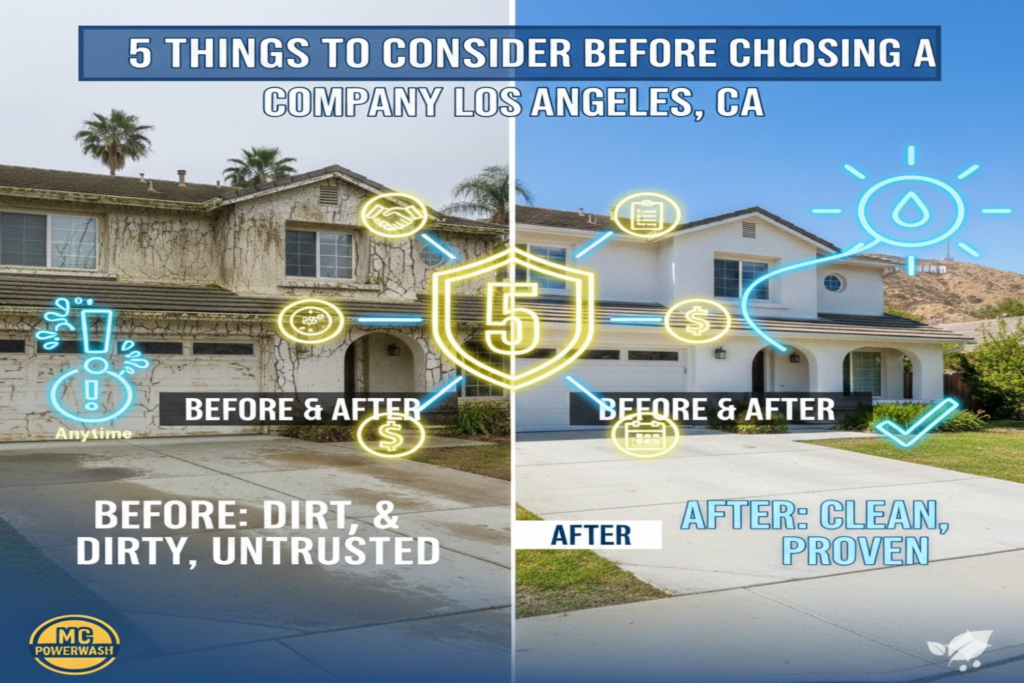
Pressure washing is not one-size-fits-all—different materials demand specific PSI levels, nozzle types, detergents, dwell times, and techniques to clean effectively without harm. A company with extensive experience understands how to safely handle common local surfaces: fragile stucco on mid-century homes, painted wood siding, textured concrete driveways prone to cracking, asphalt that can soften under too much heat/pressure, tile roofs susceptible to shingle damage, and modern low-E coated windows or glass railings. Ask for years in business in the LA area, examples of similar jobs (e.g., Spanish-style homes in Silver Lake, commercial storefronts in Koreatown, or large driveways in Encino), and before-and-after photos.
Local expertise matters because LA’s varied microclimates (coastal salt corrosion in Venice vs. intense sun in the Valley) and building styles require tailored approaches. Experienced teams also identify underlying issues like mold infiltration, efflorescence, or paint failure early, preventing bigger problems down the line. Choose companies that specialize in residential or commercial work matching your property type rather than general handymen offering pressure washing as a side service.
Equipment, Methods & Eco-Friendly Practices
The quality of equipment and cleaning solutions directly affects results and surroundings.
Ask about:
- Commercial-grade pressure washers
- Eco-friendly or biodegradable detergents
- Whether they adjust pressure for delicate surfaces
- Water conservation techniques
has strict environmental concerns, so choosing a company that practices safe runoff disposal and uses sustainable products protects your property and local regulations.
5. Reputation, Reviews & References
Before hiring, evaluate the company’s reputation online and ask for references. Check platforms like Google, Yelp, Facebook, or local review sites to see real customer experiences.
What to look for:
- Consistent positive reviews
- Before-and-after photos of previous jobs
- Testimonials about reliability and professionalism
Companies proud of their work will gladly share references and examples. Strong reputations signal trustworthiness and quality results.
Optional: Ask Key Questions Before Hiring
To further vet a pressure washing company, consider asking:
- What surfaces do you specialize in cleaning?
- Can you explain your cleaning process?
- Do you offer any satisfaction guarantee or warranty?
- Can you provide a timeline for the job?
Choosing a company that answers clearly and confidently builds peace of mind.
3. Examine Equipment, Cleaning Methods, and Eco-Friendly Practices
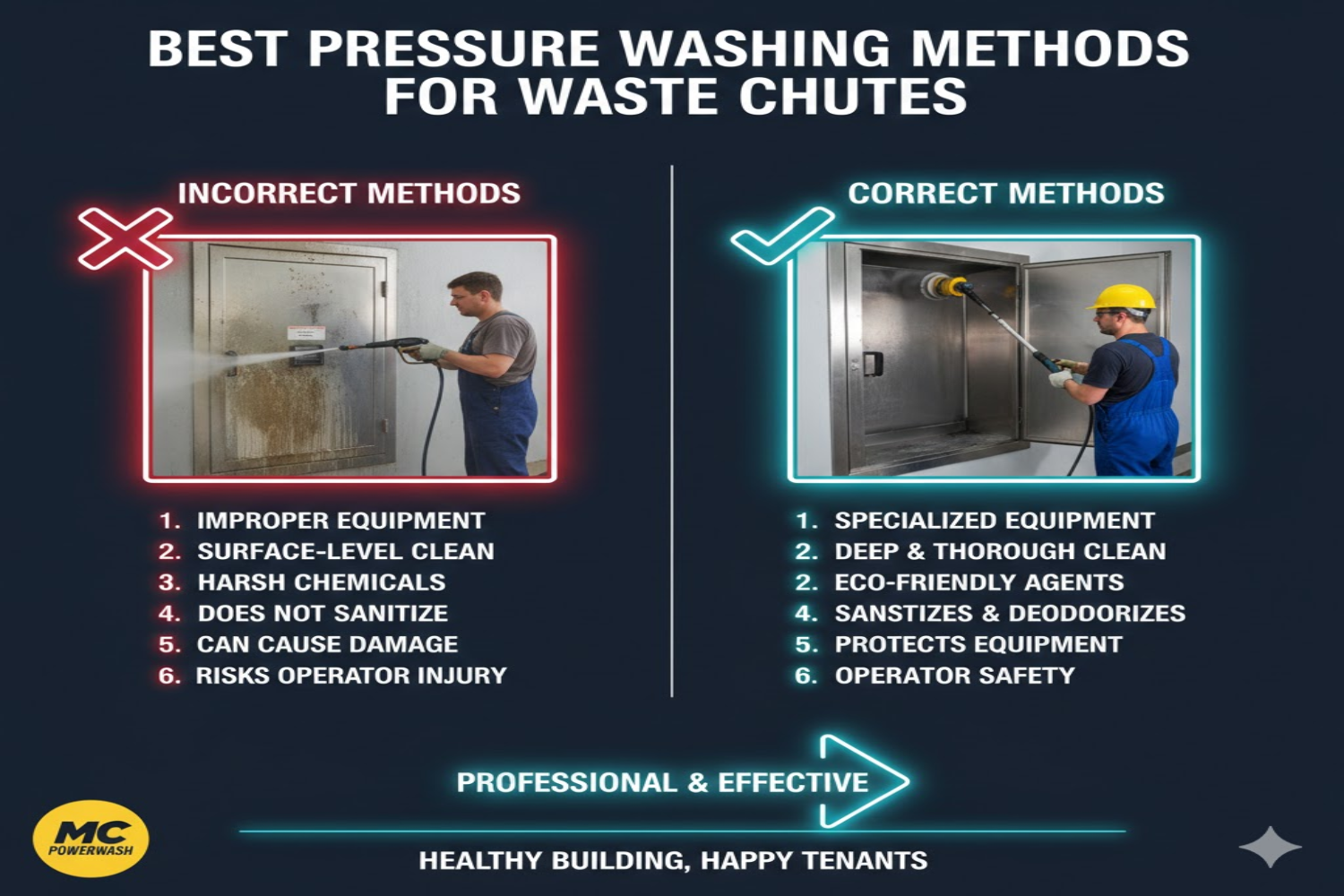
Professional-grade equipment makes a huge difference—commercial hot/cold water pressure washers with adjustable PSI (up to 4000+), wide surface cleaners for flat areas, downstream chemical injectors, soft-wash systems (low-pressure + biodegradable detergents), and wastewater recovery/vacuum systems for containment. Avoid firms relying solely on high-pressure blasting for every surface, as it can gouge stucco, strip paint, embed dirt deeper into porous concrete, or damage delicate landscaping.
In, eco-friendly practices are non-negotiable due to strict stormwater pollution prevention rules. Ask if they use biodegradable, phosphate-free cleaners, soft-wash techniques for roofs and siding (safer and longer-lasting), and methods to capture/runoff wastewater instead of letting it flow into street drains. Companies committed to green methods protect your plants, comply with regulations, and deliver gentler, more effective cleaning that prevents rapid re-soiling in LA’s polluted air.
4. Investigate Reputation, Customer Reviews, and Real References
In a competitive market like, online reputation tells the true story—check Google, Yelp, Angi, Thumbtack, BBB, and Nextdoor for consistent 4.5+ star ratings with hundreds of recent reviews. Look for detailed feedback mentioning punctuality, thorough cleanup, communication, damage-free results, and LA-specific challenges (traffic delays, tight access, multi-story work). Request 2–3 recent references from similar properties and ask to see before-and-after photos or videos of their work.
Beware of companies with few reviews, a sudden flood of 5-star ratings with generic comments, unresolved complaints about damage or poor communication, or no verifiable local presence. Strong, consistent positive feedback from real LA customers—especially mentioning neighborhoods like West Hollywood, Pasadena, or the South Bay—indicates reliability and accountability. Reputable services proudly share proof and stand behind their work with satisfaction guarantees.
5. Secure Transparent Pricing, Detailed Written Estimates, and Clear Guarantees
Never hire based on a verbal quote alone—request a detailed written estimate breaking down costs by area (e.g., house exterior square footage, driveway dimensions, roof type), number of stories, access difficulty, prep work, chemicals, sealing options, and any extras. Compare 3–5 quotes from different providers—extremely low bids often signal shortcuts, no insurance, rushed work, hidden fees, or substandard equipment. Ask about payment terms (avoid large cash upfront payments), what’s included in cleanup, and their policy for touch-ups or re-washing if results fall short.
In, typical costs range from $200–$600 for driveways, $300–$900+ for house exteriors (higher for 2–3 stories or complex access), and $500–$2,000+ for full-property packages including roofs and fences. Transparent companies explain pricing clearly, account for traffic and parking challenges, and offer warranties (e.g., 30-day satisfaction or “no damage” guarantee). This protects you from surprises and ensures fair value for professional-quality service.
Large Overview Table: 5 Key Factors for Choosing a Pressure Washing Company
| Factor to Evaluate | Key Questions / Checks to Make | Why It’s Especially Important in LA | Major Red Flags to Watch For | Practical LA-Specific Advice |
| Licensing, Insurance & Compliance | Current CA license, $1M+ liability + workers’ comp cert, runoff compliance proof | Strict stormwater laws, high liability in dense urban areas | No documents, expired license, vague answers | Verify license on CSLB site; insist on current COI |
| Experience & Local Specialization | Years in LA, similar job photos, surface expertise, neighborhood examples | Diverse building materials + pollution/climate variations | New company, no local portfolio, general handyman | Request before/after from your area (e.g., Valley or Westside) |
| Equipment & Eco-Friendly Methods | Commercial units, adjustable PSI, soft-wash options, wastewater recovery | Environmental regulations + delicate stucco/roof surfaces | High-pressure only, no green cleaners, no containment | Prioritize soft wash for siding/roofs; ask about runoff plan |
| Reputation & Customer Feedback | Google/Yelp/Angi ratings (4.5+), recent detailed reviews, references | Many fly-by-night operators in big market | Few reviews, fake-looking 5-stars, unresolved damage claims | Check Nextdoor & local groups for neighborhood feedback |
| Transparent Pricing & Guarantees | Detailed written estimate, no hidden fees, satisfaction warranty, payment terms | Variable job sizes, traffic/access issues drive costs | Verbal quotes only, suspiciously cheap, big upfront cash | Compare 3–5 quotes; demand 30-day touch-up guarantee |
2. Experience & Local Expertise
Not all pressure washing companies are equal. In s unique climate — with smog, salt air near the coast, and heavy dust in inland areas — you want a provider who understands local challenges.
What to check:
- Years in business
- Types of surfaces they’ve cleaned (driveways, siding, roof edges)
- Familiarity with LA area jobs
Experienced teams use the right pressure settings and cleaning techniques for each surface, preventing costly damage.
Conclusion
Selecting the right pressure washing company in ensures your property gets cleaned safely, thoroughly, and in full compliance with local rules—restoring curb appeal, preventing long-term damage from grime buildup, and protecting your investment in the city’s harsh sun, smog, and salt-air environment. Focus on verified licensing and insurance, proven local experience, professional equipment with eco-friendly soft-wash options, strong real-customer reviews, and crystal-clear written pricing with guarantees. Start by researching 3–5 well-reviewed LA providers (many offer free on-site assessments), ask pointed questions, verify credentials, and compare detailed estimates. Choosing quality over the cheapest option saves you from costly repairs, liability headaches, and disappointing results—leaving your home or business looking fresh, vibrant, and well-maintained for years to come.
Frequently Asked Questions (FAQs)
- Why is insurance so critical when hiring a pressure washing company?
Pressure washing involves high-pressure water, ladders, chemicals, and sometimes heights—accidents like property damage, water intrusion, or worker injury can happen. Without at least $1 million general liability and workers’ compensation coverage, you could be personally responsible for repairs or medical costs. In LA’s litigious environment and dense neighborhoods, valid insurance protects your home and finances—always demand a current certificate of insurance before work begins.
- Does every pressure washing company in LA need a contractor’s license?
Not always—small residential jobs under $500 may not require a full contractor license, but any company handling larger or commercial work should hold a valid California license (often D-38 specialty). Even for smaller jobs, licensing shows professionalism and accountability. Check the CSLB website to verify—unlicensed operators risk substandard work, no recourse if damaged, and potential fines that could affect your property.
- What’s the difference between soft washing and traditional pressure washing in LA?
Soft washing uses low pressure (under 500 PSI) combined with biodegradable detergents and dwell time to gently remove dirt, algae, and mildew—ideal for delicate stucco, painted siding, roofs, and wood in Traditional high-pressure washing (2000–4000 PSI) blasts surfaces and can strip paint, crack concrete, or embed grime deeper. Soft wash is safer, longer-lasting, and better complies with LA’s runoff regulations.
- How much should I expect to pay for professional pressure washing in Los Angeles?
Costs vary widely: $200–$600 for driveways, $300–$900+ for house exteriors (higher for 2–3 stories), $500–$2,000+ for full packages including roofs/fences. Prices depend on square footage, access difficulty, surface type, and extras like sealing. Get written estimates from multiple companies—extremely low bids often mean rushed work, no insurance, or damage risks.
- Can pressure washing damage my home if not done correctly?
Yes—too much pressure can etch stucco, strip paint, crack concrete, warp wood siding, loosen mortar, or force water behind exteriors causing rot or mold. In LA’s older homes and varied materials, improper techniques cause thousands in repairs. Choose experienced pros who adjust PSI, use soft-wash methods for delicate areas, and protect plants/windows.
- How do I know if a company follows Los Angeles stormwater runoff rules?
Ask if they use wastewater recovery systems (vacuums or berms), biodegradable cleaners, and proper containment to prevent dirty water from entering street drains. LA’s strict regulations (via the Regional Water Quality Control Board) require this to avoid ocean pollution—reputable companies are familiar and compliant; evasion or “we just let it flow” answers are red flags.
- Should I get references or just rely on online reviews for LA companies?
Both—online reviews (Google, Yelp, Angi) show patterns in quality and reliability, but request 2–3 recent references from similar LA properties (e.g., stucco homes or commercial jobs). Call or text references to ask about punctuality, cleanup, damage-free results, and overall satisfaction—real feedback reveals more than filtered online ratings.
- Is it better to hire a company that offers hot water pressure washing in Los Angeles?
Hot water (up to 200°F) excels at cutting through heavy oil, grease, and tough stains on driveways, concrete, or commercial surfaces common in LA’s traffic-heavy areas. For house exteriors, siding, or roofs, cold water with soft-wash detergents is usually safer to avoid damage. Ask if they have both options and use them appropriately based on your surfaces.
- What should a good written estimate include for pressure washing in LA?
A detailed estimate should list services (e.g., house exterior, driveway, roof), square footage or linear measurements, PSI/pressure levels, cleaning methods (soft wash vs. high pressure), chemicals used, extras (sealing, window protection), total cost, payment terms, cleanup policy, and any warranties. It should also note traffic/parking considerations—avoid companies that only give verbal ballpark figures.
- How can I tell if a pressure washing company in Los Angeles is truly professional?
Professional LA companies have current insurance/license proof, strong local reviews with photos, commercial-grade equipment, soft-wash capabilities, wastewater containment, detailed written estimates, clear communication, uniformed technicians, proper safety gear, and satisfaction guarantees. They arrive on time, protect your property (covering plants/windows), clean up thoroughly, and stand behind their work—avoid cash-only, no-insurance, or overly cheap operators.