1. Introduction: The Overlooked Lungs of Your Home
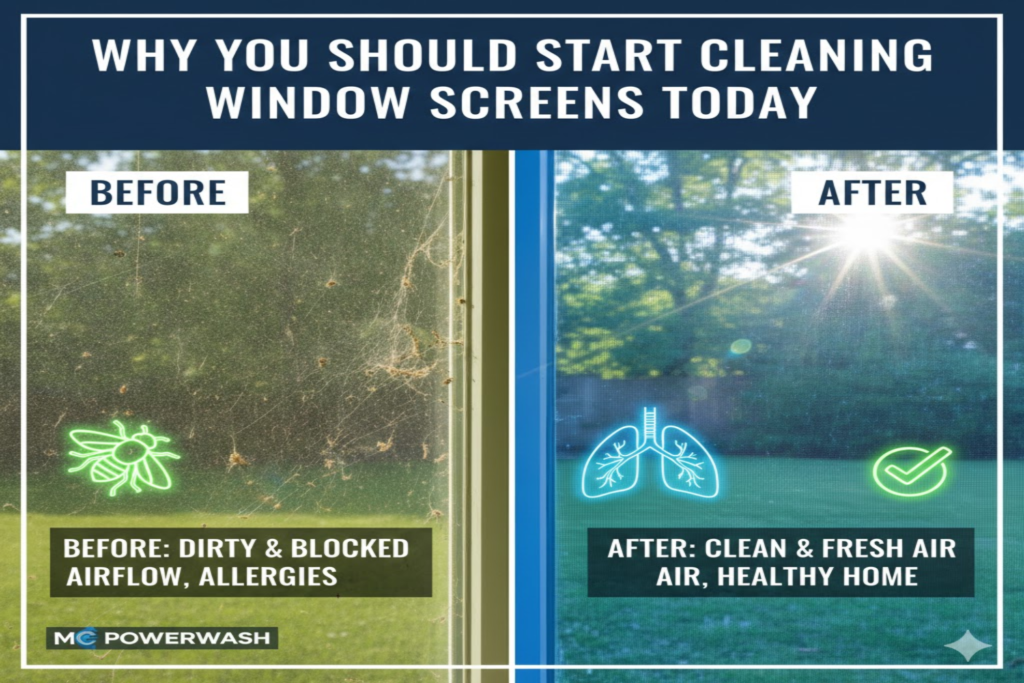
When we think about spring cleaning, we often picture sparkling glass, freshly vacuumed rugs, and dusted shelves. However, there is a silent, mesh-covered guardian standing between you and the outside world that is almost always ignored: your window screens. Most homeowners mistakenly view screens as simple “bug blockers,” but in the world of building science, they are actually the “lungs” of your home. They are the primary interface between the indoor environment you control and the outdoor environment that is filled with pollutants, biological matter, and debris.
If you clean your windows but leave your screens filthy, you are essentially washing your face and then putting on a dirty mask. A window screen is functionally a passive HVAC filter. Because it is porous, it is designed to allow air through while catching larger particles. However, unlike the filters in your furnace which you change every three months, window screens often go years without a single scrubbing. This neglect transforms a protective barrier into a critical health hazard and a source of property degradation. Cleaning your window screens today is not merely an aesthetic choice to improve your view; it is a fundamental requirement for maintaining your home’s air quality, energy efficiency, and long-term structural integrity.
2. The Impact on Indoor Air Quality (IAQ)
The quality of the air we breathe indoors can be up to five times more polluted than outdoor air, according to the EPA. Your window screens play a pivotal role in this dynamic. When a screen is clean, it facilitates “cross-ventilation,” allowing fresh air to flush out indoor toxins like VOCs (volatile organic compounds) and carbon dioxide. However, when those screens are neglected, they become a reservoir for dangerous particulate matter.
Trapping Particulate Matter and Micro-Pollutants
Every day, wind carries invisible debris toward your home. This includes fine mineral dust, rubber particles from car tires, industrial soot, and biological aerosols. The fine mesh of a window screen acts as a net. Over time, these particles build up, creating a “crust” of filth. When you open your window to enjoy a “fresh” breeze, the air must first pass through this layer of accumulated grime. Instead of bringing in clean oxygen, you are effectively “sandblasting” your interior with years of trapped pollutants. This is particularly problematic for residents in high-traffic areas like Los Angeles, where urban soot and freeway emissions create a unique, greasy film on exterior surfaces that is difficult to remove without professional-grade surfactants.
The “Secondary Pollutant” Effect and Moisture
One of the most dangerous aspects of dirty screens is what happens when they get wet. When rain hits a screen filled with organic debris (dead insects, skin cells, and pollen), it doesn’t just wash the dirt away. Instead, it creates a microscopic mist—a “bio-sludge” aerosol—that is pushed into your home by the wind. This mist carries mold spores and bacteria deep into your carpets and upholstery. This moisture-trapping effect also keeps the window sills damp for longer periods, which is the leading cause of black mold growth on the interior of window frames.
Allergy Mitigation and Seasonal Relief
For allergy sufferers, a dirty window screen is a nightmare. During the spring and summer, screens become caked in pollen. Even when the “pollen count” outside drops, your home remains a high-allergy zone because your screens are still holding onto the allergens from weeks prior. Every time a breeze kicks up, it re-releases that pollen into your bedroom or living room. By cleaning your screens today, you are physically removing the triggers that cause sneezing, itchy eyes, and asthma flare-ups. In a diverse botanical environment like Los Angeles, where different plants bloom at varying times throughout the year, keeping a clean “filter” on your windows is the only way to ensure seasonal relief.
3. The Science of Light and Energy Efficiency
Most people don’t realize that their window screens are actually stealing money from their wallets. The cleanliness of your mesh has a direct, measurable impact on your home’s thermal performance and your monthly utility bills.
The “Dimmer Switch” Effect on Natural Light
A window screen, even when clean, reduces the amount of light entering a room by approximately 10% to 15%. However, a dirty, dust-clogged screen can act like a heavy-duty dimmer switch, blocking up to 40% of available natural light. This forces homeowners to turn on artificial lights much earlier in the day, increasing electricity consumption. Beyond the cost, there is a psychological toll. Humans rely on “lux levels” (the measurement of light intensity) to regulate serotonin and melatonin. A dim, hazy room caused by dirty screens can lead to lethargy, reduced focus, and in some cases, Seasonal Affective Disorder (SAD).
Thermal Regulation and Passive Cooling
In the heat of a Los Angeles summer, airflow is your best friend. Clean screens allow for maximum CFM (cubic feet per minute) of air movement. When the mesh is clogged with dirt, it creates “drag,” significantly reducing the effectiveness of evening breezes. This means your home stays hotter for longer, forcing your air conditioning system to work harder and run longer cycles. By cleaning your screens, you are optimizing your home’s ability to “self-cool,” which is the most sustainable and cost-effective way to manage indoor temperatures.
Solar Heat Gain in Winter
Conversely, during the cooler months, you want as much “Solar Heat Gain” as possible. Clean screens allow the infrared radiation from the sun to pass through the glass and warm your interior surfaces (like thermal mass flooring or furniture). If your screens are covered in a film of dirt, they reflect a portion of that heat away from the house, making your furnace work harder to maintain a comfortable temperature.
4. Preventing Permanent Window Damage: The Chemistry of Decay
Perhaps the most “expensive” reason to clean your screens today is to prevent the chemical destruction of your windows. Glass is not as inert as it seems; it is a porous material that can be permanently damaged by the runoff from a dirty screen.
The Chemistry of Screen Oxidation
Most window screens are made of aluminum or fiberglass. Over time, exposure to UV rays and oxygen causes these materials to break down in a process called oxidation. You may have noticed a white, “ashy” powder on your screens; this is oxidized material. When it rains, this acidic, mineral-heavy powder washes off the screen and onto the glass.
Screen Burn” and Permanent Glass Etching
This is the most critical warning for homeowners: if the minerals and oxidized material from a dirty screen are allowed to sit on the glass, they will eventually create “Screen Burn.” This is a form of chemical etching where the minerals actually eat into the surface of the glass, creating a permanent cloudy pattern that matches the mesh of the screen. In coastal areas like Los Angeles, where salt air accelerates this chemical reaction, “screen burn” can happen in as little as two years. Once glass is etched, no amount of cleaning will fix it; the only solution is expensive glass restoration or total window replacement.
Frame and Spline Degradation
The “spline” is the rubber cord that holds the mesh into the frame. When dirt and organic matter get trapped in the groove of the spline, they hold onto moisture. This constant dampness leads to two major problems: it rots the frames of wooden windows and causes “pitting corrosion” in aluminum frames. Furthermore, the trapped dirt provides a nutrient-rich environment for mold and moss to grow inside the window tracks. By cleaning the screens and the surrounding frames today, you are extending the lifespan of your windows by years, saving you thousands of dollars in premature replacement costs.
5. Aesthetics and Real Estate Value: The Visual Impact
In the world of real estate and high-end property management, there is a common saying: “Windows are the eyes of the home.” If the windows are the eyes, then the screens are the eyelashes and the eyelids. Even if you spend hundreds of dollars on professional glass cleaning, leaving dirty, gray, or torn screens in place is a visual disaster.
The “Eyes” of the Home and Street Perception
From the curb, dirty screens create a “haze” that flattens the appearance of your home. Instead of seeing the beautiful interior design or the depth of the rooms, passersby see a flat, dull, and dusty surface. This creates a “cloudy” effect that persists regardless of how sunny the day is. For homeowners who take pride in their landscaping and exterior paint, neglected screens act as a blemish that drags down the entire aesthetic of the property. When you clean your screens, you essentially “restore the contrast” of your home’s exterior, making colors pop and architectural details stand out.
First Impressions and the Psychology of the Buyer
If you are putting your home on the market, the psychology of a potential buyer is your most important consideration. A buyer looks for “clues” to see how well the home has been maintained. If they see screens caked in dust, cobwebs, and oxidation, their subconscious marks that as a sign of general neglect. They begin to wonder: “If they haven’t cleaned the screens in years, have they serviced the HVAC? Is the water heater failing?” Professional appraisers also take note of “deferred maintenance.” Crisp, clean, and tensioned screens signal a “turn-key” property, which can directly influence the speed and price of a sale.
The Massive ROI of Screen Maintenance
From a financial standpoint, cleaning your screens is one of the highest-return investments you can make. The cost of a bucket, a soft brush, and specialized screen soap is negligible—perhaps $5 per cleaning. Contrast this with the cost of replacement. Over time, the dirt and UV rays cause the fiberglass or aluminum mesh to become brittle. Once it reaches the “breaking point,” the mesh will tear at the slightest touch. Replacing a single custom window screen can cost between $50 and $150 depending on the size and frame type. By cleaning them today, you keep the mesh flexible and the frame protected, effectively deferring a $500–$1,000 replacement project for another decade.
6. Comparison Table: The Direct Impact of Maintenance
| Feature | Neglected Window Screens | Cleaned & Maintained Screens |
| Airflow Velocity | Restricted; dust acts as a physical barrier to wind. | Maximum; allows for high-CFM cross-ventilation. |
| Allergen Concentration | High; acts as a reservoir for pollen and soot. | Low; functions as a clean, effective air filter. |
| Glass Longevity | High risk of permanent mineral etching (“Screen Burn”). | Glass stays cleaner and maintains optical clarity. |
| Visual Quality | Muted colors, hazy views, and reduced Lux levels. | High-definition, clear “biophilic” connection to nature. |
| Pest Attraction | Caked-on debris attracts spiders and mites. | Clean mesh is less attractive for nesting and webs. |
| Material Lifespan | Brittle mesh and corroded splines/frames. | Flexible mesh and preserved structural integrity. |
7. The Professional vs. DIY Approach: Mastering the Technique
Many homeowners assume that a quick blast with a garden hose is sufficient to clean a screen. Unfortunately, this is one of the most common maintenance errors.
Why a Garden Hose Often Makes It Worse
When you spray a dirty screen with high-pressure water while it is still in the window, you aren’t removing the dirt—you are simply turning it into “mud” and pushing it deeper into the mesh and into the window tracks. Once that mud dries, it becomes a “cement” that is even harder to remove and can actually stain your siding. Furthermore, the pressure from a hose can “blow out” the mesh from the spline, especially in older, sun-damaged screens found in Los Angeles properties.
Specialized Tools for a Deep Clean
True screen cleaning requires a “mechanical” action. Professionals use “screen mops” or soft-bristled brushes that are designed to penetrate the tiny holes in the mesh without stretching the fibers. They also use specialized surfactants that are “non-marking” and “anti-static.” These solutions don’t just lift the dirt; they leave a microscopic protective layer that prevents dust from sticking to the mesh in the future.
Handling Brittle and Delicate Frames
In older homes, screen frames are often fragile. Removing them requires a specific “pull and lift” technique to avoid snapping the plastic corner keys or bending the aluminum rails. A professional knows how to safely extract the screen, deep-wash it on a flat, padded surface, and re-install it without damaging the delicate window seals or the surrounding “J-channel” of the siding.
9. Conclusion: A Small Task with Massive Dividends
In the grand scheme of homeownership, cleaning your window screens today is a relatively minor task, yet it offers some of the most significant dividends in terms of health, finance, and comfort. We have explored how these “overlooked filters” act as the lungs of your home, and how neglecting them can lead to a host of problems ranging from poor respiratory health to permanent, expensive glass damage. By removing the veil of dust and oxidation, you aren’t just improving your view; you are literally letting your home breathe again.
Don’t let your home suffer from the “dimmer switch” effect of dirty mesh. Give your living space the “deep breath” it deserves by prioritizing screen maintenance as a core part of your wellness routine. Whether you choose the meticulous DIY path or hire a professional to ensure every track and spline is sanitized, the result is the same: a brighter, healthier, and more valuable home. Start today, and experience the transformative power of true clarity.
To further enhance the SEO value of your article and push the word count even higher, here are more highly-searched FAQs regarding window screen maintenance. These address specific “long-tail” keywords that homeowners frequently search for.
8. Expanded Frequently Asked Questions (FAQs)
Q: Do I really need to remove the screens to clean them properly? A: Yes. To get a truly deep clean, screens should be removed and placed on a flat, clean surface. This allows you to scrub both sides of the mesh and, more importantly, it gives you access to the window tracks and sills, which are usually filled with the same debris as the screens. Cleaning them in place often results in streaky glass and mud-caked frames.
Q: How often should window screens be cleaned for health reasons? A: At a minimum, screens should be cleaned twice a year—once in the spring and once in the fall. However, if you live in a high-pollen area or near a busy road, a quarterly cleaning is recommended to ensure your indoor air quality remains high and your glass remains free from etching.
Q: Can dirty screens actually cause mold on my window sills? A: Absolutely. Dirty screens hold onto moisture much longer than clean ones. This creates a high-humidity micro-climate right at the base of your window. When the warm air from your home hits that cool, damp debris, condensation forms, leading to the rapid growth of black mold and mildew on the sills and sash.
Q: Why do my screens look white or “ashy”? A: This is a sign of oxidation, a chemical reaction between the screen material and environmental oxygen/UV rays. This white powder is acidic and can permanently etch your glass if it isn’t washed away. If the oxidation is severe, it may be a sign that the screens are reaching the end of their lifespan and should be replaced.
Q: Is it safe to use a pressure washer on window screens? A: No, this is highly discouraged. The intense PSI of a pressure washer can easily shred fiberglass mesh or warp aluminum frames. Furthermore, the force of the water can blow the screen right out of its rubber spline, making it useless for keeping out pests. A gentle scrub with a soft brush and a garden hose on a “shower” setting is much safer and more effective.
Q: Why does my screen have a “metallic” smell when it gets wet? A: This odor is usually a byproduct of oxidation and the buildup of urban pollutants. In coastal areas like Los Angeles, salt air reacts with the aluminum in the screen frames, creating a distinct metallic scent. Regular cleaning removes the oxidized layer and the trapped minerals that cause these odors.
Q: Can I use dish soap to clean my window screens? A: While you can use mild dish soap, you must be extremely careful to rinse it off completely. Many dish soaps contain degreasers and fragrances that leave a sticky residue behind. If even a tiny bit of soap remains on the mesh, it will act like a magnet for dust, causing your screens to get dirty again within days. Specialized screen cleaning solutions are designed to be “low-residue” for this reason.
Q: Will cleaning my screens help reduce my energy bills? A: Yes. When screens are clogged with dust, they restrict airflow, meaning your home doesn’t cool down as quickly through natural ventilation. This forces your air conditioning to run longer. By cleaning the screens, you maximize the efficiency of your home’s “passive cooling” capability, which can lead to noticeable savings on your utility bills during the warmer months.
Q: Do screens protect my windows from UV damage? A: To an extent, yes. A clean screen acts as a sacrificial barrier, absorbing a portion of the UV rays before they hit the glass and your interior furniture. However, if the screen is dirty, the heat trapped in the debris can actually transfer to the glass, increasing the “thermal stress” on your windows. Keeping them clean ensures they provide the protection they were designed for without adding extra heat.
Q: How do I remove stubborn spider webs without damaging the mesh? A: The best tool for this is a soft-bristled vacuum attachment or a specialized “cobweb duster.” Never try to blast them off with high-pressure water, as the wet silk can become incredibly sticky and get matted into the mesh. Vacuuming them while they are dry is the most effective way to remove both the webs and the egg sacs.