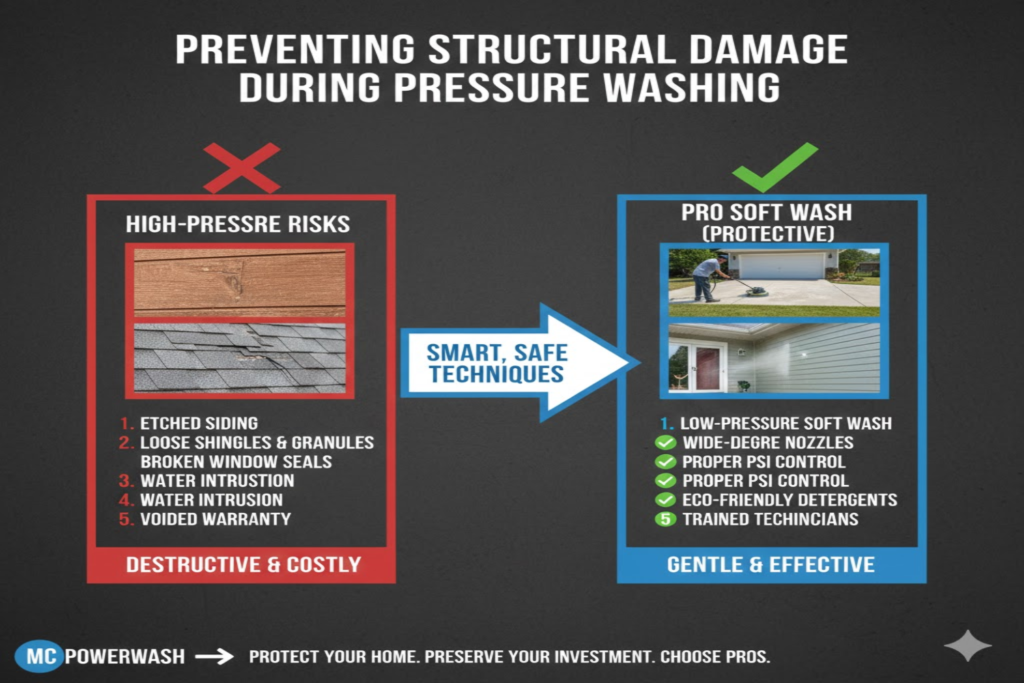
Pressure washing is often viewed through the lens of aesthetics, but from a structural engineering perspective, it is a high-stakes interaction with a building’s envelope. When you pull the trigger on a 3,000 PSI machine, you are not merely “cleaning”; you are applying a hydraulic force that exceeds the defensive capabilities of most residential construction materials. In the pursuit of a pristine driveway or a spotless facade, it is remarkably easy to overlook the fact that water is the single most destructive element to a home’s longevity.
The reality is that “clean” becomes irrelevant if the process introduces moisture into the wall cavities. Once water breaches the exterior skin, it can lead to wood rot, compromised insulation, and the rapid growth of toxic mold—problems that may remain hidden behind drywall for months or years. To prevent these catastrophic outcomes, homeowners and contractors must prioritize the “Building Envelope.” This means shifting the focus from simply removing grime to a comprehensive strategy of technique, preparation, and geometric awareness that ensures water stays exactly where it belongs: on the surface and in the drain.
2. Identifying Vulnerability Points: Where Water Sneaks In
Before the first gallon of water is sprayed, a professional must conduct a vulnerability audit of the property. Residential architecture is designed to shed water through gravity (downward rain), but pressure washing introduces water from lateral and upward angles that the home was never intended to withstand.
The Siding Gap and Lapping Failures
Most siding—whether it is Vinyl, Hardie Plank, or traditional Wood Cedar—is installed using a “lapping” technique. This means the top piece overlaps the bottom piece so that rainwater rolls down the face. However, if a pressure washing wand is aimed upward at the siding, the water is driven under the lap and directly onto the wooden sheathing or house wrap. This creates an immediate moisture trap that has no way to vent, leading to localized rot and the warping of the siding panels.
The Misunderstood Function of Weep Holes
Modern windows and certain types of masonry contain “weep holes”—small, intentional gaps designed to allow internal condensation to escape. Amateurs often see these as dirty holes and attempt to “clean them out” with high pressure. This is a critical mistake. Blasting a weep hole forces water backward into the window track or the wall cavity, often bypassing the internal drainage system entirely and dumping water onto the interior floorboards or into the framing.
Compromised Door Thresholds and Window Seals
Over time, the weatherstripping at the bottom of doors and the silicone seals around window glass become brittle, especially in the intense UV environment of Southern California. High-pressure water can easily displace these worn seals or find its way under a door threshold. Even a minor breach can lead to “wicking,” where the water is pulled into the subflooring, potentially ruining hardwood floors or creating a damp environment for termites.
Electrical Hazards in Conduits
Exterior outlets and light fixtures are “weather-resistant,” not waterproof. High-pressure water can penetrate the gaskets of outlet covers or travel through the electrical conduit itself. Once water enters the electrical box, it can cause short circuits, corrode wire nuts, or even travel back toward the main breaker panel, creating a significant fire hazard that may not manifest until the system is under load later that day.
3. The “Down & Away” Rule: Proper Wand Geometry
Prevention is rooted in the physics of how the wand is held. The geometry of the spray determines whether the water cleans the surface or penetrates the structure.
The 45-Degree Downward Angle
The golden rule of pressure washing is to always maintain a 45-degree downward angle relative to the surface. This ensures that the force of the water is always working with gravity, pushing water over the laps of siding and away from seals. By keeping the wand pointed down, you significantly reduce the risk of forcing water behind trim pieces or into the soffit vents of the attic.
The “Sweep” Technique for Drainage
Instead of spraying directly at a door or a vent, use a “sweeping” motion that begins near the obstacle and moves away from it. This prevents the “piling up” of water against thresholds. For example, when cleaning a patio that leads to a sliding glass door, the sweep should always be directed toward the outer edges of the patio, ensuring that the volume of water is never allowed to build up against the door’s tracks.
Distance Management and Fan Dissipation
Pressure decreases exponentially as the distance from the nozzle increases. By utilizing a wider fan (such as a 40-degree white tip) and maintaining a distance of 18 to 24 inches from delicate seals, you allow the water to dissipate its “punch” before it makes contact. This provides enough flow to rinse away detergents without providing enough “jet force” to cut through weatherstripping or displace caulking.
4. Sealing the Perimeter: Pre-Wash Fortification
Preparation is the silent protector of the home. A “Watertight Wash” begins with manual fortification of the property’s weakest points.
Tape and Drape Procedures
Every exterior electrical outlet, smart doorbell (like Ring or Nest), and keyhole should be protected. Using high-quality blue painter’s tape and plastic sheeting, “tape and drape” these items. Keyholes are particularly vulnerable; forcing water into a lock cylinder can wash away the internal lubricants, leading to a seized lock or a key that breaks off inside.
The Towel Trick for Thresholds
No matter how careful the operator is, a small amount of “creep” water can find its way under doors. Before starting, place rolled-up, heavy-duty towels on the inside of every exterior door threshold. This acts as a secondary line of defense, absorbing any moisture that manages to bypass the weatherstripping before it can reach the carpet or hardwood.
Identifying Masonry Gaps and Temporary Caulking
Perform a “pre-flight” check for cracked mortar or gaps in the stucco. If you find a significant crack, do not wash over it. High pressure will enlarge the crack and saturate the brickwork. If the job must proceed, use a temporary removable caulking or “rope caulk” to seal the gap, allowing you to clean the surrounding area without flooding the substrate.
5. [Table Section] Surface Vulnerability Matrix
| Material | Max Safe PSI | Primary Water Entry Risk | Protection Method |
| Wood Siding | 500 – 800 (Soft Wash) | Upward spray under laps | Downward 45° angle only |
| Stucco | 1,000 – 1,500 | Saturation through cracks | Pre-soak; No direct dwell |
| Brick / Mortar | 1,500 – 2,000 | Mortar joint erosion | Keep wand moving; 12″ distance |
| Vinyl Siding | 1,000 – 1,300 | Weep hole intrusion | Tape weep holes; Low pressure |
| Windows / Doors | 500 (Rinse) | Seal displacement | 3-foot safety distance |
6. Managing Runoff and Sub-Base Erosion
Water damage isn’t just about what goes into the walls; it’s about where the water goes once it hits the ground.
The Foundation Risk and Pooling
A standard pressure washer can output 4 to 8 gallons of water per minute. Over the course of a three-hour driveway and house wash, you could be dumping over 1,000 gallons of water around your foundation. If the soil is not graded correctly, this water can pool against the slab, leading to foundation settling or water seeping into a basement or crawlspace. You must monitor the pooling and ensure water is constantly moving away from the structure.
Directing the Flow with Snake Booms
To manage large volumes of water, professionals use “Snake Booms” or long sandbags to create temporary channels. This is especially important in Southern California hillsides, where uncontrolled runoff can lead to soil erosion or mudslides. By directing the flow toward established storm drains or grassy “bioswales,” you prevent the saturation of the soil immediately adjacent to the home’s foundation.
The Saturated Sub-Base Problem
When cleaning pavers or flagstone, excessive water can over-saturate the sand or gravel sub-base. Once the sub-base is turned into a slurry, the pavers can shift or “sink” under their own weight. To prevent this, never allow the wand to linger in one spot for more than a few seconds. The goal is to clean the surface, not to flood the foundation of the hardscape.
7. Critical Mistakes That Lead to Rot
Even with the best equipment, certain operational lapses can lead to long-term structural decay. Understanding these “hidden” mistakes is the difference between a successful maintenance task and a costly insurance claim.
Blasting Attic and Soffit Vents
One of the most common errors made by DIYers is treating the eaves of the house like any other wall surface. The soffit vents located under the roof overhang are designed to draw air into the attic. They are essentially open gateways to your home’s insulation. If you spray upward into these vents, you aren’t just cleaning the mesh; you are creating an “instant flood” in your attic. This water saturates the fiberglass or cellulose insulation, which acts like a sponge. Because attics are often poorly ventilated during the wash, this moisture sits in the dark, creating a perfect breeding ground for black mold and causing the ceiling drywall below to sag or stain.
Ignoring the “Milky” Water in Double-Pane Windows
When cleaning windows, if you notice a “milky” or “cloudy” residue forming between the two layers of glass, you have likely committed a “Hermetic Seal Breach.” High-pressure water can compress the flexible seals that hold the insulating gas (argon or krypton) between the panes. Once that seal is bent or displaced, the gas escapes, and moisture-laden air is sucked in. This is an irreversible form of water damage; the window will remain permanently fogged and will lose its energy-efficient properties, requiring a total glass replacement.
Excessive Dwell Time on Porous Wood
Wood is hygroscopic, meaning it naturally absorbs moisture. When applying detergents or water to wooden decks or siding, “dwell time” (the amount of time the liquid sits) must be strictly monitored. If you allow the surface to remain saturated for too long, the wood fibers swell excessively. This “over-saturation” can lead to cell-wall collapse, resulting in a “fuzzy” texture (lignin damage) or, worse, trapping moisture deep enough to initiate dry rot from the inside out once you apply a topical sealer later.
8. The Post-Wash Inspection: Ensuring No Moisture is Trapped
The job is not finished when the machine is turned off. A professional “Watertight Wash” requires a verification phase to ensure the building envelope remains secure.
The Professional Moisture Meter Check
For high-end wood siding or deck restorations, professionals use a moisture meter. Before applying any stains or sealers post-wash, the wood’s moisture content must typically be below 12-15%. Using a meter to check various points—especially around joints and end-grains—ensures that you aren’t “sealing in” the water you just sprayed, which is the primary cause of premature sealer failure and wood rot.
Interior “Weep” Checks
Immediately following the wash, conduct an interior walkthrough. Look at the base of windows and door thresholds for any signs of “weeping” or dampness. If you find a small leak, dry it immediately with a high-capacity shop-vac and a fan. Early intervention prevents the water from reaching the subfloor or the interior of the wall cavity where it can do the most damage.
Promoting Rapid Evaporation
In the humid coastal pockets of Southern California, like Newport Beach or Venice, natural drying can be slow. If you’ve cleaned a particularly tight courtyard or a shaded north-facing wall, use industrial air movers or floor fans to promote airflow. The goal is to move the property from a “saturated” state to a “dry” state as quickly as possible to prevent opportunistic mold spores from taking hold.
9. Environmental Factors: The “Flash-Flood” Effect in SoCal
The unique geography and climate of Southern California change the way water behaves once it leaves your driveway.
Runoff Management on Hardened Soil
During the dry season, the soil in Los Angeles and the Inland Empire can become “hydrophobic.” When you release thousands of gallons of wash water, the ground cannot absorb it quickly, leading to a “flash-flood” effect across your landscape. This water can quickly find its way into “below-grade” areas, such as subterranean garages or walk-out basements. To manage this, you must use “Snake Booms” or sandbags to steer the runoff toward municipal drainage systems rather than allowing it to pool near these vulnerable lower levels.
10. Chemical Safety and Water Damage
Chemistry and hydraulics are inextricably linked. The soaps you use actually change the physics of the water.
How Surfactants Lower Water Tension
Professional pressure washing soaps contain “surfactants.” The job of a surfactant is to break the surface tension of water, making it “wetter” so it can penetrate dirt. However, this also makes it much easier for water to leak through microscopic cracks in stucco or around window gaskets that might normally hold back plain rainwater. When using soap, you must be twice as careful with your wand angles, as the soapy water will “creep” into gaps that standard water cannot reach.
11. Conclusion: Finesse as a Protective Shield
The most important tool in any pressure washing project is not the pump or the engine—it is the mindset of the operator. To achieve a truly “Watertight Wash,” one must view the home as a delicate system rather than a target for cleaning. A professional result is measured not just by the brightness of the concrete or the cleanliness of the siding, but by the dryness of the interior.
By respecting the “Down & Away” rule, identifying vulnerability points before starting, and understanding the environmental factors of Southern California, you can restore your property’s beauty without compromising its structural integrity. In the world of high-pressure cleaning, finesse is your best protective shield. A clean house is a joy, but a structurally sound, dry house is an investment that lasts a lifetime.
12. FAQs: Preventing Common Water Disasters
Can pressure washing cause mold inside my walls?
Yes. If water is driven behind the siding and saturates the house wrap and plywood sheathing, it can become trapped. Without sunlight or airflow, this moisture creates a mold colony within 24 to 48 hours. This is why “Soft Washing” (low pressure) is the only recommended method for house siding.
How do I protect my smart doorbell (Ring/Nest) from water damage?
While these devices are weather-resistant, they are not designed for direct high-pressure hits. Always cover them with a plastic sandwich bag and high-quality painter’s tape before washing. The high-frequency vibration of the water can also shatter the internal camera lens or microphone components.
What should I do if water gets behind my siding?
If you suspect a breach, do not seal the area. Instead, use a leaf blower or a specialized “siding vent” tool to blow air behind the panels. Increasing the air circulation is the only way to dry the substrate and prevent rot.