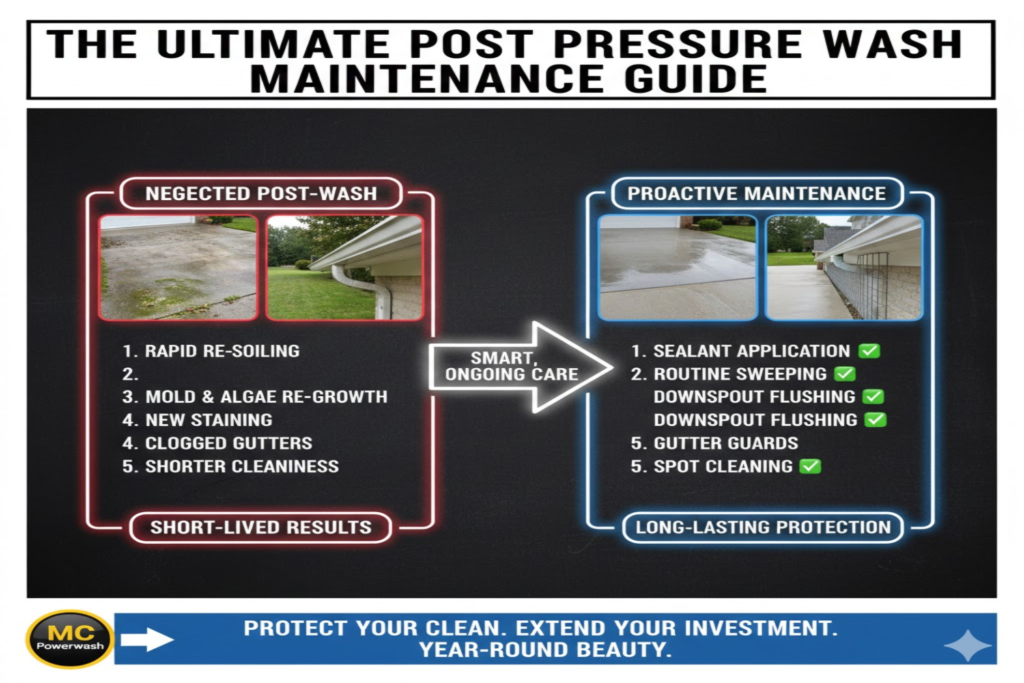
The moments immediately following a professional pressure wash are the most critical for the long-term health of your patio. While the surface looks pristine, it is currently in its most vulnerable state. High-pressure water and specialized detergents do an excellent job of stripping away grime, but they also “open up” the microscopic pores of the stone or concrete.
Without the protective layer of dirt or a proper sealer, these open pores act like tiny vacuum chambers, ready to suck in moisture, new algae spores, and airborne pollutants. This is the “Clean Slate” phase—a window of opportunity where you can either lock in that “new” look for years or leave it exposed to rapid degradation. Our Pro-Plan focuses on transforming this temporary cleanliness into a permanent standard of excellence.
2. The Critical 48-Hour Window: Post-Wash Care
What you do (or don’t do) in the first two days after a wash determines the success of the entire project.
Drying Time: The Golden Rule
Patience is the most important tool in your arsenal. You must allow the patio to dry for 24 to 48 hours before placing furniture back or applying any treatments.
- Why? Even if the surface feels dry to the touch, concrete is a sponge. Trapped moisture inside the stone can cause “blistering” if a sealer is applied too early, or it can lead to dark “ghosting” stains under heavy rugs or furniture.
Efflorescence Check: Handling the White Powder
After a deep clean, you may notice a white, powdery substance appearing as the stone dries. This is Efflorescence—natural mineral salts rising to the surface.
- The Fix: Do not re-wash it with high pressure. Instead, use a stiff-bristle dry brush to sweep it away. If you seal over this powder, it will be trapped forever, leaving a cloudy, dull finish on your beautiful patio.
pH Neutralization
Many heavy-duty cleaners used for oil or algae are highly alkaline.
- The Rinse: Ensure a final, low-pressure rinse with fresh water was performed to neutralize the pH level of the stone. A balanced pH ensures that any subsequent sealers bond correctly to the substrate rather than reacting chemically with leftover detergent.
3. Sealing: The Ultimate Protective Shield
Sealing is not an “extra”—it is the fundamental insurance policy for your hardscaping.
To Seal or Not to Seal?
In climates like Southern California, sealing is mandatory for porous surfaces. If you leave a patio unsealed, UV rays will bleach the color out of the stone, and water will facilitate the return of black algae within weeks.
Choosing Your Defense: Penetrating vs. Film-Forming
- Penetrating Sealers (Natural Look): These soak deep into the stone and protect from within. They are perfect for those who want a “matte” finish where the stone still looks and feels natural. These are highly “breathable,” allowing vapor to escape while blocking liquid water.
- Film-Forming Sealers (Glossy/Wet Look): These create a visible hifazati layer on top. They “pop” the colors of the stone, making them look richer and deeper. These are the best choice for high-traffic areas where food spills or oil drops are likely.
Application: Brush vs. Sprayer
For a professional finish, a Sprayer provides the most even distribution, while a Brush or Roller is essential for “back-rolling” the product into the texture of the stone. Always apply thin, even coats to prevent “pooling” or sticky spots.
4. Joint Stabilization: Restoring the Foundation
If you have a paver patio, the pressure wash likely removed a significant amount of the sand between the joints. This sand is the “skeleton” of your patio; without it, the pavers will shift and collapse.
Polymeric Sand Replacement
Once the patio is bone-dry, sweep in new Polymeric Sand. Unlike regular sand, this contains specialized binders that harden when activated.
- The Misting Technique: After sweeping the sand into the joints and removing all excess from the surface, use a garden hose to apply a light mist. This “locks” the sand in place, creating a flexible, waterproof joint.
Weed and Structural Integrity
Stable joints are your first line of defense against biological invasion. Hardened polymeric sand prevents weeds from taking root and keeps ants from tunneling under your pavers, ensuring your patio stays level for decades.
5. [Table Section] Maintenance Schedule for Different Surfaces
| Surface Type | Sealer Frequency | Weekly Cleaning Tip | Monthly Task |
| Concrete | 2-3 Years | Blow off leaves & debris | Check for new oil spots |
| Pavers | 2 Years | Stiff-bristle sweep | Inspect joint sand levels |
| Flagstone | 1-2 Years | Soft-bristle sweep | Check for flaking (shaling) |
| Wood Deck | Every Year | Clear standing water | Check for “soft” spots/rot |
6. Organic Growth Prevention (Anti-Algae Strategy)
Moss and algae are persistent, but they can be managed with a proactive approach rather than a reactive blast.
The “Mist & Forget” Method
Every 3 to 6 months, apply a light mist of a pH-neutral biocide. You don’t need to rinse it off; just let it dry. This keeps a residual “shield” in the pores of the stone that kills algae spores the moment they land.
Sunlight and Airflow
Organics love shade and moisture.
- Trimming: Trim back overhanging branches to let UV light (nature’s best disinfectant) hit the patio.
- Drainage: Ensure your patio slopes away from the house. Standing water is an invitation for algae to move back in.
Moisture Control
Adjust your irrigation systems. If your sprinklers are hitting your patio every night at 2:00 AM, the stone never stays dry enough to resist growth. Aim your nozzles so that water stays on the grass and off your clean stone.
7. Managing Traffic and Furniture Hazards
Once your patio is clean and sealed, the greatest threats to its pristine finish are mechanical wear and localized staining. High-quality stone is durable, but it is not invincible against metal scrapes or stagnant moisture.
Furniture Pads: Preventing Scratches
Heavy wrought iron or aluminum furniture can act like a chisel on your patio’s surface.
- The Solution: Always apply rubber or silicone pads to the feet of chairs and tables. This prevents the metal from “dragging” across the stone, which can tear through your new sealer and leave permanent gouges or rust rings.
Pot Plant Care: Avoiding the “Ring of Algae”
Placing ceramic or plastic pots directly on the stone traps moisture underneath, creating a dark, damp micro-environment.
- The Strategy: Use “Pot Feet” or decorative risers. By elevating your plants just half an inch, you allow air to circulate and water to evaporate. This prevents the formation of those stubborn, circular mineral and algae stains that are notoriously difficult to remove.
Spill Protocol: Blotting vs. Scrubbing
Accidents happen during outdoor dining. How you react determines if a spill becomes a permanent stain.
- Blotting: If oil or wine hits the surface, use an absorbent cloth to blot (press down) on the liquid.
- Why not Scrub? Scrubbing pushes the liquid deeper into the microscopic pores of the stone. Blot first to remove the bulk of the liquid, then clean the area with a pH-neutral soap.
8. Daily & Weekly “Low-Effort” Maintenance
You don’t need a professional crew every week to keep your patio looking sharp. A “Low-Effort” ritual preserves the surface between deep cleans.
- The 5-Minute Sweep: Dirt and grit act as abrasives. Walking on a sandy patio is like using sandpaper on your sealer. A quick sweep once or twice a week prevents dirt from being ground into the pores.
- Leaf Blowing: Fallen leaves from Oak, Sycamore, or Fruit trees release tannins when they get wet. These organic dyes can “tattoo” your concrete in less than 48 hours. Blow leaves off the surface immediately after a windstorm or rain.
- The Water Test: Once a month, pour a cup of water on a high-traffic area. If the water beads up, your sealer is healthy. If it soaks in and turns the stone dark, it’s time for a localized “top-off” of sealer.
9. Seasonal Adjustments for Long-Term Shine
Each season brings a different challenge to your hardscaping. Adapting your care schedule ensures year-round protection.
Winterizing: Drainage is Key
Before the rainy season hits, perform a Drainage Audit. Clear any silt or debris from area drains and gutters. Standing water in the winter is the number one cause of “spalling” (surface flaking) and the rapid return of black algae.
Summer Care: UV and Heat Management
The intense summer sun in regions like California can “bake” stains into the stone. During high-heat months, avoid using harsh chemicals that can flash-dry and leave streaks. Focus on keeping the surface cool with occasional freshwater rinses during the early morning.
10. Environmental Compliance: Safe Maintenance
In 2026, environmental regulations regarding residential runoff are stricter than ever. Your maintenance routine must be as green as it is clean.
- California Runoff Rules: Avoid “hosing down” detergents into the street or storm drains. Use eco-friendly, phosphate-free soaps that are labeled as biodegradable.
- Groundwater Protection: Minimize the use of harsh acids or high-concentration bleaches. These can leach into the soil, affecting the health of your garden and the local water table.
11. Conclusion: A Legacy of Curb Appeal
A beautiful patio is an investment that pays dividends in both lifestyle and property value. The secret to a “forever clean” exterior isn’t found in the power of a machine, but in the consistency of care. By following the “Beyond the Blast” protocol—sealing the pores, stabilizing the joints, and managing seasonal threats—you transform a simple walkway into a lasting legacy of curb appeal.
Consistency over intensity is the golden rule. Spend a few minutes a week on the small things, and your patio will remain a vibrant, welcoming oasis for years to come.
12. FAQs: Expert Maintenance Advice
How long after pressure washing can I put furniture back? Wait at least 24 hours after the surface is completely dry. If you have applied a film-forming (glossy) sealer, wait 48 hours to ensure the furniture feet don’t “bond” to the tacky sealer.
Is it necessary to pressure wash every year? No. If you seal the surface and follow a weekly sweeping routine, you should only need a heavy pressure wash every 3 to 5 years. Over-washing can actually wear down the “cream coat” of the concrete.Why does algae come back so quickly? Algae returns if the surface stayed damp or if the spores weren’t fully killed during the wash. Proper sealing and improving sunlight/airflow are the only permanent solutions.