Residential pressure washing is a professional exterior cleaning service that uses high-pressure water to thoroughly remove dirt, grime, mold, mildew, algae, oil stains, leaf debris, and pollution buildup from home surfaces. It focuses on areas such as siding, roofs, driveways, patios, decks, fences, walkways, and gutters to restore them to a bright, fresh condition. This method prevents long-term damage caused by trapped moisture, rot, cracks, and premature material wear. Equipment pressurizes water to 1,500–4,000 PSI and uses adjustable nozzles along with safe, biodegradable cleaning solutions for effective results. Professionals apply soft washing techniques on delicate surfaces like stucco, vinyl siding, and asphalt shingles to prevent any damage. The service is quick, safe, and delivers dramatic improvements in appearance and protection for most homes. In places like Los Angeles, soft washing is especially common due to the prevalence of stucco and tile roofs. Overall, it is one of the most practical ways to boost curb appeal, safety, and property value in a single session.
Understanding the Basics of Residential Pressure Washing
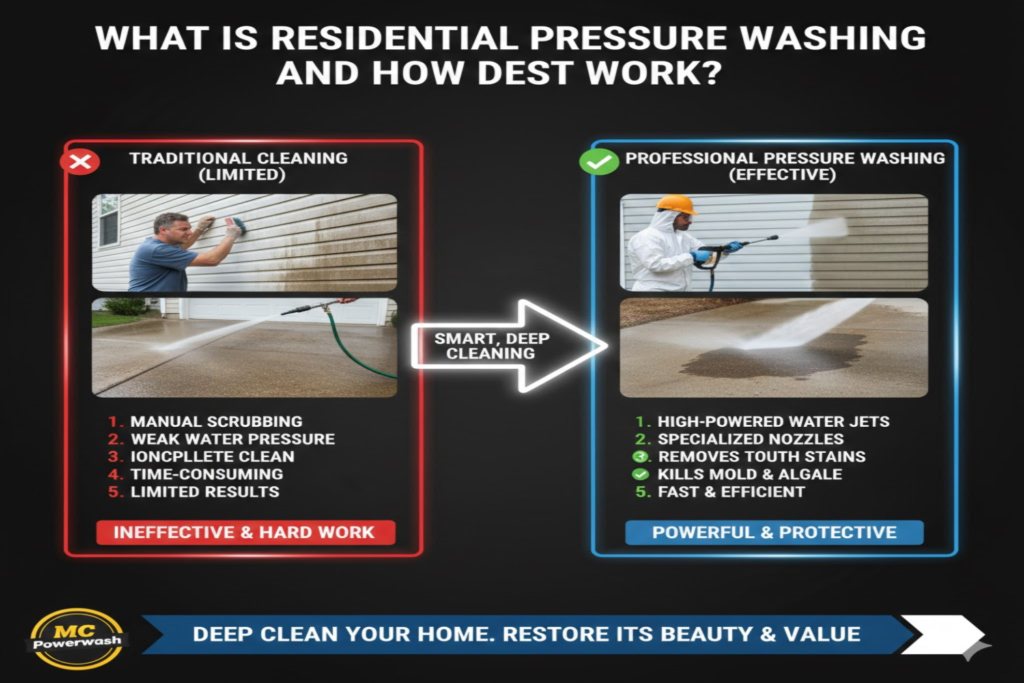
Pressure washing works by using a high-powered pump to increase ordinary water pressure to levels far beyond normal household flow, allowing it to blast away stubborn surface contaminants efficiently. It eliminates the need for intensive manual scrubbing while achieving deeper and faster cleaning results. Typical residential machines operate between 1,500 and 4,000 PSI with flow rates of 2 to 5 gallons per minute depending on the task. Biodegradable detergents, algaecides, and surfactants are often applied first to loosen mold, algae, mildew, and grease before the pressure rinse. Los Angeles Technicians carefully match pressure settings, nozzle types, and spray distance to the specific material being cleaned. This precision ensures thorough cleaning without risking damage to paint, stucco, wood, or roofing granules. Regular professional pressure washing protects exterior surfaces and maintains a well-kept appearance year after year.
How the Pressure Washing Process Works Step by Step
The process starts with a detailed inspection of the entire home exterior to evaluate surface conditions and select the safest cleaning methods. Technicians identify which areas need high pressure and which require gentle soft washing techniques. Furniture, plants, decorations, and vehicles are moved or covered to protect them from overspray. Eco-friendly cleaning solutions are applied first and allowed to dwell so they can break down dirt, mold, and stains effectively. Spraying begins from the bottom and moves upward in controlled patterns to prevent dirty water from streaking clean sections. Different nozzles are used to adjust spray angle and intensity for each surface type during the job. A final high-volume rinse removes all loosened debris and chemical residue completely.
Tools and Equipment Used
A standard pressure washing setup includes a pressure washer machine, a water source, hoses, and different spray nozzles. Some professionals also use surface cleaners or soft washing systems for roofs and fragile materials. Safety gear such as gloves and goggles is recommended to prevent injury during the cleaning process.
Benefits of Residential Pressure Washing
- Enhances the overall look of the home
- Removes harmful mold and bacteria
- Increases property value
- Prepares surfaces for painting or repairs
- Saves time compared to manual cleaning
Key Equipment Used in Residential Pressure Washing
Professional pressure washers feature gas, electric, or diesel-powered pumps that deliver steady and powerful water pressure throughout the job. Trigger-style wands with quick-connect fittings give operators precise control over the spray direction and force. Color-coded nozzles allow fast switching between Los Angeles wide fan patterns for gentle rinsing and narrow streams for tough spots. Hot-water pressure washers heat water to dissolve grease, oil, and heavy stains more quickly on concrete surfaces. Downstream or upstream chemical injectors automatically mix detergents into the water stream at the right ratio. Long extension wands and spinning surface cleaners help reach upper levels and clean large flat areas efficiently and safely.
Benefits of Getting Residential Pressure Washing Done
Professional pressure washing dramatically improves curb appeal by removing years of dirt, oxidation, and biological growth in just one session. It eliminates mold, algae, and mildew that trap moisture and cause wood rot, siding damage, and concrete deterioration over time. Cleaner walkways, steps, and driveways reduce slip hazards and improve safety during wet weather conditions. The service extends the lifespan of expensive exterior materials such as roofs, decks, fences, and siding significantly. Removing exterior spores helps lower the number of allergens entering the home through windows and vents. Surfaces are left in ideal condition for future painting, sealing, or staining projects. A freshly cleaned home boosts perceived property value and prevents far more expensive repairs later.
How Does Pressure Washing Work?
A pressure washer uses a motor or engine to pump water through a hose at high speed. The strong force of water breaks down dirt and stains from surfaces. Los Angeles Some machines also mix detergent or cleaning solutions for deep cleaning. Different pressure levels and spray nozzles are used depending on the surface type.
Types of Surfaces That Can Be Cleaned
- Concrete driveways and sidewalks
- Brick and stone walls
- Wooden decks and fences
- Vinyl siding and exterior walls
- Patios and outdoor furniture
Tools and Equipment Used
Pressure washing usually requires:
- Pressure washer machine
- Water supply and hose
- Spray gun and adjustable nozzles
- Surface cleaner attachments
- Safety gloves and goggles
Common Areas That Need Residential Pressure Washing
Siding surfaces often collect dark streaks, mildew, chalky oxidation, and pollution residue that dull their appearance over time. Roofs frequently develop black algae streaks, green moss, lichen, and trapped leaf debris that hold moisture. Driveways show persistent oil spots, tire marks, rust stains, and slippery algae growth from regular use. Patios made of concrete, pavers, or stone become green and slick with mold and dirt accumulation. Wooden or composite decks lose their original color, develop mildew, and become unsafe when wet. Exterior fences of all types fade, stain, and gather grime that ages their look quickly. Gutters and downspouts fill with leaves, twigs, dirt, and sludge that can cause overflow during rain.
Why Professional Pressure Washing Beats DIY Attempts
Professional technicians understand exactly which pressure levels, nozzles, and distances are safe for every type of home surface material. They avoid common DIY errors that cause paint peeling, water intrusion behind siding, or etching of stucco and concrete. Commercial equipment provides more consistent power, flow, and reliability than typical rental or consumer machines. Insurance coverage protects homeowners in case of any accidental damage during the service. Trained crews complete jobs faster with more uniform, streak-free results every time. Proper chemical selection, dwell times, and responsible runoff management are handled correctly. Experienced professionals often notice underlying issues like cracks or loose materials before they worsen.
Cost Factors in Residential Pressure Washing Services
The final price is mainly determined by the total square footage of all surfaces being cleaned including siding, driveway, patio, and deck areas. Multi-story homes require extra time, ladders, or lifts which increases the overall cost. Homes with heavy mold, thick algae, or years of neglected buildup need more labor and stronger solutions. Optional add-on services such as roof soft washing, gutter cleaning, or fence treatment add to the total amount. Most average single-story homes with standard exterior cleaning fall in the $250 to $900 range. Many companies offer free, no-obligation on-site estimates after a quick inspection. Investing in professional service is usually much cheaper than dealing with major repairs later.
Large Overview Table: Key Benefits of Residential Pressure Washing
| Benefit | Main Advantage | Problem It Solves | Long-Term Result | Typical Surfaces Affected | Estimated Cost Savings Potential |
| Better Curb Appeal | Removes years of dirt, oxidation & stains | Dull, neglected, aged appearance | Home looks freshly maintained & inviting | Siding, trim, front door, driveway | Increases resale value by 5–10% |
| Prevents Moisture Damage | Eliminates mold, algae & mildew that trap water | Wood rot, siding decay, foundation issues | Materials last 5–15 years longer | Siding, wood trim, roof, deck | $2,000–$10,000 saved |
| Increases Safety | Clears slippery algae, oil & leaf stains | Slip-and-fall accidents in wet conditions | Significantly fewer fall risks | Driveway, walkways, steps, patio | Reduces liability & medical costs |
| Healthier Indoor Air | Reduces exterior mold spores & allergens | Spores entering home via vents & windows | Cleaner indoor air & fewer allergy issues | Walls, roof, vents, windows | Lower medical & cleaning expenses |
| Saves Money on Repairs | Stops small problems before they become major | Expensive emergency roof, siding & foundation repairs | Thousands saved vs. reactive fixes | All exterior surfaces | $3,000–$15,000+ over 5–10 years |
| Prepares for Painting / Sealing | Creates perfectly clean surface for new coatings | Poor adhesion, peeling & wasted paint | Paint & sealants last 2–3× longer | Siding, deck, fence, concrete | 30–50% longer coating life |
| Boosts Property Value | Makes home appear well-maintained & move-in ready | Lower offers or longer time on market | Higher sale price & faster sale | Entire exterior | $5,000–$20,000 added value |
| Protects Roof Longevity | Removes algae, moss & debris that hold moisture | Premature shingle decay & granule loss | Roof lasts 5–10+ extra years | Asphalt shingles, tile roofs | $8,000–$25,000 saved on replacement |
| Improves Drainage & Prevents Leaks | Clears clogged gutters & debris from roof valleys | Water overflow, leaks & interior water damage | Fewer interior stains & structural issues | Gutters, roof valleys, downspouts | $1,500–$8,000 in leak repairs |
| Enhances Holiday & Event Appearance | Makes home look its best for gatherings & photos | Dirty or stained look during special occasions | Memorable photos & positive guest impression | All visible exterior areas | Better social & family experience |
When to Schedule Residential Pressure Washing
Spring is an excellent time to remove winter dirt, pollen, and early mold growth from surfaces. Fall cleaning eliminates fallen leaves and debris before the rainy season arrives. After major storms, pressure washing restores appearance and prevents lingering moisture issues quickly. Scheduling before listing your home for sale creates a strong first impression for buyers. Cleaning before holiday gatherings or family events makes the property look its best for guests. When visible mold, algae streaks, or dullness first appears, it is time to act. Most homes benefit from service every 1–2 years as regular preventive maintenance.
Eco-Friendly Aspects of Modern Pressure Washing
Many professional companies now use biodegradable, phosphate-free, and eco-safe cleaning solutions on every job. Runoff water is carefully directed away from storm drains and managed with grass buffers or collection systems. Soft washing techniques require much less water volume compared to traditional high-pressure methods. Chemicals are applied only where needed and in the correct dilution to minimize environmental impact. Reputable services follow all local regulations regarding water discharge and chemical use. Water reclamation equipment is becoming more common among green-focused providers. These modern practices allow effective cleaning while protecting the surrounding environment.
Conclusion
Residential pressure washing is a fast, powerful, and highly effective way to clean and protect your home’s exterior surfaces. It removes tough dirt, mold, algae, stains, and buildup using professional equipment and expert techniques. Safe methods work well on siding, roofs, concrete, wood, and other common materials without causing damage. Regular service dramatically improves curb appeal, safety, indoor air quality, and overall property value. It prevents moisture-related problems and expensive repairs before they become serious. The entire process is efficient and produces impressive before-and-after results quickly. Homeowners enjoy a noticeably cleaner, healthier, and more attractive home. It remains one of the smartest and most affordable maintenance investments available.
Frequently Asked Questions (FAQs)
1. What is residential pressure washing and how does it work?
Residential pressure washing is a professional service that uses high-pressure water between 1,500 and 4,000 PSI to clean home exteriors thoroughly. A pump pressurizes water from a standard hose and forces it through adjustable nozzles on a spray wand. Cleaning solutions are usually applied first to loosen dirt, mold, algae, and stains effectively. Technicians then rinse carefully to leave surfaces spotless and undamaged.
2. Is pressure washing safe for siding, roofs, and other surfaces?
Yes, it is completely safe when performed by trained professionals who adjust pressure for each material. Soft washing uses very low pressure combined with strong cleaners to protect roofs, vinyl siding, and stucco. High pressure is reserved only for hard surfaces like concrete driveways and patios. Experienced crews prevent any paint peeling, surface etching, or granule loss.
3. How long does a full residential pressure washing service take?
Most single-story homes are fully cleaned in 3 to 6 hours depending on size and condition. Larger two-story properties or homes with extensive hardscaping may take 6 to 10 hours. The duration varies based on dirt level, number of areas treated, and accessibility. Professional crews work efficiently and typically complete everything in one visit.
4. How often should I schedule professional pressure washing?
Every 12 to 24 months is ideal for most homes to maintain appearance and protection. Properties in humid, shaded, or high-tree areas often benefit from annual cleaning. Fall or spring is the best time to remove seasonal buildup before problems worsen. Regular service keeps surfaces cleaner and prevents long-term damage.
5. What is the difference between pressure washing and soft washing?
Pressure washing uses high water force ideal for cleaning concrete driveways, patios, and hard surfaces effectively. Soft washing applies low pressure with specialized cleaning solutions to safely treat roofs, siding, and delicate materials. Soft washing prevents damage to paint, shingles, and stucco while still removing growth. Professionals choose the appropriate method for each surface.
6. Can pressure washing remove oil stains and rust from concrete?
Yes, hot-water pressure washing combined with degreasers removes most oil stains and tire marks successfully. Rust usually requires pre-treatment with specialized chemicals for the best outcome. Older or deeply embedded stains may lighten significantly rather than disappear completely. Professional techniques deliver much cleaner results than typical DIY methods.
7. Will pressure washing make my home look freshly painted?
Yes, it removes oxidation, dirt streaks, chalking, and biological growth very effectively. Many homeowners report their house looks newly painted after the service is complete. While it is not actual paint, the cleaning creates a bright, uniform, and refreshed appearance. The improved look lasts for years with proper maintenance.
8. Is professional pressure washing environmentally friendly?
Yes, most reputable companies use biodegradable, phosphate-free cleaners and manage runoff responsibly. Soft washing reduces overall water consumption compared to high-pressure methods. Professionals follow local environmental regulations to protect waterways and soil. Eco-friendly practices are now standard in the industry.
9. How should I prepare my home before pressure washing?
Move all outdoor furniture, potted plants, decorations, and vehicles away from the walls and work areas. Close windows and doors tightly to prevent any water from entering inside the home. Cover electrical outlets, light fixtures, and other sensitive exterior items for protection. Trim back bushes or overhanging branches to provide clear access to all surfaces.
10. Why hire professionals instead of doing it myself?
Professionals use the correct pressure settings and techniques to avoid damaging surfaces permanently. They have commercial-grade equipment, proper insurance, and years of experience for superior results. The job is completed faster, more evenly, and with better attention to detail. Experts guarantee satisfaction and save homeowners from costly mistakes and repair expenses.