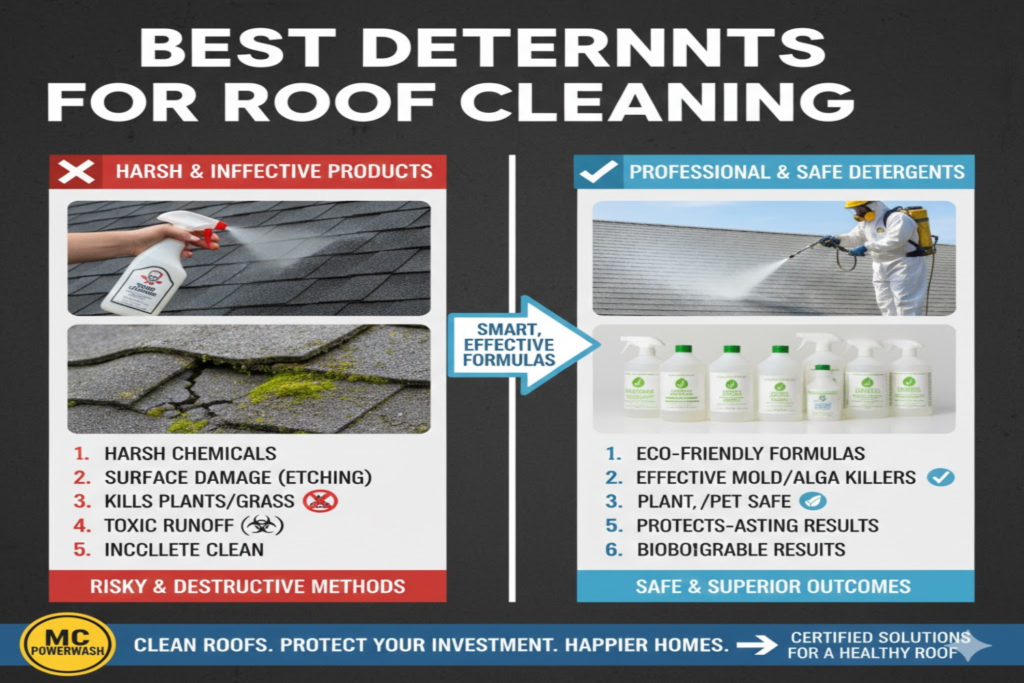
Best detergents for roof cleaning are essential for safely removing black algae, moss, lichen, smog residue, dirt, and oxidation from roofs without causing damage to shingles, tiles, or protective coatings. The right detergent, when used in soft washing (low-pressure application), kills contaminants at the root level while preserving roofing materials.
Professional-grade options typically combine a primary cleaner like sodium hypochlorite (SH) with surfactants for better adhesion and dwell time. In places like Los Angeles, constant urban smog and mild weather accelerate algae and moss growth, making effective detergents crucial. Los Angeles roofs often develop stubborn dark streaks quickly due to pollution buildup. Homeowners face faster oxidation and staining without proper cleaning solutions.
properties benefit most from chlorine-stable, eco-aware detergents that combat heavy grime. Choosing the best detergents ensures long-lasting results, roof longevity, and environmental safety. Using household bleach without dilution causes over-bleaching and damage. Skipping surfactants leads to poor adhesion and weak results. Applying in direct sun causes fast evaporation and streaking. Ignoring roof type leads to incompatible cleaners. Over-concentrating harms materials. Not rinsing properly leaves residues. Avoiding these mistakes maximizes detergent benefits.
Why the Right Detergent Matters for Roof Cleaning
The wrong detergent can strip granules from asphalt shingles, crack tiles, or leave harmful residues that accelerate deterioration. Effective detergents penetrate porous surfaces to dissolve organic growth without high pressure. They must be chlorine-stable to work with sodium hypochlorite and include surfactants for cling. Proper selection prevents voided warranties on roofing materials. Detergents also influence drying time, streak-free finishes, and plant safety. The best options balance cleaning power with gentleness. Professional results depend heavily on detergent quality.
Using household bleach without dilution causes over-bleaching and damage. Skipping surfactants leads to poor adhesion and weak results. Applying in direct sun causes fast evaporation and streaking. Ignoring roof type leads to incompatible cleaners. Over-concentrating harms materials. Not rinsing properly leaves residues. Avoiding these mistakes maximizes detergent benefits.
Sodium Hypochlorite – The Industry Standard Detergent
Sodium hypochlorite (SH), commonly known as bleach solution, is the most widely used and effective detergent base for roof cleaning. It kills black algae (Gloeocapsa magma), moss, mildew, and mold at the root level through oxidation. Professional-grade SH at 10–12.5% concentration is diluted to 1–6% for safe application on roofs. It breaks down organic contaminants quickly and rinses cleanly with low pressure. SH is affordable, readily available, and proven for decades in soft washing. When mixed properly with surfactants, it provides excellent dwell time and coverage. This detergent excels in removing smog residue and dark streaks.
Using household bleach without dilution causes over-bleaching and damage. Skipping surfactants leads to poor adhesion and weak results. Applying in direct sun causes fast evaporation and streaking. Ignoring roof type leads to incompatible cleaners. Over-concentrating harms materials. Not rinsing properly leaves residues. Avoiding these mistakes maximizes detergent benefits.
Surfactants – Essential Additives for Better Performance
Surfactants are added to SH mixes to reduce surface tension, allowing the solution to cling longer and penetrate deeply. Common options include chlorine-stable dish soaps like Ultra Gain or professional products such as Southern Drawl and Fresh Wash. Surfactants prevent runoff on sloped roofs, ensuring even cleaning. They mask chlorine odor and improve overall effectiveness. Without surfactants, the solution beads up and rolls off quickly. The best surfactants are thick, stable, and eco-friendly. They make detergents far more efficient for roof applications.
Using household bleach without dilution causes over-bleaching and damage. Skipping surfactants leads to poor adhesion and weak results. Applying in direct sun causes fast evaporation and streaking. Ignoring roof type leads to incompatible cleaners. Over-concentrating harms materials. Not rinsing properly leaves residues. Avoiding these mistakes maximizes detergent benefits.
Eco-Friendly Alternatives to Traditional Bleach
For environmentally conscious homeowners, oxygen-based cleaners like sodium percarbonate or hydrogen peroxide offer bleach-free options. These break down into water, oxygen, and soda ash, minimizing runoff impact. Products like Wash Safe Roof Wash or Roof Cleaner OX use organic oxygen bleach for safe, effective results. They are ideal for sensitive plants and areas with strict environmental rules. While slower-acting than SH, they avoid chlorine concerns. Eco-friendly detergents work well on lighter buildup. They provide a sustainable choice without sacrificing cleaning power.
Using household bleach without dilution causes over-bleaching and damage. Skipping surfactants leads to poor adhesion and weak results. Applying in direct sun causes fast evaporation and streaking. Ignoring roof type leads to incompatible cleaners. Over-concentrating harms materials. Not rinsing properly leaves residues. Avoiding these mistakes maximizes detergent benefits.
Commercial Roof Cleaning Products and Blends
- Professional blends like 30 Seconds Outdoor Cleaner, Wet & Forget, and Roof-A-Cide combine algaecides, surfactants, and mild cleaners for easy application.
- Roof-A-Cide is manufacturer-approved for preventing algae without damage.
- Spray & Forget uses no-rinse formulas that activate with rain.
- These ready-to-use or concentrated products simplify the process.
- They often include plant-safe ingredients and long-term prevention.
- Commercial detergents suit DIY or professional use.
- Many offer fragrance masking for better user experience.
Mix Ratios for Effective Detergent Solutions
For 12.5% SH, a common roof mix is 1:1 to 1:4 (SH to water) for 6–3% final strength, plus 1–2 oz surfactant per gallon. Lower concentrations (1–3%) suit lighter buildup or sensitive roofs. Always test small areas first. Add surfactants last to avoid foaming issues. Proper ratios ensure kill power without over-drying surfaces. Professional mix calculators help achieve precise strengths. Correct dilution maximizes detergent effectiveness safely.
How to Choose the Best Detergent for Your Roof Type
Asphalt shingles require low-concentration SH (1–3%) with gentle surfactants to avoid granule loss. Tile roofs tolerate stronger mixes but benefit from eco-friendly options. Metal roofs need non-corrosive detergents without acids. Los Angeles Flat roofs may require higher dwell-time formulas. Consider local pollution levels when selecting strength. Always check manufacturer guidelines for compatibility. The best detergent matches your roof material and contaminant type.
Using household bleach without dilution causes over-bleaching and damage. Skipping surfactants leads to poor adhesion and weak results. Applying in direct sun causes fast evaporation and streaking. Ignoring roof type leads to incompatible cleaners. Over-concentrating harms materials. Not rinsing properly leaves residues. Avoiding these mistakes maximizes detergent benefits.
Benefits of Using High-Quality Detergents
- Quality detergents extend roof lifespan by preventing root-level damage from algae and moss.
- They reduce oxidation and maintain energy efficiency through reflective surfaces.
- Proper cleaners minimize water usage and runoff pollution.
- They provide streak-free, long-lasting results with fewer reapplications.
- Safe detergents protect landscaping and indoor air quality.
- Cost-effective prevention avoids expensive repairs.
- The right choice delivers superior performance and value.
Safety Considerations When Using Roof Detergents
Always wear protective gear including gloves, goggles, and respirators when mixing strong SH. Ventilate areas and avoid skin contact with concentrated solutions. Protect nearby plants with tarps or water pre-soaking. Rinse thoroughly to prevent residue buildup. Use biodegradable surfactants for environmental safety. Follow label instructions precisely. Professional application minimizes risks significantly.
Using household bleach without dilution causes over-bleaching and damage. Skipping surfactants leads to poor adhesion and weak results. Applying in direct sun causes fast evaporation and streaking. Ignoring roof type leads to incompatible cleaners. Over-concentrating harms materials. Not rinsing properly leaves residues. Avoiding these mistakes maximizes detergent benefits.
DIY vs Professional Detergent Application
DIY mixes work for small jobs but risk uneven coverage or damage. Professionals use precise equipment for consistent application and dwell time. They select detergents based on roof inspection. Experts handle disposal and runoff properly. DIY saves money but may void warranties. Professional service ensures best results. Many homeowners combine DIY prevention with pro cleanings.
Professionals select and mix detergents precisely for your roof. They use commercial-grade products and equipment safely. Experts achieve uniform, long-lasting results. Scheduled services prevent buildup effectively. Proper technique avoids damage risks. Professional care delivers superior protection. Contact certified cleaners for optimal results.
Common Mistakes to Avoid with Roof Detergents
Using household bleach without dilution causes over-bleaching and damage. Skipping surfactants leads to poor adhesion and weak results. Applying in direct sun causes fast evaporation and streaking. Ignoring roof type leads to incompatible cleaners. Over-concentrating harms materials. Not rinsing properly leaves residues. Avoiding these mistakes maximizes detergent benefits.
Detergent Comparison Table – Roof Cleaning Options
| Detergent Type | Primary Ingredient | Strength Level | Best For | Eco-Friendly | Cost Range | Effectiveness Rating |
| Sodium Hypochlorite (SH) | Bleach solution | 1–6% diluted | Algae, moss, heavy grime | Low | Low | Excellent |
| Oxygen-Based (Percarbonate) | Sodium percarbonate | Varies | Mild buildup, eco jobs | High | Medium | Good |
| Commercial Blends | Mixed algaecides | Ready-to-use | Easy application | Medium | Medium-High | Very Good |
| Surfactant-Enhanced SH | SH + Gain/Fresh Wash | 2–4% | Cling, dwell time | Low-Medium | Low | Excellent |
| No-Rinse Formulas | Spray & Forget style | Low | Light maintenance | High | Medium | Good |
Combine Detergents with Preventive Treatments
After cleaning, apply zinc or copper strips to inhibit future algae naturally. Use algaecide sealants for extended protection. Trim trees to reduce shade and debris. Keep gutters clear to avoid backup. Schedule regular inspections. Combine detergents with maintenance for maximum longevity. Prevention multiplies detergent effectiveness.
Professionals select and mix detergents precisely for your roof. They use commercial-grade products and equipment safely. Experts achieve uniform, long-lasting results. Scheduled services prevent buildup effectively. Proper technique avoids damage risks. Professional care delivers superior protection. Contact certified cleaners for optimal results.
Invest in Professional Roof Cleaning Services
Professionals select and mix detergents precisely for your roof. They use commercial-grade products and equipment safely. Experts achieve uniform, long-lasting results. Scheduled services prevent buildup effectively. Proper technique avoids damage risks. Professional care delivers superior protection. Contact certified cleaners for optimal results.
Conclusion
The best detergents for roof cleaning include sodium hypochlorite-based solutions with surfactants for powerful algae and moss removal, oxygen-based eco-friendly alternatives for sustainable options, and commercial blends for convenience. Proper selection and mixing ratios ensure safe, effective soft washing without damaging roofing materials. In challenging climates, high-quality detergents combat rapid buildup and extend roof life significantly. Spring and fall provide ideal conditions for application.
Los Angeles Regular use of the right detergents prevents costly damage, maintains appearance, and improves energy efficiency. Investing in effective detergents and professional application is essential for long-term roof health. Professionals select and mix detergents precisely for your roof. They use commercial-grade products and equipment safely. Experts achieve uniform, long-lasting results. Scheduled services prevent buildup effectively. Proper technique avoids damage risks. Professional care delivers superior protection. Contact certified cleaners for optimal results.
Frequently Asked Questions (FAQs)
1. What is the best detergent for roof cleaning?
Sodium hypochlorite (SH) at 1–6% diluted with surfactants like Gain or professional blends is the most effective. It kills algae and moss at the root without high pressure. SH provides reliable results in polluted areas. Add surfactants for better cling and performance.
2. Is household bleach safe for roof cleaning?
Yes, when diluted properly (50/50 or less) and mixed with surfactant. It works similarly to professional SH but may lack consistency. Avoid undiluted bleach to prevent damage. Professional-grade is usually stronger and more reliable.
3. What surfactants work best with roof detergents?
Chlorine-stable options like Ultra Gain dish soap or Southern Drawl are excellent. They improve adhesion and mask odors. Professional surfactants like Fresh Wash provide superior cling. Use 1–2 oz per gallon for optimal results.
4. Are eco-friendly detergents effective for roofs?
Yes, oxygen-based cleaners like sodium percarbonate or Wash Safe Roof Wash remove buildup safely. They are biodegradable and plant-friendly. Results may take longer than SH but avoid chlorine concerns. Ideal for light to moderate grime.
5. How do I mix SH detergent for roof cleaning?
For 12.5% SH, use 1:1 to 1:4 ratio with water for 6–3% strength, plus surfactant. Test small areas first. Lower strengths suit sensitive roofs. Precise mixing ensures safety and effectiveness.
6. Can I use commercial roof cleaners like Wet & Forget?
Yes, they are convenient no-rinse options for mild buildup. Apply and let rain activate over months. Effective for prevention after initial cleaning. Great for maintenance between professional services.
7. Will strong detergents damage asphalt shingles?
Over-concentrated SH can cause granule loss or cracking. Always dilute properly and use low pressure. Surfactants help control application. Follow manufacturer guidelines to avoid warranty issues.
8. How long do roof detergent results last?
With proper soft washing, results last 12–36 months depending on exposure. Annual cleaning in high-pollution areas extends cleanliness. Preventive additives like zinc strips help longer. Consistent care maintains results.
9. Are professional detergents better than DIY?
Yes, pros use precise mixes, commercial surfactants, and equipment for even coverage. They avoid common mistakes and ensure safety. Results last longer with professional application. Ideal for heavy buildup.
10. What detergent prevents algae regrowth best?
SH-based mixes with algaecide additives or Roof-A-Cide provide long-term prevention. Zinc strips combined with cleaning inhibit growth naturally. Regular maintenance stops recurrence effectively. Choose based on roof type and environment.