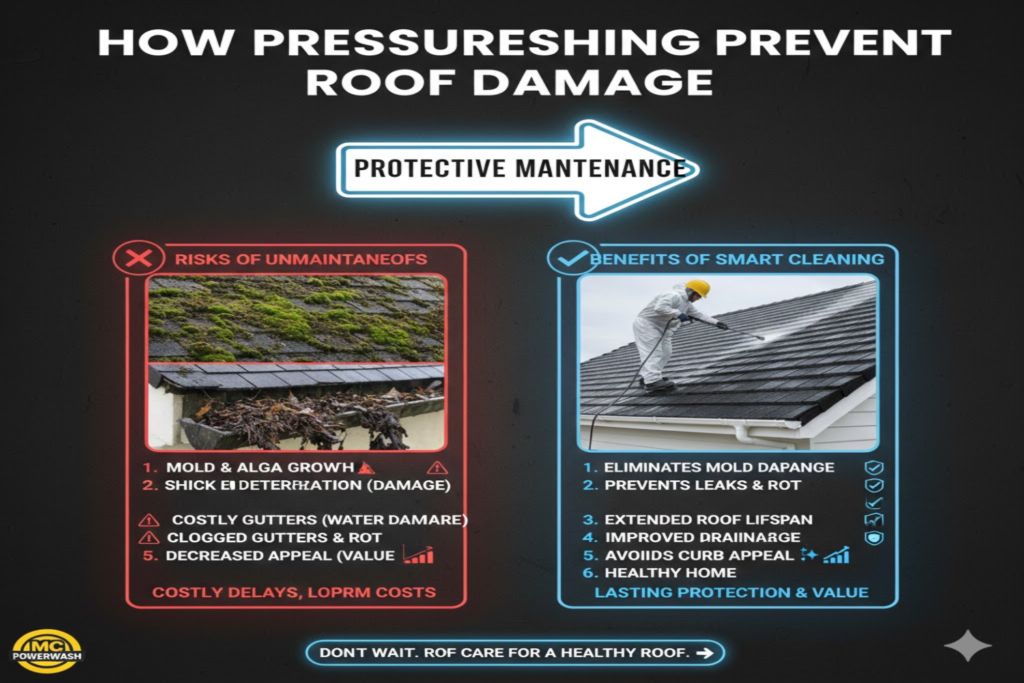
How pressure washing can prevent roof damage is a key question for homeowners in sunny, polluted climates where roofs face constant threats from black algae, moss, smog buildup, bird droppings, oxidation, and dirt accumulation. When done correctly—using low-pressure soft washing techniques—pressure washing removes harmful contaminants before they cause permanent harm to shingles, tiles, or other roofing materials.
Regular cleaning stops algae roots from penetrating surfaces, prevents moisture trapping that leads to wood rot, and halts granule loss on asphalt shingles. In places like Los Angeles, heavy urban smog and vehicle exhaust settle rapidly, creating dark streaks that accelerate material breakdown. Los Angeles roofs frequently develop black algae on shaded sections due to mild temperatures and airborne pollutants. homeowners see faster oxidation and staining without routine maintenance. properties remain structurally sound longer with scheduled soft washing.
Proper pressure washing (meaning soft washing) is one of the most effective preventive measures against premature roof failure and costly replacements. Dark residue increases heat absorption and promotes algae growth. Soft washing removes these layers before permanent chemical damage sets in. Clean surfaces resist pollutant adhesion better after treatment. In heavily polluted areas, annual or biennial cleaning is often necessary. Prevention through regular washing counters urban environmental stress effectively.
Understanding Soft Washing vs Traditional Pressure Washing
Soft washing uses very low pressure (under 500 PSI) combined with specialized cleaning solutions to dissolve and rinse away contaminants. Traditional high-pressure washing (over 1500–3000 PSI) blasts surfaces aggressively and often causes immediate or hidden damage. Soft washing targets the root cause of most roof problems—organic growth and pollution—without stripping protective granules or cracking tiles. The method applies eco-friendly detergents that dwell on the surface, killing algae and moss at the cellular level.
Gentle rinsing removes loosened debris safely without forcing water under shingles. Manufacturers and roofing experts overwhelmingly recommend soft washing over high-pressure methods. This preventive approach significantly reduces long-term roof deterioration. Dark residue increases heat absorption and promotes algae growth. Soft washing removes these layers before permanent chemical damage sets in. Clean surfaces resist pollutant adhesion better after treatment. In heavily polluted areas, annual or biennial cleaning is often necessary. Prevention through regular washing counters urban environmental stress effectively.
How Algae and Moss Cause Roof Damage
Black algae (Gloeocapsa magma) appears as dark streaks and embeds roots into shingle granules or tile pores. These roots create micro-cracks that allow water penetration during rain. Moss holds moisture against the surface for extended periods, promoting wood rot in the decking below. Both organisms trap heat, raising roof temperatures and accelerating UV degradation. Left untreated, algae and moss weaken the entire roofing system over just a few years.
Regular soft washing eliminates growth before roots can cause structural issues. Prevention through cleaning is far cheaper than repairing rot or replacing damaged sections. Dark residue increases heat absorption and promotes algae growth. Soft washing removes these layers before permanent chemical damage sets in. Clean surfaces resist pollutant adhesion better after treatment. In heavily polluted areas, annual or biennial cleaning is often necessary. Prevention through regular washing counters urban environmental stress effectively.
Preventing Granule Loss on Asphalt Shingles
Asphalt shingles rely on a protective layer of ceramic granules to shield the asphalt core from UV rays and weathering. Algae and dirt buildup hold moisture, causing repeated expansion and contraction that loosens granules. Los Angeles Once granules fall off, the exposed asphalt cracks, curls, and fails prematurely. Soft washing removes surface contaminants without dislodging granules the way high-pressure methods do. Clean shingles maintain their protective coating longer and resist weathering better. Preventing granule loss extends shingle lifespan by 5–10 years in many cases. Consistent soft washing is essential for asphalt roof longevity.
Stopping Oxidation and Surface Breakdown
- Oxidation creates chalky, white residue when Los Angeles rays and pollutants break down roofing coatings.
- Dark algae streaks absorb more sunlight, intensifying heat and speeding chemical degradation.
- Oxidized surfaces become porous, allowing more dirt and moisture to penetrate.
- Soft washing removes the dark film that accelerates oxidation, restoring a reflective surface.
- Cleaner roofs stay cooler and resist chalking longer.
- This preventive step reduces brittleness and cracking over time.
- Regular cleaning halts the oxidation cycle before it becomes irreversible.
Preventing Water Intrusion and Wood Rot
Contaminants like algae, moss, and dirt create a moisture-trapping layer on the roof. Trapped water seeps into small cracks, reaches the underlayment, and eventually causes wood rot in the decking or rafters. Rot weakens the structural integrity and leads to sagging or leaks. Soft washing eliminates the moisture-holding growth and allows the roof to dry properly after rain. Clean surfaces shed water faster and reduce pooling risks. Preventing hidden rot avoids thousands in structural repairs. Early cleaning protects the entire roof system from water-related failure.
Reducing Thermal Stress and Energy Costs
- Dark algae and smog buildup absorb solar heat, raising roof temperatures by 20–50°F compared to clean surfaces.
- Higher heat stresses materials, causing faster expansion, contraction, and cracking.
- Hot roofs transfer heat into attics, increasing air conditioning demands.
- Soft washing restores light, reflective surfaces that bounce sunlight away.
- Cooler roofs experience less thermal cycling and material fatigue.
- Homeowners save noticeably on cooling costs year after year.
- Preventive cleaning improves both roof durability and home energy efficiency.
Protecting Roof Warranties and Insurance Claims
Many shingle and tile manufacturers void warranties if high-pressure washing damages the surface or removes granules. Soft washing complies with most warranty guidelines by using low pressure and approved cleaners. Clean roofs are less likely to develop leaks that trigger insurance claims. Documented maintenance history strengthens claims when damage does occur. Preventive soft washing preserves warranty coverage and insurance eligibility. Regular professional service provides proof of proper care. This documentation saves money during claims or sales.
Dark residue increases heat absorption and promotes algae growth. Soft washing removes these layers before permanent chemical damage sets in. Clean surfaces resist pollutant adhesion better after treatment. In heavily polluted areas, annual or biennial cleaning is often necessary. Prevention through regular washing counters urban environmental stress effectively.
How Pollution Accelerates Roof Wear
Constant exposure to vehicle exhaust, industrial particles, and smog creates an abrasive film on roofs. Pollutants chemically react with roofing coatings, causing etching and breakdown. Dark residue increases heat absorption and promotes algae growth. Soft washing removes these layers before permanent chemical damage sets in. Clean surfaces resist pollutant adhesion better after treatment. In heavily polluted areas, annual or biennial cleaning is often necessary.
Prevention through regular washing counters urban environmental stress effectively. Dark residue increases heat absorption and promotes algae growth. Soft washing removes these layers before permanent chemical damage sets in. Clean surfaces resist pollutant adhesion better after treatment. In heavily polluted areas, annual or biennial cleaning is often necessary. Prevention through regular washing counters urban environmental stress effectively.
Safety Benefits of Preventive Roof Cleaning
Slippery algae-covered roofs create dangerous conditions for anyone accessing them. Accumulated debris adds weight that stresses hangers and flashing. Clean roofs reduce slip hazards and structural strain. Professional soft washing is performed safely from the ground or with extendable poles. Removing hazards prevents falls and injuries during future inspections. Preventive cleaning maintains a safer roof environment year-round. Homeowners avoid liability risks associated with neglected roofs.
Extending Roof Lifespan Through Regular Cleaning
- Roofs that receive timely soft washing often last 10–20 years longer than neglected ones.
- Cleaning prevents compounding damage from algae, oxidation, and moisture.
- Each preventive service resets the deterioration clock.
- Consistent maintenance avoids the need for full replacement.
- Clean roofs perform better against wind, heat, and rain.
- Long-term savings far exceed cleaning costs.
- Investing in regular soft washing is one of the most cost-effective roof protection strategies.
Soft Washing Process for Maximum Prevention
Professionals begin with a detailed roof inspection to assess buildup and damage. Surrounding plants, windows, and landscaping are protected with tarps. A biodegradable cleaning solution is applied using low-pressure sprayers. The mixture dwells for 10–20 minutes to kill growth at the root. Gentle rinsing removes all loosened contaminants without high force. Final inspection confirms complete coverage and no streaks. Post-treatment algaecide may be applied for extended protection.
Dark residue increases heat absorption and promotes algae growth. Soft washing removes these layers before permanent chemical damage sets in. Clean surfaces resist pollutant adhesion better after treatment. In heavily polluted areas, annual or biennial cleaning is often necessary. Prevention through regular washing counters urban environmental stress effectively.
Common Myths About Pressure Washing Roofs
High-pressure washing cleans better than low-pressure methods (false—high pressure causes damage). All pressure washing damages roofs (false—soft washing is safe). DIY pressure washing saves money (false—mistakes lead to costly repairs). Cleaning is only cosmetic (false—it prevents structural failure). One cleaning lasts forever (false—regular maintenance is required). Understanding these myths helps homeowners choose proper preventive care. Soft washing debunks most misconceptions with proven results.
Roof Damage Prevention Comparison Table – Soft Washing Impact
| Contaminant / Issue | Without Cleaning | With Regular Soft Washing | Prevention Benefit | Long-Term Savings Potential |
| Black Algae | Deep root penetration, cracking | Killed at root, streaks removed | Stops micro-cracks and leaks | High |
| Granule Loss | Exposed asphalt, fast aging | Granules preserved, no stripping | Extends shingle life 5–10+ years | Very High |
| Moss / Lichen | Tile lifting, water entry | Growth eliminated safely | Prevents gaps and rot | High |
| Oxidation / Chalkiness | Brittle surfaces, accelerated wear | Reflective surface restored | Reduces thermal stress | Medium-High |
| Moisture Trapping | Wood rot, mold in decking | Moisture sheds quickly | Avoids structural failure | Very High |
| Smog / Pollution Buildup | Chemical etching, dark film | Layers removed before permanent damage | Maintains coating integrity | High |
| Energy Cost Increase | Higher heat absorption | Cooler roof, better reflection | Lowers cooling bills noticeably | Medium |
Combine Roof Cleaning with Other Maintenance
Trim overhanging tree branches to reduce shade and debris drop. Install zinc or copper strips along ridges to deter algae regrowth naturally. Keep gutters clean to prevent backup onto roof edges. Apply roof sealants after soft washing when recommended. Direct downspouts far from foundation walls. Schedule annual inspections to catch early issues. Comprehensive maintenance multiplies the preventive benefits of roof cleaning.
Dark residue increases heat absorption and promotes algae growth. Soft washing removes these layers before permanent chemical damage sets in. Clean surfaces resist pollutant adhesion better after treatment. In heavily polluted areas, annual or biennial cleaning is often necessary. Prevention through regular washing counters urban environmental stress effectively.
Choose Professional Soft Washing Services
Certified professionals use correct pressure, solutions, and techniques every time. They protect landscaping and avoid runoff issues. Experts identify hidden damage before it worsens. Scheduled cleanings provide consistent protection year after year. Proper service avoids warranty violations and safety risks. Professional soft washing delivers measurable prevention results. Contact a trusted roof cleaning company for lasting roof protection.
Conclusion
How pressure washing can prevent roof damage becomes clear when using proper soft washing methods to remove algae, moss, smog, and dirt before they cause granule loss, oxidation, moisture trapping, or structural rot. Regular low-pressure cleaning stops contaminants at the root, preserves warranties, reduces energy costs, and extends roof lifespan significantly. In challenging climates, preventive soft washing every 12–24 months is essential to combat rapid buildup.
Spring and fall offer ideal conditions for thorough, long-lasting protection. Delaying cleaning turns minor maintenance into major repairs or full replacement. Choosing professional soft washing is one of the smartest investments for any roof’s health and your home’s value.Dark residue increases heat absorption and promotes algae growth. Soft washing removes these layers before permanent chemical damage sets in. Clean surfaces resist pollutant adhesion better after treatment. In heavily polluted areas, annual or biennial cleaning is often necessary. Prevention through regular washing counters urban environmental stress effectively.
Frequently Asked Questions (FAQs)
1. How does soft washing prevent roof damage?
Soft washing removes algae, moss, and dirt that trap moisture and weaken materials. Low pressure avoids granule loss or cracking that high pressure causes. It kills growth at the root for longer protection. Regular treatments stop rot and extend roof life significantly.
2. Can high-pressure washing cause roof damage?
Yes, high pressure strips granules, cracks tiles, and forces water under shingles. This leads to leaks, rot, and premature failure. Soft washing is the safe alternative recommended by experts. It cleans effectively without harming surfaces.
3. How often should I soft wash to prevent damage?
Every 12 to 24 months is ideal for most roofs in polluted areas. Shaded or high-smog roofs benefit from annual cleaning. Consistent scheduling prevents buildup before damage starts. Professionals adjust frequency based on your roof’s condition.
4. Does cleaning really stop wood rot under the roof?
Yes, by removing moisture-trapping algae and moss that cause rot. Clean surfaces dry faster and shed water properly. Prevention eliminates the conditions mold needs to thrive. Regular soft washing protects decking and rafters long-term.
5. Will soft washing save money on energy bills?
Yes, clean roofs reflect more sunlight and stay cooler. This reduces heat transfer into attics and lowers air conditioning use. Removing dark algae and smog improves thermal performance. Many homeowners notice savings in hot months.
6. Does soft washing protect roof warranties?
Yes, most manufacturers approve low-pressure soft washing methods. High-pressure washing often voids warranties due to damage. Professional service provides documentation of proper care. It maintains warranty coverage for peace of mind.
7. How does algae cause granule loss?
Algae roots and trapped moisture loosen granules over time. Repeated wet-dry cycles accelerate the process. Soft washing removes algae before significant loss occurs. Prevention keeps the protective layer intact longer.
8. Is soft washing safe for tile roofs?
Yes, low pressure and gentle cleaners will not crack or loosen tiles. It removes moss and lichen without lifting edges. Professionals adjust solutions for tile surfaces. Safe cleaning preserves tile integrity and appearance.
9. Can I prevent oxidation with regular cleaning?
Yes, removing dark buildup reduces heat absorption and slows oxidation. Clean surfaces resist chalking and stay more reflective. Soft washing halts the chemical breakdown process. Consistent care keeps roofs looking and performing better.
10. Why hire professionals for preventive roof washing?
Professionals use correct pressure, safe solutions, and proper techniques to avoid damage. They spot early issues and protect landscaping. DIY attempts often cause harm or incomplete results. Expert service ensures maximum prevention and value.