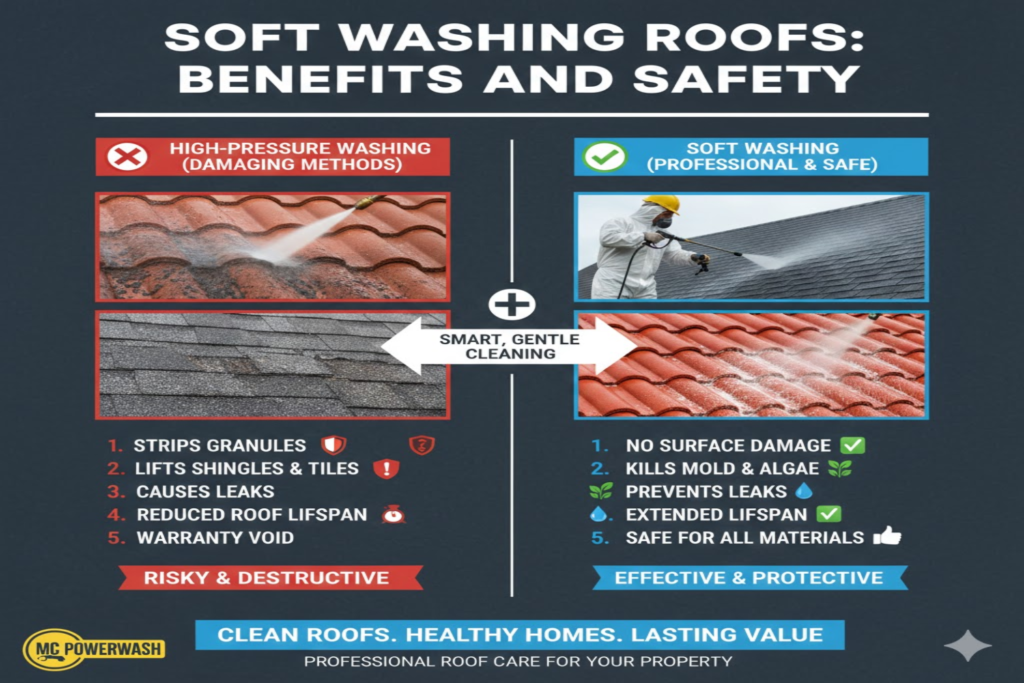
Soft washing roofs is the safest and most effective method to clean residential roofs without causing damage to shingles, tiles, or protective coatings. This low-pressure technique uses specialized cleaning solutions to remove black algae, moss, lichen, dirt, smog residue, and oxidation gently. Unlike high-pressure washing, soft washing avoids stripping granules, cracking tiles, or forcing water under roofing materials.
In places like Los Angeles, heavy urban smog and constant pollutants create dark streaks quickly on roofs. Homeowners frequently deal with black algae growth due to mild temperatures and airborne grime. Los Angeles roofs show faster buildup of oxidation and staining without proper care. properties benefit greatly from regular soft washing to maintain appearance and structure. Professional soft washing delivers long-lasting results while protecting roof integrity and surrounding landscaping.
It removes tough contaminants like algae and smog residue without risking damage to shingles, tiles, or warranties. Spring and fall offer ideal conditions for superior dwell time and lasting results. Summer works with careful timing, while winter should be avoided due to drying and rain issues. Regular professional soft washing extends roof life, improves energy efficiency, enhances appearance, and prevents expensive repairs. Choosing soft washing is one of the smartest decisions for roof maintenance in challenging climates.
Why Choose Soft Washing for Roofs
Soft washing applies cleaning agents at low pressure, typically under 500 PSI, to dissolve contaminants at the root level. It kills algae and moss without physically scrubbing or blasting surfaces. The method prevents granule loss on asphalt shingles and avoids micro-cracks in tile roofs. Solutions are formulated to break down organic growth safely and thoroughly. Soft washing reduces the risk of water intrusion into the roof deck or attic. It preserves the manufacturer’s warranty on many roofing materials. This approach extends roof lifespan significantly compared to aggressive cleaning methods.
It removes tough contaminants like algae and smog residue without risking damage to shingles, tiles, or warranties. Spring and fall offer ideal conditions for superior dwell time and lasting results. Summer works with careful timing, while winter should be avoided due to drying and rain issues. Regular professional soft washing extends roof life, improves energy efficiency, enhances appearance, and prevents expensive repairs. Choosing soft washing is one of the smartest decisions for roof maintenance in challenging climates.
Key Benefits of Soft Washing Roofs
Removes black algae, moss, and lichen without damaging roofing surfaces. Restores original color and improves overall roof appearance dramatically. Prevents premature aging caused by trapped moisture and oxidation. Los Angeles Enhances energy efficiency by allowing better heat reflection from clean surfaces. Reduces indoor allergens by eliminating mold spores and pollen buildup. Increases property value through improved curb appeal and well-maintained exteriors. Saves money long-term by avoiding expensive roof repairs or early replacement.
It removes tough contaminants like algae and smog residue without risking damage to shingles, tiles, or warranties. Spring and fall offer ideal conditions for superior dwell time and lasting results. Summer works with careful timing, while winter should be avoided due to drying and rain issues. Regular professional soft washing extends roof life, improves energy efficiency, enhances appearance, and prevents expensive repairs. Choosing soft washing is one of the smartest decisions for roof maintenance in challenging climates.
How Soft Washing Improves Roof Longevity
Soft washing eliminates algae roots that penetrate and weaken shingles or tiles over time. It stops moisture trapping that leads to wood rot, mold, and structural damage underneath. Regular soft washing prevents granule loss and surface Los Angeles erosion on asphalt roofs. The method reduces oxidation and chalking caused by pollution exposure. Clean roofs resist future buildup better, requiring less frequent maintenance. Proper soft washing protects underlayment and flashing from unnecessary wear. Overall, it can add years to the functional life of any roof type.
It removes tough contaminants like algae and smog residue without risking damage to shingles, tiles, or warranties. Spring and fall offer ideal conditions for superior dwell time and lasting results. Summer works with careful timing, while winter should be avoided due to drying and rain issues. Regular professional soft washing extends roof life, improves energy efficiency, enhances appearance, and prevents expensive repairs. Choosing soft washing is one of the smartest decisions for roof maintenance in challenging climates.
Safety Advantages of Soft Washing
- Low-pressure application greatly reduces risk of injury to workers and bystanders.
- It eliminates the danger of high-pressure streams causing slips, falls, or equipment mishaps.
- Soft washing protects delicate roof components like vents, skylights, and solar panels.
- Eco-friendly biodegradable solutions minimize harm to plants, lawns, and nearby water sources.
- Technicians stay safely on the ground or use extendable poles when possible.
- Reduced runoff prevents soil erosion and environmental contamination.
- Soft washing is the preferred method recommended by roofing manufacturers for safety.
Soft Washing Process Step by Step
Professionals first assess the roof condition and identify problem areas. Surrounding plants and landscaping are protected with tarps or water shields. A specialized cleaning solution is applied using low-pressure sprayers. The mixture dwells for the recommended time to break down contaminants. Gentle rinsing removes loosened debris without high force. Final inspection ensures complete coverage and streak-free results. Post-cleaning treatment may include algaecide application for longer protection.
It removes tough contaminants like algae and smog residue without risking damage to shingles, tiles, or warranties. Spring and fall offer ideal conditions for superior dwell time and lasting results. Summer works with careful timing, while winter should be avoided due to drying and rain issues. Regular professional soft washing extends roof life, improves energy efficiency, enhances appearance, and prevents expensive repairs. Choosing soft washing is one of the smartest decisions for roof maintenance in challenging climates.
Soft Washing vs Pressure Washing Comparison
Soft washing uses low pressure and chemical action to clean safely and effectively. Pressure washing relies on high force that can damage shingles, tiles, and coatings. Soft methods kill growth at the root level for longer-lasting results. High-pressure techniques often cause granule loss and surface erosion. Soft washing is gentler on roof warranties and structural integrity. Pressure washing increases risk of water intrusion and hidden leaks. Soft washing is widely considered superior for residential roof cleaning.
It removes tough contaminants like algae and smog residue without risking damage to shingles, tiles, or warranties. Spring and fall offer ideal conditions for superior dwell time and lasting results. Summer works with careful timing, while winter should be avoided due to drying and rain issues. Regular professional soft washing extends roof life, improves energy efficiency, enhances appearance, and prevents expensive repairs. Choosing soft washing is one of the smartest decisions for roof maintenance in challenging climates.
Common Contaminants Soft Washing Removes
Black algae streaks that create dark, unsightly lines on roofs. Moss and lichen patches that lift tiles and hold moisture. Smog residue and pollution buildup that accelerate oxidation. Bird droppings with acidic properties that etch surfaces. Dirt, pollen, and organic debris that promote mold growth. White chalky oxidation from UV and chemical breakdown.
Tree sap, leaf stains, and airborne grime that dull appearance. This low-pressure technique uses specialized cleaning solutions to remove black algae, moss, lichen, dirt, smog residue, and oxidation gently. Unlike high-pressure washing, soft washing avoids stripping granules, cracking tiles, or forcing water under roofing materials.
Eco-Friendly Benefits of Soft Washing
- Biodegradable cleaning solutions break down safely in the environment.
- Low-pressure application reduces water usage compared to traditional methods.
- Minimal runoff prevents harmful chemicals from entering storm drains.
- Plant-safe formulas protect landscaping during and after treatment.
- Soft washing avoids physical damage that requires replacement materials.
- It supports sustainable home maintenance practices overall.
- Environmentally conscious homeowners prefer this gentler approach.
Soft Washing Equipment and Solutions
Professionals use specialized low-pressure pumps and wide-tip nozzles for even coverage. Cleaning agents are typically sodium hypochlorite-based or eco-friendly alternatives. Proportioners mix solutions accurately to avoid overuse or underuse. Extension poles and ground-based sprayers keep workers safe. Protective gear and containment tools prevent accidental spills. Quality equipment ensures consistent, professional-grade results. Proper tools make soft washing reliable and repeatable.
It removes tough contaminants like algae and smog residue without risking damage to shingles, tiles, or warranties. Spring and fall offer ideal conditions for superior dwell time and lasting results. Summer works with careful timing, while winter should be avoided due to drying and rain issues. Regular professional soft washing extends roof life, improves energy efficiency, enhances appearance, and prevents expensive repairs. Choosing soft washing is one of the smartest decisions for roof maintenance in challenging climates.
Soft Washing Roof Season Comparison Table
| Season | Temp Range | Rainfall | Biggest Advantages | Main Challenges | Best For | Rating |
| Spring | 60–80°F | Very low | Mild temps, excellent dwell time | Rare late rain | Full roof treatment | Excellent |
| Summer | 75–95°F+ | Almost none | Fast drying, no rain delays | Heat speeds evaporation | Quick jobs | Good |
| Fall | 65–85°F | Very low | Ideal conditions, clears summer grime | Light leaf debris | Long-lasting results | Excellent |
| Winter | 50–70°F | Occasional | Less urgent growth | Slow drying, rain risks | Minor touch-ups only | Poor |
Protect Your Roof Investment with Soft Washing
Soft washing prevents small issues from turning into major structural problems. Regular treatments keep roofs performing at their best year after year. It maintains warranty compliance for most roofing products. Professional soft washing delivers consistent, high-quality outcomes. The method balances cleaning power with maximum safety. Homeowners gain peace of mind with a well-protected roof. Investing in soft washing pays off through durability and savings.
It removes tough contaminants like algae and smog residue without risking damage to shingles, tiles, or warranties. Spring and fall offer ideal conditions for superior dwell time and lasting results. Summer works with careful timing, while winter should be avoided due to drying and rain issues. Regular professional soft washing extends roof life, improves energy efficiency, enhances appearance, and prevents expensive repairs. Choosing soft washing is one of the smartest decisions for roof maintenance in challenging climates.
Choose Professional Soft Washing Services
Trained professionals understand roof materials and use correct techniques. They apply solutions safely and rinse effectively every time. Experts protect your home, plants, and property during the process. Scheduled soft washing ensures ongoing protection against buildup.
Proper service avoids costly mistakes common in DIY attempts. Professional crews deliver results that last longer. Contact certified soft washing specialists for your roof. This low-pressure technique uses specialized cleaning solutions to remove black algae, moss, lichen, dirt, smog residue, and oxidation gently. Unlike high-pressure washing, soft washing avoids stripping granules, cracking tiles, or forcing water under roofing materials.
Conclusion
Soft washing roofs provides the perfect combination of effective cleaning, maximum safety, and long-term protection for Southern California homes. It removes tough contaminants like algae and smog residue without risking damage to shingles, tiles, or warranties. Spring and fall offer ideal conditions for superior dwell time and lasting results. Summer works with careful timing, while winter should be avoided due to drying and rain issues. Regular professional soft washing extends roof life, improves energy efficiency, enhances appearance, and prevents expensive repairs. Choosing soft washing is one of the smartest decisions for roof maintenance in challenging climates.
Soft washing prevents small issues from turning into major structural problems. Regular treatments keep roofs performing at their best year after year. It maintains warranty compliance for most roofing products. Professional soft washing delivers consistent, high-quality outcomes. The method balances cleaning power with maximum safety. Homeowners gain peace of mind with a well-protected roof. Investing in soft washing pays off through durability and savings. This low-pressure technique uses specialized cleaning solutions to remove black algae, moss, lichen, dirt, smog residue, and oxidation gently. Unlike high-pressure washing, soft washing avoids stripping granules, cracking tiles, or forcing water under roofing materials.
Frequently Asked Questions (FAQs)
1. What is soft washing for roofs?
Soft washing is a low-pressure cleaning method that uses specialized solutions to remove algae, moss, and dirt gently. It avoids high-pressure damage to shingles, tiles, and coatings. The process kills growth at the root for longer-lasting cleanliness. Professionals use eco-friendly agents to protect roofs and surroundings.
2. Why is soft washing better than pressure washing?
Soft washing prevents granule loss, cracking, and water intrusion that high pressure causes. It cleans more thoroughly by targeting roots instead of just surface dirt. Soft methods preserve roof warranties and extend material lifespan. Pressure washing often leads to premature wear and costly repairs.
3. How long do soft washing results last?
Results typically last 12 to 36 months depending on climate and exposure. Regular soft washing in polluted areas extends cleanliness further. Proper post-treatment can deter future growth longer. Consistent scheduling keeps roofs looking great year-round.
4. Is soft washing safe for all roof types?
Yes, soft washing is safe for asphalt shingles, tile, metal, and most flat roofs. Low pressure avoids damage to delicate surfaces and underlayment. Professionals adjust solutions for specific materials. It is the manufacturer-recommended method for most residential roofs.
5. Does soft washing remove black algae completely?
Yes, soft washing kills black algae at the root level with effective cleaners. It removes visible streaks and prevents quick regrowth when done properly. Results are far superior to surface-only cleaning. Follow-up treatments maintain clear roofs longer.
6. How does soft washing improve energy efficiency?
Clean roofs reflect more sunlight instead of absorbing heat through dark algae. This lowers attic temperatures and reduces cooling costs in hot weather. Removing smog buildup enhances thermal performance. Regular soft washing helps homes stay cooler naturally.
7. Is soft washing environmentally friendly?
Yes, most soft washing solutions are biodegradable and plant-safe. Low-pressure application minimizes water waste and runoff impact. Professionals contain and control chemicals during use. The method supports eco-conscious home maintenance effectively.
8. Can soft washing damage my roof?
When done by professionals, soft washing causes no damage to roofing materials. Low pressure and correct solutions protect shingles, tiles, and coatings. Improper high-pressure methods are the real risk. Certified crews ensure safe, effective cleaning every time.
9. How often should I soft wash my roof?
Every 12 to 24 months is recommended for most homes in polluted climates. High-buildup areas may need annual treatments. Shaded roofs require more frequent attention. Consistent soft washing prevents heavy accumulation and damage.
10. Should I hire professionals for soft washing?
Yes, professionals have the right equipment, training, and solutions for safe results. They protect your property and avoid common DIY mistakes. Expert soft washing delivers longer-lasting cleanliness. Hiring certified services ensures the best protection for your roof.