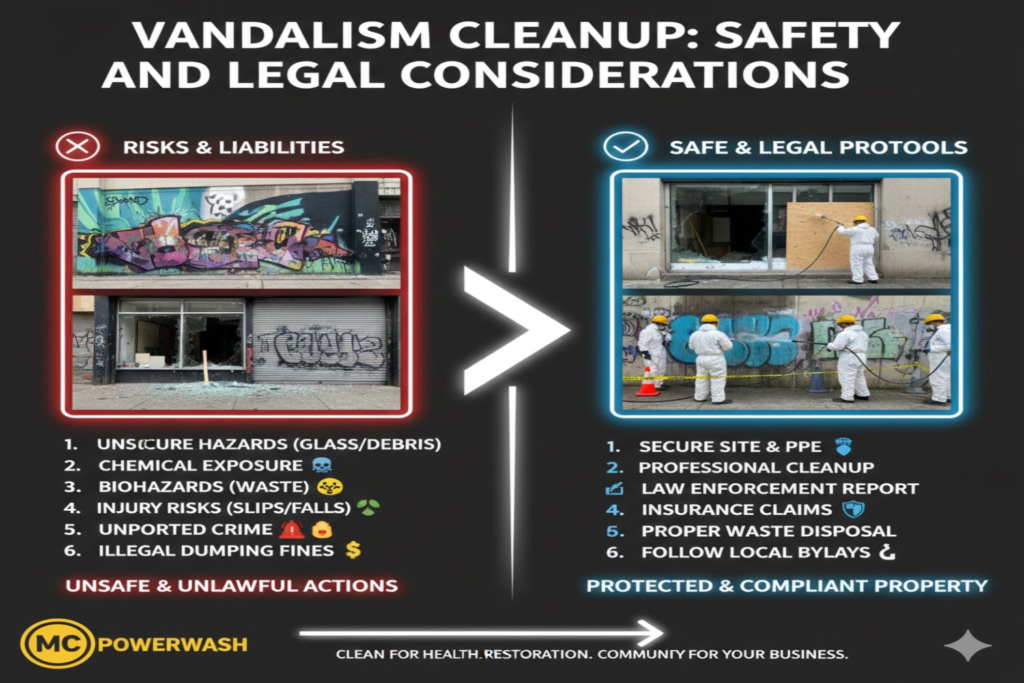
Vandalism cleanup: safety and legal considerations are essential when dealing with graffiti, broken windows, spray-painted surfaces, etched glass, scratched metal, or other deliberate damage to property. Rushing into cleanup without proper safety protocols can result in serious personal injury, chemical exposure, falls, or exposure to hazardous materials left by vandals.
Ignoring legal requirements can lead to fines, permit violations, liability disputes, or even criminal charges if cleanup affects public property or neighboring areas. Safe and compliant cleanup protects both people and the property owner. In places like Los Angeles, vandalism and graffiti are frequent on brick walls, concrete surfaces, stucco buildings, metal gates, and glass storefronts due to high urban density.
Los Angeles property owners often face multi-layered, solvent-based tags that require strong yet safe removal methods. Cleanup jobs frequently involve public visibility and strict municipal regulations on runoff and chemical use. buildings benefit greatly from understanding both safety procedures and local legal obligations. Proper planning ensures cleanup is completed safely, legally, and effectively.
Hire licensed contractors with experience in surface-safe graffiti and vandalism removal. Require certificates of insurance (general liability + workers’ comp). Ask for references and before/after photos. Get written estimates with detailed scope of work. Verify they follow local environmental and safety regulations. Professionals reduce risk and ensure compliance. For large or complex vandalism, professional service is the safest option.
Why Safety Comes First in Vandalism Cleanup
Vandalism sites can contain broken glass, sharp metal edges, exposed wiring, chemical residues from paint, or unstable structures left by vandals. Slips on wet surfaces during pressure washing or chemical application cause thousands of injuries annually. Falls from ladders or roofs are among the leading causes of serious trauma Los Angeles in property maintenance. Exposure to solvent fumes, caustic strippers, or mold in damp areas creates long-term health risks. Personal protective equipment (PPE), fall protection, and safe work practices are non-negotiable. Neglecting safety can result in medical bills, lost work time, or permanent disability. Prioritizing safety protects workers, owners, and bystanders.
Hire licensed contractors with experience in surface-safe graffiti and vandalism removal. Require certificates of insurance (general liability + workers’ comp). Ask for references and before/after photos. Get written estimates with detailed scope of work. Verify they follow local environmental and safety regulations. Professionals reduce risk and ensure compliance. For large or complex vandalism, professional service is the safest option.
Personal Protective Equipment (PPE) Requirements
Always wear chemical-resistant gloves, safety goggles, and a properly fitted respirator when using paint strippers or solvents. Use non-slip, steel-toe boots with ankle support during pressure washing or climbing. Wear long sleeves, long pants, and a hard hat to protect against falling debris or overhead hazards. Los Angeles Full-face shields are recommended when scraping or using high-pressure tools. Hearing protection is needed if operating loud equipment. PPE must be inspected before each use. Proper gear significantly reduces injury risk.
Hire licensed contractors with experience in surface-safe graffiti and vandalism removal. Require certificates of insurance (general liability + workers’ comp). Ask for references and before/after photos. Get written estimates with detailed scope of work. Verify they follow local environmental and safety regulations. Professionals reduce risk and ensure compliance. For large or complex vandalism, professional service is the safest option.
Fall Protection During Elevated Cleanup
Any work above 6 feet requires a full-body harness, roof anchor, and shock-absorbing lanyard. Secure anchors to structural points (rafters, beams), never to vents or chimneys. Use stable ladders placed at a 4:1 angle on level ground. Extend ladders at least 3 feet above the landing point. Never stand on the top two rungs. For steep roofs or multi-story access, scaffolding or boom lifts are safer. Fall protection is legally required in many jurisdictions. Proper systems save lives when slips occur.
Hire licensed contractors with experience in surface-safe graffiti and vandalism removal. Require certificates of insurance (general liability + workers’ comp). Ask for references and before/after photos. Get written estimates with detailed scope of work. Verify they follow local environmental and safety regulations. Professionals reduce risk and ensure compliance. For large or complex vandalism, professional service is the safest option.
Safe Handling of Cleaning Chemicals
- Only use products labeled for the specific surface (brick, concrete, metal, glass).
- Read SDS (Safety Data Sheets) before use.
- Never mix chemicals—especially bleach with ammonia or acids.
- Work in well-ventilated areas and avoid enclosed spaces.
- Store chemicals in original containers away from heat.
- Dispose of waste according to local hazardous waste rules.
- Use spill kits for accidental releases.
- Safe chemical handling prevents burns, respiratory issues, and environmental contamination.
Electrical and Structural Hazard Awareness
Inspect the area for exposed wiring, damaged outlets, or water near electrical panels before starting wet cleanup. Turn off power to affected areas if possible. Check for loose bricks, crumbling mortar, or unstable ledges that could collapse. Avoid leaning ladders against weak surfaces. Use non-conductive tools near electricity. Structural hazards are common after vandalism. Awareness prevents electrocution and collapse injuries.
Cleanup jobs frequently involve public visibility and strict municipal regulations on runoff and chemical use. buildings benefit greatly from understanding both safety procedures and local legal obligations. Proper planning ensures cleanup is completed safely, legally, and effectively.
Traffic and Pedestrian Safety on Public-Facing Properties
Set up cones, caution tape, and signage to keep pedestrians away from work zones. Schedule cleanup during low-traffic hours when possible. Use spotters when working near sidewalks or streets. Cover walkways if debris or runoff is present. Notify neighbors in multi-unit buildings. Public safety is legally required. Proper barriers prevent accidents and liability.
Hire licensed contractors with experience in surface-safe graffiti and vandalism removal. Require certificates of insurance (general liability + workers’ comp). Ask for references and before/after photos. Get written estimates with detailed scope of work. Verify they follow local environmental and safety regulations. Professionals reduce risk and ensure compliance. For large or complex vandalism, professional service is the safest option.
Legal Requirement to Report Certain Vandalism
- Document all vandalism with photos, dates, times, and descriptions before cleanup.
- Report serious or gang-related graffiti, hate symbols, or property destruction to local police.
- In many cities, specific types of vandalism must be reported for tracking purposes.
- Keep police report numbers for insurance claims.
- Reporting creates a record and may help identify repeat offenders.
- Legal compliance protects owners and aids law enforcement.
Permits and Local Ordinances for Cleanup
Check municipal codes for restrictions on chemical use, pressure washing runoff, or work near public rights-of-way. Some areas require permits for large-scale pressure washing or chemical application. Obtain approval before using certain solvents or blasting media. Follow storm drain protection rules to avoid fines. Legal compliance prevents penalties. Always verify local regulations before starting work.
Hire licensed contractors with experience in surface-safe graffiti and vandalism removal. Require certificates of insurance (general liability + workers’ comp). Ask for references and before/after photos. Get written estimates with detailed scope of work. Verify they follow local environmental and safety regulations. Professionals reduce risk and ensure compliance. For large or complex vandalism, professional service is the safest option.
Cleanup jobs frequently involve public visibility and strict municipal regulations on runoff and chemical use. buildings benefit greatly from understanding both safety procedures and local legal obligations. Proper planning ensures cleanup is completed safely, legally, and effectively.
Insurance and Liability Considerations
Notify your property insurance carrier before major cleanup in case additional damage occurs. Most policies cover vandalism repair but may exclude damage caused by improper cleanup. Require contractors to provide certificates of insurance (general liability + workers’ comp). Document the condition of the property before and after work. Proper insurance protects against claims. Liability awareness prevents financial loss.
Cleanup jobs frequently involve public visibility and strict municipal regulations on runoff and chemical use. buildings benefit greatly from understanding both safety procedures and local legal obligations. Proper planning ensures cleanup is completed safely, legally, and effectively.
Waste Disposal and Environmental Regulations
Collect all chemical-soaked rags, used absorbent materials, and rinse water for proper disposal. Do not pour solvents or paint-laden water into storm drains. Use licensed hazardous waste haulers when required. Follow EPA and local environmental guidelines. Many cities have strict runoff rules. Legal disposal prevents fines and environmental harm. Responsible waste handling is mandatory.
Cleanup jobs frequently involve public visibility and strict municipal regulations on runoff and chemical use. buildings benefit greatly from understanding both safety procedures and local legal obligations. Proper planning ensures cleanup is completed safely, legally, and effectively.
Vandalism Cleanup Safety & Legal Checklist Table
| Category | Key Action / Requirement | Why It Is Important | Responsible Party | Compliance Check |
| Personal Safety | Full PPE (gloves, goggles, respirator, boots) | Prevents chemical burns, eye injury, slips | Worker / Contractor | Before each job |
| Fall Protection | Harness & anchor on roofs >6 ft | Prevents fatal falls | Worker / Contractor | Before elevation |
| Chemical Safety | Read SDS, never mix chemicals, ventilate | Avoids toxic exposure, fires, reactions | Worker / Contractor | Before use |
| Electrical Hazards | Check for exposed wiring, turn off power if possible | Prevents electrocution | Worker / Contractor | Before wet work |
| Public / Traffic Safety | Cones, tape, signage, spotters | Prevents pedestrian accidents | Worker / Contractor | During job |
| Reporting Vandalism | Photograph, file police report if serious | Creates legal record, aids investigation | Property Owner | Immediately |
| Permits & Ordinances | Check local rules on runoff, chemicals, permits | Avoids fines and violations | Property Owner / Contractor | Before starting |
| Insurance Verification | Obtain COI from contractors, notify own insurer | Protects against liability claims | Property Owner | Before hiring |
| Waste Disposal | Proper disposal of chemicals, rags, runoff | Prevents environmental fines | Worker / Contractor | After job |
Documentation and Record-Keeping for Legal Protection
Photograph the vandalism before cleanup, during the process, and after completion. Keep receipts for products, contractor invoices, and police reports. Record dates, times, workers involved, and methods used. Maintain SDS sheets for all chemicals. Document any injuries or incidents immediately. Thorough records protect against disputes, insurance claims, or legal challenges. Good documentation proves due diligence.
Hire licensed contractors with experience in surface-safe graffiti and vandalism removal. Require certificates of insurance (general liability + workers’ comp). Ask for references and before/after photos. Get written estimates with detailed scope of work. Verify they follow local environmental and safety regulations. Professionals reduce risk and ensure compliance. For large or complex vandalism, professional service is the safest option.
Working with Professional Vandalism Cleanup Services
Hire licensed contractors with experience in surface-safe graffiti and vandalism removal. Require certificates of insurance (general liability + workers’ comp). Ask for references and before/after photos. Get written estimates with detailed scope of work. Verify they follow local environmental and safety regulations. Professionals reduce risk and ensure compliance. For large or complex vandalism, professional service is the safest option.
Conclusion
Vandalism cleanup: safety and legal considerations require strict adherence to personal protective equipment, fall protection, chemical handling protocols, electrical awareness, traffic safety measures, proper reporting, permit compliance, insurance verification, and responsible waste disposal. Failing to address these areas can result in serious injury, environmental violations, fines, liability claims, or worsened property damage.
In high-vandalism urban environments, thorough documentation, professional contractors, and surface-safe methods are especially important. Always prioritize safety over speed, verify local regulations, and document every step. The right approach not only removes vandalism effectively but also protects people, property, and legal standing. Planning ahead and following safety and legal guidelines turns a stressful situation into a controlled, successful restoration.
Hire licensed contractors with experience in surface-safe graffiti and vandalism removal. Require certificates of insurance (general liability + workers’ comp). Ask for references and before/after photos. Get written estimates with detailed scope of work. Verify they follow local environmental and safety regulations. Professionals reduce risk and ensure compliance. For large or complex vandalism, professional service is the safest option.
Frequently Asked Questions (FAQs)
1. What PPE is mandatory for vandalism cleanup?
Chemical-resistant gloves, safety goggles, a properly fitted respirator (for solvents), non-slip boots, long sleeves/pants, and a hard hat. Use fall protection (harness & anchor) on roofs or elevated areas. Full PPE prevents burns, inhalation injury, slips, and debris impact. Always inspect gear before use.
2. Is pressure washing safe for graffiti removal?
Low-pressure washing (500–1000 PSI) is safe on most surfaces when used with wide nozzles. High-pressure (2000+ PSI) etches brick, mortar, and concrete and drives paint deeper. Use low pressure only and start with a test area. Pressure control is essential to avoid permanent damage.
3. Do I have to report vandalism to the police?
Yes, serious vandalism (extensive damage, hate symbols, gang tags) should be reported for documentation and investigation. Minor tagging may not require a report but documenting with photos is always wise. Police reports help with insurance claims. Reporting creates an official record.
4. Are there permits required for graffiti cleanup?
In many cities, permits are needed for large-scale pressure washing, chemical application, or work near public rights-of-way. Check local ordinances on runoff, chemicals, and storm drain protection. Non-compliance can result in fines. Always verify regulations before starting.
5. How do I safely dispose of graffiti removal chemicals?
Never pour solvents or rinse water into storm drains. Collect waste in sealed containers and take to a hazardous waste facility or licensed disposal service. Follow product SDS and local environmental rules. Proper disposal prevents fines and environmental harm.
6. Can I be held liable if cleanup damages neighboring property?
Yes, if runoff or overspray affects adjacent buildings, landscaping, or vehicles, you can face liability claims. Use containment (tarps, berms) and notify neighbors. Require contractors to carry liability insurance. Careful work and documentation reduce risk.
7. What should I do if I find hazardous materials during cleanup?
Stop work immediately if you discover needles, syringes, unknown chemicals, or biohazards. Contact professional hazardous material removers or local authorities. Do not handle suspicious items. Safety comes first. Report potential hazards to the proper agencies.
8. Is hiring professionals required for vandalism cleanup?
Not always for small jobs, but professionals are strongly recommended for large areas, multi-story access, historic surfaces, or heavy chemical use. They carry insurance, follow safety protocols, and know local regulations. Professional service reduces risk significantly.
9. How do I document vandalism for insurance claims?
Take clear, dated photos of the damage from multiple angles before cleanup. Obtain a police report if applicable. Keep receipts for removal products and contractor invoices. Note dates, times, and methods used. Thorough documentation strengthens claims.
10. What legal risks exist if I ignore runoff regulations?
You can face fines, cleanup orders, or civil penalties for allowing chemicals or paint residue into storm drains. Many cities have strict environmental codes. Proper containment and disposal are legally required. Compliance prevents costly violations.