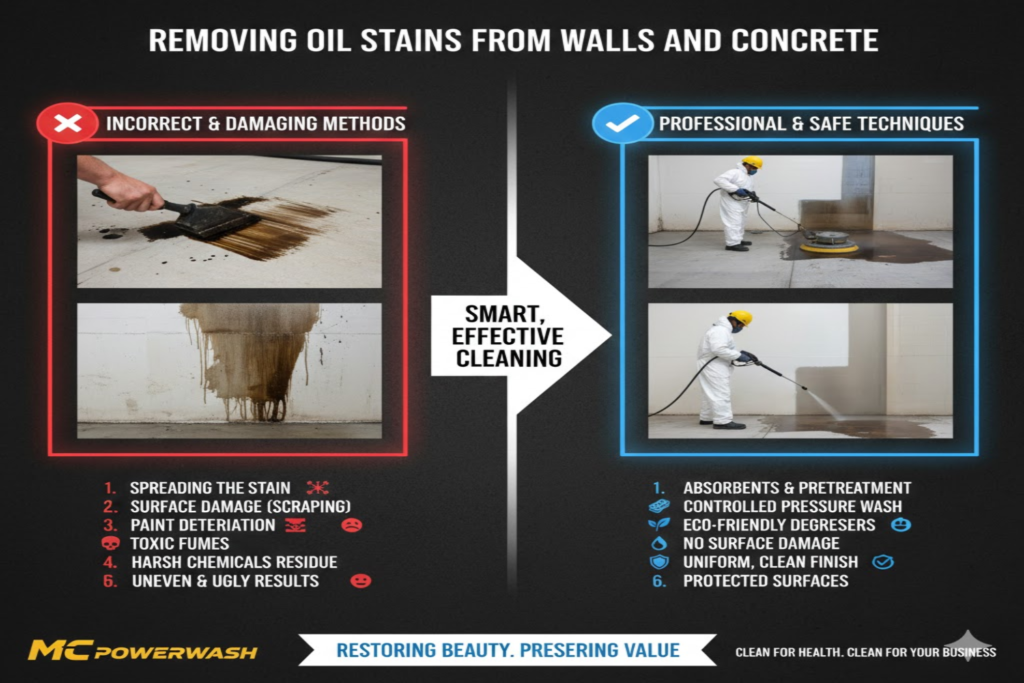
Oil stains on walls and concrete are stubborn and unsightly, often caused by engine leaks, cooking splatters, machinery drips, or improper disposal. In Los Angeles, where many homes have attached garages, driveways, and exterior concrete patios, these stains are extremely common due to frequent vehicle maintenance and urban living. Removing them requires breaking down the oil’s greasy structure so it can be lifted from porous surfaces.
Methods range from simple household items to commercial degreasers and poultices for deep penetration. Concrete is highly absorbent, trapping oil below the surface, while painted walls need gentler treatment to avoid damaging the finish. Prompt action prevents stains from setting permanently. Proper techniques protect the material and restore appearance. With patience and the right approach, most oil stains can be significantly reduced or completely eliminated.
Older stains oxidize and bond chemically with the surface. Concrete sealers can trap oil below the coating if not addressed quickly. Different surfaces—unsealed concrete, sealed driveways, stucco walls, brick—react differently to cleaners. Recognizing these factors guides method selection. Rushing with harsh chemicals often spreads the stain or damages the substrate. Understanding the science behind oil absorption improves success rates.
Understanding Why Oil Stains Are Difficult
Oil penetrates deeply into porous concrete and masonry because of its low surface tension. Once absorbed, it spreads laterally and downward, creating dark halos that worsen over time. On painted walls, oil can soften or discolor latex or oil-based paint. Sun exposure in hot climates bakes the stain, making it harder to remove. Older stains oxidize and bond chemically with the surface. Concrete sealers can trap oil below the coating if not addressed quickly. Different surfaces—unsealed concrete, sealed driveways, stucco walls, brick—react differently to cleaners.
Recognizing these factors guides method selection. Rushing with harsh chemicals often spreads the stain or damages the substrate. Understanding the science behind oil absorption improves success rates. Older stains oxidize and bond chemically with the surface. Concrete sealers can trap oil below the coating if not addressed quickly. Different surfaces—unsealed concrete, sealed driveways, stucco walls, brick—react differently to cleaners. Recognizing these factors guides method selection. Rushing with harsh chemicals often spreads the stain or damages the substrate. Understanding the science behind oil absorption improves success rates.
Common Causes of Oil Stains on Walls & Concrete
Garage floors receive oil from leaking engines, transmissions, and oil changes. Driveways get drips from parked vehicles or spilled fuel. Exterior walls near kitchens suffer from cooking oil splatters through vents or open windows. Workshop areas accumulate stains from machinery and tools. BBQ grills and outdoor fryers cause vertical runs on patio walls. Improper disposal of used oil or rags creates secondary drips. In Los Angeles, frequent car-related maintenance in residential driveways is a major source.
Construction sites and mechanics nearby can cause overspray. Identifying the origin helps prevent recurrence. Most stains are preventable with simple containment habits. Older stains oxidize and bond chemically with the surface. Concrete sealers can trap oil below the coating if not addressed quickly. Different surfaces—unsealed concrete, sealed driveways, stucco walls, brick—react differently to cleaners. Recognizing these factors guides method selection. Rushing with harsh chemicals often spreads the stain or damages the substrate. Understanding the science behind oil absorption improves success rates.
Safety Precautions Before Starting
Always wear chemical-resistant gloves, safety goggles, and long sleeves when using degreasers. Work in well-ventilated areas to avoid inhaling fumes. Keep children and pets away from the cleaning zone. Cover nearby plants with plastic sheeting and wet them before and after to dilute runoff. Avoid mixing different cleaners, especially bleach with ammonia-based products. Have a hose ready for quick rinsing. Use stable ladders for wall work and never overreach. Keep a first-aid kit and phone accessible. Read product labels carefully. Safety prevents injuries and protects surrounding areas.
Older stains oxidize and bond chemically with the surface. Concrete sealers can trap oil below the coating if not addressed quickly. Different surfaces—unsealed concrete, sealed driveways, stucco walls, brick—react differently to cleaners. Recognizing these factors guides method selection. Rushing with harsh chemicals often spreads the stain or damages the substrate. Understanding the science behind oil absorption improves success rates.
Best Household Remedies for Fresh Oil Stains
- For fresh stains, immediately blot excess oil with absorbent paper towels or rags.
- Cover the spot thickly with baking soda, cornstarch, or cat litter and let it sit 24–48 hours to draw out surface oil.
- Sweep or vacuum the powder, then scrub with dish soap and warm water using a stiff brush.
- Repeat if needed.
- This method works best on concrete and unsealed surfaces.
- On painted walls, use mild dish soap immediately to avoid spreading.
- Household remedies are inexpensive and eco-friendly for light stains.
- They often remove 50–80% of fresh oil.
- Persistence with multiple applications improves results.
Using Commercial Degreasers Effectively
Choose heavy-duty concrete degreasers containing surfactants, solvents, or citrus-based formulas. Apply generously to the stain and let it dwell 10–30 minutes. Agitate with a stiff brush to break surface tension. Rinse thoroughly with a garden hose or low-pressure washer. Repeat for stubborn spots. Products like Simple Green, Oil Eater, or Krud Kutter are popular choices. Test on a small hidden area first. Avoid highly acidic or caustic cleaners on painted surfaces. Commercial degreasers penetrate deeper than soap. They are essential for medium to heavy stains.
Poultice Method for Deep Oil Stains
Poultices pull oil from deep within porous concrete. Mix absorbent material (baking soda, diatomaceous earth, or kitty litter) with a solvent (acetone, mineral spirits, or commercial poultice liquid). Apply a ¼–½ inch thick layer over the stain. Cover with plastic wrap and tape edges to keep moist for 24–48 hours. Remove dried poultice and rinse. Repeat 2–3 times for very deep stains. This method is slow but highly effective. It works best on unsealed concrete and masonry. Poultices prevent spreading during removal. They are ideal for old, set-in stains.
Pressure Washing Oil Stains Safely
Use a pressure washer with hot water (140–180°F) for best results on concrete. Start at low pressure (800–1500 PSI) with a 25°–40° wide fan nozzle. Apply degreaser first and allow dwell time. Wash from bottom to top to avoid streaks. Keep the wand 12–18 inches away and move steadily. Rinse thoroughly to remove all residue. Avoid high pressure on painted walls or stucco. Hot water emulsifies oil faster. Pressure washing is fast for large areas. Always test pressure on a small spot first.
Special Techniques for Painted Walls
On painted walls, avoid aggressive scrubbing or high pressure. Use a degreaser safe for painted surfaces (citrus-based or mild alkaline). Apply with a sponge, let sit 5–15 minutes, then blot and rinse gently. For stubborn spots, use a soft nylon brush. Test products on an inconspicuous area. Repaint with stain-blocking primer if discoloration remains. Walls require gentler methods than concrete. Patience prevents paint damage. Multiple light applications work better than one aggressive attempt. Protect baseboards and floors during cleaning.
Removing Oil from Sealed vs Unsealed Concrete
Sealed concrete resists deep penetration, making stains easier to remove with degreaser and rinsing. Unsealed concrete absorbs oil quickly and deeply, often requiring poultices. Check for existing sealer by sprinkling water—if it beads, the surface is sealed. Reseal after cleaning to prevent future absorption. Sealed surfaces tolerate slightly higher pressure. Unsealed areas need gentler methods and longer treatment times. Knowing the seal status guides technique. Resealing is a key preventive step. It dramatically reduces future staining.
Eco-Friendly and Biodegradable Options
Opt for plant-based or citrus degreasers like Simple Green, Citrus King, or Soy-based cleaners. These break down oil without harsh solvents. Use absorbent natural materials like cornstarch or sawdust for poultices. Capture runoff with absorbent booms or shop vacs. Rinse onto grass or landscaping instead of storm drains when possible. Eco-friendly products reduce environmental impact. They perform well on most oil stains. Many are safe around pets and plants. Sustainable choices maintain compliance with local runoff rules.
Preventing Future Oil Stains
- Place absorbent drip pans under vehicles during maintenance.
- Use oil-absorbent mats or cardboard under leak-prone areas.
- Install drain blockers or berms around work zones.
- Clean spills immediately before they spread.
- Store oil containers upright and sealed.
- Train household members on proper disposal.
- Apply fresh concrete sealer every 1–2 years.
- Use oil-resistant coatings on garage floors.
- Prevention is far easier than removal.
- Consistent habits eliminate most recurring stains.
When to Call Professional Services
Hire professionals for large areas, deep-set stains, or multi-story walls. They have hot-water pressure washers, commercial poultices, and safe disposal methods. Pros handle heavy oil contamination from machinery or old leaks. They minimize damage to sealers and coatings. In Los Angeles, certified cleaning services understand local concrete types and sun exposure. Professionals complete jobs faster and more uniformly. Get multiple quotes and check reviews. Complex cases warrant expert help. Professionals protect your investment.
Long-Term Concrete & Wall Maintenance
Reseal driveways and garage floors regularly. Clean surfaces with mild detergent monthly. Inspect for early oil drips after vehicle work. Touch up paint on walls promptly. Use oil-resistant additives in future coatings. Maintain good drainage to prevent pooling. Document cleaning dates and products used. Consistent maintenance prevents deep staining. It extends surface life significantly. Proactive care keeps properties looking new.
Comparison Table: Oil Stain Removal Methods for Walls & Concrete
| Method | Best For | Time Required | Cost Level (DIY) | Effectiveness on Deep Oil | Surface Damage Risk | Eco-Friendliness | Skill Level Needed | Recommended Surfaces |
| Baking Soda + Dish Soap | Fresh light stains | 1–3 days | Very Low | Low–Medium | Very Low | High | Beginner | Concrete, painted walls |
| Commercial Degreaser | Medium stains, concrete | 1–4 hours | Low–Medium | High | Low–Medium | Medium | Beginner–Moderate | Concrete, sealed surfaces |
| Poultice Method | Deep, old stains | 24–72 hours | Low–Medium | Very High | Very Low | High (natural) | Moderate | Unsealed concrete, masonry |
| Hot Water Pressure Washing | Large areas, heavy oil | 2–6 hours | Medium (rental) | Very High | Medium | Medium | Moderate–High | Concrete driveways, patios |
| Citrus-Based Eco Degreaser | Environmentally sensitive areas | 2–8 hours | Low–Medium | High | Low | Very High | Beginner | All surfaces, near plants |
| Acetone + Absorbent | Small stubborn spots | 12–48 hours | Low | High | Medium | Low | Moderate | Concrete only |
| Professional Cleaning Service | Large/deep/multiple stains | 4–12 hours | High | Very High | Low (expert) | Varies | None (hired) | Any difficult surface |
Cost-Benefit Analysis of Different Removal Approaches
Household methods like baking soda and dish soap cost almost nothing and work well for fresh stains, making them ideal for quick, small jobs. Commercial degreasers offer excellent value at $10–$40 per bottle and handle most medium stains effectively. Poultices require time but use inexpensive materials and excel at deep extraction without surface harm. Hot-water pressure washing rentals ($50–$150/day) deliver fast results on large areas but carry higher equipment costs. Professional services ($200–$800+) are expensive upfront but save time, prevent damage, and handle wastewater legally. Eco-friendly options add slight cost but reduce environmental impact. Combining methods—pre-treatment followed by washing—often provides the best balance of cost, time, and results. Investing in prevention (sealers, drip pans) yields the highest long-term savings.
Final Tips for Stubborn or Recurring Oil Stains
Test every product on a hidden spot first. Work in small sections to avoid spreading. Repeat treatments rather than increasing strength or pressure. Capture runoff responsibly to protect waterways. Photograph before-and-after for reference. Reapply concrete sealer after successful removal. Address the source (leaks, spills) to prevent recurrence. For very old stains, multiple poultice cycles may be necessary. Patience and persistence beat aggressive shortcuts. Consistent care keeps walls and concrete looking clean for years.
Conclusion
Removing oil stains from walls and concrete requires matching the method to the stain’s age, depth, and surface type. Fresh stains respond quickly to simple absorbents and degreasers, while deep, old stains demand poultices or hot-water pressure washing. In Los Angeles, where garages and driveways see frequent oil exposure, prompt action and proper techniques prevent permanent damage. Always prioritize safety, test products, and protect surrounding areas. Prevention through drip containment, sealers, and maintenance is the most cost-effective strategy. Whether using household remedies or professional services, consistent effort restores surfaces effectively. Clean walls and concrete enhance property appearance, safety, and value for years to come.
Frequently Asked Questions (FAQs)
1. How do I remove fresh oil stains from concrete quickly?
Blot excess oil immediately with paper towels. Cover thickly with cat litter or baking soda and leave for 24 hours. Sweep up, then scrub with dish soap and warm water. This absorbs surface oil before it penetrates deeply.
2. Can old oil stains be completely removed from concrete?
Yes, but very old stains may leave a faint shadow. Poultices with solvents or commercial degreasers applied multiple times pull out most oil. Resealing afterward hides minor discoloration. Patience and repetition are key for deep stains.
3. Is pressure washing safe for removing oil from painted walls?
Low-pressure washing (under 1000 PSI) with a wide nozzle can be safe if paint is in good condition. High pressure risks peeling or chipping paint. Use a mild degreaser first and rinse gently. Test on a small area first.
4. What is the best degreaser for oil stains on concrete?
Heavy-duty citrus-based or surfactant degreasers like Simple Green, Oil Eater, or Purple Power work very well. They break down oil without excessive surface damage. Apply, agitate, and rinse thoroughly. Avoid highly acidic products.
5. How do I make a poultice for deep oil stains?
Mix absorbent powder (kitty litter, diatomaceous earth, or baking soda) with a solvent (mineral spirits or commercial poultice liquid) into a peanut-butter consistency. Apply ¼–½ inch thick, cover with plastic, and leave 24–48 hours. Remove and rinse. Repeat if needed.
6. Will dish soap alone remove oil stains?
Dish soap handles very light or fresh stains effectively. For medium or deep oil, it is usually insufficient alone. Combine with absorbents or degreasers for better results. Multiple applications may be required.
7. Should I reseal concrete after removing oil stains?
Yes, resealing is highly recommended. It closes pores, prevents future absorption, and hides minor shadows. Use a penetrating or acrylic sealer. Apply after the surface is completely dry. Resealing extends protection significantly.
8. Can oil stains on walls cause mold or damage?
Oil itself does not cause mold, but trapped moisture behind stains can. Prolonged oil can soften paint or promote peeling. Remove promptly to avoid cosmetic and structural issues. Ventilate areas during cleaning.
9. How long does it take to remove a deep oil stain?
Fresh stains can be removed in hours. Deep, old stains often require 1–7 days with poultices or repeated treatments. Each cycle needs 24–48 hours dwell time. Multiple applications are normal for complete extraction.
10. Are eco-friendly cleaners effective on oil stains?
Yes, citrus-based, soy-based, or plant-derived degreasers remove oil effectively while being safer for the environment. They may require slightly longer dwell times but perform well on concrete and walls. Rinse thoroughly after use.