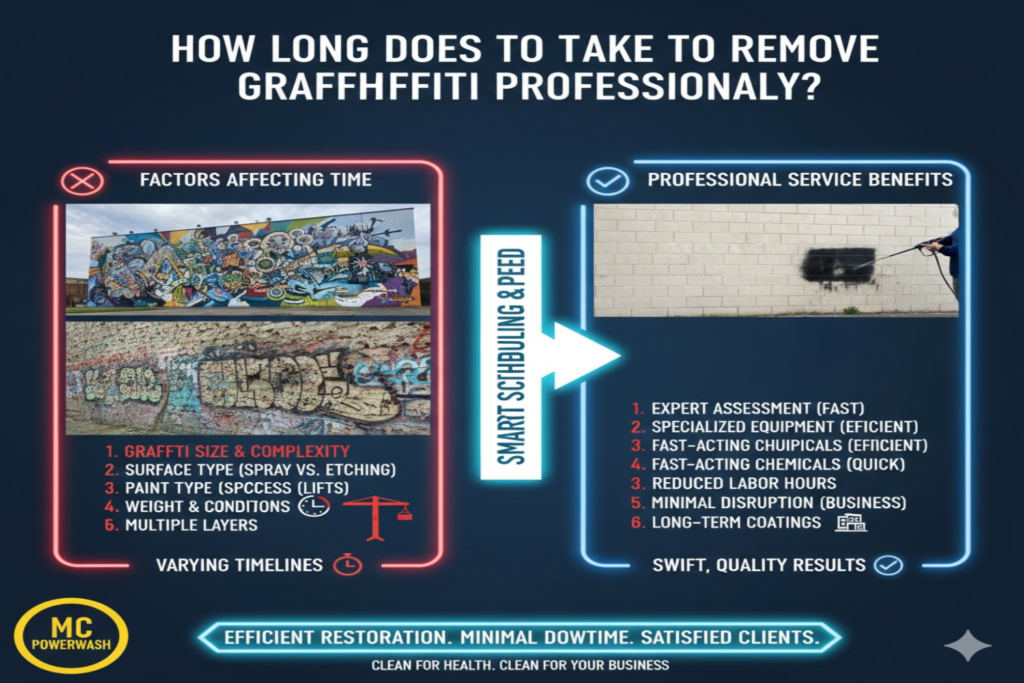
Professional graffiti removal time varies significantly depending on the size of the affected area, type of surface, age and layers of paint, and the chosen removal method. In Los Angeles, where tagging on commercial buildings, garages, and public walls is common, quick response is critical to minimize both visible damage and cost. Small fresh tags can be cleared in under an hour, while large multi-layered jobs may require several hours or even multiple days. Professionals use a combination of chemical dwell time, mechanical agitation, pressure washing, and sometimes specialized blasting. Waiting for proper chemical action and thorough rinsing adds to the timeline. Experienced teams work efficiently to complete jobs in one visit whenever possible. Accurate time estimates help property owners plan and reduce business disruption. Understanding the factors involved allows better expectations and smoother coordination with service providers.
Understanding the Graffiti Removal Timeline
The duration of professional graffiti removal is never fixed because every job presents unique challenges. Fresh spray paint on smooth concrete can be removed quickly, while old, baked-on layers on porous brick demand patience. Chemical dwell time alone often takes 10–45 minutes per application. Multiple applications are common for stubborn cases. Drying, rinsing, and inspection steps extend the process. In urban settings like Los Angeles, traffic, access restrictions, and building height further influence scheduling. Professionals prioritize safety, surface protection, and complete removal over rushing. Time estimates are based on site inspection rather than guesswork. Clear communication with the contractor prevents surprises.
Key Factors Affecting Removal Time
Size of the graffiti directly impacts duration—small tags take minutes while entire walls take hours. Surface material plays a major role: smooth metal cleans faster than textured stucco or brick. Age of the graffiti matters greatly—fresh paint lifts in one session, while cured paint requires repeated treatments. Number of paint layers increases time exponentially. Accessibility issues such as height, narrow alleys, or busy locations add setup and safety time. Method chosen also affects speed: chemical stripping is slower than blasting but gentler. Weather conditions can delay outdoor work. Experienced crews optimize every step. All these variables combine to determine the final timeline.
Time for Small Tags and Simple Surfaces
Professional removal of a single small tag (under 2 square feet) typically takes 30–60 minutes on-site. This includes assessment, chemical application, dwell time, light agitation, rinsing, and final inspection. Smooth surfaces like painted metal doors or glass allow faster work. Fresh aerosol paint responds quickly to graffiti-specific removers. In Los Angeles, many contractors handle small jobs within the same day of reporting. Minimum service calls often cover this timeframe. Quick jobs cause minimal disruption. They are ideal for residential garages or storefronts. Fast turnaround discourages repeat tagging.
Time for Medium-Sized Graffiti Jobs
- Medium-sized graffiti (10–50 square feet) generally requires 1.5–4 hours of active work.
- This includes multiple chemical applications, dwell periods totaling 30–90 minutes, brushing or scraping, pressure washing, and thorough rinsing.
- Textured walls or brick extend the timeline due to deeper paint penetration.
- Layered tags demand extra steps.
- Setup time for ladders, tarps, and equipment adds 30–60 minutes.
- Professionals aim to complete medium jobs in one visit.
- Scheduling during off-peak hours reduces delays.
- Medium jobs balance cost and time effectively.
- They are common on side walls and fences.
Time for Large-Scale or Full-Wall Removal
Large graffiti covering 100+ square feet often takes 4–12 hours spread over one or two days. Extensive areas require section-by-section treatment to maintain quality. Chemical dwell and rinsing cycles repeat across the surface. Scaffolding or boom lift setup adds 1–3 hours initially. Multi-story buildings significantly extend timelines. Heavy layered murals or murals with etching can push toward multiple days. In Los Angeles, commercial buildings frequently require overnight or phased scheduling. Large jobs benefit from crew teams. Thorough large-scale removal prevents ghosting or shadows.
Chemical Dwell Time Explained
Chemical removers need sufficient contact time to break down paint binders. Most graffiti strippers require 10–30 minutes per application. Heavy or old paint may need 45 minutes or multiple applications. Professionals monitor dwell time carefully to avoid surface damage. Dwell periods are not active work time but are essential for effective removal. Skipping or rushing dwell time leads to incomplete results. Multiple cycles add up quickly. Proper timing balances speed and quality. Experienced applicators know exact dwell requirements. This step is often the longest non-active phase.
Pressure Washing and Rinsing Duration
After chemical treatment, pressure washing removes loosened paint and residue. Thorough rinsing of a small area takes 5–15 minutes. Medium walls require 30–90 minutes of careful washing. Large surfaces can take several hours. Hot water pressure washing speeds up paint lifting but still needs controlled rinsing. Avoiding streaking or residue requires slow, even passes. Multiple rinse cycles are common. Proper pressure and nozzle choice prevent surface etching. Rinsing is critical for clean, even results. It often forms the bulk of active labor time.
Time for Specialized Removal Methods
Soda blasting or dry ice blasting typically takes 1–4 hours depending on area size. These methods are faster on large flat surfaces but require media loading and containment setup. Sandblasting adds time for masking and cleanup. Steam cleaning or heat-based methods are slower due to gradual softening. Etching removal on glass may involve polishing that takes 1–3 hours. Each specialized technique has its own timeline. Professionals select methods based on surface and speed needs. Specialized jobs often require extra preparation time. They deliver excellent results on challenging surfaces.
Setup and Cleanup Time
Professional crews spend 30–90 minutes on site preparation. This includes covering nearby surfaces, protecting plants, setting up ladders or lifts, and staging equipment. Cleanup after removal takes another 30–60 minutes. Collecting waste, rinsing tools, and removing tarps adds to the total. High-access jobs with scaffolding can add 2–4 hours for assembly and dismantling. Traffic control in urban areas extends setup. Thorough preparation prevents damage to surroundings. Cleanup ensures no residue or mess remains. These non-removal steps are essential for professional work.
Same-Day vs Multi-Day Jobs
Most small to medium graffiti jobs are completed same-day within 1–6 hours. Fresh tags and accessible surfaces allow quick turnaround. Large, complex, or multi-story projects often require multiple days. Phased work minimizes business disruption. Weather delays can push outdoor jobs to the next day. Contractors coordinate schedules for efficiency. Same-day service is preferred for high-traffic areas. Multi-day jobs are quoted with clear timelines. Planning ahead reduces inconvenience. Professionals communicate expected duration upfront.
Emergency and After-Hours Removal Time
Emergency same-day service is available for new graffiti in many cities. Response time ranges from 1–4 hours after call. Actual removal time remains the same as standard jobs. After-hours or weekend work adds premium charges but does not speed up the process itself. Quick response prevents escalation of tagging. In high-vandalism zones, fast service is valuable. Emergency crews prioritize visibility reduction. Timeline stays realistic despite urgency. Prompt action yields best results.
How Experience Affects Removal Speed
Experienced crews work faster due to familiarity with products, surfaces, and techniques. They know exact dwell times and pressure settings. Efficient workflow reduces wasted motion. Veteran teams handle unexpected challenges quickly. Less experienced contractors may take longer to avoid mistakes. Professional companies train staff for speed and safety. Experience minimizes callbacks. It ensures consistent quality. Hiring reputable firms saves time overall. Proven teams deliver reliable timelines.
Weather and Environmental Impact on Timeline
Rain or high humidity delays chemical application and drying. Wind can spread overspray or affect containment. Extreme heat speeds drying but may cause strippers to evaporate too fast. Cold temperatures slow chemical action. Professionals adjust methods for conditions. Outdoor jobs are scheduled for favorable weather. Indoor or covered graffiti avoids weather delays. Planning around forecasts improves efficiency. Weather is an uncontrollable but predictable factor. Experienced contractors build buffer time.
Post-Removal Coating Application Time
Applying anti-graffiti coatings after cleaning adds 1–4 hours depending on area. Drying time between coats extends the job. Some coatings cure quickly while others require 24 hours. Application is often done same-day if time allows. Protective coatings increase initial job length but save future time. They simplify subsequent cleanups. Many owners opt for coating during the first visit. Extra time is well-invested for prevention. Coating adds value beyond basic removal.
How to Get Accurate Time Estimates
Provide clear photos, measurements, and surface details when requesting quotes. Ask for on-site assessments for precise timelines. Experienced contractors give reliable estimates after inspection. Mention urgency or access restrictions upfront. Request breakdown of expected time per step. Compare multiple quotes for consistency. Ask about crew size and typical completion time. Clear communication prevents misunderstandings. Accurate estimates help with scheduling. They build trust with service providers.
Comparison Table: Graffiti Removal Time by Job Type
| Job Type | Typical Time On-Site | Main Time Factors | Expected Completion | Best Method Usually Used | Notes & Tips |
| Small fresh tag (1–5 sq ft) | 30–90 minutes | Quick chemical application & rinse | Same day | Chemical stripper + low pressure | Minimal disruption |
| Medium graffiti (10–50 sq ft) | 1.5–4 hours | Multiple applications & thorough rinsing | Same day | Chemical + pressure wash | Most common residential/commercial job |
| Large wall (100+ sq ft) | 4–12 hours | Section work, setup, large rinsing | 1–2 days | Chemical + hot pressure wash | May require crew of 2–4 people |
| Multi-story or high access | 6–16 hours | Scaffolding/lift setup & takedown | 1–3 days | Blasting or chemical from lift | Significant added setup time |
| Layered or old graffiti | 3–10 hours | Repeated chemical cycles & agitation | 1–2 days | Multiple stripper applications | Patience required for full removal |
| Glass etching removal | 2–6 hours | Polishing & careful surface work | Same day | Chemical etch remover + polish | May need glass specialist |
| Anti-graffiti coating application | 1–4 hours extra | Application & curing time | Same day add-on | Roller or spray coating | Adds protection but extends job |
Planning Your Property Schedule Around Removal
Schedule graffiti removal during low-traffic hours for businesses. Coordinate with tenants or staff to minimize disruption. Block off areas in advance for safety. Plan for possible drying time before reopening. Large jobs may require temporary closures. Inform neighbors if shared walls are involved. Early morning or evening slots reduce complaints. Have backup plans for weather delays. Clear scheduling improves efficiency. Good planning keeps operations running smoothly.
Conclusion
Professional graffiti removal time ranges from under an hour for small tags to multiple days for large, complex jobs. Factors such as surface type, paint age, layers, access, and method determine the exact duration. In Los Angeles, quick response and efficient crews help minimize downtime for commercial properties. Accurate on-site assessments provide reliable timelines. Acting promptly on fresh graffiti shortens removal time and reduces cost. Investing in protective coatings speeds future cleanups. Clear communication with contractors ensures realistic expectations. With proper planning and professional execution, graffiti can be removed effectively with minimal disruption. Timely removal restores appearance, deters vandals, and protects property value for the long term.
Frequently Asked Questions (FAQs)
1. How long does it take to remove a small graffiti tag professionally?
Most small tags (under 5 square feet) are removed in 30–90 minutes on-site. This includes assessment, chemical dwell time, rinsing, and inspection. Fresh paint on smooth surfaces allows the fastest turnaround. Professionals often complete these jobs same-day with minimal disruption.
2. Can large graffiti be removed in one day?
Many large graffiti jobs (100+ square feet) can be finished in one long day (6–12 hours). However, very extensive or multi-story walls often require two days. Setup, multiple applications, and thorough rinsing extend time. Experienced crews aim for single-visit completion whenever possible.
3. How does paint age affect removal time?
Fresh graffiti (under 48 hours) can be removed much faster—often in under 2 hours. Old, cured, or layered paint requires multiple chemical applications and longer dwell times. This can extend jobs to 4–10 hours or more. Prompt reporting significantly shortens the process.
4. Does surface type change the removal timeline?
Yes, smooth metal or painted surfaces clean faster than porous brick or textured stucco. Porous materials absorb paint deeply and need longer chemical action. Glass etching removal involves careful polishing and takes extra time. Surface type is one of the biggest factors in duration.
5. How long does chemical dwell time usually take?
Most graffiti removers need 10–45 minutes of dwell time per application. Heavy or layered paint may require 30–60 minutes or multiple cycles. Dwell time is non-active but essential for effective paint breakdown. Rushing this step leads to incomplete removal.
6. Does weather affect graffiti removal time?
Rain, high humidity, or extreme temperatures can delay outdoor work. Wet surfaces prevent proper chemical adhesion. Cold slows chemical action while heat may cause fast evaporation. Professionals schedule around favorable weather. Delays add hours or push jobs to the next day.
7. How much extra time does anti-graffiti coating add?
Applying protective coating after removal usually adds 1–4 hours depending on area size. Some coatings require multiple coats or curing time. It is often done same-day as removal. The added time provides long-term savings by simplifying future cleanups.
8. Do professionals work faster than DIY attempts?
Yes, experienced professionals work much faster due to proper tools, techniques, and product knowledge. They avoid trial-and-error and complete jobs efficiently. DIY attempts often take longer and may require multiple days. Hiring pros saves time and prevents surface damage.
9. How long should I expect to wait for a professional to arrive?
Same-day service is common for new graffiti reports, with response times of 1–4 hours in many areas. Emergency calls may arrive faster. Standard scheduling usually takes 24–72 hours. Quick response is available for urgent cases at additional cost.
10. Does layered graffiti really take much longer to remove?
Yes, layered or multi-colored graffiti can double or triple removal time. Each layer needs separate treatment and rinsing. Old underlying paint is harder to lift. Professionals may need multiple applications and extended dwell times. Layered jobs often require 4–10 hours or more.