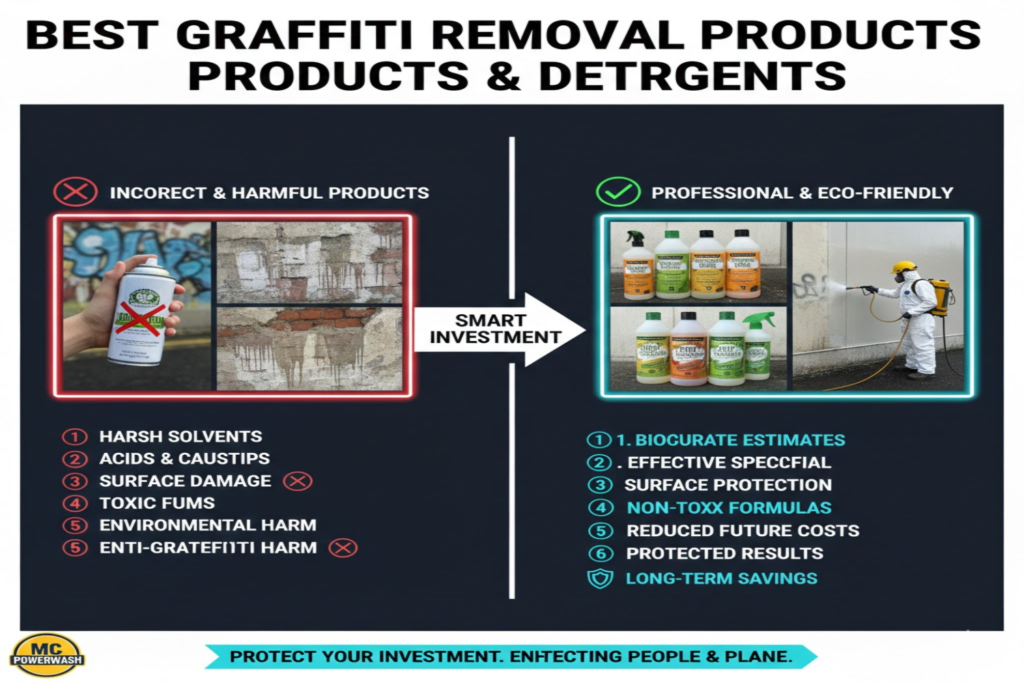
Best graffiti removal products & detergents are essential for safely eliminating spray paint, markers, tags, and etchings from brick, concrete, stucco, metal, glass, painted walls, and other surfaces without causing etching, discoloration, or structural damage. The right product depends on the surface porosity, paint type (solvent-based, water-based, enamel), age of the graffiti, and number of layers.
Effective graffiti removers dissolve or lift paint while being as gentle as possible on the substrate. Many modern formulations are biodegradable, low-odor, and environmentally safer than traditional harsh solvents. In places like Los Angeles, graffiti is common on brick facades, concrete walls, metal gates, and stucco buildings due to urban density and street art activity. property owners often face multi-color, layered tags that require strong yet surface-safe detergents.
Los Angeles surfaces frequently show deep penetration from solvent-based sprays used in the area. buildings benefit most from tested, high-performance graffiti removal products. Choosing the right detergent or remover restores surfaces effectively while minimizing repair costs. Always test first, protect surroundings, rinse thoroughly, and seal afterward. Professional services provide the most reliable results for complex cases. With the correct product and technique, graffiti can be removed completely while preserving original surfaces and structural integrity for years.
Why the Right Graffiti Remover Matters
Using the wrong product can etch brick faces, dissolve mortar joints, strip original paint, or leave permanent ghosting (faint outlines). Harsh solvents like methylene chloride or acetone burn delicate surfaces and create health hazards. Los Angeles Ineffective or overly aggressive detergents waste time and money with repeated applications. The best products penetrate paint quickly, lift it cleanly, and rinse off without residue. Many top-rated options are biodegradable and low-VOC, reducing environmental impact. Professional-grade removers outperform household alternatives significantly. Selecting the correct detergent ensures complete removal with minimal surface risk.
Citrus-Based Graffiti Removers
Citrus-based removers use natural d-limonene (derived from citrus peels) as the primary active ingredient to dissolve oil-based spray paints. Products like Citrus King Graffiti Remover, Graffiti Solutions Citrus Cleaner, and Tag Away Citrus work well on brick, concrete, metal, and painted surfaces. Apply with a low-pressure sprayer, let dwell 5–30 minutes, agitate lightly if needed, and rinse thoroughly. These removers are biodegradable, have pleasant citrus odor, and are relatively safe around plants when rinsed. They excel at removing fresh to moderate graffiti. Citrus products are widely used by property managers for their balance of effectiveness and safety.
Soy-Based & Bio-Based Graffiti Removers
Soy-based removers (such as Soy Gel Graffiti Remover, Dumond Smart Strip, and Bio-Kleen Graffiti Remover) use methylated soy esters to penetrate and lift paint. They are thick, cling well to vertical surfaces, and are highly biodegradable. Apply generously, cover with plastic for extended dwell (30 minutes to 24 hours), Los Angeles peel or rinse off softened paint. These products are low-odor, non-caustic, and safe on most masonry and painted surfaces. They perform excellently on layered or old graffiti. Soy removers are popular for environmentally sensitive areas and historic buildings.
Low-Odor Solvent Graffiti Removers
- Products like Prosoco Graffiti Remover, Dumond Laminated Graffiti Remover, and Krud Kutter
- Graffiti Remover use low-odor solvents to dissolve paint without strong fumes.
- They are effective on non-porous surfaces (metal, glass, sealed concrete) and some masonry.
- Apply, allow 10–20 minutes dwell, agitate with soft brush, and rinse.
- These removers are fast-acting and leave minimal residue.
- They are suitable for indoor or enclosed areas.
- Low-odor options reduce worker exposure and neighbor complaints.
- They provide reliable results on a wide range of surfaces.
Methylene Chloride-Based Removers (With Caution)
Traditional heavy-duty removers containing methylene chloride (such as some industrial-strength graffiti strippers) are extremely effective on tough, layered paint. They soften paint quickly (5–15 minutes) for scraping or rinsing. However, they are highly caustic, toxic, and require full PPE (respirator, gloves, goggles). Use only on non-porous surfaces and in well-ventilated areas. Many cities restrict or discourage their use due to health and environmental concerns. These are last-resort options for stubborn cases. Safer alternatives are preferred whenever possible.
Eco-Friendly & Non-Toxic Graffiti Detergents
Products like Simple Green Graffiti Remover, Bio-Shield, and Enviro Klean Graffiti Remover use plant-based surfactants and enzymes to break down paint. They are non-toxic, biodegradable, and safe around plants and waterways. Apply, let dwell 15–60 minutes, and rinse. These detergents work best on fresh graffiti or light tags. They produce minimal runoff impact. Eco options are slower but safer for residential and public spaces. They are increasingly popular for sustainable property maintenance.
Poultice-Style Graffiti Removers
Poultice removers (such as Prosoco Poultice Paint Remover or custom mixes with diatomaceous earth and solvent) draw paint out of porous surfaces like brick and concrete. Apply thick paste, cover, and allow 24–48 hours dwell. Peel dried poultice and rinse. These are highly effective for deep-set graffiti and ghosting. They minimize surface abrasion. Poultices are ideal for historic or delicate brick. They require patience but deliver excellent results on porous materials.
Graffiti Removal Products Comparison Table
| Product Type | Key Ingredient(s) | Best Surfaces | Dwell Time | Environmental Impact | Damage Risk | Cost Range (per gallon) | Effectiveness Rating |
| Citrus-Based | d-Limonene | Brick, concrete, metal, painted | 5–30 minutes | Low | Very Low | $25–$60 | Very Good |
| Soy-Based / Bio-Based | Methyl soy esters | Brick, masonry, concrete | 30 min–24 hours | Very Low | Very Low | $40–$90 | Excellent |
| Low-Odor Solvent | Proprietary low-VOC solvents | Metal, glass, sealed concrete | 10–20 minutes | Medium | Low | $30–$70 | Very Good |
| Methylene Chloride (Heavy) | Methylene chloride | Non-porous, tough cases | 5–15 minutes | High | Medium-High | $50–$100 | Excellent (with risk) |
| Eco / Non-Toxic | Plant surfactants & enzymes | All surfaces (light graffiti) | 15–60 minutes | Very Low | Very Low | $20–$50 | Good |
| Poultice Removers | Absorbent + solvent | Porous brick & stone | 24–48 hours | Low | Very Low | $40–$80 | Excellent (deep) |
Combining Products for Layered Graffiti
For multi-layer or aged graffiti, start with a citrus or soy stripper for initial softening. Follow with a poultice application to draw out remaining pigment. Finish with low-pressure rinsing or steam to remove residue. Staged removal prevents ghosting and surface damage. Layered graffiti often requires multiple products and applications. Patience and testing yield the best results. Combination approaches handle the toughest cases effectively.
Always test first, protect surroundings, rinse thoroughly, and seal afterward. Professional services provide the most reliable results for complex cases. With the correct product and technique, graffiti can be removed completely while preserving original surfaces and structural integrity for years.
Protecting Adjacent Surfaces & Landscaping
Cover nearby plants, windows, siding, and vehicles with plastic sheeting before application. Pre-wet grass and shrubs to dilute any runoff. Place absorbent tarps or drop cloths below the work area. Use containment systems to capture chemicals. Direct rinse water away from storm drains. Proper protection prevents collateral damage. Responsible removal safeguards the entire property.
Post-Removal Surface Care & Sealing
Allow the surface to dry completely (24–48 hours). Apply a breathable, penetrating silane/siloxane sealer to reduce future paint adhesion. Avoid film-forming sealers that trap moisture. Reapply sealer every 3–5 years. Sealed surfaces resist new graffiti better. Post-care extends protection and simplifies future removal. Sealing is the final step for long-term results.
Always test first, protect surroundings, rinse thoroughly, and seal afterward. Professional services provide the most reliable results for complex cases. With the correct product and technique, graffiti can be removed completely while preserving original surfaces and structural integrity for years.
Preventing Future Graffiti Recurrence
- Apply sacrificial anti-graffiti coatings that allow easy chemical removal of new tags.
- Use permanent penetrating sealers to make surfaces less absorbent.
- Install motion-sensor lighting or surveillance cameras in vulnerable areas.
- Add physical barriers or thorny landscaping near walls.
- Quick removal of new graffiti discourages repeat tagging.
- Prevention reduces removal frequency and costs.
- Proactive measures maintain clean surfaces long-term.
Common Mistakes When Using Graffiti Removal Products
Using too-strong solvents etches brick and mortar. Skipping test patches causes widespread discoloration. Applying on wet surfaces reduces effectiveness. Rinsing from bottom to top creates streaks. Not neutralizing chemicals leaves residue. Using high-pressure after chemicals forces paint deeper. Avoiding these errors prevents costly damage. Correct usage maximizes product performance.
Always test first, protect surroundings, rinse thoroughly, and seal afterward. Professional services provide the most reliable results for complex cases. With the correct product and technique, graffiti can be removed completely while preserving original surfaces and structural integrity for years.
When to Hire Professional Graffiti Removal Services
Professionals have access to commercial-grade removers, infrared systems, and low-pressure equipment. They carry insurance for accidental damage. Experienced crews assess surface type and adjust methods precisely. They handle containment, runoff, and disposal responsibly.
Professionals complete jobs faster and more uniformly. For large areas, historic surfaces, or multi-layer graffiti, expert service is essential. Professional removal protects value and appearance. Always test first, protect surroundings, rinse thoroughly, and seal afterward. Professional services provide the most reliable results for complex cases. With the correct product and technique, graffiti can be removed completely while preserving original surfaces and structural integrity for years.
Conclusion
Best graffiti removal products & detergents include citrus-based removers (d-limonene), soy/bio-based strippers, low-odor solvents, eco/non-toxic cleaners, and poultice systems—each chosen based on surface type, paint composition, and environmental concerns. Citrus and soy products offer excellent balance of effectiveness and safety, while poultices and heat methods excel on porous or stubborn graffiti.
In high-graffiti urban settings, selecting the right detergent prevents etching, discoloration, and costly repairs. Always test first, protect surroundings, rinse thoroughly, and seal afterward. Professional services provide the most reliable results for complex cases. With the correct product and technique, graffiti can be removed completely while preserving original surfaces and structural integrity for years.
Professionals have access to commercial-grade removers, infrared systems, and low-pressure equipment. They carry insurance for accidental damage. Experienced crews assess surface type and adjust methods precisely. They handle containment, runoff, and disposal responsibly. Professionals complete jobs faster and more uniformly. For large areas, historic surfaces, or multi-layer graffiti, expert service is essential. Professional removal protects value and appearance.
Frequently Asked Questions (FAQs)
1. What is the best overall graffiti removal product?
Citrus-based removers (d-limonene) and soy-based strippers offer the best combination of effectiveness, safety, and environmental impact. They work on brick, concrete, metal, and painted surfaces. They are biodegradable and low-odor. They remove most graffiti without harsh damage.
2. Are eco-friendly graffiti removers strong enough?
Yes, modern eco removers (soy, citrus, enzyme-based) effectively remove most graffiti. They may require longer dwell times or multiple applications. They protect the environment and plants. They are reliable alternatives to harsh solvents.
3. Can I use regular paint stripper for graffiti?
Some are safe, but avoid methylene chloride or caustic strippers on brick or porous surfaces. Use soy, citrus, or low-VOC products labeled for graffiti. Always test first and rinse thoroughly. The right stripper removes paint without etching.
4. How do poultice removers work on graffiti?
Poultices use absorbent material mixed with solvent to draw paint out of pores. Apply thickly, cover, and let sit 24–48 hours. Peel dried poultice and rinse. They are excellent for deep-set graffiti on brick and concrete.
5. Is there a completely chemical-free graffiti removal method?
Yes, steam cleaning or infrared heat removal softens paint without chemicals. Steam uses hot water vapor; infrared uses controlled heat. Both are effective and leave no residue. They are ideal for sensitive or historic surfaces.
6. How do I prevent graffiti remover from damaging brick?
Use low-concentration, biodegradable removers. Always test on a hidden area. Apply low pressure and rinse thoroughly. Use poultices for deep penetration instead of aggressive scrubbing. Proper technique protects brick integrity.
7. How long should graffiti remover dwell?
Dwell time varies: 5–30 minutes for citrus/soy on fresh tags, 1–24 hours for layered graffiti or poultices. Follow product instructions. Covering with plastic extends effectiveness. Correct dwell time ensures complete paint softening.
8. Should I seal surfaces after graffiti removal?
Yes, apply a breathable penetrating sealer (silane/siloxane-based) after cleaning. It reduces future paint adhesion and water absorption. Avoid film-forming sealers that trap moisture. Sealing makes future removal easier.
9. Are professional-grade graffiti removers worth the cost?
Yes, commercial products like Prosoco, Dumond, or Graffiti Solutions are stronger, faster, and safer than household alternatives. They reduce repeat applications and surface damage. They provide consistent results. Professional-grade is worth it for large or stubborn jobs.
10. What is the fastest graffiti removal product?
Citrus-based or low-odor solvent removers work fastest on fresh graffiti (5–20 minutes dwell). They soften paint quickly for rinsing or wiping. For layered or old tags, soy-based or poultice methods take longer but are more thorough. Speed depends on paint age and type.