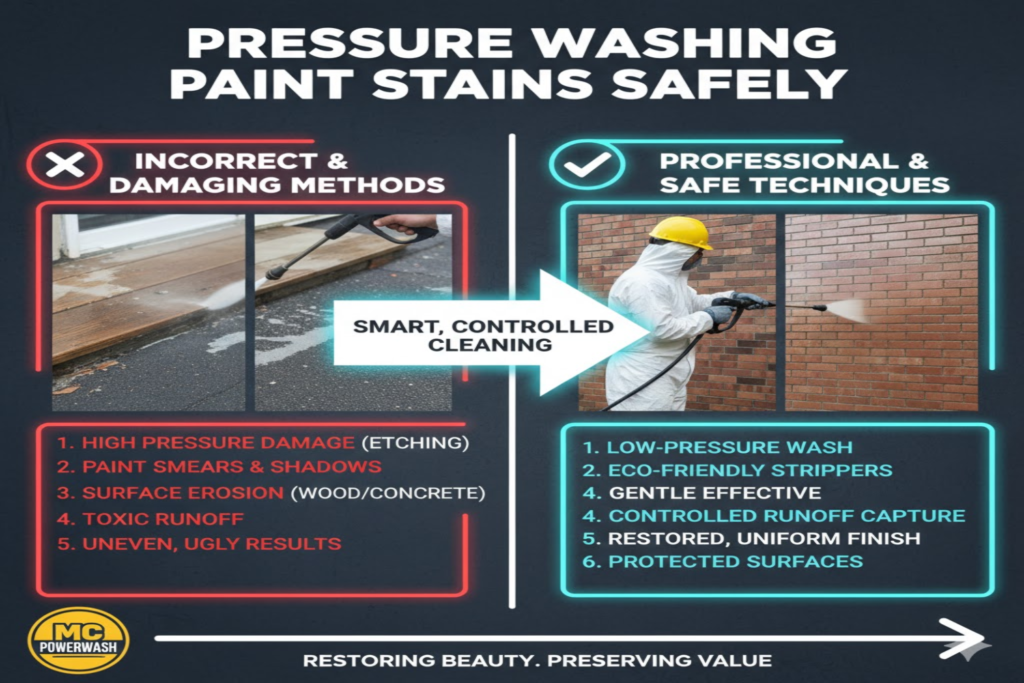
Pressure washing is one of the most effective ways to remove paint stains from concrete, brick, driveways, patios, fences, and exterior walls. When done correctly, it lifts old paint, splatters, overspray, and drips without excessive damage to the surface underneath. In Los Angeles, where many homes have stucco, concrete driveways, and painted garages exposed to sun and dust, safe pressure washing restores appearance quickly. The key is controlling pressure, choosing the right nozzle, using appropriate detergents, and testing first. High pressure can etch concrete, strip sealers, or force water into cracks causing future issues. Low-pressure techniques combined with paint strippers or hot water often work better than brute force alone. Safety gear, proper preparation, and post-cleaning care protect both the surface and the operator. Following best practices ensures professional-level results without costly mistakes.
Understanding Paint Stains and Surfaces
Paint stains vary widely depending on type—latex, oil-based, epoxy, or spray paint—and how long they have cured. Fresh latex paint is softer and easier to remove, while old oil-based paint bonds tightly to porous surfaces. Concrete and asphalt absorb paint deeply, brick holds it in mortar joints, wood can splinter under pressure, and stucco may crumble if too aggressive. In Los Angeles, sun-baked paint becomes brittle but also more stubborn due to UV curing. Each surface has different tolerance levels to PSI (pounds per square inch) and water temperature. Recognizing the stain age and substrate material guides the entire process. Wrong assumptions lead to etching, discoloration, or incomplete removal. Proper identification prevents unnecessary damage.
Why Safe Pressure Washing Matters
Aggressive pressure washing can pit concrete, remove protective sealers, erode grout, or embed paint deeper into pores. Once damage occurs, resurfacing or resealing becomes expensive. Safe methods preserve surface integrity, extend the life of driveways and patios, and maintain property value. They also reduce the risk of water intrusion behind siding or into foundations. Environmentally responsible techniques minimize chemical runoff into storm drains. In urban areas, compliance with local water regulations is essential. Safe cleaning avoids neighbor complaints about noise, spray, or overspray. Prioritizing safety and surface protection turns a messy job into a lasting improvement.
Assessing the Paint Stain Before Starting
Examine the stain to determine its type, age, thickness, and penetration level. Check if it is flaking, fully adhered, or layered over multiple applications. Test surface hardness with a fingernail scrape or small chisel. Identify the material—concrete, brick, wood, metal, or stucco—and note any existing cracks or sealers. Photograph the area for before-and-after comparison. In sunny climates, heat can make paint brittle, affecting removal strategy. Walk around to plan ladder access, electrical hazards, and nearby plants. A thorough assessment prevents surprises mid-job. It allows selection of the safest pressure, chemical, and technique combination.
Safety Gear and Preparation Essentials
Always wear chemical-resistant gloves, safety goggles, and closed-toe non-slip shoes. Use ear protection during long sessions and a respirator if using strong strippers. Set up caution tape to keep people and pets away. Cover nearby plants, windows, and cars with plastic sheeting. Turn off nearby electrical outlets and cap sprinklers. Have a first-aid kit, phone, and helper nearby for emergencies. Check weather forecast to avoid rain or high winds. Pre-rinse the area to remove loose dirt. Preparation reduces accidents and improves results significantly.
Choosing the Right Pressure Washer
- Select a machine with adjustable pressure from 500 to 3000 PSI.
- Electric models (1300–2000 PSI) are safer for home use than gas units (3000+ PSI).
- Hot-water pressure washers soften paint faster and require less chemical.
- Cold-water units work well with pre-treatment strippers.
- Nozzle selection is critical—use 25° or 40° wide fan tips for most surfaces.
- Narrow 0° tips concentrate force too much and should be avoided.
- Rent or buy units with soap injection systems.
- Match machine power to job size and surface delicacy.
- Proper equipment prevents over-aggression.
Best Nozzles and Pressure Settings
Wide-angle nozzles (25°–40°) distribute force evenly and reduce surface etching. Soap nozzles apply detergent at low pressure before switching to rinse. Start at 500–800 PSI for delicate surfaces like stucco or painted wood. Concrete driveways tolerate 1500–2200 PSI with caution. Increase gradually only if needed after testing. Keep the wand at least 12–18 inches from the surface. Use sweeping motions and avoid lingering in one spot. Correct settings lift paint without gouging. Testing on a hidden area confirms the safe range.
Pre-Treatment with Paint Strippers
Apply a quality paint stripper or graffiti remover designed for exterior use. Citrus-based or biodegradable strippers are safer for plants and runoff. Let the product dwell 10–30 minutes to soften the paint bond. Do not let it dry out completely. Agitate gently with a stiff brush for better penetration. Multiple applications may be necessary for thick layers. Rinse stripper residue thoroughly before pressure washing. Pre-treatment dramatically reduces required PSI. It protects surfaces from mechanical damage. Choose products compatible with your surface type.
Step-by-Step Safe Pressure Washing Process
Begin with a low-pressure pre-rinse to remove loose dirt and debris. Apply stripper evenly and allow proper dwell time. Lightly agitate stubborn spots with a soft brush. Switch to a wide fan nozzle and start at low PSI (500–1000). Work from bottom to top to avoid streaks. Maintain consistent distance and sweeping motion. Increase pressure only if paint lifts easily. Rinse thoroughly to remove all chemicals and loosened paint. Inspect for missed areas and repeat if needed. Allow surface to dry completely before evaluating results.
Using Hot Water Pressure Washing
Hot water (120–200°F) softens paint, oil, and adhesives quickly. It reduces chemical dependency and speeds up the job. Ideal for oil-based stains and heavy buildup. Requires a hot-water-capable machine. Keep pressure lower than cold-water settings due to increased effectiveness. Hot water helps break down stubborn stains on concrete driveways. Use with care on heat-sensitive surfaces like vinyl siding. Always test temperature and pressure first. Hot washing improves results on tough jobs. It minimizes surface abrasion.
Protecting Surrounding Areas
Cover plants, grass, and flower beds with plastic tarps or drop cloths. Wet nearby vegetation heavily before and after to dilute any overspray. Shield windows, doors, and cars from direct spray. Use wind barriers if working on windy days. Direct runoff away from storm drains if using chemicals. Collect wastewater if required by local rules. Proper protection prevents collateral damage. It maintains good neighbor relations. Thoughtful setup saves cleanup time later.
Post-Cleaning Surface Care
Rinse away all chemical residue to prevent discoloration or etching. Apply a concrete or masonry sealer after drying to protect pores. Reapply driveway sealcoat every 1–2 years. Inspect for any missed paint spots and touch up if necessary. Clean equipment thoroughly to avoid clogs. Store pressure washer properly to prevent damage. Document the job with photos for future reference. Post-care extends surface life and appearance. It prevents rapid re-staining. Consistent maintenance maintains results.
Common Mistakes to Avoid
Never start with maximum pressure on unknown surfaces. Avoid zero-degree nozzles that cut like knives. Do not use household bleach or acid without testing. Skipping pre-treatment forces higher pressure and more damage. Lingering in one spot causes pitting. Ignoring wind direction sprays chemicals onto unintended areas. Forgetting to rinse chemicals leaves residue. Working without protective gear risks injury. Avoiding mistakes ensures safe, effective cleaning. Learning proper technique prevents expensive repairs.
When to Call Professional Services
Hire professionals for large areas, multi-story exteriors, or delicate historic surfaces. They have commercial-grade hot-water machines and safe strippers. Pros handle wastewater disposal legally. They minimize damage through experience. In Los Angeles, certified teams understand local concrete types and sun exposure. Professionals finish faster with uniform results. Get multiple quotes and check insurance. Complex jobs or safety concerns warrant expert help. Professionals protect your investment long-term.
Environmental and Legal Considerations
Capture chemical runoff to prevent waterway contamination. Use biodegradable strippers whenever possible. Follow local regulations on pressure washing discharge. In some areas, permits are required for large jobs. Avoid phosphates and harsh VOCs. Dispose of waste paint responsibly. Eco-friendly methods maintain compliance. They protect community water quality. Responsible cleaning benefits everyone. Sustainable choices reduce long-term impact.
Alternative Methods to Pressure Washing
Chemical-only stripping works for sensitive surfaces. Use soy-based or citrus strippers with scraping. Soda blasting gently removes paint without water. Dry ice blasting leaves no residue. Manual scraping suits small spots. Heat guns soften paint for easy lifting. Each alternative has specific uses. They reduce pressure-related risks. Combining methods often yields best results. Choose based on surface and stain type.
Long-Term Prevention of Paint Stains
Use drop cloths and painter’s tape during future projects. Store paint cans upright and sealed tightly. Clean spills immediately before they set. Apply protective coatings to driveways and patios. Educate contractors on proper containment. Install splash guards near work areas. Regular cleaning prevents deep staining. Proactive habits reduce future removal needs. Prevention saves time and money. Consistent care keeps surfaces looking new.
Comparison Table: Pressure Washing vs Alternative Paint Removal Methods
| Method | Best For | Surface Safety | Speed | Cost (DIY) | Damage Risk | Chemical Use | Water Use | Effectiveness on Old Paint | Skill Level Required |
| Low-Pressure Washing + Stripper | Concrete, driveways, patios | High | Moderate | $100–$300 | Low | Medium | Medium | High | Moderate |
| Hot Water Pressure Washing | Oil-based, heavy buildup | Medium-High | Fast | $200–$500 | Medium | Low | High | Very High | Moderate-High |
| Chemical Stripping Only | Delicate stucco, wood | Very High | Slow | $50–$150 | Very Low | High | Low | High | Low |
| Soda Blasting | Masonry, brick, historic surfaces | Very High | Moderate | $300–$800 | Very Low | None | None | High | High (Pro) |
| Manual Scraping + Solvents | Small spots, fresh paint | High | Very Slow | $20–$80 | Low | Medium | Low | Medium | Low |
| Heat Gun + Scraping | Wood, metal, small areas | Medium | Slow | $50–$150 | Medium | Low | None | Medium-High | Moderate |
Choosing the Right Tools and Detergents
Invest in adjustable pressure washers with multiple nozzles. Select biodegradable, paint-specific detergents. Citrus-based cleaners cut grease and paint effectively. Avoid generic degreasers that harm sealers. Use surface-safe strippers labeled for concrete or masonry. Rent hot-water units for tough jobs. Quality tools and products reduce effort and damage. Match detergents to paint type. Proper selection improves results dramatically. Reliable equipment delivers consistent performance.
Conclusion
Pressure washing paint stains safely requires preparation, correct equipment, controlled pressure, and surface-specific techniques. Starting with pre-treatment, using wide nozzles, and keeping PSI low protects concrete, stucco, and other materials from etching or pitting. In Los Angeles, where sun-hardened paint and dusty surfaces are common, combining strippers with hot or low-pressure washing yields excellent results. Always prioritize safety gear, environmental care, and post-cleaning sealing. Whether DIY or professional, following proven steps removes stains effectively while preserving surface integrity. With careful planning and execution, your driveways, patios, and walls can look clean and new again. Safe pressure washing protects your property and delivers long-lasting improvements.
Frequently Asked Questions (FAQs)
1. What PSI is safe for pressure washing paint off concrete?
For most concrete surfaces, start at 1000–1500 PSI and increase only if needed up to 2200 PSI. Always use a 25° or 40° wide fan nozzle to distribute force. Test on a hidden area first. Higher pressure risks etching or pitting the concrete.
2. Can I use a regular pressure washer to remove old paint?
Yes, but pair it with a paint stripper or hot water for best results. Cold water alone often struggles with cured paint. Use low to medium pressure to avoid damage. Pre-treatment softens paint and reduces required PSI significantly.
3. Will pressure washing remove paint from stucco safely?
Low-pressure washing (under 1000 PSI) with a wide nozzle can work if paint is pre-softened. High pressure can chip or erode stucco texture. Test carefully and consider chemical stripping first. Professionals often use gentler methods for stucco.
4. Do I need hot water to remove oil-based paint stains?
Hot water (140–180°F) softens oil-based paint much faster than cold water. It reduces chemical use and effort. Cold water requires stronger strippers and more time. Hot washing is highly recommended for stubborn oil stains.
5. How do I protect plants during pressure washing?
Cover plants with plastic tarps or old sheets. Wet surrounding vegetation heavily before and after to dilute any overspray. Use biodegradable, plant-safe detergents. Rinse plants thoroughly once the job is finished.
6. What chemicals are best for paint stain removal?
Citrus-based or biodegradable paint strippers work well and are safer for the environment. Avoid harsh acids or strong alkalis on concrete. Choose products labeled for exterior surfaces. Always follow label instructions for dwell time and rinsing.
7. Can pressure washing damage concrete sealer?
Yes, high pressure or narrow nozzles can strip or dull concrete sealers. Use low pressure and wide fan tips to minimize risk. Reapply sealer after cleaning to restore protection. Testing first prevents unnecessary damage.
8. How long should paint stripper dwell before washing?
Most strippers need 10–30 minutes to soften paint effectively. Do not let the product dry out completely. Follow manufacturer guidelines for exact times. Longer dwell helps on thick or old layers.
9. Is it better to DIY or hire a professional for paint removal?
DIY works for small areas and fresh stains with proper tools. Professionals are better for large jobs, delicate surfaces, or oil-based paint. They have hot-water equipment and experience to avoid damage. Hiring pros saves time and reduces risk.
10. What should I do after pressure washing paint stains?
Rinse thoroughly to remove all chemicals and residue. Allow the surface to dry completely. Apply a fresh concrete or masonry sealer to protect pores. Inspect for missed spots and touch up if needed. Regular maintenance prevents future staining.