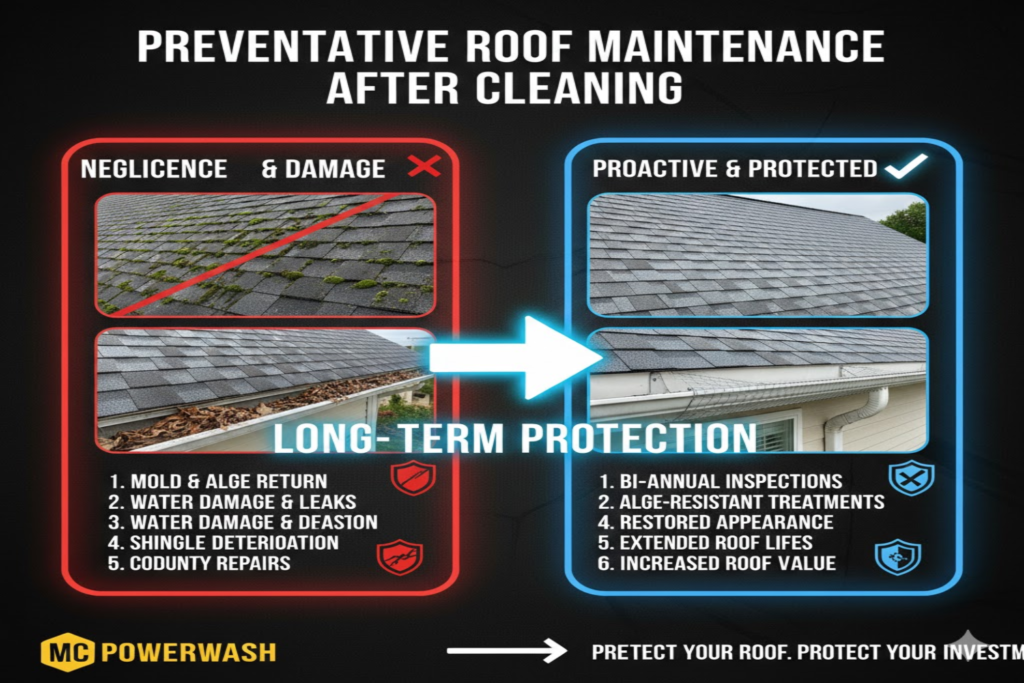
After cleaning your roof of algae, moss, and lichen, preventative maintenance becomes the most important step to protect your investment and avoid recurring growth. In Los Angeles, coastal humidity and foggy mornings create ideal conditions for quick regrowth if steps are not taken. Proper aftercare extends roof lifespan, preserves shingle granules, and maintains energy efficiency. Preventative measures include installing metal strips, improving ventilation, trimming trees, and scheduling regular inspections. These actions reduce moisture retention and block spore accumulation. Consistent habits prevent costly repairs and preserve curb appeal. Homeowners who follow through see fewer cleaning needs. Long-term roof health starts right after the cleaning is complete.
Why Preventative Care Matters After Cleaning
Cleaning removes visible growth but does not eliminate underlying causes like shade, humidity, and poor drainage. Without follow-up, algae and moss can return within months. Preventative steps create an environment where organisms struggle to reestablish. They protect asphalt shingles from granule loss and premature cracking. In Los Angeles, where ocean air adds persistent dampness, proactive care is especially valuable. It reduces mold risks inside attics and walls. Regular maintenance also supports insurance compliance. It keeps roofs performing at peak efficiency for heat reflection. Skipping these steps wastes the effort and cost of cleaning. A strong prevention plan maximizes every cleaning session.
How Soon to Start Preventative Measures
Begin preventative actions immediately after cleaning while the roof is still free of growth. Install zinc or copper strips within days to start ion release with the next rain. Trim overhanging branches the same week to increase sunlight exposure quickly. Schedule attic ventilation checks shortly after. Apply long-term algaecide treatments as the final rinse dries. Document the cleaning date to track future intervals. Early implementation maximizes effectiveness. Delaying allows spores to settle again. Quick action locks in the clean state. It sets the foundation for years of reduced maintenance.
Installing Zinc and Copper Strips
Zinc and copper strips are placed along the roof ridge and key valleys. Rainwater flows over the metal, releasing ions that inhibit algae, moss, and lichen growth. These strips create a protective zone up to 15 feet below each installation. Copper lasts longer and works more aggressively than zinc. Proper placement requires secure fastening to avoid wind uplift. They are nearly invisible once installed correctly. Replacement is needed every 10–20 years depending on climate. In humid regions they provide excellent long-term prevention. Combine with other methods for full coverage. Cost is low compared to repeated cleanings.
Trimming Trees and Overhanging Branches
Overhanging branches drop leaves, sap, and shade directly onto the roof surface. Trim them back at least 6–10 feet from the roof edge. Remove dead or weak limbs that could fall during storms. Increase sunlight to dry the roof faster after rain. This reduces moisture retention and slows organic growth. Hire certified arborists for large or high trees. Regular pruning every 1–2 years maintains the benefit. In Los Angeles, palm trees and eucalyptus are common culprits. Proper trimming also lowers fire risk in dry seasons. It improves roof access for future inspections.
Improving Attic Ventilation
- Poor attic ventilation traps heat and moisture beneath the roof deck.
- Install ridge vents, soffit vents, or powered attic fans to promote airflow.
- Aim for a balanced intake and exhaust system.
- Check baffles to ensure vents remain unobstructed.
- Proper ventilation lowers attic temperatures and reduces condensation.
- It prevents shingle curling and wood rot from the underside.
- Inspect vents for blockages or damage annually.
- In coastal climates, good airflow fights persistent humidity.
- Upgrading old systems can dramatically improve roof longevity.
- Combine with insulation checks for maximum benefit.
Keeping Gutters and Downspouts Clear
Clean gutters prevent water backup that soaks roof edges and fascia. Install gutter guards to reduce leaf and debris entry. Flush downspouts quarterly to confirm free flow. Extend downspout discharge away from the foundation. Clogged systems cause ice dams in winter and leaks year-round. Regular maintenance here protects roof perimeters. Use leaf blowers or professional services for high sections. In Los Angeles, urban dust adds to gutter load. Clean gutters enhance overall water management. They complement roof prevention perfectly.
Applying Preventative Roof Treatments
After cleaning, apply slow-release algaecide or moss-inhibiting sprays. These products create a residual barrier against spore germination. Choose roof-safe formulas that do not harm shingles. Reapply every 1–3 years based on exposure. Some treatments include zinc additives for extra protection. Test on a small area first. Professional application ensures even coverage. These sprays extend the time between cleanings significantly. They are especially useful in shaded or humid sections. Combine with metal strips for layered defense.
Regular Roof Inspections
Inspect your roof twice a year from the ground or ladder. Look for granule loss, curling shingles, or new dark streaks. Check flashing around chimneys, vents, and skylights. Document findings with photos for comparison over time. Early detection allows minor repairs before major damage. Hire professionals for steep or complex roofs. Inspections catch issues missed from street level. Schedule them in spring and fall. Consistent monitoring extends roof service life. It provides peace of mind and cost savings.
Maintaining Proper Roof Slope and Drainage
Ensure roof slope allows quick water runoff. Clear debris from valleys and low spots regularly. Repair sagging areas that pool water. Proper drainage prevents standing water that encourages moss. Check for ice dam risks in colder months. Realign gutters if settling has occurred. Good drainage works with ventilation to keep the roof dry. In areas with seasonal rain, it is critical. Address minor slope issues early. It protects shingles and underlayment from prolonged moisture.
Choosing Roof-Friendly Cleaning Products
Use only pH-balanced, bleach-free cleaners for future touch-ups. Avoid high-pressure washing that strips granules. Opt for soft-wash systems with low pressure. Select products labeled safe for asphalt shingles. Eco-friendly options reduce runoff impact. Store chemicals properly to maintain potency. Read labels carefully for dilution ratios. Quality products extend treatment effectiveness. They prevent accidental damage during spot cleaning. Always rinse thoroughly after application.
Protecting Roof from Environmental Factors
Apply UV-protective coatings if shingles show fading. Seal minor cracks or exposed nails promptly. Use algae-resistant shingles during replacement. Plant shade-tolerant ground cover instead of trees near the house. These steps reduce weathering and biological growth. Monitor for bird or insect activity that adds debris. In coastal zones, salt air accelerates corrosion. Protective measures slow degradation. They maintain roof integrity longer. Combine with ventilation for best results.
Seasonal Roof Maintenance Checklist
Spring: inspect after winter, clean gutters, trim new growth. Summer: check for heat damage, ensure ventilation works. Fall: remove leaves, install guards, apply treatments. Winter: monitor for leaks, clear snow gently if needed. Adjust checklist for local weather patterns. Document completed tasks each season. Use reminders to stay consistent. Seasonal care prevents surprises. It spreads workload evenly. Long-term adherence yields the best outcomes.
Benefits of Consistent Preventative Maintenance
- Consistent care extends roof life by 5–15 years.
- It reduces energy bills through better heat reflection.
- Prevents interior mold and structural rot.
- Maintains higher home resale value.
- Lowers insurance risks from water damage.
- Decreases frequency of full cleanings.
- Improves overall home health.
- Saves thousands compared to early replacement.
- Boosts curb appeal year-round.
- Proactive habits deliver reliable protection.
Common Mistakes to Avoid After Cleaning
Do not skip metal strip installation after cleaning. Avoid walking on wet roofs during inspections. Never ignore small leaks or damaged flashing. Refrain from using harsh chemicals on treated roofs. Do not allow branches to regrow unchecked. Skipping ventilation upgrades wastes potential. Overlooking gutter maintenance undermines efforts. Ignoring professional advice on steep roofs. Rushing treatments without drying time. Avoiding mistakes preserves results longer.
When to Call Professional Roofers
Call professionals for steep slopes or high roofs. Hire them for ventilation upgrades or major repairs. Seek experts after storm damage. Get annual inspections from certified roofers. They spot hidden issues homeowners miss. Professionals apply treatments safely and evenly. They ensure warranty compliance. Use pros for complex installations like copper strips. In Los Angeles, local experts understand coastal challenges. Professional involvement guarantees quality outcomes.
Long-Term Roof Replacement Planning
Monitor shingle age and performance closely. Plan replacement before leaks begin. Choose algae-resistant materials next time. Budget gradually for future costs. Document maintenance history for buyers. Upgrade underlayment and flashing during reroof. Select reputable contractors. Long-term planning avoids emergencies. It aligns with preventative habits. Smooth transitions keep roofs protected.
Comparison Table: Key Preventative Measures After Roof Cleaning
| Measure | How It Works | Frequency | Estimated Cost (DIY) | Estimated Cost (Pro) | Effectiveness | Ease of Implementation | Long-Term Impact |
| Zinc/Copper Strips | Rain releases ions to inhibit growth | Install once, replace 10–20 yrs | $100–$400 | $400–$1,200 | High | Moderate | Reduces growth for years |
| Tree Trimming | Increases sunlight, reduces debris | Every 1–2 years | $0–$300 | $300–$1,500 | High | Easy to Moderate | Dries roof faster, lowers fire risk |
| Attic Ventilation Upgrade | Promotes airflow, reduces moisture | Once + annual check | $200–$800 | $800–$3,000 | Very High | Difficult | Prevents rot, lowers energy costs |
| Gutter Guards Installation | Blocks large debris entry | Once + occasional clean | $300–$1,000 | $1,000–$3,500 | High | Moderate | Keeps gutters flowing, protects edges |
| Preventative Algaecide Spray | Creates residual barrier | Every 1–3 years | $50–$150 | $200–$600 | Moderate-High | Easy | Extends clean time between services |
| Biannual Roof Inspections | Early detection of issues | Twice yearly | Free (DIY) | $150–$400 | High | Easy | Saves money by catching problems early |
| Proper Drainage Maintenance | Prevents water pooling | After storms + annually | $0–$100 | $200–$800 | High | Moderate | Reduces moss and shingle damage |
| Roof-Safe Cleaning Products | Avoids granule loss during touch-ups | As needed | $30–$100 | Included in service | Moderate | Easy | Preserves shingle integrity |
Cost-Benefit Analysis of Preventative Roof Care
Investing in preventative measures after cleaning pays off quickly through avoided repairs. Metal strips cost little but prevent thousands in future cleanings. Ventilation upgrades reduce cooling bills in hot climates. Tree trimming lowers both roof and fire risks. Gutter guards save time and prevent edge damage. Annual inspections catch small problems before they escalate. Combined, these steps can extend roof life significantly. The return on investment appears in fewer service calls and longer material durability. Budget-conscious homeowners see the value in layered prevention. Proactive spending protects the entire home structure.
Final Tips for Sustaining a Clean Roof
Create a yearly calendar for inspections, trimming, and treatments. Take photos during each check for easy comparison. Store tools and products in one accessible place. Educate household members on warning signs. Join local home maintenance groups for tips. Use weather-resistant labels on treatments. Stay consistent even when the roof looks fine. Small habits compound into major savings. A clean roof reflects responsible ownership. Commit to ongoing care for lasting results.
Conclusion
Preventative roof maintenance after cleaning is the key to long-lasting protection and beauty. Simple steps like installing zinc strips, trimming trees, and improving ventilation stop regrowth before it starts. In Los Angeles, where humidity and urban debris challenge roofs, these measures make a noticeable difference. Regular inspections and proper drainage complete the defense system. Whether DIY or professional, consistency delivers the best outcomes. Protect your roof with proactive habits and enjoy peace of mind for decades. A well-maintained roof safeguards your home, wallet, and family.
Frequently Asked Questions (FAQs)
1. How soon after cleaning should I install zinc strips?
Install zinc or copper strips immediately after cleaning while the roof is free of growth. This allows ions to start working with the next rainfall. Early installation maximizes the protective zone. Delaying lets spores settle again quickly.
2. Do zinc strips really stop algae and moss permanently?
Zinc and copper strips do not stop growth permanently but significantly reduce it for 10–20 years. Rain spreads metal ions down the roof, creating a hostile environment for organisms. They work best on sloped roofs with good water flow. Combine with other methods for stronger results.
3. How often should I inspect my roof after cleaning?
Inspect your roof at least twice a year, ideally in spring and fall. Look for early signs of regrowth, granule loss, or damage. Ground-level checks with binoculars work for most homes. Professional inspections are recommended annually for steep roofs.
4. Can tree trimming alone prevent roof growth?
Tree trimming helps a lot by increasing sunlight and reducing debris drop. It dries the roof faster and limits organic material. However, it should be combined with metal strips or treatments for full prevention. Regular pruning every 1–2 years maintains the benefit.
5. Is better attic ventilation worth the investment?
Yes, improving attic ventilation is one of the best investments for roof longevity. It reduces moisture, heat, and condensation that feed growth. Lower attic temperatures also cut cooling costs. Upgrades pay for themselves through energy savings and fewer repairs.
6. Should I apply preventative sprays every year?
Most preventative algaecide sprays last 1–3 years depending on exposure and product strength. Reapply based on manufacturer guidelines and visible regrowth. Over-application is unnecessary and wasteful. Use roof-safe formulas to avoid damaging shingles.
7. How do gutter guards help roof maintenance?
Gutter guards prevent clogs that cause water backup onto roof edges. They keep fascia and soffits dry, reducing perimeter moss growth. Fewer gutter cleanings save time and money. They work best when combined with regular checks.
8. What if my roof is very steep or high?
For steep or high roofs, hire professional roofers for inspections and treatments. They use safety equipment and have experience with tricky surfaces. DIY attempts increase fall risks significantly. Professionals ensure even application and thorough checks.
9. Does preventative care increase home value?
Yes, documented preventative roof care boosts home value and buyer confidence. Clean, well-maintained roofs signal responsible ownership. It reduces buyer concerns about future repairs. Maintenance records support higher appraisals.
10. Can I do all preventative steps myself?
Many steps like trimming small branches, installing simple strips, and basic inspections are DIY-friendly. Complex tasks such as ventilation upgrades or work on steep roofs require professionals. Assess your skills and safety comfort level. A mix of DIY and pro help works best for most homeowners.