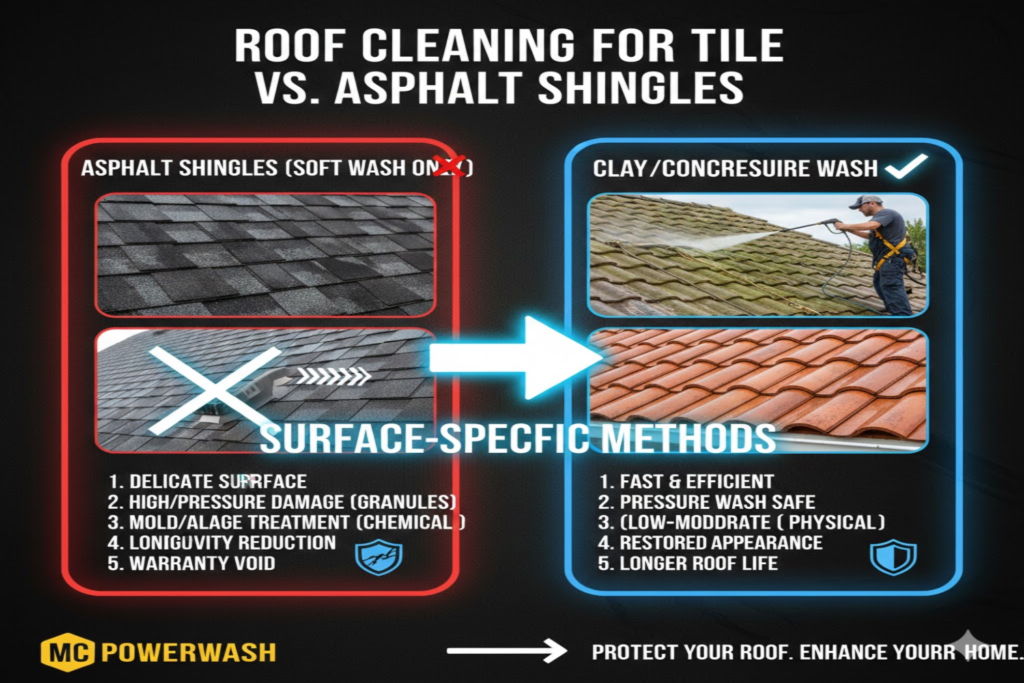
Roof cleaning for tile vs asphalt shingles requires completely different approaches because the two most common roofing materials respond very differently to cleaning methods, pressure, chemicals, and techniques. Asphalt shingles are relatively delicate and can suffer granule loss, cracking, or premature aging if cleaned too aggressively. Tile roofs (clay, concrete, or composite) are much more durable but have fragile interlocking edges, valleys, and coatings that can crack or chip if mishandled.
Choosing the wrong method for either material can lead to leaks, voided warranties, or thousands in replacement costs. In places like Los Angeles, constant urban smog, vehicle exhaust, and mild temperatures cause rapid black algae, moss, and oxidation buildup on both roof types. Tile roofs often show stubborn dark streaks in shaded areas due to pollution accumulation. Los Angeles asphalt shingle roofs develop heavy granule loss and streaking faster than in less polluted regions.
Homeowners must select cleaning methods carefully to protect their specific roof type. Understanding the differences ensures safe, effective, and long-lasting results.They adjust pressure, solution strength, and dwell time precisely for asphalt or tile. Experts protect warranties and avoid common DIY damage. Professionals complete jobs faster and more uniformly. They carry insurance for accidental issues. For most homeowners, professional service provides the safest results. Material differences make expert care especially valuable.
Why Cleaning Methods Differ Between Tile and Asphalt
Asphalt shingles have a thin asphalt layer topped with protective ceramic granules that shield against UV rays and weathering. Aggressive cleaning removes these granules, exposing the asphalt core to rapid deterioration. Tile roofs are solid, non-porous, and lack granules, so they tolerate more mechanical action but can crack or chip at edges. Tile roofs often have textured surfaces that trap algae deeply, Los Angeles requiring longer dwell times. Asphalt needs gentle chemical action with very low pressure.
Tile allows slightly higher pressure but demands careful rinsing to avoid water intrusion under tiles. The material structure dictates pressure, solution strength, dwell time, and rinsing technique. Using the wrong approach damages one material while being safe for the other. They adjust pressure, solution strength, and dwell time precisely for asphalt or tile. Experts protect warranties and avoid common DIY damage. Professionals complete jobs faster and more uniformly. They carry insurance for accidental issues. For most homeowners, professional service provides the safest results. Material differences make expert care especially valuable.
Asphalt Shingle Roof Cleaning Requirements
Asphalt shingles require soft washing using low pressure (under 500 PSI) to avoid stripping granules. Cleaning solutions should be diluted sodium hypochlorite (1–3%) with a surfactant for better adhesion. Dwell time of 10–20 minutes allows algae roots to be killed without surface abrasion. Rinse with a wide, low-pressure fan nozzle Los Angeles from top to bottom. Avoid any brushing or mechanical scrubbing. High-pressure washing voids most warranties and causes immediate granule loss. Soft washing preserves the protective layer and extends shingle life by 5–10 years. Asphalt roofs demand the gentlest possible method.
They adjust pressure, solution strength, and dwell time precisely for asphalt or tile. Experts protect warranties and avoid common DIY damage. Professionals complete jobs faster and more uniformly. They carry insurance for accidental issues. For most homeowners, professional service provides the safest results. Material differences make expert care especially valuable.
Tile Roof Cleaning Requirements
- Tile roofs can handle slightly higher pressure (500–800 PSI) because they are solid and non-porous.
- Soft washing remains the preferred method to prevent chipping at interlocking edges.
- Use 2–4% sodium hypochlorite solution with a surfactant to penetrate textured surfaces.
- Longer dwell time (15–30 minutes) is often needed to reach deep algae.
- Rinse carefully to avoid forcing water under tiles or into valleys.
- Brushing with soft bristles is acceptable on some tile types but should be minimal.
- Tile roofs are more forgiving but still require low-impact techniques.
- Proper tile cleaning removes deep buildup without structural damage.
Pressure Settings Comparison
Soft washing pressure for asphalt shingles should never exceed 500 PSI, ideally 200–400 PSI with wide nozzles. Tile roofs can tolerate 500–800 PSI but only with soft-wash equipment. High-pressure washing (1500+ PSI) is strictly prohibited for asphalt and risky even for tile. Pressure must be adjusted based on material, buildup, and roof slope. Too much force causes granule loss on asphalt and micro-cracks on tile. Low-pressure application is the safest common denominator. Correct pressure settings prevent the majority of cleaning-related damage.
Cleaning Solution Strength Differences
Asphalt shingles require very low concentrations (1–3% sodium hypochlorite) to avoid softening the asphalt binder or loosening granules. Tile roofs handle 2–4% solutions because they are chemically inert and non-porous. Oxygen-based cleaners (sodium percarbonate) work well on both but may need stronger mixes on tile. Surfactants are essential for both to improve adhesion and dwell time. Solution strength must match material sensitivity. Too strong a mix burns asphalt and causes streaking. Proper dilution ensures safety and effectiveness.
They adjust pressure, solution strength, and dwell time precisely for asphalt or tile. Experts protect warranties and avoid common DIY damage. Professionals complete jobs faster and more uniformly. They carry insurance for accidental issues. For most homeowners, professional service provides the safest results. Material differences make expert care especially valuable.
Dwell Time and Application Technique
Asphalt shingles need 10–20 minutes of dwell time so the solution kills algae roots without over-drying the surface. Tile roofs often require 15–30 minutes because algae embeds deeper in textured surfaces. Apply solution from top to bottom on both types. Use extension poles for ground-based application to minimize foot traffic. Asphalt cannot tolerate walking on the roof; tile allows careful walking with soft shoes. Dwell time and technique must be adjusted per material. Correct timing maximizes algae kill while minimizing risk.
Rinsing and Runoff Control
Rinse asphalt shingles with a wide, low-pressure fan pattern to avoid blasting granules. Tile roofs need thorough rinsing to remove solution from valleys and under edges. Direct runoff toward grassed areas or collection points to protect landscaping. Asphalt requires gentler rinsing to prevent streaking. Tile needs more volume to clear textured surfaces. Proper rinsing prevents residue and chemical damage. Runoff management is critical for both materials.
Warranty Implications for Cleaning
Most asphalt shingle warranties (20–50 years) require soft washing only; high-pressure or aggressive methods void coverage. Tile roof warranties are more flexible but still prohibit high pressure or harsh abrasives. Documenting the cleaning method (photos, receipts) strengthens warranty claims. Professional soft washing usually complies with both. DIY high-pressure attempts often void asphalt warranties. Warranty compliance protects your investment long-term. Choosing the right method preserves coverage.
Long-Term Benefits of Correct Cleaning
Proper cleaning of asphalt shingles prevents granule loss and oxidation, extending life by 5–15 years. Tile roofs stay free of deep algae, reducing water intrusion and rot. Both materials maintain reflectivity, lowering cooling costs. Clean roofs resist future buildup better. Correct methods avoid leaks, rot, and premature replacement. Long-term savings far exceed cleaning costs. Material-specific care maximizes roof performance.
They adjust pressure, solution strength, and dwell time precisely for asphalt or tile. Experts protect warranties and avoid common DIY damage. Professionals complete jobs faster and more uniformly. They carry insurance for accidental issues. For most homeowners, professional service provides the safest results. Material differences make expert care especially valuable.
Risks of Using the Wrong Cleaning Method
High-pressure washing on asphalt causes immediate granule loss and cracking. Aggressive pressure on tile chips edges and forces water underneath. Harsh chemicals soften asphalt and cause streaking. Incorrect rinsing leaves residue on both materials. Walking on wet asphalt dislodges granules. Using asphalt methods on tile leaves deep algae behind. Wrong techniques cause more damage than neglect. Material-specific methods prevent costly mistakes.
Roof Cleaning Comparison Table – Tile vs Asphalt Shingles
| Aspect | Asphalt Shingles | Tile Roofs | Key Difference | Recommended Method |
| Pressure Limit | 200–500 PSI (soft wash only) | 500–800 PSI (low pressure preferred) | Asphalt much more sensitive | Soft washing both |
| Solution Strength | 1–3% sodium hypochlorite | 2–4% sodium hypochlorite | Tile tolerates stronger mixes | Dilute carefully |
| Dwell Time | 10–20 minutes | 15–30 minutes | Tile needs longer for deep texture | Adjust per material |
| Rinsing Technique | Wide, low-pressure fan nozzle | Thorough rinsing of valleys/edges | Tile requires more volume | Gentle & complete |
| Walking on Roof | Avoid completely | Possible with soft shoes | Asphalt cannot tolerate foot traffic | Ground-based preferred |
| Granule Loss Risk | Very high with wrong method | None (no granules) | Asphalt unique vulnerability | Low pressure essential |
| Warranty Risk | High if high pressure used | Moderate | Asphalt warranties stricter | Soft wash compliance |
Best Practices for Both Roof Types
Always use soft washing as the base method for both asphalt and tile. Work from ground level with extension poles whenever possible. Pre-wet and protect landscaping on both. Test cleaning solution on a small area first. Rinse thoroughly and monitor for residue. Document the process for warranty records. Schedule cleaning every 12–24 months. Consistent best practices protect both materials effectively.
Proper care extends roof life significantly. They adjust pressure, solution strength, and dwell time precisely for asphalt or tile. Experts protect warranties and avoid common DIY damage. Professionals complete jobs faster and more uniformly. They carry insurance for accidental issues. For most homeowners, professional service provides the safest results. Material differences make expert care especially valuable.
When to Hire Professional Roof Cleaners
Professionals have material-specific training, commercial soft-wash equipment, and safety certifications. They adjust pressure, solution strength, and dwell time precisely for asphalt or tile. Experts protect warranties and avoid common DIY damage. Professionals complete jobs faster and more uniformly. They carry insurance for accidental issues. For most homeowners, professional service provides the safest results. Material differences make expert care especially valuable.
Conclusion
Roof cleaning for tile vs asphalt shingles demands different pressure settings, solution strengths, dwell times, and techniques because asphalt is delicate and granule-dependent while tile is durable but textured and edge-sensitive. Soft washing remains the safest and most effective method for both, but asphalt requires gentler pressure (under 500 PSI) and lower solution concentrations (1–3%) to prevent granule loss and warranty voids. Tile allows slightly higher pressure (up to 800 PSI) and stronger mixes (2–4%) but needs careful rinsing to avoid water intrusion.
In high-pollution environments, understanding these differences prevents damage, extends roof life, and maintains appearance. Regular professional soft washing tailored to the material protects your investment long-term. Choosing the right cleaning approach for your specific roof type is essential for safety, durability, and cost savings. They adjust pressure, solution strength, and dwell time precisely for asphalt or tile. Experts protect warranties and avoid common DIY damage. Professionals complete jobs faster and more uniformly. They carry insurance for accidental issues. For most homeowners, professional service provides the safest results. Material differences make expert care especially valuable.
Frequently Asked Questions (FAQs)
1. Can I use the same cleaning method for tile and asphalt roofs?
No, asphalt shingles require gentler low-pressure soft washing (under 500 PSI) to avoid granule loss. Tile roofs can handle slightly higher pressure (500–800 PSI) but still need soft washing. The method must be adjusted for material sensitivity. Using one approach for both risks damage to asphalt.
2. Is soft washing safe for both tile and asphalt shingles?
Yes, soft washing is the recommended method for both materials. It uses low pressure and targeted solutions to remove algae without harm. Asphalt benefits from very low pressure and dilute mixes. Tile allows a bit more pressure but still requires careful soft washing.
3. Why is asphalt shingle cleaning more delicate?
Asphalt shingles have a thin asphalt layer topped with granules that protect against UV and weathering. Aggressive cleaning strips granules, exposing the core to rapid deterioration. Tile roofs are solid and granule-free, so they tolerate more mechanical action. Asphalt demands the gentlest techniques.
4. Can high-pressure washing be used on tile roofs?
It is possible but not recommended. High pressure risks chipping edges or forcing water under tiles. Soft washing (500–800 PSI max) is safer and more effective for tile. Low-pressure methods prevent cracks and leaks. Soft washing is preferred for both materials.
5. How does solution strength differ between tile and asphalt?
Asphalt requires 1–3% sodium hypochlorite to avoid softening the binder. Tile roofs handle 2–4% because they are chemically inert. Stronger mixes on asphalt cause streaking or damage. Dilution must match material tolerance. Proper strength ensures safety.
6. Does tile roof cleaning take longer than asphalt?
Yes, tile often requires longer dwell time (15–30 minutes) to penetrate textured surfaces. Asphalt needs 10–20 minutes. Tile rinsing takes more volume to clear valleys and edges. Material texture affects cleaning time. Both benefit from careful application.
7. Will the wrong method void my roof warranty?
Yes, high-pressure washing or harsh chemicals often voids asphalt shingle warranties. Tile warranties are more flexible but still prohibit aggressive methods. Soft washing complies with most guidelines. Documenting the process protects coverage. Warranty-safe cleaning is essential.
8. Can I clean both roof types myself safely?
DIY is possible but risky, especially on asphalt. Use soft-wash equipment and follow material-specific guidelines. Asphalt is too delicate for most homeowners. Professionals have the right tools and experience. Professional service reduces damage risk significantly.
9. How often should each roof type be cleaned?
Both benefit from cleaning every 12–24 months in polluted areas. Asphalt may need more frequent attention due to granule concerns. Tile can often go longer between cleanings. Schedule based on buildup and exposure. Consistent care protects both materials.
10. Is professional cleaning worth it for tile vs asphalt?
Yes, professionals tailor pressure, solution, and technique to each material. They prevent damage and warranty issues. Asphalt benefits more due to its delicacy. Tile cleaning is safer but still improved by expert care. Professional service delivers the best long-term results.