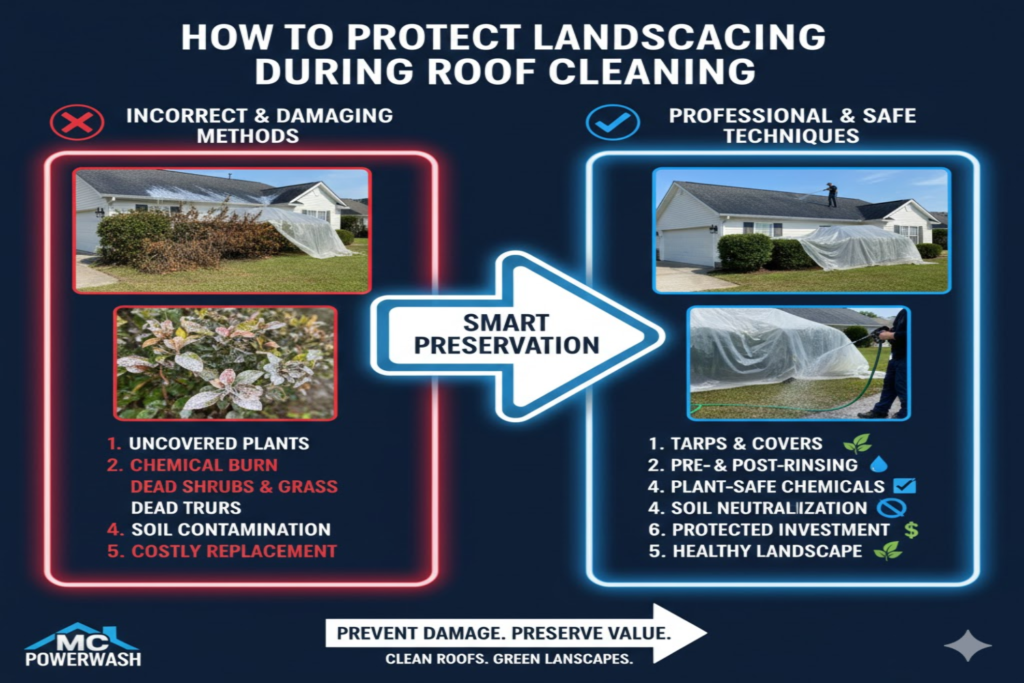
How to protect landscaping during roof cleaning is a critical concern for homeowners who want to remove black algae, moss, smog residue, bird droppings, and dirt from roofs without harming grass, flowers, shrubs, trees, or soil. Roof cleaning solutions—especially those containing sodium hypochlorite (bleach), surfactants, or algaecides—can cause chemical burn, yellowing, wilting, or even plant death if not handled properly. Runoff from the roof can carry concentrated cleaners directly onto landscaping below.
Proper preparation, application techniques, and post-cleaning care prevent damage and keep your yard healthy. In places like, constant urban smog and pollution mean roofs often require stronger cleaning solutions, increasing the risk to nearby plants. Los Angeles homeowners frequently deal with delicate drought-tolerant landscaping and native plants that are sensitive to chemical exposure. Los Angeles properties often have tight spacing between roofs and gardens, making runoff control essential.
landscapes stay vibrant and undamaged when homeowners follow proven protection strategies. Protecting your plants is just as important as cleaning the roof itself.Healthy soil microbes recover quickly when chemicals are minimal and rinsed properly. Regular deep watering helps flush any residual traces. Mulching after cleaning retains moisture and protects roots. Avoid fertilizing for 2–4 weeks to let plants recover. Healthy landscaping bounces back fully. Consistent eco-friendly practices maintain yard vitality. Proper care ensures no lasting damage.
Why Landscaping Protection Matters
Roof cleaning chemicals can alter soil pH, burn leaf tissue, and harm root systems when they reach the ground. Even mild solutions cause temporary stress that weakens plants for weeks or months. Native and drought-resistant plants common in dry climates are especially vulnerable to sudden chemical exposure. Runoff entering storm drains affects local waterways and wildlife. Damaged landscaping reduces curb appeal and requires costly replacement. Proper protection maintains the beauty and health of your yard. It also prevents disputes with neighbors over overspray or runoff.
Healthy soil microbes recover quickly when chemicals are minimal and rinsed properly. Regular deep watering helps flush any residual traces. Mulching after cleaning retains moisture and protects roots. Avoid fertilizing for 2–4 weeks to let plants recover. Healthy landscaping bounces back fully. Consistent eco-friendly practices maintain yard vitality. Proper care ensures no lasting damage.
Pre-Cleaning Preparation Steps
Before any cleaning solution is applied, thoroughly pre-wet all plants, grass, shrubs, and flowers with plain water using a garden hose. This dilutes any future runoff and helps plants resist chemical absorption. Cover sensitive or high-value plants (ferns, impatiens, Los Angeles succulents, young trees) with breathable plastic sheeting or painter’s drop cloths. Secure covers with stakes or weights so they don’t blow away. Move potted plants away from the drip line if possible. Clear toys, furniture, or outdoor items from the work area. Preparation creates a protective barrier and minimizes risk.
Healthy soil microbes recover quickly when chemicals are minimal and rinsed properly. Regular deep watering helps flush any residual traces. Mulching after cleaning retains moisture and protects roots. Avoid fertilizing for 2–4 weeks to let plants recover. Healthy landscaping bounces back fully. Consistent eco-friendly practices maintain yard vitality. Proper care ensures no lasting damage.
Choosing Plant-Safe Cleaning Solutions
Use the lowest effective concentration of sodium hypochlorite (1–2% for most roofs) to reduce potential harm. Add chlorine-stable surfactants sparingly to improve adhesion without excess runoff. Consider oxygen-based cleaners (sodium percarbonate) or commercial eco-friendly products labeled “plant-safe” and “biodegradable.” Vinegar-based solutions Los Angeles (10–20% horticultural vinegar) are milder alternatives for light buildup. Avoid high-bleach mixes or untested homemade solutions. The right detergent significantly lowers plant risk. Always test a small hidden area first.
Healthy soil microbes recover quickly when chemicals are minimal and rinsed properly. Regular deep watering helps flush any residual traces. Mulching after cleaning retains moisture and protects roots. Avoid fertilizing for 2–4 weeks to let plants recover. Healthy landscaping bounces back fully. Consistent eco-friendly practices maintain yard vitality. Proper care ensures no lasting damage.
Application Techniques to Minimize Overspray
- Apply cleaning solution using low-pressure soft washing (under 500 PSI) from ground-based extension poles whenever possible.
- This reduces airborne mist and direct overspray.
- Start application from the roof ridge downward so runoff follows the natural flow path.
- Work in small sections to control the amount of solution used.
- Use wide-angle nozzles to create a gentle fan pattern instead of a concentrated stream.
- Avoid spraying directly toward plants or windy conditions.
- Controlled application keeps most solution on the roof surface.
Containing and Diverting Runoff
Place heavy-duty tarps or plastic sheeting on the ground below the roof edge to catch falling runoff. Angle tarps so water flows toward grassed areas or away from flower beds. Use absorbent materials or sandbags to create small berms that redirect runoff. Direct downspouts and gutters away from sensitive landscaping during the job. Pump or vacuum excess solution if heavy runoff occurs.
Proper containment prevents chemicals from reaching soil and roots. Runoff management is the most important protection step.Direct downspouts and gutters away from sensitive landscaping during the job. Pump or vacuum excess solution if heavy runoff occurs. Proper containment prevents chemicals from reaching soil and roots. Runoff management is the most important protection step.
Protecting Different Types of Plants
Lawn grass is relatively resilient but still needs heavy pre-wetting and thorough post-rinsing. Flowering annuals (petunias, marigolds) and delicate perennials are highly sensitive—cover them completely. Succulents and cacti can suffer burn from even mild solutions; use double tarps and rinse immediately. Trees and large shrubs may need trunk wrapping with burlap if directly under the drip line. Drought-tolerant natives (lavender, salvia) tolerate better but still require protection. Match protection level to plant sensitivity.
Healthy soil microbes recover quickly when chemicals are minimal and rinsed properly. Regular deep watering helps flush any residual traces. Mulching after cleaning retains moisture and protects roots. Avoid fertilizing for 2–4 weeks to let plants recover. Healthy landscaping bounces back fully. Consistent eco-friendly practices maintain yard vitality. Proper care ensures no lasting damage.
Post-Cleaning Rinse and Recovery Care
Immediately after roof cleaning, thoroughly rinse all plants, grass, and soil with large volumes of plain water for 10–15 minutes. This flushes away any residual chemicals before they cause damage. Water deeply to dilute any solution that reached the soil. Monitor plants for 1–2 weeks for signs of stress (wilting, yellowing, leaf drop). Provide extra shade or mulch if needed to aid recovery. Avoid fertilizing or stressing plants during this period. Proper post-rinsing prevents most long-term damage.
Direct downspouts and gutters away from sensitive landscaping during the job. Pump or vacuum excess solution if heavy runoff occurs. Proper containment prevents chemicals from reaching soil and roots. Runoff management is the most important protection step.
When to Hire Professional Roof Cleaners
Professional soft-wash companies have experience protecting landscaping with containment systems, plant-safe solutions, and runoff control. They use ground-based application to minimize overspray. Certified technicians understand dilution ratios and dwell times that reduce risk. Professionals carry insurance in case of accidental damage. They complete the job faster and more uniformly. For most homeowners, professional service provides the best plant protection. DIY attempts often cause more harm than good.
Healthy soil microbes recover quickly when chemicals are minimal and rinsed properly. Regular deep watering helps flush any residual traces. Mulching after cleaning retains moisture and protects roots. Avoid fertilizing for 2–4 weeks to let plants recover. Healthy landscaping bounces back fully. Consistent eco-friendly practices maintain yard vitality. Proper care ensures no lasting damage.
Common Mistakes That Harm Landscaping
Skipping pre-wetting leaves plants vulnerable to chemical absorption. Using too-strong bleach solutions causes severe burn even with rinsing. Spraying on windy days creates uncontrolled overspray. Failing to rinse plants afterward allows residue to sit on leaves. Not covering delicate flowers or potted plants leads to direct exposure.
Ignoring runoff flow direction damages flower beds. Avoiding these mistakes prevents most plant injury.Direct downspouts and gutters away from sensitive landscaping during the job. Pump or vacuum excess solution if heavy runoff occurs. Proper containment prevents chemicals from reaching soil and roots. Runoff management is the most important protection step.
Eco-Friendly Alternatives for Maximum Protection
Choose oxygen-based cleaners (sodium percarbonate) that break down into water, oxygen, and soda ash. Use steam cleaning for completely chemical-free results. Apply vinegar solutions for mild buildup. These methods reduce chemical risk to near zero. Combine with manual brushing for light cases. Eco options protect both plants and the environment. Sustainable choices deliver clean roofs without compromise.
Direct downspouts and gutters away from sensitive landscaping during the job. Pump or vacuum excess solution if heavy runoff occurs. Proper containment prevents chemicals from reaching soil and roots. Runoff management is the most important protection step.
Roof Cleaning Landscaping Protection Checklist Table
| Step | Action Required | Why It Protects Plants | Tools/Supplies Needed | Done (Yes/No) |
| 1. Pre-wet landscaping | Soak grass, plants, shrubs with plain water | Dilutes future runoff | Garden hose | |
| 2. Cover sensitive plants | Use plastic sheeting or drop cloths | Blocks direct contact | Tarps, stakes, clips | |
| 3. Choose low-impact solution | Use 1–2% SH or oxygen-based cleaner | Reduces chemical strength | Measuring tools, proper detergent | |
| 4. Use ground-based application | Apply with extension poles, low pressure | Minimizes airborne mist | Extension poles, soft-wash sprayer | |
| 5. Contain runoff | Place tarps and direct flow to grass | Prevents soil contamination | Heavy tarps, sandbags | |
| 6. Rinse plants immediately | Flush all foliage and soil after cleaning | Removes residual chemicals | Hose with strong flow | |
| 7. Monitor plants for 1–2 weeks | Watch for wilting, yellowing, leaf drop | Allows early recovery action | None |
Signs Your Plants Are Stressed After Cleaning
Yellowing or browning leaf edges indicate chemical burn. Wilting despite watering shows root damage. Leaf drop or curling signals stress. White powdery residue on leaves means undiluted solution contact. Stunted growth or discoloration appears days later. Monitor closely and rinse again if symptoms appear. Early detection allows recovery before permanent harm.
Healthy soil microbes recover quickly when chemicals are minimal and rinsed properly. Regular deep watering helps flush any residual traces. Mulching after cleaning retains moisture and protects roots. Avoid fertilizing for 2–4 weeks to let plants recover. Healthy landscaping bounces back fully. Consistent eco-friendly practices maintain yard vitality. Proper care ensures no lasting damage.
Long-Term Landscaping Health After Roof Cleaning
Healthy soil microbes recover quickly when chemicals are minimal and rinsed properly. Regular deep watering helps flush any residual traces. Mulching after cleaning retains moisture and protects roots. Avoid fertilizing for 2–4 weeks to let plants recover. Healthy landscaping bounces back fully. Consistent eco-friendly practices maintain yard vitality. Proper care ensures no lasting damage.
Combining Roof Cleaning with Garden Maintenance
Clean gutters first to prevent dirty roof water from spilling onto plants. Trim overhanging branches to reduce future debris and shade. Install rain barrels to capture clean roof runoff for garden use. Apply mulch around plants to protect soil from future cleaning. Coordinate roof and garden care for best results. Integrated maintenance benefits both roof and yard. Holistic care creates a healthier property.
Conclusion
How to protect landscaping during roof cleaning involves pre-wetting plants, using low-concentration or eco-friendly solutions, applying from ground-based low-pressure systems, containing runoff with tarps, rinsing thoroughly afterward, and monitoring plants for stress. These steps prevent chemical burn, soil contamination, and long-term damage to grass, flowers, shrubs, and trees.
In urban environments with heavy pollution and tight yard spacing, careful protection becomes even more important. Choosing soft washing professionals who prioritize plant safety ensures the best outcome. With proper preparation and post-care, you can have a clean roof and a healthy, beautiful landscape at the same time. Responsible roof cleaning protects both your home and your garden.
Healthy soil microbes recover quickly when chemicals are minimal and rinsed properly. Regular deep watering helps flush any residual traces. Mulching after cleaning retains moisture and protects roots. Avoid fertilizing for 2–4 weeks to let plants recover. Healthy landscaping bounces back fully. Consistent eco-friendly practices maintain yard vitality. Proper care ensures no lasting damage.
Frequently Asked Questions (FAQs)
1. Can roof cleaning chemicals kill my plants?
Yes, undiluted or high-concentration bleach causes severe burn, yellowing, and death. Even mild solutions harm sensitive plants without protection. Proper dilution, pre-wetting, and rinsing prevent most damage. Eco-friendly alternatives reduce risk significantly.
2. How do I pre-wet plants before roof cleaning?
Use a garden hose to soak grass, shrubs, flowers, and tree foliage thoroughly until soil is wet 4–6 inches deep. Do this 10–15 minutes before applying cleaner. Pre-wetting dilutes any runoff. Repeat rinsing after cleaning.
3. What is the safest roof cleaning method for plants?
Soft washing with oxygen-based cleaners (sodium percarbonate) or steam cleaning is safest. These break down naturally without harmful residue. Low-pressure application minimizes overspray. Professional eco-friendly services provide maximum plant protection.
4. Should I cover all my plants during roof cleaning?
Cover delicate flowers, young plants, ferns, and anything directly under the drip line. Use breathable plastic or drop cloths secured with stakes. Pre-wet and rinse uncovered plants heavily. Targeted covering protects sensitive species best.
5. How long should I rinse plants after roof cleaning?
Rinse foliage and soil for at least 10–15 minutes with a strong hose stream. Water deeply to flush chemicals from roots. Continue until runoff runs clear. Thorough rinsing prevents most long-term damage.
6. Can I use vinegar instead of bleach to protect plants?
Yes, diluted horticultural vinegar (10–20%) is much gentler on plants. It kills algae and moss with minimal risk when rinsed properly. Vinegar breaks down naturally. It is a popular eco-friendly alternative.
7. What if my plants show damage after cleaning?
Rinse again immediately and provide extra water for 1–2 weeks. Trim damaged leaves to encourage new growth. Avoid sun stress or fertilizer until recovery. Most plants recover fully with prompt care.
8. Do professionals protect landscaping better than DIY?
Yes, professionals use containment systems, plant-safe solutions, and controlled application. They have experience minimizing runoff and overspray. Certified soft-wash crews prioritize landscaping protection. Professional service reduces plant risk significantly.
9. How do I prevent runoff from entering storm drains?
Direct tarps and runoff toward grassed areas or collection points. Use absorbent materials to capture excess. Pump or vacuum heavy solution if needed. Responsible runoff management protects waterways.
10. Is it worth hiring pros just for plant protection?
Yes, professionals prevent costly plant replacement and ensure even, safe cleaning. DIY attempts often cause more damage. The peace of mind and healthy landscaping justify professional service. Quality work protects both roof and yard.