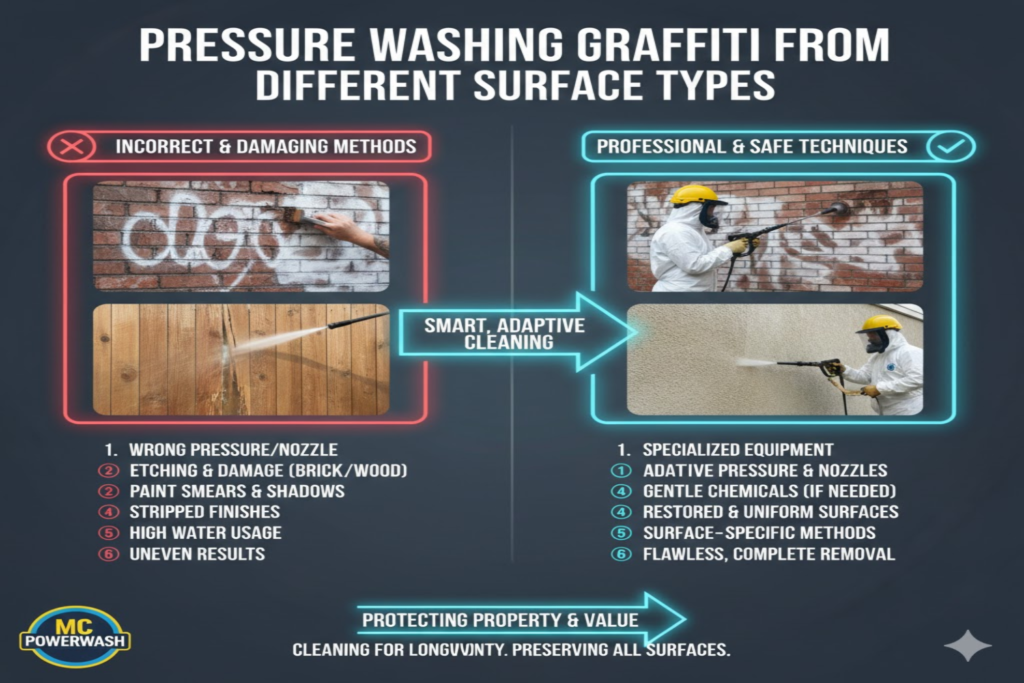
Pressure washing graffiti from different surface types requires precise control of pressure settings, nozzle selection, distance, temperature, and pre-treatment to remove spray paint, markers, and tags without etching, cracking, stripping, or causing permanent damage to brick, concrete, stucco, metal, glass, painted walls, wood, or other materials. Using too much pressure or the wrong technique can destroy brick faces, erode mortar joints, remove protective sealers, or drive paint deeper into porous surfaces, creating worse ghosting than the original graffiti. Safe pressure washing uses low to moderate PSI (500–1500 PSI for most surfaces), wide fan nozzles (25–40 degrees), and hot water when needed.
In places like, graffiti is extremely common on brick facades, concrete sidewalks, stucco buildings, and metal gates due to urban density and street activity. Los Angeles surfaces often show layered, solvent-based tags that penetrate deeply and require careful pressure control. Los Angeles property owners frequently deal with public-facing brick and concrete that cannot tolerate aggressive washing. cleanup jobs benefit greatly from surface-specific pressure settings. Proper technique removes graffiti effectively while preserving the original surface finish and structural integrity.
Apply sacrificial anti-graffiti coatings for easy future removal. Use penetrating sealers to make surfaces less absorbent. Install motion-sensor lighting or cameras in vulnerable areas. Add physical barriers near walls. Quick removal of new tags discourages repeat tagging. Prevention reduces cleaning frequency. Proactive measures maintain clean surfaces.
Why Pressure Settings Must Change by Surface Type
Every surface has a different hardness, porosity, and coating that determines how much pressure it can safely withstand. Brick and soft mortar crumble under high pressure. Concrete can handle more force but still etches if too aggressive. Painted or stucco surfaces peel or crack easily. Metal and glass tolerate higher pressure but can dent or scratch. Using one universal pressure setting causes damage on sensitive materials and poor results on hard ones. Surface-specific pressure prevents etching, cracking, and ghosting. Correct PSI is the most important factor in safe graffiti removal.
Apply sacrificial anti-graffiti coatings for easy future removal. Use penetrating sealers to make surfaces less absorbent. Install motion-sensor lighting or cameras in vulnerable areas. Add physical barriers near walls. Quick removal of new tags discourages repeat tagging. Prevention reduces cleaning frequency. Proactive measures maintain clean surfaces.
Pressure Washing Brick Surfaces
Brick is highly porous and has soft mortar joints, so high pressure (above 1000 PSI) erodes the face and joints, creating permanent pitting and structural weakness. Use 500–800 PSI with a wide 40-degree fan nozzle. Pre-treat with citrus or soy-based graffiti remover to soften paint. Hold the wand 12–18 inches away. Work top to bottom to avoid streaking. Rinse thoroughly to remove residue. Brick requires the lowest safe pressure. Low-pressure soft washing protects historic and modern brick alike.
Apply sacrificial anti-graffiti coatings for easy future removal. Use penetrating sealers to make surfaces less absorbent. Install motion-sensor lighting or cameras in vulnerable areas. Add physical barriers near walls. Quick removal of new tags discourages repeat tagging. Prevention reduces cleaning frequency. Proactive measures maintain clean surfaces.
Pressure Washing Concrete Surfaces
Concrete is harder than brick but still vulnerable to etching and micro-cracking at high pressure. Use 1000–2000 PSI depending on concrete age and strength. Wide 25–40 degree nozzles prevent concentrated damage. Los Angeles Hot water (140–180°F) softens gum and paint effectively. Pre-treat heavy tags with degreaser. Keep the wand 8–12 inches away. Concrete tolerates more pressure than brick but still needs control. Proper settings remove graffiti cleanly without surface erosion.
Apply sacrificial anti-graffiti coatings for easy future removal. Use penetrating sealers to make surfaces less absorbent. Install motion-sensor lighting or cameras in vulnerable areas. Add physical barriers near walls. Quick removal of new tags discourages repeat tagging. Prevention reduces cleaning frequency. Proactive measures maintain clean surfaces.
Pressure Washing Stucco Surfaces
Stucco is very fragile—high pressure strips the finish coat, exposes underlying layers, and causes cracking. Limit pressure to 500–800 PSI maximum. Use a 40-degree fan nozzle and keep distance 12–18 inches. Pre-treat with low-VOC graffiti remover. Avoid direct pressure on seams or damaged areas. Rinse gently to prevent water intrusion. Stucco requires the gentlest pressure washing approach. Careful technique prevents costly re-stuccoing.
Pressure Washing Metal Surfaces
- Metal (steel, aluminum, galvanized) tolerates higher pressure (1500–3000 PSI) because it is non-porous and hard.
- Use 25–40 degree nozzles to avoid denting thin metal.
- Hot water helps with sticky residues.
- Pre-treat painted metal to avoid Los Angeles stripping factory coatings.
- Keep wand 8–12 inches away.
- Metal surfaces handle pressure well but require care on painted or coated finishes.
- Higher pressure is safe when controlled.
Pressure Washing Glass Surfaces
Glass is non-porous and very hard but can scratch or crack under extreme pressure or narrow nozzles. Use 1000–2000 PSI with wide fan tips. Add mild detergent to prevent water spots. Keep distance 12–18 inches. Avoid zero-degree nozzles—they can cause micro-scratches. Glass tolerates pressure well but requires clean water and proper nozzles. Careful washing leaves glass streak-free.
Pressure Washing Painted Walls and Surfaces
Painted walls and surfaces are highly vulnerable—high pressure peels paint, exposes primer, and causes cracking. Limit pressure to 500–1000 PSI maximum. Use wide 40-degree nozzles and keep distance 12–18 inches. Pre-treat with graffiti remover to soften paint. Work gently to avoid lifting original coatings. Painted surfaces demand the lowest pressure. Gentle washing protects paint integrity.
Apply sacrificial anti-graffiti coatings for easy future removal. Use penetrating sealers to make surfaces less absorbent. Install motion-sensor lighting or cameras in vulnerable areas. Add physical barriers near walls. Quick removal of new tags discourages repeat tagging. Prevention reduces cleaning frequency. Proactive measures maintain clean surfaces.
Pressure Washing Wood Surfaces
Wood is soft and absorbent—high pressure raises grain, causes splintering, and drives water deep, leading to warping or rot. Use 500–800 PSI with wide nozzles. Pre-treat with wood-safe degreaser. Keep distance 12–18 inches. Avoid hot water on unfinished wood. Wood requires extremely gentle pressure. Low-pressure methods prevent permanent damage.
Nozzle Selection and Spray Patterns
Use 25–40 degree fan nozzles for graffiti removal—narrower nozzles concentrate force and cause etching. 40-degree is safest for brick and stucco. 25-degree works on concrete and metal. Avoid 0-degree pencil tips—they gouge surfaces. Fan patterns distribute pressure evenly. Correct nozzle choice reduces damage dramatically. Nozzle type is as important as PSI.
Hot Water vs Cold Water Pressure Washing
- Hot water (140–200°F) softens gum, tar, and adhesives, reducing required pressure and improving results on all surfaces.
- Cold water works for fresh tags but struggles with hardened paint.
- Hot water units cost more but save time and surface stress.
- Cold water is sufficient for light jobs on hard surfaces.
- Temperature choice affects efficiency and safety.
- Hot water is preferred for tough graffiti.
Pre-Treatment Before Pressure Washing
Apply citrus, soy, or low-VOC graffiti removers to soften paint before washing. Let dwell 10–30 minutes. Use degreasers for tar and adhesives. Pre-treatment reduces pressure needs and prevents surface damage. Always test pre-treatments first. Preparation makes pressure washing more effective. Pre-treatment is key to safe results.
Pressure Washing Safety During Graffiti Removal
Wear non-slip boots, chemical-resistant gloves, safety goggles, and hearing protection. Use GFCI-protected outlets near water. Never point the wand at people or animals. Keep a safe distance from windows and vehicles. Use fall protection on elevated surfaces. Have a spotter when needed. Safety gear and awareness prevent injuries. Pressure washing carries high risk if not handled properly.
Apply sacrificial anti-graffiti coatings for easy future removal. Use penetrating sealers to make surfaces less absorbent. Install motion-sensor lighting or cameras in vulnerable areas. Add physical barriers near walls. Quick removal of new tags discourages repeat tagging. Prevention reduces cleaning frequency. Proactive measures maintain clean surfaces.
Protecting Adjacent Areas and Landscaping
Cover plants, windows, siding, and vehicles with plastic sheeting. Pre-wet grass and shrubs to dilute runoff. Place absorbent tarps below work area. Use containment berms for wastewater. Direct rinse water away from storm drains. Proper protection prevents collateral damage. Responsible washing safeguards the entire property.
Pressure Washing Results Comparison Table – Surface Types
| Surface Type | Safe PSI Range | Recommended Nozzle | Pre-Treatment Needed | Damage Risk if Too High | Typical Results with Proper Technique |
| Brick | 500–800 PSI | 40-degree fan | Yes – citrus/soy | Etching, mortar erosion | Clean removal, no damage |
| Concrete | 1000–2000 PSI | 25–40 degree fan | Yes for heavy tags | Surface etching | Excellent, uniform cleaning |
| Stucco | 500–800 PSI | 40-degree fan | Yes – gentle | Finish coat peeling | Safe if pressure kept low |
| Metal | 1500–3000 PSI | 25–40 degree fan | Optional | Denting on thin metal | Fast, clean results |
| Glass | 1000–2000 PSI | 40-degree fan | Mild detergent | Micro-scratches if narrow | Streak-free when rinsed properly |
| Painted Walls | 500–1000 PSI | 40-degree fan | Yes – paint-safe | Peeling, primer exposure | Safe with low pressure |
| Wood | 500–800 PSI | 40-degree fan | Yes – wood-safe | Grain raising, splintering | Gentle cleaning only |
Post-Cleaning Surface Care
Rinse all surfaces thoroughly to remove residue. Allow complete drying (24–48 hours). Apply penetrating sealers to porous surfaces (brick, concrete) to prevent future adhesion. Reapply sealers every 2–3 years. Inspect for missed spots and treat as needed. Post-care maintains clean appearance. Sealing reduces future graffiti sticking.
Apply sacrificial anti-graffiti coatings for easy future removal. Use penetrating sealers to make surfaces less absorbent. Install motion-sensor lighting or cameras in vulnerable areas. Add physical barriers near walls. Quick removal of new tags discourages repeat tagging. Prevention reduces cleaning frequency. Proactive measures maintain clean surfaces.
Preventing Future Graffiti After Pressure Washing
Apply sacrificial anti-graffiti coatings for easy future removal. Use penetrating sealers to make surfaces less absorbent. Install motion-sensor lighting or cameras in vulnerable areas. Add physical barriers near walls. Quick removal of new tags discourages repeat tagging. Prevention reduces cleaning frequency. Proactive measures maintain clean surfaces.
When to Avoid Pressure Washing Altogether
Avoid pressure washing on historic brick, soft mortar, delicate stucco, or heavily painted surfaces. Use chemical poultices, steam, or infrared methods instead. Pressure is not suitable for all materials. Alternative methods prevent damage. Knowing when to switch techniques protects surfaces.
Conclusion
Pressure washing graffiti from different surface types requires tailored PSI settings, nozzle choices, pre-treatments, and techniques to avoid damage: 500–800 PSI for brick and stucco, 1000–2000 PSI for concrete, 1500–3000 PSI for metal, and much lower pressure for painted walls and wood. Low-pressure soft washing with wide fan nozzles, hot water when needed, and careful pre-treatment removes graffiti effectively while protecting porous and delicate surfaces. In high-graffiti urban settings, matching pressure to surface type prevents etching, cracking, peeling, and ghosting. Always test first, protect landscaping, rinse thoroughly, and seal afterward. Professional hot-water pressure washing delivers the best results for large or complex jobs. The correct pressure washing approach cleans graffiti completely while preserving the original surface for years. Apply sacrificial anti-graffiti coatings for easy future removal. Use penetrating sealers to make surfaces less absorbent. Install motion-sensor lighting or cameras in vulnerable areas. Add physical barriers near walls. Quick removal of new tags discourages repeat tagging. Prevention reduces cleaning frequency. Proactive measures maintain clean surfaces.
Frequently Asked Questions (FAQs)
1. What PSI is safe for pressure washing graffiti off brick?
500–800 PSI with a 40-degree fan nozzle is safe for brick. Higher pressure etches the face and mortar joints. Always start low and test a small area. Low-pressure soft washing protects brick best.
2. Can pressure washing remove graffiti from concrete without damage?
Yes, 1000–2000 PSI with wide nozzles removes graffiti effectively from concrete. Pre-treat heavy tags for better results. Avoid narrow nozzles or excessive pressure. Concrete tolerates moderate pressure well.
3. Is pressure washing safe for stucco surfaces?
Only at very low pressure (500–800 PSI max) with a wide fan nozzle. Higher pressure strips the finish coat. Use gentle pre-treatment and careful rinsing. Stucco requires the lightest touch.
4. How much pressure can metal surfaces handle for graffiti removal?
1500–3000 PSI is safe for most metal (steel, aluminum). Use 25–40 degree nozzles to avoid denting thin metal. Hot water helps with sticky residues. Metal tolerates higher pressure than masonry.
5. Can I pressure wash painted walls to remove graffiti?
Only at 500–1000 PSI max with wide nozzles. Higher pressure peels paint and exposes primer. Pre-treat with paint-safe remover first. Painted surfaces are highly sensitive to pressure.
6. Does hot water improve graffiti removal with pressure washing?
Yes, hot water (140–200°F) softens paint, gum, and adhesives dramatically. It reduces required pressure and improves results. Hot water units are more effective. Temperature makes a big difference.
7. How do I prevent surface etching during pressure washing?
Use wide fan nozzles (25–40 degrees), keep the wand 8–18 inches away, start at the lowest effective pressure, and increase gradually. Pre-treat when possible. Proper technique prevents etching.
8. What pre-treatment helps pressure washing graffiti removal?
Citrus-based degreasers, soy removers, or graffiti-specific solvents soften paint before washing. Apply, let dwell 10–30 minutes, then pressure wash. Pre-treatment reduces pressure needs. It makes removal much easier.
9. Can pressure washing cause permanent damage to brick?
Yes, high pressure (above 1000 PSI) etches the brick face and erodes mortar joints permanently. Use only low pressure (500–800 PSI) with wide nozzles. Brick is highly vulnerable. Low-pressure methods are essential.
10. When should I hire professionals for pressure washing graffiti?
Hire professionals for large areas, multi-story access, historic surfaces, delicate materials, or when DIY risks damage. They use correct pressure, hot water units, and protect surroundings. Professional service ensures safe, complete removal.