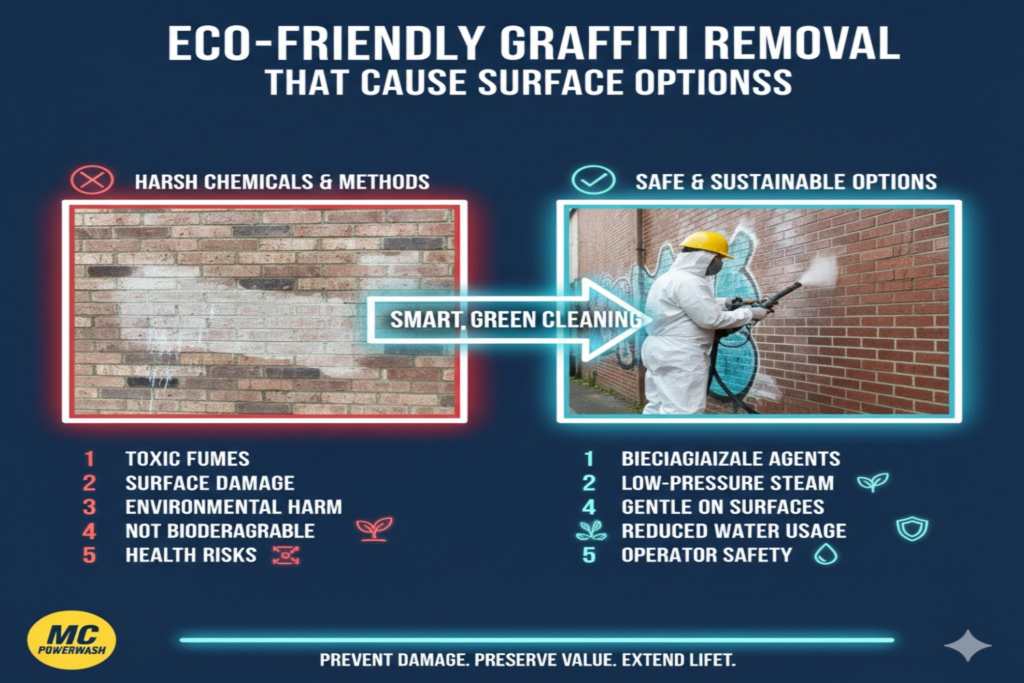
Eco-friendly graffiti removal focuses on using biodegradable, non-toxic, and low-VOC products that effectively dissolve paint while protecting the environment, waterways, plants, and human health. In Los Angeles, where storm drains lead directly to the ocean and runoff regulations are strict, green methods help property owners stay compliant and reduce ecological impact. These options avoid harsh solvents like methylene chloride or strong acids that contaminate soil and groundwater. Instead, they rely on plant-based solvents, citrus extracts, soy derivatives, and mechanical techniques that generate minimal waste. Many eco-friendly removers are just as effective as traditional chemicals when used correctly, especially on fresh graffiti. They often require slightly longer dwell times but cause less surface damage. Choosing green methods preserves local ecosystems while restoring property appearance. Sustainable removal is both responsible and increasingly cost-effective.
Why Choose Eco-Friendly Graffiti Removal Methods
Traditional graffiti removers often contain volatile organic compounds (VOCs), phosphates, and petroleum-based solvents that harm aquatic life and pollute urban waterways. In coastal cities, even small amounts of runoff can affect marine habitats and violate clean water standards. Eco-friendly alternatives break down naturally, have low toxicity, and reduce air pollution during application. They are safer for applicators, nearby residents, children, and pets. Many biodegradable formulas are certified by organizations like Green Seal or EcoLogo. Green products minimize long-term surface damage, preserving original coatings and reducing future repaint needs. They align with growing community expectations for sustainable property care. Choosing eco-friendly options demonstrates environmental responsibility while delivering professional results.
Understanding the Environmental Impact of Traditional Removers
Conventional graffiti strippers frequently include methylene chloride, toluene, acetone, or strong alkaline solutions. These chemicals are persistent in the environment and can kill beneficial bacteria in soil. Runoff from pressure washing carries heavy metals and toxins into storm drains. In Los Angeles, where rainfall events flush directly to the Pacific, even one large job can contribute to coastal pollution. VOCs evaporate and degrade air quality, contributing to smog formation. Many traditional products are classified as hazardous waste, requiring special disposal. Eco-friendly methods drastically reduce these risks. They protect both urban wildlife and public health. Sustainable choices prevent regulatory fines and community complaints.
Citrus-Based Graffiti Removers
Citrus-based removers use d-limonene, a natural solvent extracted from orange peels, to dissolve paint bonds. Products like Citrus King, Orange-Sol, or Soy Gel with citrus additives penetrate spray paint effectively. Apply generously, allow 15–45 minutes dwell time, agitate with a soft brush, and rinse with low-pressure water. These removers are biodegradable and have pleasant natural scents. They work best on fresh to moderately cured graffiti. Citrus formulas are safe around plants when rinsed properly. They cause minimal etching on most surfaces. Multiple applications may be needed for layered tags. Citrus removers are widely available and reasonably priced. They represent one of the most popular green options.
Soy-Based and Plant-Derived Cleaners
- Soy-based graffiti removers use methyl soyate, a derivative of soybean oil, to soften and lift paint.
- Products such as Soy Gel, Eco-Strip, or Bio-Solv are thick gels that cling to vertical surfaces.
- Apply a thick layer, cover with plastic to keep moist, and let dwell 1–24 hours depending on paint thickness.
- Scrape gently or rinse with low pressure.
- Soy formulas are non-toxic, biodegradable, and have very low VOC content.
- They are especially effective on oil-based and enamel paints.
- These removers are gentle on masonry and metal.
- They produce minimal runoff hazards.
- Soy-based cleaners are ideal for sensitive areas.
- perform consistently when given enough contact time.
Biodegradable Graffiti-Specific Products
Many manufacturers now offer fully biodegradable graffiti removers designed for professional and municipal use. Examples include Graffiti Solutions “S-100”, Enviro Klean SafStrip, and Taginator Eco. These products use a blend of plant esters, surfactants, and enzymes to break down paint. Apply with a sprayer, allow 10–60 minutes dwell, agitate, and rinse. Most are certified low-VOC and non-hazardous. They work on a wide range of surfaces including concrete, brick, metal, and glass. These removers reduce cleanup time compared to some natural options. They meet strict environmental standards. Biodegradable formulas are increasingly used by city crews. They offer reliable performance with minimal ecological footprint.
Mechanical Eco-Friendly Removal Methods
Soda blasting uses sodium bicarbonate (baking soda) as a gentle abrasive media. It removes paint without harsh chemicals and produces water-soluble residue. Dry ice blasting freezes paint for easy chipping and leaves no chemical waste. Both methods require specialized equipment but generate zero hazardous runoff. Soft nylon brushing after eco-remover application minimizes chemical use. Hand scraping with plastic tools is effective on small areas. Mechanical methods are ideal when chemical use must be avoided. They are labor-intensive but environmentally superior. Combine with green pre-treatment for best results. These techniques protect sensitive sites.
Low-Pressure Washing with Eco-Cleaners
Use low-pressure washing (under 1500 PSI) with biodegradable degreasers to rinse after chemical treatment. Wide fan nozzles distribute force evenly and reduce surface etching. Hot water (120–160°F) enhances cleaning power without increasing chemical strength. Collect runoff with vacuum systems or absorbent booms when required. Low-pressure methods minimize water waste compared to high-pressure blasting. They are safe for most masonry and painted surfaces. Eco-cleaners ensure rinse water is less harmful. This approach balances effectiveness and sustainability. Proper technique prevents damage while staying green.
Eco-Friendly Protective Anti-Graffiti Coatings
Sacrificial anti-graffiti coatings made from biodegradable polymers allow graffiti to be removed with warm water or mild cleaners. Permanent eco-coatings use low-VOC, water-based formulas that permit solvent-free removal. Apply after cleaning and let cure fully. These coatings reduce future chemical use dramatically. They are safe for plants and waterways during application. Green coatings last 5–10 years depending on exposure. They minimize repeat removal impact. Many are certified for environmental compliance. Protective layers make long-term maintenance more sustainable. They are a key part of green graffiti management.
Capturing and Managing Runoff Responsibly
- Place absorbent booms, socks, or berms around the work area to contain rinse water.
- Use wet vacuums or shop vacs to collect wastewater for proper disposal.
- Allow sediment to settle in buckets before decanting clear water. Dispose of sludge as non-hazardous waste if using biodegradable products.
- Avoid letting any runoff enter storm drains directly.
- In some cases, local regulations require containment for all pressure washing.
- Responsible runoff management prevents pollution fines.
- It protects local waterways and marine life.
- Green removal includes responsible water handling.
- Proper containment completes the eco-friendly process.
Cost Comparison of Eco vs Traditional Methods
Eco-friendly removers often cost slightly more per gallon than traditional strippers. However, lower disposal fees, reduced regulatory risk, and less surface damage offset the price. Mechanical methods like soda blasting have higher equipment costs but zero chemical expenses. Low-pressure washing uses less water and fuel than high-pressure alternatives. Protective coatings add upfront cost but drastically cut future removal expenses. Over time, green methods frequently prove more economical. They avoid hazardous waste fees and potential fines. Sustainable choices become cost-competitive with volume. Long-term savings favor eco-friendly strategies.
Comparison Table: Eco-Friendly Graffiti Removal Options
| Method | Key Ingredient / Media | Effectiveness on Fresh Graffiti | Effectiveness on Cured / Layered | Surface Safety | Biodegradability | Runoff Impact | Cost per Job (Medium Size) | Dwell / Work Time | Best Surfaces |
| Citrus-Based Remover | d-Limonene (orange peel) | Very High | High | High | Very High | Low | $80–$200 | 15–60 min | Concrete, brick, metal, glass |
| Soy-Based Gel | Methyl soyate | High | Very High | Very High | Very High | Very Low | $100–$250 | 1–24 hours | Masonry, stucco, sensitive areas |
| Biodegradable Graffiti Stripper | Plant esters + enzymes | Very High | High | High | Very High | Low | $120–$300 | 10–60 min | Most surfaces |
| Soda Blasting | Baking soda | Very High | Very High | Very High | N/A (mechanical) | Minimal | $300–$800 | 1–4 hours | Concrete, brick, historical walls |
| Dry Ice Blasting | Frozen CO2 | High | High | Very High | N/A | None | $400–$1,200 | 1–5 hours | Metal, glass, painted surfaces |
| Low-Pressure Washing + Eco Soap | Biodegradable surfactants | High | Medium–High | High | High | Low (contained) | $150–$400 | 1–3 hours | Large flat areas |
| Sacrificial Eco-Coating | Biodegradable polymers | N/A (prevention) | N/A (prevention) | Very High | High | Minimal | $200–$600 (application) | N/A | High-risk walls (prevention) |
Combining Eco Methods for Maximum Effectiveness
The best results often come from combining techniques: start with a citrus or soy pre-treatment, allow proper dwell, agitate gently, then rinse with low-pressure washing using biodegradable soap. For very porous surfaces, follow with a poultice made from natural absorbents and eco-solvents. Apply sacrificial eco-coating afterward to simplify future cleanups. Mechanical blasting is excellent for large areas when chemicals must be avoided. Layered approaches reduce chemical volume while maintaining high performance. Combining methods minimizes environmental impact and maximizes surface preservation. Multi-step green strategies deliver professional outcomes. They balance ecology and efficiency. Integrated plans provide the most sustainable removal.
Long-Term Benefits of Choosing Green Graffiti Removal
Consistent use of eco-friendly methods reduces cumulative pollution in urban watersheds. Property owners avoid fines for non-compliant runoff. Green products improve applicator safety and reduce health complaints. Surfaces experience less etching and coating damage, extending repaint cycles. Community perception improves when sustainable practices are used. Many municipalities offer incentives or preferred vendor lists for green services. Long-term savings come from lower disposal costs and fewer repeat jobs with protective coatings. Eco-conscious choices align with corporate sustainability goals. They future-proof properties against stricter environmental regulations. Green removal is both ethical and economically smart.
Conclusion
Eco-friendly graffiti removal options provide effective, responsible alternatives to harsh traditional chemicals. Citrus-based, soy-based, biodegradable strippers, and mechanical methods like soda and dry ice blasting deliver excellent results with minimal environmental harm. In Los Angeles, where ocean protection and runoff compliance are priorities, green techniques help property owners meet regulations while restoring surfaces safely. Combining pre-treatment, gentle agitation, low-pressure rinsing, and protective coatings creates the most sustainable strategy. These methods protect waterways, reduce toxicity, and maintain surface integrity. Choosing eco-friendly removal demonstrates environmental stewardship and often proves cost-competitive long-term. With proper application and responsible runoff management, graffiti can be removed effectively without harming the planet. Sustainable cleaning is the responsible future for urban property care.
Frequently Asked Questions (FAQs)
1. Are eco-friendly graffiti removers as strong as traditional chemicals?
Yes, modern citrus, soy, and biodegradable removers are formulated to match or exceed the performance of many conventional strippers. They often require slightly longer dwell times but remove paint effectively without toxic residues. Fresh and moderately cured graffiti respond especially well. Proper technique and patience deliver comparable results.
2. How do I handle runoff when using green graffiti removers?
Capture runoff using absorbent booms, vacuum systems, or berms. Allow sediment to settle, then dispose of sludge responsibly. Rinse water from biodegradable products can often go to landscaping or sanitary sewers. Check local regulations for pressure washing discharge. Responsible containment prevents pollution.
3. Can soda blasting be considered eco-friendly?
Yes, soda blasting uses sodium bicarbonate (baking soda), which is non-toxic and water-soluble. It produces no chemical waste and minimal dust when controlled properly. The media can often be swept up and disposed of as non-hazardous waste. It is one of the cleanest mechanical removal methods available.
4. Do eco-friendly coatings really make future removal easier?
Yes, biodegradable sacrificial coatings allow graffiti to be removed with warm water or very mild cleaners. Permanent eco-coatings permit solvent-free or low-VOC removal. Both types reduce chemical use and surface damage in future incidents. They significantly lower the environmental impact of repeated cleanups.
5. Are citrus-based removers safe around plants and pets?
Yes, when used correctly and rinsed thoroughly, citrus-based removers pose very low risk to plants and pets. d-Limonene is naturally occurring and breaks down quickly. Wet plants before and after to dilute any overspray. Keep pets away during application until rinsing is complete. They are among the safest options.
6. How long does soy-based gel need to dwell?
Soy-based graffiti gels typically require 1–24 hours of dwell time depending on paint type and thickness. Cover the gel with plastic to keep it moist and active. Longer dwell times improve performance on layered or oil-based paints. Check product instructions for exact recommendations.
7. Can I use eco-friendly methods on textured stucco?
Yes, citrus and soy removers are gentle enough for stucco. Use a soft nylon brush to agitate without eroding texture. Low-pressure rinsing (under 1500 PSI) prevents damage. Avoid high-pressure washing on stucco. Green methods preserve delicate surfaces effectively.
8. Are biodegradable removers more expensive?
Eco-friendly removers often cost slightly more per gallon than traditional strippers. However, lower disposal fees, reduced regulatory risk, and less surface damage frequently make them more economical overall. Protective coatings add upfront cost but save significantly on future jobs. Long-term savings usually favor green options.
9. Do eco-friendly methods work on old, layered graffiti?
Yes, soy-based gels and some biodegradable strippers excel at layered and old graffiti when given enough dwell time. Multiple applications or poultice techniques may be required. Mechanical methods like soda blasting handle tough cases without chemicals. Patience and correct technique achieve strong results.
10. How do I know if a remover is truly eco-friendly?
Look for certifications like Green Seal, EcoLogo, or USDA BioPreferred. Check for low-VOC, biodegradable, and non-toxic claims backed by safety data sheets. Avoid products containing methylene chloride, toluene, or phosphates. Read reviews and manufacturer environmental statements. Certified green products provide the highest assurance.