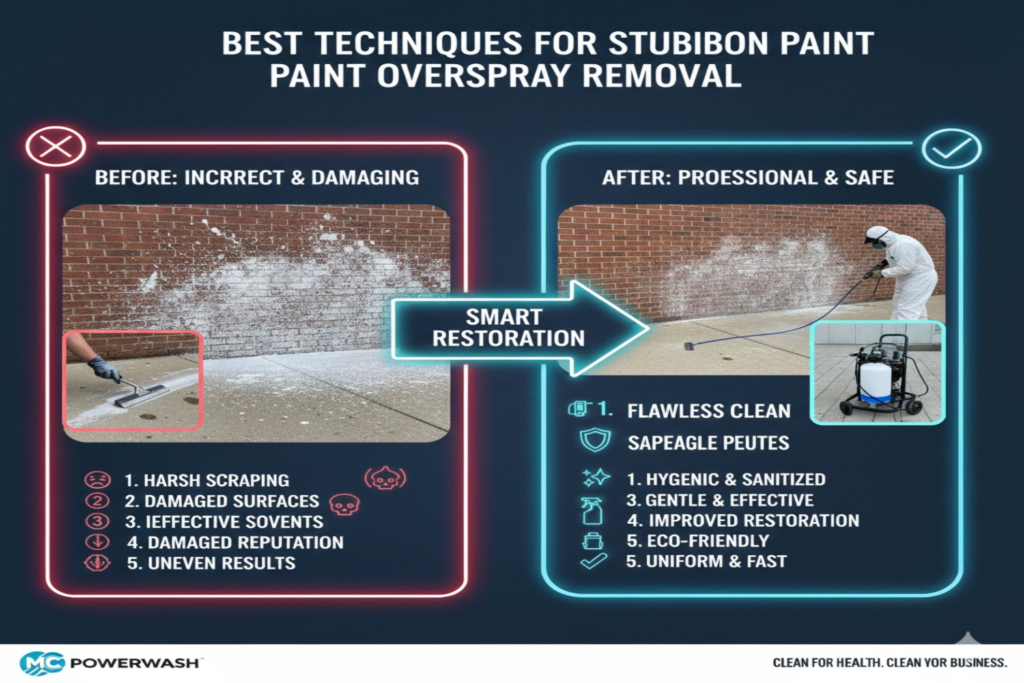
Stubborn paint overspray is a frequent problem during home improvement projects, especially when spray painting furniture, fences, vehicles, or exteriors. In Los Angeles, where many residents repaint garages, patio furniture, and stucco walls due to sun fading and coastal salt exposure, overspray often lands on nearby concrete, glass, brick, metal, and even vehicles. Stubborn overspray refers to paint that has cured for days or weeks, forming a hard film that resists simple wiping or soap. Removing it safely requires breaking the paint bond without scratching, etching, or discoloring the underlying surface. The best techniques combine chemical softening, gentle mechanical action, and surface-specific methods. Patience and testing are critical to avoid permanent damage. With the right approach, most overspray can be removed effectively. Prevention during painting saves time and money later.
Understanding Why Some Overspray Becomes Stubborn
Paint overspray starts as tiny droplets that land and begin drying immediately. Fresh overspray remains soft for hours and wipes away easily. After 24–48 hours, most latex paints cure into a hard film, especially in warm, dry Los Angeles weather. Oil-based and enamel paints cure even harder and bond more aggressively. Porous surfaces like concrete and brick trap paint deep in the texture. Smooth surfaces like glass and polished metal allow easier removal but show scratches readily. Sunlight accelerates curing, making removal harder after a week. Multiple layers from repeated overspray create thicker, more resistant deposits. Knowing the paint type, time elapsed, and surface material determines the best technique. Rushing with harsh methods often causes more damage than the original overspray.
Common Surfaces Affected by Paint Overspray
Concrete driveways and patios receive heavy overspray from fence or furniture painting. Glass windows and vehicle windshields show overspray clearly and require careful handling. Brick and stucco walls trap paint in textured surfaces. Metal gates, railings, and car bodies suffer from both adhesion and potential scratching. Wood decks and fences absorb paint unevenly. Vinyl siding can warp or discolor with wrong cleaners. Each surface has different tolerances to chemicals and abrasion. Identifying the material first prevents costly mistakes. In urban areas, overspray often affects multiple surfaces at once. Proper surface knowledge guides safe removal.
Safety Precautions Before Removing Overspray
Always wear chemical-resistant gloves, safety goggles, and a mask when using solvents or strippers. Work in a well-ventilated area or outdoors to avoid inhaling fumes. Keep children and pets away from the work zone. Cover nearby plants, grass, and sensitive items with plastic sheeting. Wet vegetation before and after to dilute any chemical runoff. Never mix different cleaners, especially bleach with ammonia products. Have a hose or bucket ready for quick rinsing. Use stable ladders for vertical surfaces. Keep a first-aid kit and phone accessible. Read all product labels carefully. Safety protects both you and the property.
Best Technique for Fresh Overspray (Under 24 Hours)
- Blot excess paint immediately with clean, dry paper towels or microfiber cloths—do not wipe, as it spreads the stain.
- Apply a mild solution of dish soap and warm water with a soft sponge.
- Gently blot and rinse repeatedly.
- For glass and metal, use a plastic razor blade held at a 45° angle to lift soft paint.
- On concrete, use a nylon brush to agitate lightly.
- Fresh overspray usually comes off completely with patience.
- Avoid aggressive scrubbing or solvents at this stage.
- Quick action prevents curing.
- This method is safe for almost all surfaces.
- It is the easiest and cheapest solution.
Chemical Paint Softeners for Cured Overspray
Use paint-safe solvents like citrus-based strippers, lacquer thinner, or dedicated overspray removers (Goo Gone, Goof Off, or Spray & Forget). Apply generously, let dwell 5–20 minutes (per label), then gently scrape with a plastic putty knife or soft brush. Rinse thoroughly and repeat if needed. Citrus products are gentler on most surfaces. Test every chemical on a hidden area first. Avoid strong solvents like acetone or MEK on painted or plastic surfaces. Chemicals soften cured paint so it lifts without heavy abrasion. They are essential for overspray older than 48 hours. Proper dwell time maximizes effectiveness.
Mechanical Removal Techniques (Scraping & Abrasion)
Plastic razor blades, credit cards, or soft nylon scrapers work well on glass, metal, and sealed concrete. Hold at a low angle and push gently to lift paint. For textured surfaces like stucco or brick, use a soft wire brush or detailing brush after softening. Fine steel wool (0000 grade) is safe for metal and glass when used lightly with lubricant. Avoid metal scrapers on painted or soft surfaces—they cause scratches. Mechanical methods work best after chemical pre-treatment. Use light pressure and frequent rinsing. Combine with solvent for best results. Gentle abrasion removes stubborn residue safely.
Clay Bar Method for Automotive Overspray
Clay bars are highly effective for removing overspray from vehicle paint without scratching. Lubricate the surface with clay lube or soapy water. Glide the clay bar gently in straight lines over the affected area. Fold and knead the clay frequently to expose a clean surface. Rinse and dry the panel. This method lifts paint particles embedded in the clear coat. It is safe for factory and repainted vehicle finishes. Clay bars are inexpensive and reusable. They excel at removing fine overspray mist. Follow with wax or sealant for protection. Professional detailers often use this technique.
Pressure Washing Techniques for Large Surfaces
Use a pressure washer with hot water (120–180°F) for large concrete or brick areas. Pre-treat with a paint stripper or degreaser and allow dwell time. Start at low pressure (800–1500 PSI) with a 25°–40° wide fan nozzle. Work from bottom to top to avoid streaks. Keep the wand 12–18 inches away and move steadily. Rinse thoroughly to remove all residue. Hot water softens paint faster than cold. Pressure washing is ideal for driveways and patios. Avoid on delicate stucco or painted siding. Always test pressure on a small area first.
Special Techniques for Glass and Windows
Razor blades (single-edge) held flat against glass are the gold standard for overspray. Use a lubricant like soapy water or lighter fluid to reduce scratching. Scrape in one direction only. For stubborn spots, apply a citrus solvent, let dwell, then scrape gently. Commercial glass overspray removers are also effective. Polish with cerium oxide if light scratches appear. Avoid metal scrapers on tinted windows. Glass is unforgiving—mistakes show clearly. Multiple light passes work better than heavy pressure. Clean with glass cleaner afterward for streak-free results.
Removing Overspray from Brick and Stucco
Pre-treat with a citrus-based stripper or graffiti remover and let dwell longer due to texture. Use a soft nylon brush or detailing brush to agitate paint out of crevices. Low-pressure washing (under 1500 PSI) with a wide nozzle helps rinse. For very stubborn spots, a poultice of absorbent powder and solvent can draw paint out. Avoid high pressure—it erodes mortar and stucco. Test chemicals carefully to avoid discoloration. Brick and stucco require patience. Multiple applications are normal. Seal afterward to protect from future staining.
Eco-Friendly and Low-Odor Options
- Citrus-based strippers (orange oil, d-limonene) effectively soften paint with pleasant smell and lower toxicity.
- Soy-based gel strippers work slowly but safely.
- Vinegar and baking soda pastes handle light overspray naturally.
- Use biodegradable degreasers for rinsing.
- Capture runoff with absorbent materials to protect waterways.
- These options are safer near plants and pets.
- They perform well on most surfaces.
- Eco-friendly products reduce environmental impact.
- Many are available at local hardware stores.
- Sustainable choices maintain good neighbor relations.
Preventing Paint Overspray in Future Projects
Mask surrounding areas thoroughly with plastic sheeting, painter’s tape, and drop cloths. Use cardboard or foam board as shields. Spray in low-wind conditions and avoid overspray drift. Use spray shields or temporary barriers. Paint on calm mornings when humidity helps control drift. Work in sections and keep the spray gun close to the surface. Clean overspray immediately when noticed. Prevention saves hours of cleanup. Proper preparation reduces risk dramatically. Good habits make painting cleaner and faster.
When to Hire Professional Paint Removal Services
Hire professionals for large areas, vehicle overspray, delicate stucco, or antique surfaces. They have commercial-grade strippers, hot-water pressure washers, and clay bar systems. Pros minimize damage to paint, clear coat, and sealers. They handle wastewater disposal legally. In Los Angeles, certified detailers and restoration teams understand local concrete and stucco challenges. Professionals finish jobs faster with uniform results. Get multiple quotes and check reviews. Complex or high-value surfaces warrant expert help. Professionals protect your investment.
Long-Term Surface Protection After Removal
Apply concrete sealer or driveway coating after cleaning concrete. Use wax, ceramic coating, or paint sealant on vehicles. Reseal stucco or brick periodically. Maintain surfaces with regular gentle washing. Inspect for new overspray immediately. Touch up damaged paint promptly. Consistent maintenance prevents deep staining. It extends surface life significantly. Proactive care keeps properties looking new. Document cleaning products for future reference.
Comparison Table: Best Techniques for Stubborn Paint Overspray
| Technique | Best For | Time Required | Cost Level (DIY) | Effectiveness on Cured Paint | Surface Damage Risk | Eco-Friendliness | Skill Level Needed | Recommended Surfaces |
| Citrus-Based Stripper | Concrete, brick, metal | 1–6 hours | Low–Medium | High | Low–Medium | High | Beginner–Moderate | Most exterior surfaces |
| Plastic Razor Blade | Glass, smooth metal, sealed concrete | 30 min–2 hours | Very Low | Medium–High | Low (if careful) | Very High | Beginner | Windows, vehicles |
| Clay Bar + Lubricant | Automotive paint | 1–3 hours | Low–Medium | Very High | Very Low | Medium | Moderate | Cars, painted metal |
| Hot Water Pressure Washing | Large concrete areas | 2–8 hours | Medium (rental) | High | Medium | Medium | Moderate–High | Driveways, patios |
| Commercial Graffiti Remover | Textured stucco, brick | 2–8 hours | Medium | Very High | Low–Medium | Medium | Moderate | Walls, masonry |
| Soy-Based Gel Stripper | Sensitive surfaces | 4–24 hours | Medium | High | Very Low | Very High | Beginner | Painted walls, delicate areas |
| Vinegar + Baking Soda Paste | Light overspray | 1–4 hours | Very Low | Low–Medium | Very Low | Very High | Beginner | Concrete, non-porous surfaces |
| Professional Detailing Service | Vehicles, large/complex jobs | 4–12 hours | High | Very High | Low (expert) | Varies | None (hired) | Any high-value surface |
Cost-Benefit Analysis of Overspray Removal Techniques
Household items like vinegar and baking soda cost almost nothing and work for light overspray, making them ideal for quick spot fixes. Citrus-based strippers ($10–$30 per bottle) offer excellent value for most cured overspray and outperform natural methods on tougher paint. Clay bars ($15–$40) are inexpensive and highly effective on vehicles, preventing costly repaints. Pressure washing rentals ($50–$150/day) deliver fast results on large areas but require equipment investment. Professional services ($200–$1,000+) are expensive upfront but save time, prevent damage, and handle difficult surfaces perfectly. Combining pre-treatment with gentle mechanical removal provides the best balance of cost, time, and results. Investing in prevention (masking, barriers) yields the highest long-term savings.
Final Tips for Dealing with Stubborn Overspray
Always test every product on a hidden spot first. Work in small sections to avoid spreading. Repeat treatments rather than increasing strength or pressure. Capture chemical runoff responsibly to protect waterways. Photograph before-and-after for reference. Address the overspray source during painting to prevent recurrence. For very stubborn paint, combine chemical softening with light abrasion. Patience and multiple light passes beat aggressive shortcuts. Consistent care keeps surfaces clean and undamaged. Professional help is worth it for valuable or delicate surfaces.
Conclusion
Removing stubborn paint overspray requires matching the technique to the surface type, paint age, and overspray severity. Fresh overspray wipes away easily, but cured paint needs chemical softeners, gentle scraping, clay bars, or pressure washing. In Los Angeles, where sun and dry air cure paint quickly, prompt action and proper methods prevent permanent damage. Always prioritize safety, test products, and protect surrounding areas. Prevention through careful masking and barriers is the most cost-effective strategy. Whether using DIY solutions or hiring professionals, consistent effort restores surfaces effectively. Clean concrete, glass, metal, and walls enhance property appearance, value, and pride for years to come.
Frequently Asked Questions (FAQs)
1. How do I remove stubborn overspray from car paint safely?
Use a clay bar with plenty of lubricant or a citrus-based overspray remover. Apply gently in straight lines, rinse, and dry. Avoid abrasive tools or strong solvents. Follow with wax or ceramic coating to protect the clear coat. Professional detailing is ideal for valuable vehicles.
2. Can I use acetone to remove paint overspray?
Acetone removes many paints quickly but can damage clear coat, plastic, rubber, and some painted surfaces. Use only on glass or bare metal and test first. Citrus or dedicated overspray removers are safer alternatives. Rinse thoroughly afterward.
3. What is the best way to remove overspray from concrete?
Pre-treat with a citrus-based stripper or commercial paint remover, let dwell, then scrub with a nylon brush. Low-pressure washing (1000–1500 PSI) with hot water helps lift residue. For very stubborn spots, use a poultice method. Reseal concrete afterward to prevent future staining.
4. Will a plastic razor blade scratch glass?
When used correctly with lubricant and held flat, plastic razor blades rarely scratch glass. Use light pressure and change blades frequently. For safety, commercial glass overspray removers are a gentler alternative. Always test on a corner first.
5. How long should I let a paint stripper dwell on overspray?
Most citrus or graffiti removers need 10–30 minutes of dwell time. Check the product label and do not let it dry completely. Longer dwell helps on thick or old overspray. Reapply if the product evaporates too fast.
6. Is pressure washing safe for removing overspray from stucco?
Low-pressure washing (under 1200 PSI) with a wide nozzle is safe if paint is pre-softened. High pressure can erode stucco texture or force water behind walls. Use chemical pre-treatment first and rinse gently. Professional low-pressure soft washing is recommended.
7. Can baking soda remove stubborn paint overspray?
Baking soda works for very light overspray when mixed into a paste with water or vinegar. It is too mild for thick cured paint. Use it as a gentle abrasive after chemical softening. It is safe and eco-friendly for small jobs.
8. How do I prevent overspray on nearby surfaces next time?
Mask thoroughly with plastic sheeting, painter’s tape, and drop cloths. Use cardboard or foam board as shields. Paint on calm days and keep the spray gun close to the surface. Work in small sections. Proper preparation reduces cleanup dramatically.
9. Should I hire a professional for vehicle overspray?
Yes, for expensive or show cars, professional detailers have safe products and techniques that preserve clear coat. DIY mistakes can cause swirl marks or require repainting. Professionals often guarantee results. It is worth the cost for high-value vehicles.
10. What should I do if overspray has been there for months?
Pre-treat with a strong citrus stripper or graffiti remover and let it dwell longer. Use a poultice method on concrete or clay bar on vehicles. Multiple applications are usually needed. Professionals handle very old overspray best to avoid damage.