Garbage chutes are vertical shafts installed in multi-story residential and commercial buildings to allow convenient disposal of trash from each floor directly into a central collection bin or compactor at the bottom. In Los Angeles, where high-rise apartments, condos, and mixed-use buildings are extremely common, garbage chutes are a standard feature in most structures built after the 1960s. Over time, food waste, liquids, grease, paper, and other debris stick to the chute walls, creating layers of sludge, mold, bacteria, and foul odors. Garbage chute cleaning is the specialized process of removing this buildup using high-pressure hot water, eco-friendly degreasers, brushes, and sometimes steam or enzymatic treatments. Professional cleaning restores hygiene, eliminates bad smells, and prevents dangerous blockages. Regular maintenance is not just about cleanliness—it protects resident health and building infrastructure. Proper chute care also helps buildings comply with local health and fire safety codes. Ignoring it can lead to serious and expensive consequences.
What Exactly Is a Garbage Chute?
A garbage chute is a vertical metal or concrete shaft that runs from the top floor to the basement or ground level of a building. Each floor has a small door or hopper where residents deposit trash bags. Gravity carries the waste down into a large container, compactor, or dumpster below. In high-density urban areas like Los Angeles, chutes eliminate the need for trash bags piling up in hallways or elevators. They are usually made of stainless steel or galvanized metal to resist corrosion. Some modern chutes include ventilation systems, fire dampers, and sprinkler heads for safety. Despite durable construction, the interior becomes coated with organic waste over months. Understanding the chute system helps explain why deep, thorough cleaning is required. It is more than just a pipe—it is a high-risk hygiene zone.
How Garbage Builds Up Inside Chutes
Food scraps, coffee grounds, grease, dairy, meat juices, and sugary drinks create the worst buildup. Liquids run down the walls and pool at bends or joints. Paper and cardboard absorb grease and stick permanently. Plastic bags sometimes snag and create dams that trap more waste. Over time, this material ferments, producing methane gas, mold spores, and strong odors. Bacteria such as E. coli, Salmonella, and Listeria thrive in the moist, dark environment. In warm climates, decomposition accelerates quickly. Blockages can form from compacted trash or stuck bags. The longer buildup remains, the harder and more hazardous it becomes to remove. Regular inspection reveals early problems before they become severe.
Health Hazards of Dirty Garbage Chutes
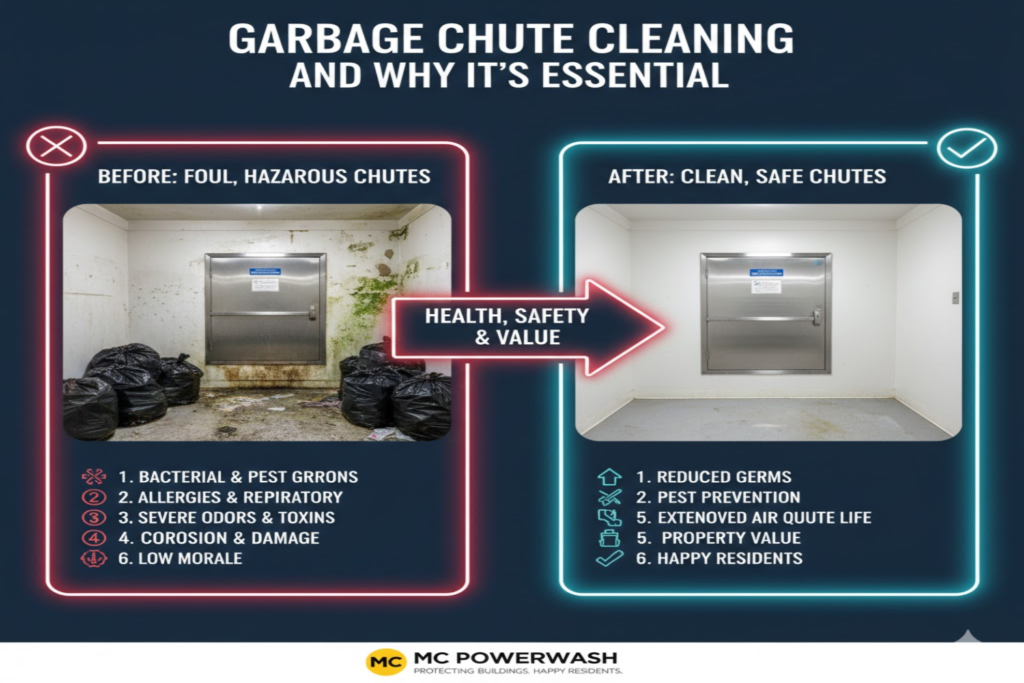
Dirty chutes become breeding grounds for harmful bacteria, mold, and pests. Residents breathe in airborne mold spores and volatile organic compounds when opening chute doors. Foul odors travel through hallways and apartments, affecting indoor air quality. Cockroaches, flies, and rodents are attracted to the food source and can enter living spaces through gaps. In buildings with poor ventilation, odors and pathogens spread more easily. Children, elderly residents, and people with respiratory conditions are especially vulnerable. Exposure to contaminated air can trigger allergies, asthma attacks, or infections. Health departments frequently cite unclean chutes as violations. Clean chutes protect public health and improve quality of life for all occupants.
Fire Risks Associated with Unclean Chutes
- Garbage chutes are designed with fire dampers and sprinklers to contain fires, but thick grease and dry debris make them extremely flammable.
- A discarded cigarette, hot coals from a barbecue, or overheated lithium battery can ignite built-up waste.
- Once started, fires spread rapidly upward through the shaft, acting like a chimney.
- Grease and oils fuel intense flames that are difficult to extinguish.
- In Los Angeles, high-rise fire codes strictly regulate chute maintenance to prevent tragedies.
- Dirty chutes have been documented as contributing to major building fires.
- Regular cleaning removes fuel sources and reduces fire hazard significantly.
- It is a critical life-safety measure required by most fire marshals.
Why Regular Garbage Chute Cleaning Is Essential
Cleaning prevents odors, bacteria, mold, pests, blockages, and fire risks that affect the entire building. A single neglected chute can make dozens or hundreds of units unpleasant or unsafe. Regular cleaning maintains property value by ensuring pleasant common areas. It reduces complaints, turnover, and vacancy rates in rental properties. Many insurance policies require documented chute maintenance to cover fire or health-related claims. Local health and fire codes often mandate periodic professional cleaning. Clean chutes improve tenant satisfaction and community reputation. Proactive maintenance is far cheaper than emergency cleanings, repairs, or health violations. It protects both residents and property owners.
How Often Should Garbage Chutes Be Cleaned?
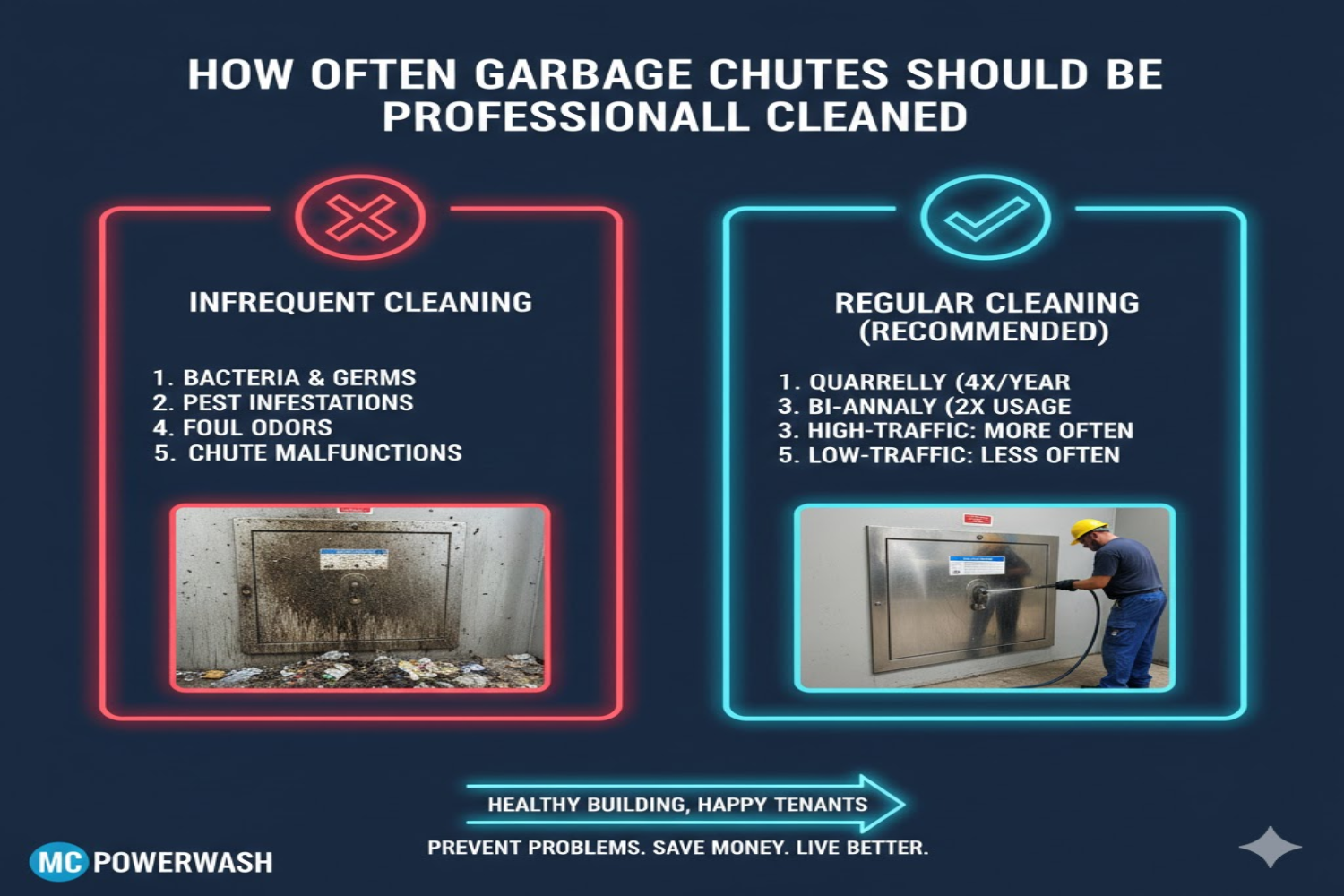
Most experts recommend professional deep cleaning every 3–6 months in residential buildings. High-traffic or poorly maintained buildings may need quarterly or even monthly service. Monthly inspections help determine actual need based on odor, visible buildup, and resident complaints. In warmer months or buildings with many food-related disposals, more frequent cleaning is beneficial. After move-outs or renovations, an extra clean is advisable. Consistent scheduling prevents heavy sludge accumulation. A professional cleaning company can create a customized maintenance calendar. Regular frequency keeps chutes hygienic year-round. It avoids costly emergency interventions.
Professional Garbage Chute Cleaning Process
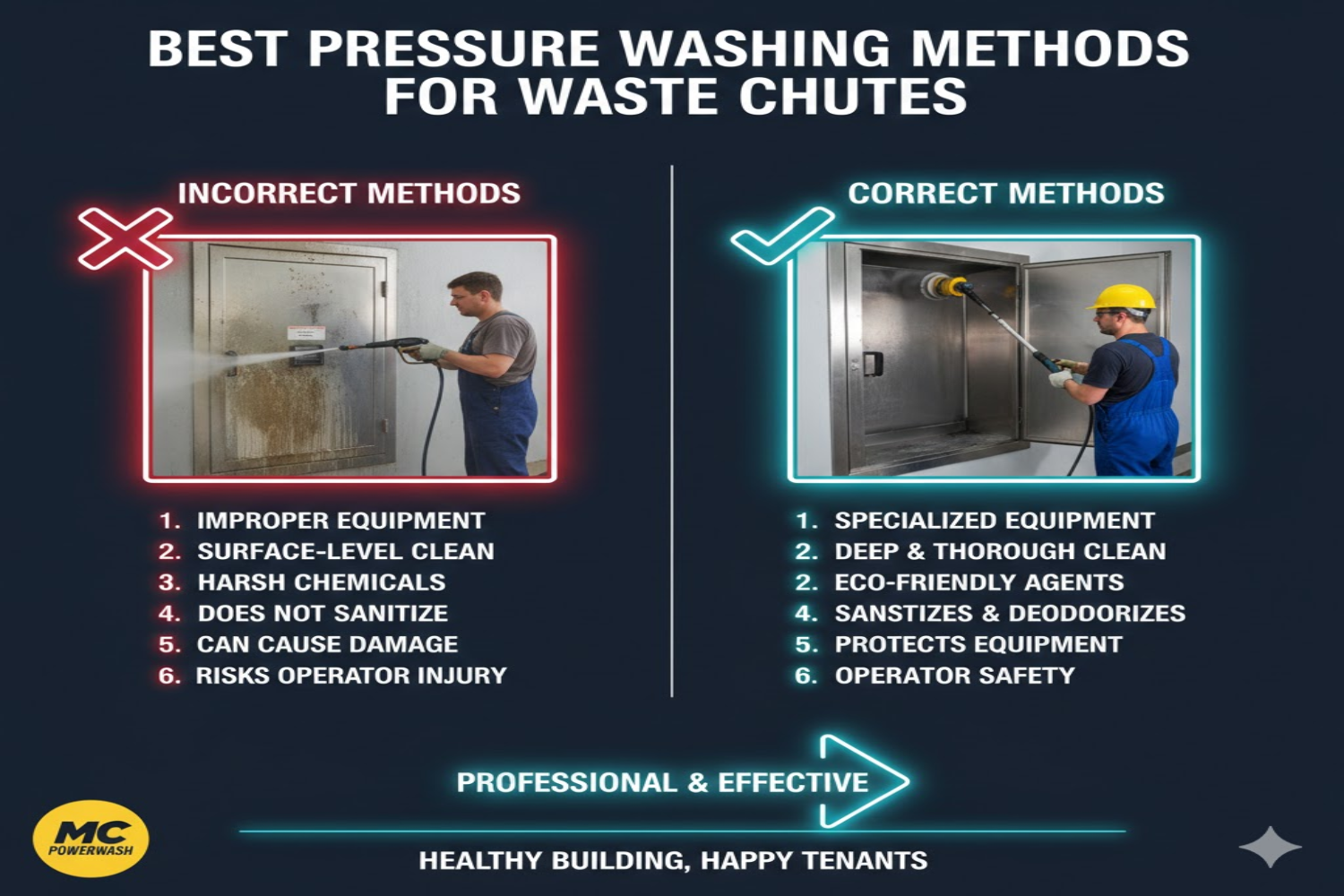
Professionals start by securing the chute—posting signs, locking hoppers, and notifying residents. They remove the bottom bin or compactor for access. High-pressure hot water (180–220°F) combined with heavy-duty, biodegradable degreasers is sprayed from top to bottom. Rotating brushes or chain flails scrub walls and break up sludge. Some teams use steam cleaning or enzymatic treatments for organic matter. After washing, they apply disinfectant and deodorizer. Final rinse ensures no chemical residue remains. The entire system is inspected and tested for free flow. Debris is collected and disposed of properly. The process usually takes 4–12 hours depending on building height.
Common Methods Used in Eco-Friendly Cleaning
- Many modern cleaning companies use biodegradable, low-VOD degreasers and neutral pH cleaners.
- Hot water and high-pressure systems reduce the need for harsh chemicals.
- Steam cleaning sanitizes without chemicals and kills bacteria effectively.
- Enzyme-based cleaners break down organic waste naturally.
- Citrus or plant-based degreasers are popular for odor control.
- Runoff is often captured or treated before disposal.
- These green methods meet strict environmental standards.
- They are safer for workers and building occupants.
- Eco-friendly cleaning maintains hygiene without harming waterways.
- It is increasingly preferred in urban areas.
Signs Your Building Needs Chute Cleaning
Persistent foul odors near chute doors or in hallways are the most obvious sign. Flies, gnats, or cockroaches appearing near hoppers indicate infestation. Slow drainage or backups when throwing trash suggest partial blockage. Visible slime, black mold, or brown grease on chute door frames show heavy buildup. Tenant complaints about smells or bugs increase noticeably. Yellowing or staining inside the hopper is a visual clue. Any of these signs warrant immediate professional inspection. Early action prevents major problems. Regular monitoring helps catch issues quickly.
Cost Factors in Professional Chute Cleaning
Pricing depends on building height, number of floors, chute diameter, and buildup severity. Most companies charge per floor or per linear foot. Basic cleanings range from $300–$800 for small buildings. High-rise or heavily soiled chutes can cost $1,500–$5,000+. Frequency discounts are common for quarterly or biannual contracts. Emergency cleanings carry higher rates. Additional fees apply for odor neutralizing, enzyme treatments, or runoff containment. Investing in regular service is more economical than waiting for severe blockages. Transparent quotes help owners budget effectively. Quality service provides lasting results.
Benefits of Regular Professional Cleaning
Regular cleaning eliminates odors and improves indoor air quality throughout the building. It reduces pest problems and lowers the risk of insect or rodent infestations. Fire hazards decrease dramatically when flammable buildup is removed. Health risks from bacteria and mold are minimized for residents. Property managers receive fewer tenant complaints and maintenance requests. Buildings maintain higher occupancy rates and better resident satisfaction. Insurance providers often favor well-maintained chutes. Professional cleaning ensures compliance with health and fire codes. Long-term savings come from avoiding emergency services and repairs. Clean chutes enhance overall building reputation.
DIY vs Professional Chute Cleaning
DIY cleaning is not recommended due to safety risks, difficult access, and incomplete results. High-pressure equipment, hot water, and proper chemicals are required for thorough cleaning. Professionals have specialized tools like chute-mounted brushes, extension wands, and containment systems. They follow strict safety protocols for working at heights and handling biohazards. DIY attempts often push debris further down, creating worse blockages. Professionals dispose of waste legally and ensure complete sanitization. Hiring experts is safer, more effective, and usually more economical long-term. Professional service guarantees compliance and results.
Preventing Future Buildup in Garbage Chutes
Encourage residents to wrap food waste securely and avoid pouring liquids directly into the chute. Install signage reminding users to tie bags tightly. Provide larger trash rooms or bins for oversized items. Schedule regular inspections to catch early buildup. Use chute deodorizers or enzymatic treatments between deep cleanings. Educate tenants about proper disposal habits. Some buildings install anti-clog devices or misting systems. Preventive measures reduce cleaning frequency. They extend the life of the chute system. Good resident cooperation makes maintenance easier.
Comparison Table: Key Aspects of Garbage Chute Maintenance
| Aspect | Without Regular Cleaning | With Regular Professional Cleaning | Impact on Building & Residents |
| Odor Control | Severe, persistent foul smells | Odors eliminated or greatly reduced | Improved air quality & tenant comfort |
| Health & Bacteria | High risk of mold, E. coli, Listeria | Bacteria & mold minimized | Safer living environment |
| Pest Infestation | Flies, roaches, rodents common | Pest problems rare | Fewer complaints & extermination costs |
| Fire Risk | High – grease & debris highly flammable | Fire hazard significantly reduced | Better safety & insurance compliance |
| Blockages | Frequent backups & slow drainage | Rare blockages | Fewer emergency service calls |
| Cleaning Frequency | Only when emergency occurs | Every 3–6 months | Predictable budgeting & fewer disruptions |
| Cost Over Time | High emergency & repair bills | Lower long-term maintenance costs | Better financial control for owners |
| Property Value & Reputation | Lower due to complaints & odors | Higher tenant satisfaction & retention | Better leasing & resale value |
Choosing the Right Garbage Chute Cleaning Service
Look for licensed, insured companies with experience in high-rise buildings. Check reviews and ask for references from similar properties. Confirm they use hot water, biodegradable cleaners, and proper containment methods. Ensure technicians follow OSHA safety standards for confined spaces and heights. Request detailed quotes including frequency discounts. Ask about warranties on odor elimination and follow-up inspections. Choose providers who offer eco-friendly options. A reliable service builds a long-term maintenance partnership. Quality providers deliver consistent results and compliance. The right team protects both residents and property.
Conclusion
Garbage chute cleaning is the specialized process of removing dangerous, odorous, and flammable buildup from vertical trash disposal shafts in multi-story buildings. In Los Angeles, where high-density living makes chutes essential, regular professional cleaning is critical for health, safety, and property management. Dirty chutes create fire hazards, pest problems, mold growth, and foul odors that affect every resident. Regular maintenance eliminates these risks, improves air quality, and protects building infrastructure. Professional services using hot water, biodegradable cleaners, and proper equipment provide the most effective and safe results. Investing in scheduled cleaning is far cheaper than emergency interventions or health violations. With proper care, garbage chutes remain hygienic, safe, and odor-free for years. Proactive chute maintenance is one of the most important responsibilities in multi-family property management.
Frequently Asked Questions (FAQs)
1. How often should garbage chutes be professionally cleaned?
Most buildings should have professional deep cleaning every 3–6 months. High-traffic or older buildings may need quarterly service. Monthly inspections help determine actual frequency. Regular cleaning prevents heavy buildup and reduces emergency situations significantly.
2. What happens if garbage chutes are never cleaned?
Neglected chutes develop thick grease layers, mold, bacteria, and pest infestations. Foul odors spread throughout the building. Blockages cause backups, and fire risk increases dramatically. Health complaints rise and property value suffers.
3. Are professional chute cleanings safe for residents?
Yes, reputable companies follow strict safety protocols. They post signs, lock hoppers, and notify residents in advance. Modern methods use hot water and biodegradable cleaners. Work is done from the bottom or top with proper containment. Residents are protected throughout the process.
4. Do eco-friendly cleaners really work on garbage chutes?
Yes, biodegradable degreasers and enzyme-based cleaners effectively break down organic waste and grease. They eliminate odors and sanitize without harsh chemicals. Many professional services now use eco-friendly options. Results are comparable to traditional methods when proper dwell time is allowed.
5. How long does a professional garbage chute cleaning take?
Cleaning time varies from 4–12 hours depending on building height and buildup severity. Small buildings may be finished in half a day. High-rise structures often require a full day or more. Professionals work efficiently to minimize disruption.
6. Will cleaning remove bad odors permanently?
Professional cleaning with hot water, degreasers, and deodorizers removes the source of odors effectively. Odors usually disappear completely after thorough treatment. Some buildings apply residual deodorizers for longer-lasting freshness. Recurrence is rare with regular maintenance.
7. Is garbage chute cleaning required by law?
Many cities and counties require regular chute cleaning under health and fire codes. In Los Angeles, building codes and health department regulations often mandate periodic maintenance. Landlords and HOAs can face citations for non-compliance. Regular cleaning ensures legal and safety compliance.
8. Can residents help prevent chute problems?
Yes—wrap food waste securely, avoid pouring liquids directly into the chute, and never dispose of oversized items. Report odors or slow drainage immediately. Follow building guidelines for proper disposal. Resident cooperation makes cleaning easier and less frequent.
9. How much does professional chute cleaning cost?
Costs typically range from $300–$800 for small buildings and $1,500–$5,000+ for high-rises. Pricing depends on floors, condition, and frequency. Regular contracts often receive discounts. Quality service provides better long-term value than emergency cleanings.
10. What should I do if odors return quickly after cleaning?
Quick odor return usually means heavy buildup remains or a blockage exists. Schedule a follow-up inspection immediately. Check for improper resident disposal habits. Consider more frequent cleaning or enzymatic maintenance between deep cleans. Persistent issues warrant a different cleaning provider.