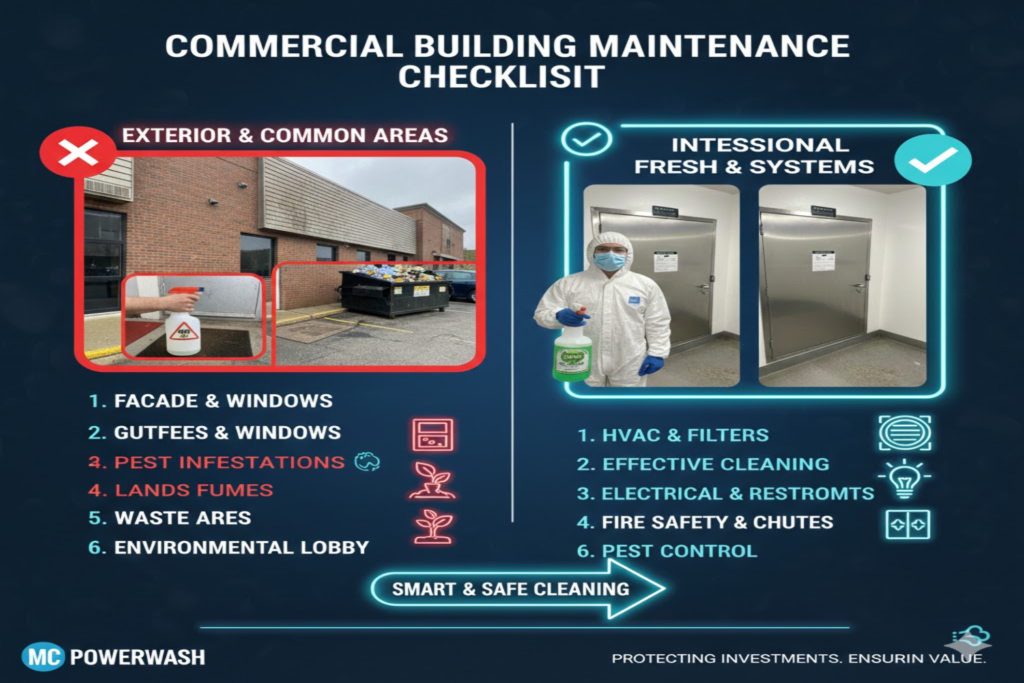
A comprehensive commercial building maintenance checklist is essential for property managers and owners to ensure safety, compliance, longevity of systems, and tenant satisfaction. In Los Angeles, where high-rise structures face intense sun exposure, coastal humidity, seismic risks, and strict local regulations, regular maintenance prevents costly emergencies and code violations. This checklist covers daily, weekly, monthly, quarterly, semi-annual, and annual tasks across HVAC, plumbing, electrical, elevators, fire safety, exterior, waste systems, roofing, landscaping, and common areas. Proper scheduling reduces downtime, lowers utility costs, extends equipment life, and maintains property value. Neglecting routine checks can lead to mold growth, pest infestations, fire hazards, and health complaints. Following a structured checklist helps demonstrate due diligence during inspections. It protects both the building and its occupants. Consistent execution turns reactive repairs into proactive preservation.
Why a Maintenance Checklist Is Critical for Commercial Buildings
Commercial buildings have complex systems that experience heavy daily use from tenants, visitors, and staff. In Los Angeles, seismic activity requires frequent structural checks, while dry summers and occasional heavy rains stress roofing and drainage. Unmaintained HVAC systems waste energy and spread poor air quality. Neglected fire sprinklers or alarms can fail during emergencies. Waste chutes and grease traps become health hazards without regular cleaning. A documented checklist ensures nothing is overlooked, provides proof of compliance, and helps during insurance audits. It reduces emergency repair costs by 30–50% through early detection. Regular maintenance improves tenant retention and supports higher rental rates. A well-executed checklist is the foundation of responsible property management.
Daily Maintenance Tasks Checklist
Daily tasks focus on safety, cleanliness, and immediate issue detection. Inspect common areas for spills, debris, or trip hazards. Check elevators for unusual noises, door alignment, and emergency phone operation. Verify fire exits are unobstructed and exit signs illuminated. Monitor HVAC for strange sounds or temperature inconsistencies. Empty trash receptacles in lobbies and restrooms. Test emergency lighting in corridors and stairwells. Walk exterior grounds for broken glass, potholes, or landscaping issues. Record any tenant-reported problems. Daily checks prevent small issues from becoming large liabilities. They maintain first impressions for visitors and tenants.
Weekly Maintenance Tasks Checklist
Weekly tasks build on daily inspections and target recurring problem areas. Clean and sanitize high-touch surfaces in lobbies, elevators, and restrooms. Inspect garbage chutes for odors or visible residue at hopper doors. Check restroom supplies (soap, paper towels, toilet paper) and restock as needed. Test emergency generator startup and battery levels. Clean cooling tower strainers if applicable. Walk parking garages for leaks, lighting failures, or security issues. Inspect exterior lighting and replace burned-out bulbs. Monitor irrigation systems for leaks or broken sprinklers. Weekly routines catch developing problems early. They keep common areas presentable and functional.
Monthly Maintenance Tasks Checklist
- Monthly tasks shift toward system checks and preventive care.
- Change HVAC filters in tenant spaces and common areas.
- Inspect and clean garbage chute hopper doors and surrounding frames.
- Test fire extinguishers for pressure and accessibility.
- Check sump pumps and storm drains for blockages.
- Inspect roof drains and scuppers for debris accumulation.
- Clean cooling towers and check chemical levels.
- Lubricate door closers, hinges, and elevator components.
- Test emergency lighting batteries and replace as needed.
- Walk exterior for caulk cracks around windows and doors.
- Monthly tasks prevent equipment failure and water damage.
- They maintain system efficiency and code compliance.
Quarterly Maintenance Tasks Checklist
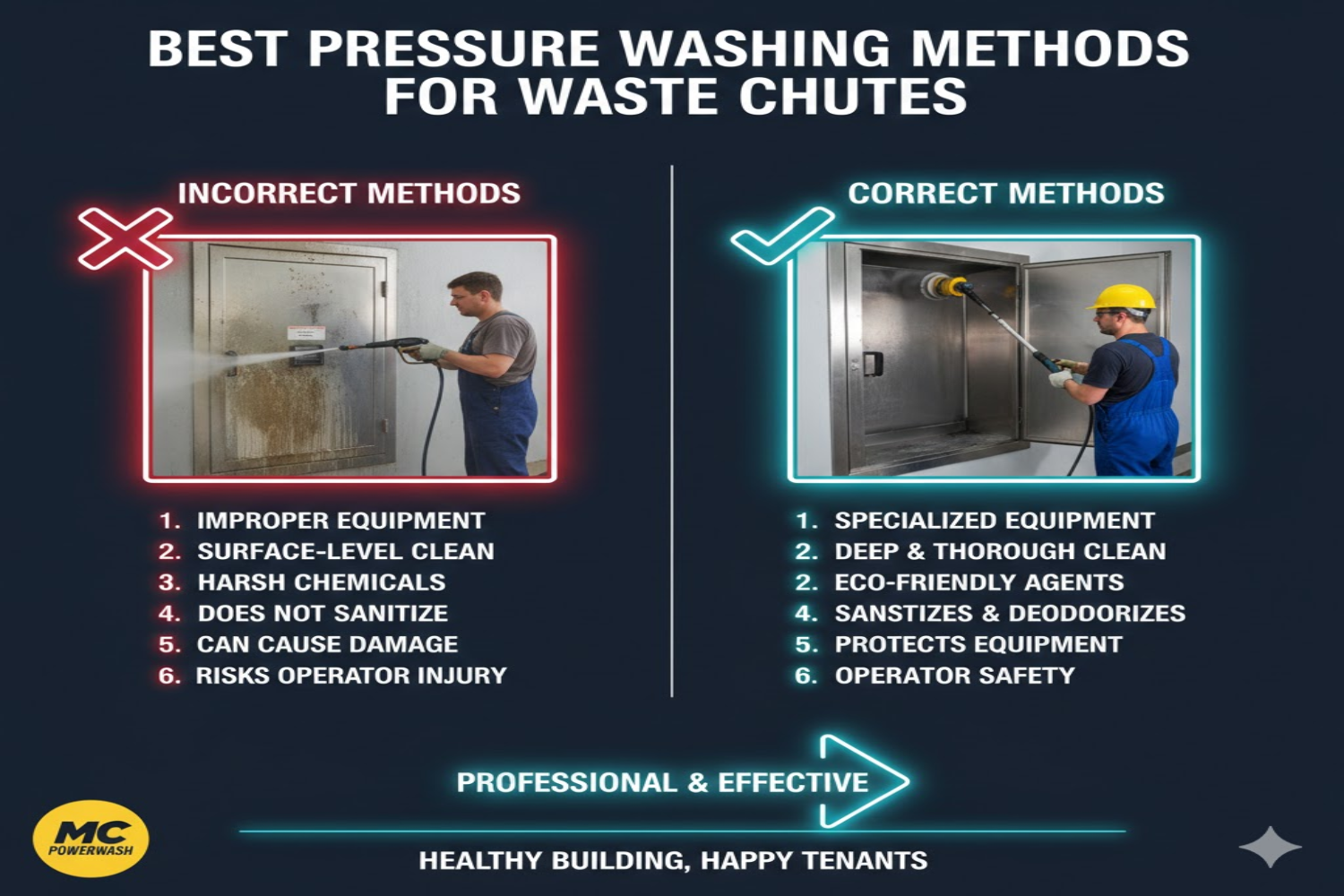
Quarterly tasks involve deeper inspections and professional services. Schedule professional garbage chute pressure washing with hot water and degreaser. Have HVAC coils cleaned and refrigerant levels checked. Inspect and test fire sprinkler heads and backflow preventers. Clean and inspect elevator pits and machine rooms. Pressure test fire pumps and verify flow rates. Check roofing for loose seams, ponding water, or damaged flashing. Inspect exterior facade for cracks, efflorescence, or water stains. Test emergency generators under load. Quarterly professional services catch issues invisible to daily checks. They prevent major system failures and costly downtime.
Semi-Annual Maintenance Tasks Checklist
Semi-annual tasks focus on seasonal preparation and major systems. In spring, clean gutters, downspouts, and roof drains thoroughly. In fall, prepare for winter rains by checking seals around windows and doors. Have fire alarm and detection systems professionally tested and certified. Inspect and service cooling towers before summer peak. Check boiler and heating systems before winter. Clean and calibrate elevator controls and safety devices. Test seismic bracing and structural anchors. Apply sealants to exterior joints and concrete surfaces. Semi-annual tasks align maintenance with seasonal demands. They ensure readiness for weather changes and peak usage periods.
Document completion with photos, signatures, and notes. Schedule professional services well in advance. Review the checklist quarterly to adjust based on building needs. Train staff on daily and weekly items. Keep records for insurance, inspections, and audits. Involve tenants through newsletters about maintenance schedules. Track costs to measure ROI. Consistent implementation prevents oversights. A living checklist evolves with the building’s needs.
Annual Maintenance Tasks Checklist
Annual tasks include major inspections, certifications, and deep maintenance. Schedule full building envelope inspection (roof, facade, windows). Have fire suppression systems hydrostatically tested and recertified. Perform elevator safety tests and five-year certifications. Conduct structural seismic retrofit review if applicable. Clean and inspect cooling tower basins thoroughly. Test backflow prevention devices and certify per city requirements. Have electrical panels and emergency generators load-tested. Review and update emergency response plans. Annual deep maintenance prevents catastrophic failures. It satisfies insurance requirements and code mandates. Comprehensive annual checks protect the entire building.
HVAC System Maintenance Checklist Items
- Change all air filters monthly or quarterly based on usage.
- Clean evaporator and condenser coils semi-annually.
- Check refrigerant levels and inspect for leaks annually.
- Clean cooling tower and change water treatment chemicals quarterly.
- Test and calibrate thermostats and controls.
- Inspect belts, bearings, and motors for wear.
- Clean drain pans and clear condensate lines.
- Verify proper airflow and balance dampers.
- Maintain indoor air quality with regular duct inspections.
- HVAC maintenance reduces energy costs and prevents mold growth. It ensures comfortable temperatures and clean air year-round.
Fire Safety & Life Safety Systems Checklist
Inspect all fire extinguishers monthly for pressure and seals. Test fire alarm systems monthly and have annual certification. Check fire sprinkler heads for damage or corrosion quarterly. Test fire pumps and backflow devices annually. Verify emergency lighting and exit signs monthly. Inspect fire-rated doors and closers quarterly. Test smoke detectors and replace batteries annually. Conduct fire drill coordination annually.
Keep fire lanes and hydrants clear at all times. Fire safety maintenance saves lives and avoids massive liability. Regular checks ensure systems function during emergencies. Document completion with photos, signatures, and notes. Schedule professional services well in advance. Review the checklist quarterly to adjust based on building needs. Train staff on daily and weekly items. Keep records for insurance, inspections, and audits. Involve tenants through newsletters about maintenance schedules. Track costs to measure ROI. Consistent implementation prevents oversights. A living checklist evolves with the building’s needs.
Waste Management & Garbage Chute Checklist
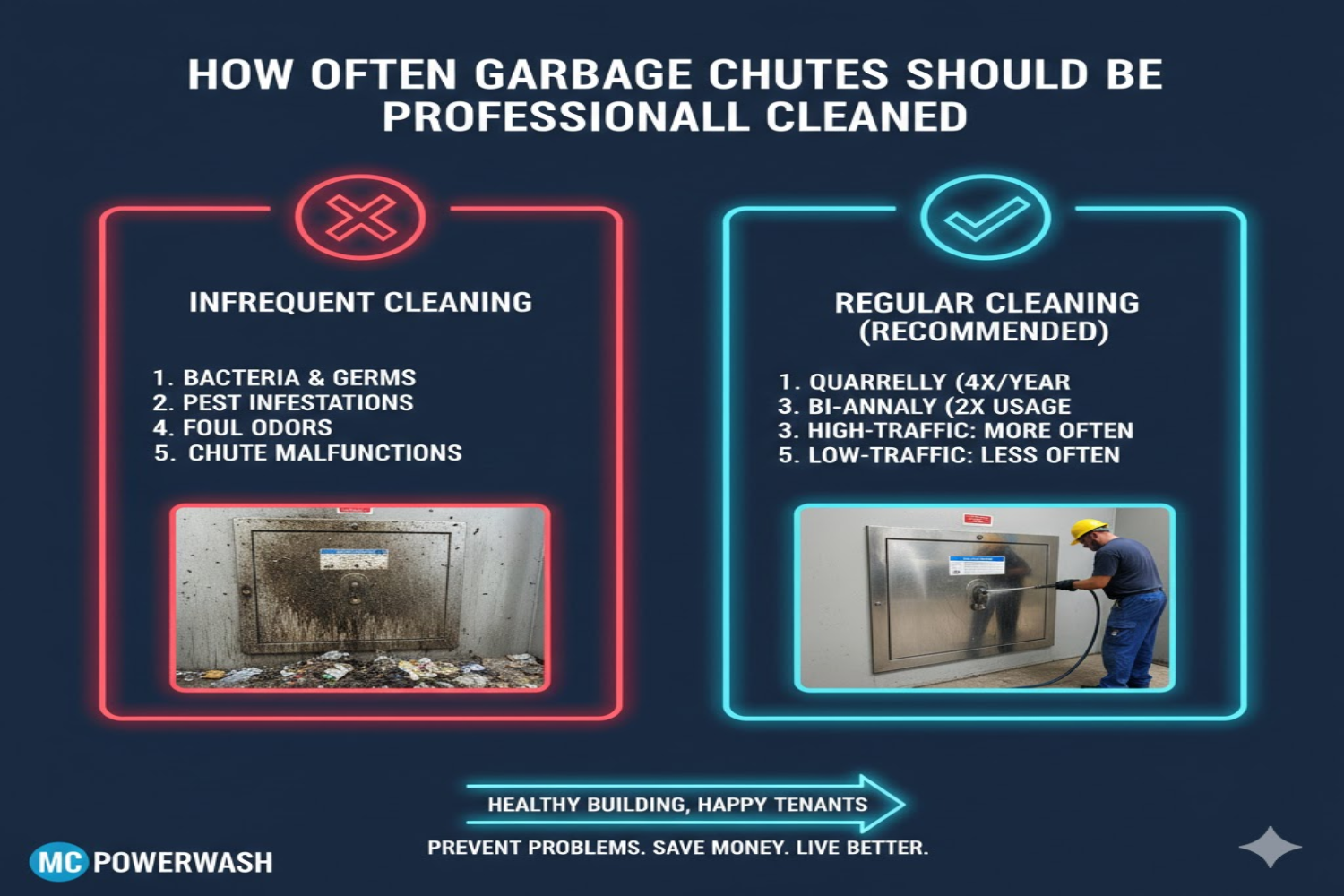
Inspect garbage chutes weekly for odors, visible residue, or slow flow. Schedule professional pressure washing every 3–6 months. Clean hopper doors and frames monthly. Check compactor room for leaks or spills daily. Test chute ventilation fans quarterly. Apply enzymatic or deodorizing treatments monthly. Monitor for pest activity around chute areas. Ensure proper signage for resident disposal rules. Waste system maintenance prevents health hazards and blockages. It keeps odors contained and chutes free-flowing. Regular care is essential for multi-family hygiene.
Comparison Table: Maintenance Frequency Overview
| System / Area | Daily Tasks | Weekly Tasks | Monthly Tasks | Quarterly Tasks | Semi-Annual Tasks | Annual Tasks |
| Common Areas & Lobbies | Spill & debris check | High-touch surface cleaning | Restroom restocking & deep clean | Lighting & fixture checks | Seasonal preparation | Full deep clean & inspection |
| Garbage Chutes | Odor & flow observation | Hopper door visual check | Frame & door cleaning | Professional deep clean recommended | Ventilation & deodorizer check | Full pressure wash & certification |
| HVAC Systems | Noise & temp monitoring | Filter check | Coil & drain pan inspection | Cooling tower clean | System calibration | Load test & refrigerant check |
| Fire & Life Safety | Exit & lighting check | Extinguisher visual check | Alarm test | Sprinkler head inspection | Fire pump test | Full system certification |
| Elevators | Operation & noise check | Door alignment check | Lubrication & pit clean | Safety device test | Control & brake inspection | Five-year safety certification |
| Exterior & Grounds | Grounds walk | Exterior lighting check | Irrigation & drainage check | Roof drain & gutter clean | Sealant & caulk inspection | Building envelope full inspection |
How to Implement & Track Your Maintenance Checklist
Create a digital or printed checklist with responsible parties and due dates. Use property management software (Buildium, AppFolio, Yardi) to assign tasks and send reminders. Document completion with photos, signatures, and notes. Schedule professional services well in advance. Review the checklist quarterly to adjust based on building needs. Train staff on daily and weekly items. Keep records for insurance, inspections, and audits. Involve tenants through newsletters about maintenance schedules. Track costs to measure ROI. Consistent implementation prevents oversights. A living checklist evolves with the building’s needs.
Conclusion
A comprehensive commercial building maintenance checklist is the backbone of safe, efficient, and compliant property management. In Los Angeles, where seismic risks, coastal corrosion, intense sun, and high occupancy create unique challenges, regular checks across HVAC, fire safety, waste systems, elevators, roofing, and common areas prevent disasters and extend asset life. Daily and weekly tasks maintain appearance and catch immediate issues, while monthly, quarterly, semi-annual, and annual inspections address deeper systems and code requirements. Documented maintenance reduces emergency costs, improves tenant satisfaction, lowers energy bills, and protects against liability. Skipping scheduled checks leads to expensive failures, health complaints, and regulatory violations. A well-executed checklist is not optional—it is essential for responsible ownership. Consistent implementation delivers long-term value, safety, and peace of mind. Document completion with photos, signatures, and notes. Schedule professional services well in advance. Review the checklist quarterly to adjust based on building needs. Train staff on daily and weekly items. Keep records for insurance, inspections, and audits. Involve tenants through newsletters about maintenance schedules. Track costs to measure ROI. Consistent implementation prevents oversights. A living checklist evolves with the building’s needs.
Frequently Asked Questions (FAQs)
1. How often should garbage chutes be professionally cleaned in commercial buildings?
Most experts recommend deep professional cleaning every 3–6 months. High-traffic or food-heavy buildings often need every 3 months. Monthly visual inspections help determine actual need. Regular cleaning prevents odors, pests, blockages, and fire hazards.
2. What is the most important daily maintenance task in commercial buildings?
Inspecting common areas for spills, trip hazards, and debris is most critical. Daily checks prevent accidents and maintain first impressions. Checking fire exits and emergency lighting should also be done daily. Early detection stops small problems from escalating.
3. How often should HVAC filters be changed in commercial properties?
Change HVAC filters monthly in high-traffic buildings or quarterly in lower-occupancy spaces. Dirty filters reduce efficiency and spread contaminants. Inspect more frequently during construction or renovation. Regular filter changes improve air quality and energy savings.
4. When should fire sprinkler systems be professionally inspected?
Fire sprinkler systems require annual inspection and testing per NFPA 25 standards. Hydrostatic testing is needed every 5 years. Check heads quarterly for damage or corrosion. Professional certification ensures compliance and reliability during emergencies.
5. How often should elevators receive safety inspections?
Elevators require annual safety tests and certification in most jurisdictions. Five-year full safety inspections are common. Monthly visual checks by building staff catch minor issues. Regular professional maintenance prevents breakdowns and ensures passenger safety.
6. What seasonal maintenance is most important in Los Angeles?
In spring, clean roof drains, gutters, and check for winter damage. In fall, prepare for rains by inspecting seals and drainage. Summer requires cooling tower and HVAC focus. Seasonal tasks prevent water intrusion and equipment strain in local climate.
7. How can maintenance checklists help with insurance requirements?
Documented checklists and service records prove due diligence during insurance audits. They demonstrate compliance with safety and maintenance standards. Many insurers require proof of regular upkeep for coverage. Good records can reduce premiums and speed claims.
8. What is the benefit of digital maintenance tracking software?
Digital tools send automatic reminders, track completion with photos, and generate compliance reports. They reduce missed tasks and provide audit-ready documentation. Software improves accountability and communication among staff. It saves time and prevents oversights.
9. How often should building exterior be professionally inspected?
Full exterior facade and roofing inspections should occur annually. Check caulk, seals, and drainage quarterly. Semi-annual checks catch seasonal damage early. Professional inspections prevent water intrusion and structural issues.
10. Why is regular garbage chute cleaning so important for hygiene?
Dirty chutes harbor bacteria, mold, and pests that affect entire buildings. Regular cleaning removes breeding grounds, reduces airborne contaminants, and eliminates odors. It improves indoor air quality and lowers health complaints. Consistent chute hygiene is essential for multi-family living.