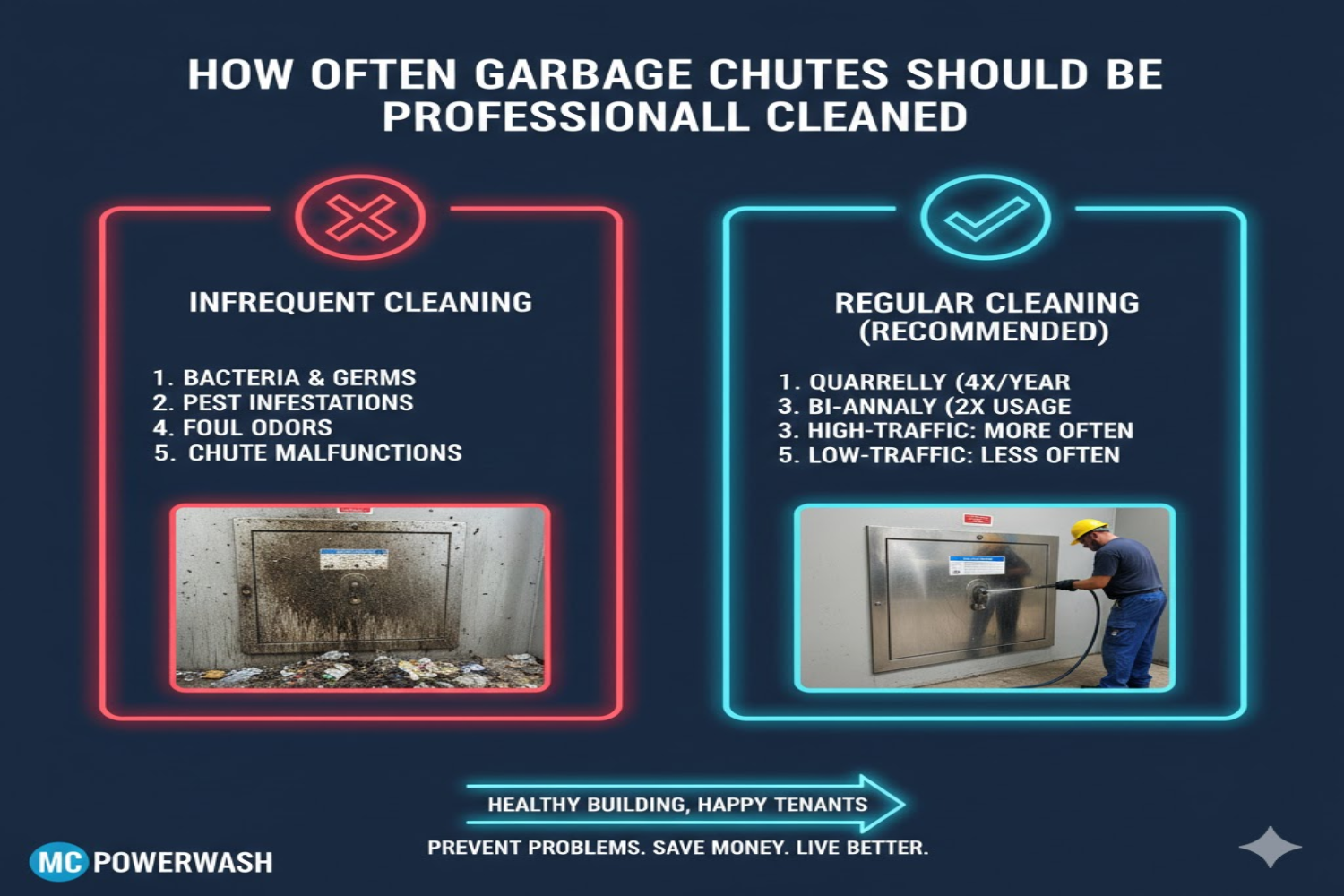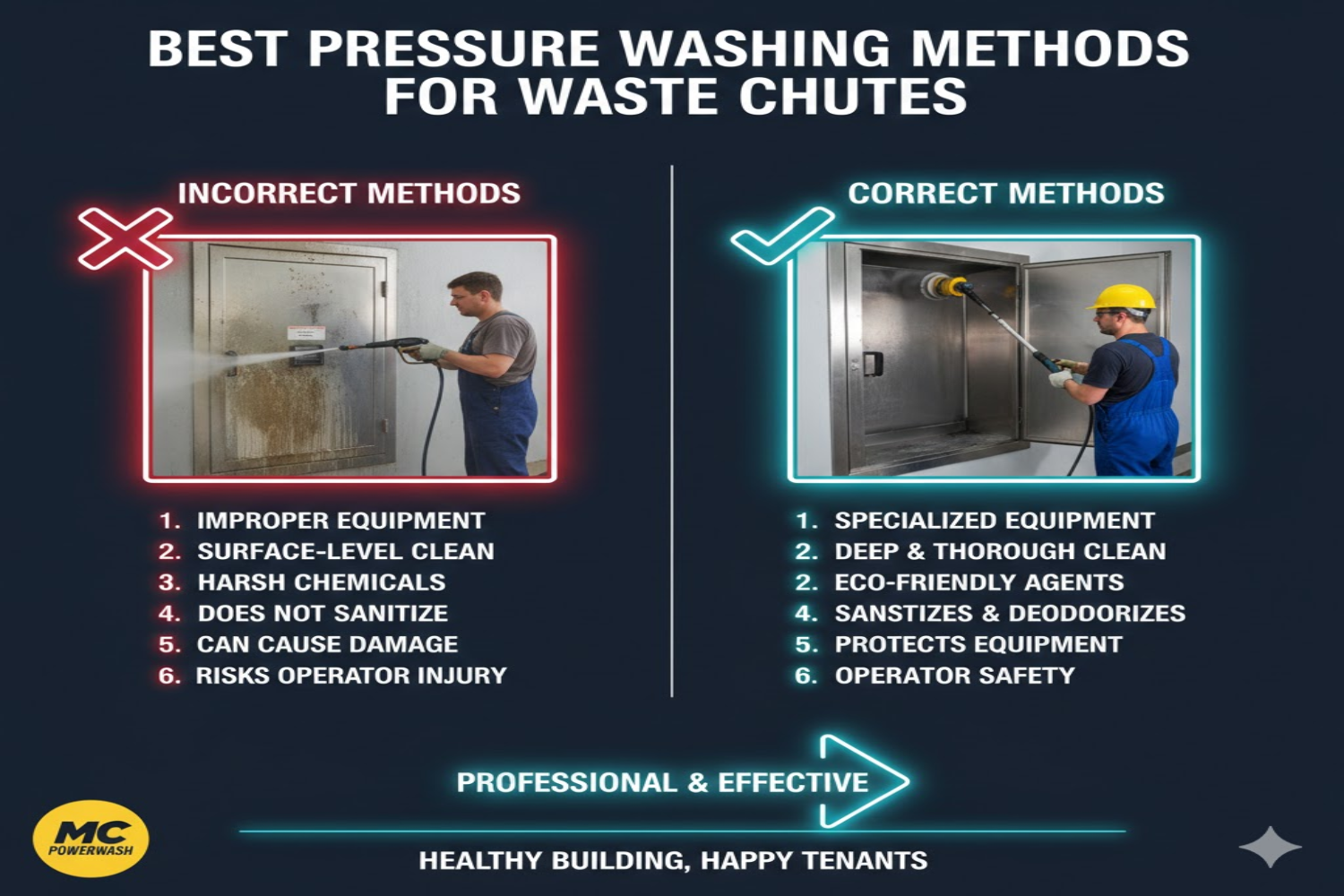
Choosing the right detergent for garbage chute cleaning is essential for effectively removing grease, food residue, dried sludge, and odor-causing bacteria while protecting the chute material, building residents, and the environment. In Los Angeles, where high-rise apartments and condos are extremely common, the detergent must cut through heavy food grease, oils, and organic buildup that accumulate rapidly in warm temperatures. The best detergents combine strong emulsification power, biodegradability, low foam, and neutral or controlled pH to avoid damaging stainless steel or galvanized metal. Alkaline, citrus-based, enzyme, and surfactant formulas are the most popular categories. Using the wrong detergent can leave residue, cause corrosion, create excessive foam, or fail to eliminate odors. Professional-grade products designed specifically for chutes deliver the best results. The right choice reduces cleaning time, prevents rapid re-soiling, and ensures compliance with local runoff regulations. Proper detergent selection is one of the most important decisions in chute maintenance.
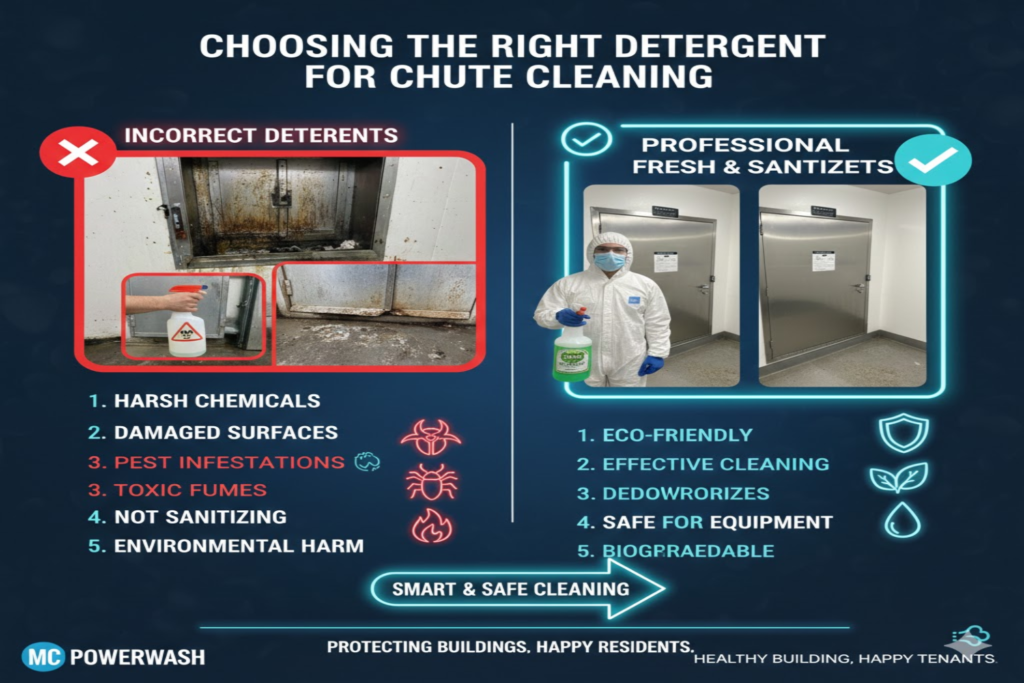
Why Detergent Choice Matters for Garbage Chutes
Garbage chutes contain layers of fats, proteins, starches, sugars, and food acids that form a sticky, black sludge over time. Ordinary dish soap or general cleaners cannot break down these complex organic compounds effectively. The wrong detergent may leave a greasy film that traps more dirt, causes rapid odor return, or damages chute welds and seals. In Los Angeles, where coastal humidity and warm weather speed up decomposition, the detergent must emulsify grease completely and neutralize odor molecules. Low-foam formulas are critical because excessive foam can clog drains or create slippery hazards in the compactor room. Biodegradable options prevent environmental harm when rinse water enters sanitary systems. The right detergent ensures deep cleaning, long-lasting freshness, and safe operation. Poor selection wastes time, money, and effort.
Key Factors to Consider When Choosing a Detergent
- The detergent must have strong degreasing power to dissolve animal fats, vegetable oils, and cooking residues.
- Low-foaming surfactants are essential to avoid overflow and ensure proper rinsing.
- pH level should be controlled—strong alkaline cleaners cut grease quickly but can corrode metal over time, while neutral or mildly alkaline formulas are safer for frequent use.
- Biodegradability and low-VOC content are important for environmental compliance and indoor air quality.
- Enzyme additives help digest proteins and starches between deep cleanings.
- Compatibility with hot water (up to 220°F) improves performance significantly.
- Odor-neutralizing ingredients prevent smell return.
- Cost per cleaning and availability of bulk supply affect long-term budgeting.
- Each factor influences cleaning effectiveness and chute longevity.
Alkaline-Based Detergents for Heavy Grease
Alkaline detergents (pH 10–13) are highly effective at breaking down animal fats, grease, and protein-based food waste. They emulsify oils so they can be rinsed away easily. Products like Zep Heavy-Duty Degreaser, Purple Power, or Krud Kutter Heavy Duty are popular choices. These cleaners work quickly and handle thick sludge well. They are ideal for heavily soiled chutes in buildings with many food-related disposals. However, strong alkaline formulas require thorough rinsing and occasional neutralization to prevent long-term metal corrosion. Low-foam versions are preferred for chute applications. Alkaline detergents are cost-effective for tough jobs. They should be used with hot water for maximum performance.
Proper selection is one of the most important decisions in chute maintenance. Many professionals use a two-step approach: first apply a strong alkaline or citrus degreaser to break down heavy grease, then follow with an enzymatic treatment to digest remaining organics. This combination removes visible sludge and prevents odor return. Some add a residual deodorizing coating after rinsing. Layered detergent use delivers deeper cleaning and longer-lasting results. It reduces the frequency of full deep cleans. Combining products maximizes grease breakdown and odor control. It is the preferred strategy for high-traffic buildings. Proper sequencing and rinsing are critical. Multi-product approaches provide superior hygiene.
Citrus-Based & Plant-Derived Degreasers
Citrus-based degreasers use d-limonene (from orange peels) to dissolve grease naturally. Products like Citrus King, Orange-Sol, or Eco-Friendly Citrus Degreaser are biodegradable, have pleasant natural scents, and are safer for workers and the environment. They cut through food oils effectively without harsh fumes. Plant-derived options (soy, coconut-based surfactants) are also low-VOC and eco-friendly. These cleaners are ideal for regular maintenance and buildings with strict environmental policies. They may require slightly longer dwell times than strong alkaline products. Citrus formulas are gentle on stainless steel and concrete. They reduce chemical runoff impact. Many professionals prefer them for routine chute cleaning.
Enzyme-Based & Bio-Based Cleaners
Enzyme detergents contain live or dormant bacteria and enzymes that digest fats, proteins, starches, and carbohydrates over time. Products like Bio-Clean, Green Gobbler, or Drano Max Gel (enzyme versions) continue working after application. They are excellent for preventing odor return between deep cleanings. Enzyme cleaners are completely biodegradable and non-corrosive. They are ideal for maintenance sprays or light treatments. They work best when given 24–48 hours to digest residue. Bio-based cleaners are safe for use around food areas and waterways. They reduce the need for frequent strong chemical cleanings. Enzymes provide ongoing organic breakdown and odor control.
Proper selection is one of the most important decisions in chute maintenance. Many professionals use a two-step approach: first apply a strong alkaline or citrus degreaser to break down heavy grease, then follow with an enzymatic treatment to digest remaining organics. This combination removes visible sludge and prevents odor return. Some add a residual deodorizing coating after rinsing. Layered detergent use delivers deeper cleaning and longer-lasting results. It reduces the frequency of full deep cleans. Combining products maximizes grease breakdown and odor control. It is the preferred strategy for high-traffic buildings. Proper sequencing and rinsing are critical. Multi-product approaches provide superior hygiene.
Low-Foam & High-Temperature Compatible Detergents
- Low-foam detergents are critical for pressure washing because excessive foam reduces cleaning power and can overflow the compactor area.
- Most professional chute cleaning companies use specially formulated low-foam, high-temperature degreasers.
- These products maintain effectiveness at 180–220°F without creating suds.
- They rinse clean without leaving slippery residue.
- Compatibility with hot water systems is essential.
- Low-foam formulas prevent pump damage and ensure proper drainage.
- They are more expensive but deliver superior results.
- Choosing low-foam, heat-stable detergents improves efficiency and safety.
- They are industry standard for chute cleaning.
Comparison Table: Types of Detergents for Garbage Chute Cleaning
| Detergent Type | Grease Cutting Power | Odor Elimination | Foaming Level | pH Range | Environmental Impact | Surface Safety (Stainless Steel) | Cost per Cleaning | Best Use Case | Main Limitation |
| Strong Alkaline | Very High | High | Low–Medium | 11–13 | Medium–High | Moderate (needs rinsing) | Low–Medium | Heavy grease & sludge | Potential corrosion if not rinsed well |
| Citrus / Plant-Based | High | Very Good | Low | 8–10 | Very Low | Very High | Medium | Regular maintenance & eco-sensitive areas | Slightly slower on very thick grease |
| Enzyme / Bio-Based | Medium (long-term) | Excellent | Very Low | Neutral–Mild | Extremely Low | Very High | Medium | Ongoing prevention & odor control | Requires dwell time to work |
| Low-Foam High-Temp | High–Very High | High | Extremely Low | 9–12 | Low–Medium | High | Medium–High | Hot-water pressure washing | Higher upfront cost |
| Neutral pH Degreaser | Medium | Good | Low | 6.5–8.5 | Low | Very High | Low–Medium | Light maintenance & sensitive metals | Less effective on heavy grease layers |
How to Test & Choose the Right Detergent
Always test any new detergent on a small, inconspicuous section of the chute (near an access panel). Apply, let dwell, rinse, and check for any discoloration, etching, or odor change. Observe how well it cuts through existing grease. Ask the cleaning contractor for product SDS and biodegradability certifications. Request references from similar buildings in Los Angeles. Compare dwell time, foam level, and rinsing ease. Choose products with proven results in stainless steel chutes. Factor in environmental compliance and disposal requirements. The best detergent balances cleaning power, safety, and cost. Trial testing prevents poor performance and wasted effort.
Combining Detergents for Maximum Effectiveness
Many professionals use a two-step approach: first apply a strong alkaline or citrus degreaser to break down heavy grease, then follow with an enzymatic treatment to digest remaining organics. This combination removes visible sludge and prevents odor return. Some add a residual deodorizing coating after rinsing. Layered detergent use delivers deeper cleaning and longer-lasting results. It reduces the frequency of full deep cleans. Combining products maximizes grease breakdown and odor control. It is the preferred strategy for high-traffic buildings. Proper sequencing and rinsing are critical. Multi-product approaches provide superior hygiene.
Cost-Benefit Analysis of Different Detergent Types
Strong alkaline detergents are inexpensive per cleaning but may require more frequent use if corrosion occurs. Citrus and plant-based options cost slightly more but reduce environmental fees and improve worker safety. Enzyme treatments add upfront cost but extend time between deep cleanings significantly. Low-foam, high-temp formulas are pricier but improve pressure-washing efficiency and reduce labor time. Over time, the right detergent choice lowers overall maintenance expenses. Savings come from fewer emergency calls, less pest control, and lower odor complaints. Investing in quality products pays off quickly. Long-term cost-effectiveness favors balanced, effective detergents.
Conclusion
Choosing the right detergent for garbage chute cleaning is crucial for removing grease, eliminating odors, preventing bacterial growth, and maintaining long-term hygiene. In Los Angeles, where high-rise buildings face rapid buildup due to warm weather and dense occupancy, alkaline, citrus-based, enzyme, and low-foam high-temp detergents each offer specific advantages. The best choice depends on grease severity, chute material, environmental regulations, and budget. Combining strong initial degreasing with enzymatic follow-up and residual deodorizing provides the most comprehensive results. Always test products, follow safety guidelines, and use biodegradable formulas to stay compliant. The right detergent not only cleans effectively but also extends chute life, reduces cleaning frequency, and improves resident satisfaction. Proper selection is one of the most important decisions in chute maintenance. Many professionals use a two-step approach: first apply a strong alkaline or citrus degreaser to break down heavy grease, then follow with an enzymatic treatment to digest remaining organics. This combination removes visible sludge and prevents odor return. Some add a residual deodorizing coating after rinsing. Layered detergent use delivers deeper cleaning and longer-lasting results. It reduces the frequency of full deep cleans. Combining products maximizes grease breakdown and odor control. It is the preferred strategy for high-traffic buildings. Proper sequencing and rinsing are critical. Multi-product approaches provide superior hygiene.
Frequently Asked Questions (FAQs)
1. What is the best detergent type for heavy grease in garbage chutes?
Strong alkaline or citrus-based degreasers work best for heavy grease. They emulsify fats and oils quickly so they can be rinsed away. Low-foam, high-temperature compatible formulas are ideal for pressure washing. These types handle thick sludge effectively.
2. Are enzyme detergents strong enough to clean chutes alone?
Enzyme detergents are excellent for digesting organic residue and preventing odor return, but they are not strong enough to remove thick grease layers by themselves. Use them after initial degreasing or as maintenance between deep cleans. They provide long-term breakdown.
3. Will citrus-based detergents damage stainless steel chutes?
No—citrus-based degreasers (d-limonene) are very safe for stainless steel and concrete. They are non-corrosive when used as directed. They are gentler than strong alkaline cleaners. Citrus formulas are widely used in professional chute cleaning.
4. How do I choose between alkaline and neutral pH detergents?
Use alkaline detergents for heavy grease and rapid cleaning. Choose neutral or mildly alkaline for regular maintenance or when corrosion is a concern. Neutral pH is safer for frequent use and sensitive metals. Match the detergent to the buildup severity and cleaning frequency.
5. Are biodegradable detergents required for chute cleaning in Los Angeles?
While not always strictly required, biodegradable, low-VOC detergents are strongly recommended due to runoff entering sanitary systems and strict environmental regulations. Many professional companies use eco-friendly formulas to stay compliant. They perform well without harming the environment.
6. How much dwell time do degreasers need for chute cleaning?
Most degreasers need 15–30 minutes of dwell time to penetrate and break down grease. Heavy sludge may require 45–60 minutes. Follow product instructions. Longer dwell improves cleaning power. Proper timing maximizes effectiveness.
7. Can I use the same detergent for both chute walls and compactor room?
Yes—most professional chute degreasers are safe for both chute interiors and compactor room floors. Use low-foam formulas to avoid overflow issues. Citrus or alkaline cleaners work well on concrete and metal surfaces. Consistent product use simplifies inventory.
8. How do I know if the detergent is working properly?
The grease should visibly loosen and emulsify during dwell time. After rinsing, the chute walls should appear clean and free of black slime. Odors should decrease dramatically. If grease remains, increase dwell time or concentration. Test results confirm effectiveness.
9. Are enzyme treatments worth using after degreasing?
Yes—enzymes digest leftover organic matter that pressure washing misses. They prevent rapid odor return and reduce buildup between deep cleanings. Regular enzyme application extends time between full services. They are cost-effective for long-term odor control.
10. What should I avoid when selecting a chute cleaning detergent?
Avoid high-foam detergents that overflow and create slippery hazards. Stay away from highly corrosive acids or strong alkalis that damage metal over time. Do not use products with high VOCs or non-biodegradable formulas in sensitive areas. Choose chute-specific or professional-grade detergents for best results.