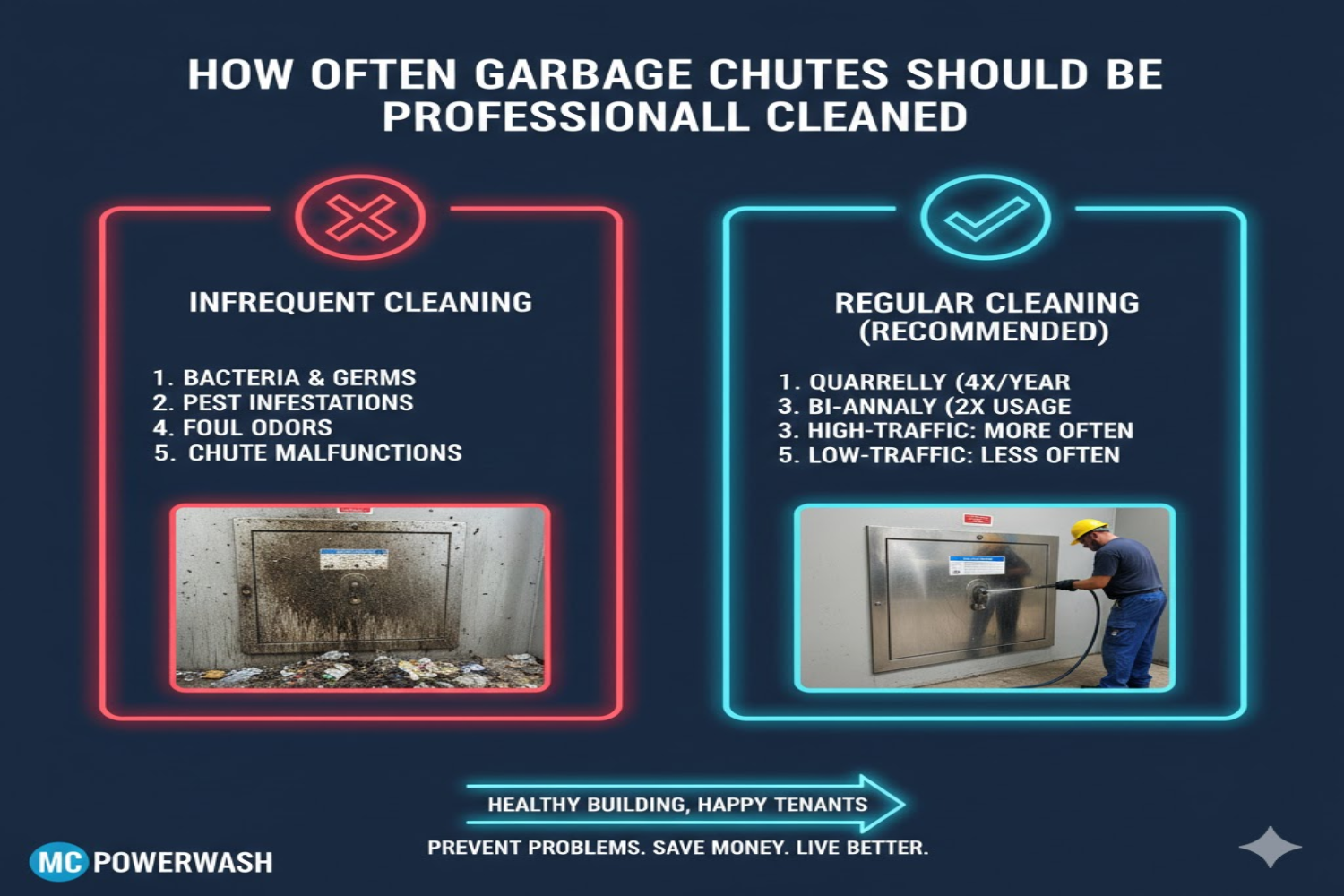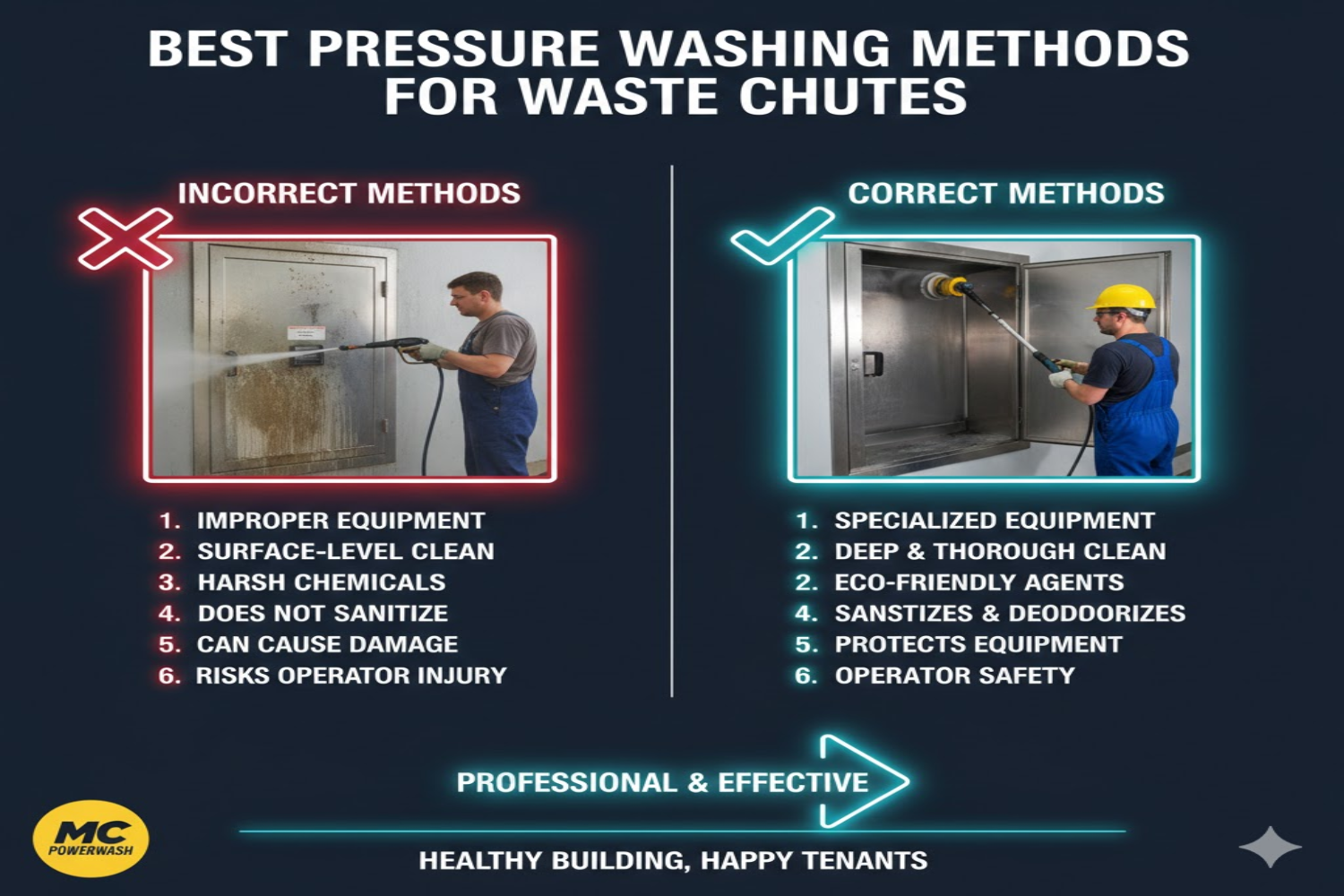
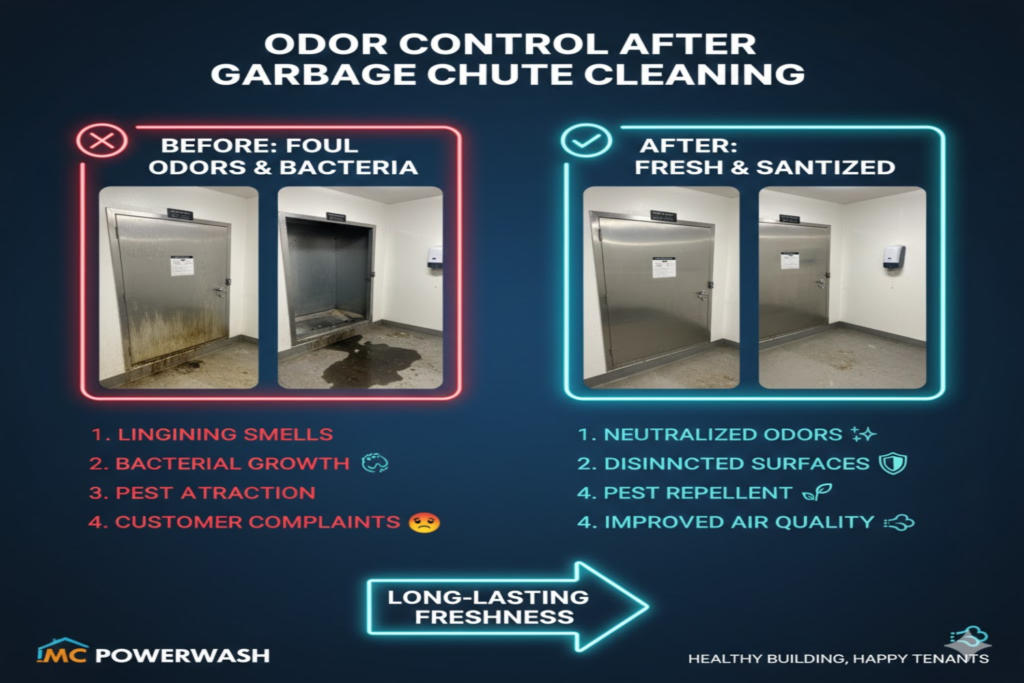
Odor control after garbage chute cleaning is one of the most important final steps to ensure residents experience fresh, clean air throughout the building rather than lingering foul smells. In Los Angeles, where high-rise apartments and condos often have warm temperatures and limited ventilation in chute shafts, residual odors from grease, food decomposition, and bacteria can return quickly if not addressed properly. After pressure washing removes visible sludge and kills surface bacteria, odors can still persist due to trapped organic matter in seams, joints, bends, and microscopic pores. Effective post-cleaning odor control combines immediate neutralization, long-lasting deodorizers, enzymatic treatments, and preventive maintenance. Professional-grade products and correct application techniques eliminate both current smells and prevent rapid re-odorization. Many buildings notice dramatic improvement in hallway air quality within hours. Proper odor management increases tenant satisfaction, reduces complaints, and helps avoid repeat cleanings. When done right, it extends the time between deep cleanings significantly.
Why Odors Return After Cleaning
Even after thorough pressure washing, microscopic organic particles remain embedded in metal seams, welds, textured concrete, or inside hopper door gaskets. These residues continue to ferment and release volatile organic compounds (VOCs) that cause persistent bad smells. Warm shaft temperatures in Los Angeles accelerate bacterial regrowth from leftover food particles. Grease that re-hardens in cooler spots releases rancid odors over days. Without neutralization and residual treatment, odors can return within 48–72 hours. Poor ventilation in the chute allows smells to migrate upward through hopper doors into hallways and apartments. Resident habits (loose bags, liquid disposal) quickly reintroduce odor sources. Understanding these causes helps choose the right control methods. Comprehensive odor management targets both immediate relief and long-term prevention.
Effective post-cleaning odor control combines immediate neutralization, long-lasting deodorizers, enzymatic treatments, and preventive maintenance. Professional-grade products and correct application techniques eliminate both current smells and prevent rapid re-odorization. Many buildings notice dramatic improvement in hallway air quality within hours. Proper odor management increases tenant satisfaction, reduces complaints, and helps avoid repeat cleanings. When done right, it extends the time between deep cleanings significantly.
Immediate Post-Cleaning Odor Neutralization
Right after pressure washing, apply a high-strength odor neutralizer designed for organic waste. Products containing essential oils, plant-based compounds, or chemical neutralizers (not simple fragrances) bond with odor molecules and destroy them. Spray or fog the entire chute interior from top to bottom using extension wands. Allow 15–30 minutes contact time before final rinse if required. Some professionals use thermal fogging with deodorizing agents for deeper penetration into pores. This step eliminates the majority of post-cleaning smells. Immediate neutralization prevents odors from migrating into living spaces. It creates a clean slate for longer-lasting treatments. Skipping this step is a common reason for quick odor return.
Effective post-cleaning odor control combines immediate neutralization, long-lasting deodorizers, enzymatic treatments, and preventive maintenance. Professional-grade products and correct application techniques eliminate both current smells and prevent rapid re-odorization. Many buildings notice dramatic improvement in hallway air quality within hours. Proper odor management increases tenant satisfaction, reduces complaints, and helps avoid repeat cleanings. When done right, it extends the time between deep cleanings significantly.
Enzymatic Treatments for Long-Lasting Odor Control
Enzyme-based cleaners are highly effective after pressure washing. These products contain live or dormant enzymes and bacteria that digest remaining organic matter (fats, proteins, starches) over days or weeks. Apply a concentrated enzymatic solution to the chute walls after rinsing. The enzymes continue working in the background, breaking down trapped residue that pressure washing could not fully remove. This prevents new odor formation at the source. Enzymatic treatments are completely biodegradable and safe for the environment. They are especially valuable in warm climates where organic decomposition happens fast. Regular application between deep cleanings maintains freshness. Enzymes provide ongoing odor control without masking smells.
Effective post-cleaning odor control combines immediate neutralization, long-lasting deodorizers, enzymatic treatments, and preventive maintenance. Professional-grade products and correct application techniques eliminate both current smells and prevent rapid re-odorization. Many buildings notice dramatic improvement in hallway air quality within hours. Proper odor management increases tenant satisfaction, reduces complaints, and helps avoid repeat cleanings. When done right, it extends the time between deep cleanings significantly.
Residual Deodorizers & Barrier Coatings
- After neutralization and enzymatic treatment, many professionals apply a residual deodorizing coating or barrier film.
- These products create a thin, invisible layer on chute walls that repels grease and reduces odor adhesion.
- Some contain essential oils or antimicrobial agents that continue releasing deodorizing vapors for weeks.
- Water-based, low-VOC formulas are preferred for indoor safety. Apply using sprayers or foggers for even coverage.
- These coatings extend odor-free time significantly.
- They are especially useful in high-traffic buildings.
- Reapplication every 3–6 months aligns with deep cleaning cycles.
- Residual treatments bridge the gap between professional services.
Ventilation & Airflow Improvements
Improving airflow inside the chute helps odors dissipate faster after cleaning. Many modern chutes have exhaust fans—ensure they are clean, operational, and running continuously. Install or upgrade to high-CFM ventilation fans if absent. Some buildings add activated carbon filters to capture odors at the exhaust point. Positive pressure systems prevent odors from backflowing into hallways. In Los Angeles, where coastal humidity can slow drying, good ventilation speeds moisture evaporation and reduces mold risk. Clean fan blades and filters every 6 months. Better airflow complements chemical treatments. It prevents odor trapping in stagnant areas.
Preventing Odor Recurrence Between Cleanings
Encourage residents to wrap food waste tightly and avoid pouring liquids directly into the chute. Install signage reminding users to tie bags securely. Provide larger trash rooms or bins for oversized items. Schedule monthly or bi-monthly enzymatic misting or deodorizer fogging. Clean hopper doors and surrounding frames weekly. Monitor for slow drainage or new odors and respond immediately. Some buildings use automatic chute misting systems with enzyme or deodorizer solutions. Resident education and light maintenance dramatically slow re-odorization. Prevention is the most cost-effective odor control strategy.
Effective post-cleaning odor control combines immediate neutralization, long-lasting deodorizers, enzymatic treatments, and preventive maintenance. Professional-grade products and correct application techniques eliminate both current smells and prevent rapid re-odorization. Many buildings notice dramatic improvement in hallway air quality within hours. Proper odor management increases tenant satisfaction, reduces complaints, and helps avoid repeat cleanings. When done right, it extends the time between deep cleanings significantly.
Monitoring Odor Levels After Cleaning
- Property managers should conduct regular odor checks on every floor after cleaning.
- Use a consistent scale (0 = no odor, 10 = severe) and document findings.
- Ask residents for feedback via surveys or complaint logs.
- Install odor sensors in common areas or chute shafts for objective data.
- Compare pre- and post-cleaning odor levels.
- Persistent smells on certain floors may indicate hopper seal issues or resident misuse. Monthly walkthroughs help track effectiveness.
- Early detection allows quick spot treatments. Monitoring ensures cleaning frequency and methods remain appropriate.
- It demonstrates proactive management to owners and residents.
Common Mistakes That Cause Odor Return
Using only fragrances or masking agents instead of neutralizers allows odors to return once the scent fades. Skipping enzymatic treatment leaves organic residue that continues decomposing. Inadequate rinsing leaves chemical residue that mixes with new waste and creates worse smells. Poor ventilation traps moisture and odors inside the shaft. Allowing residents to resume improper disposal habits immediately after cleaning. Not cleaning hopper doors, gaskets, and compactor rooms thoroughly. Avoiding these mistakes is essential. Each error shortens the odor-free period significantly. Proper technique and follow-through deliver lasting freshness.
Comparison Table: Odor Control Methods After Chute Cleaning
| Method | How It Works | Duration of Effect | Cost Level | Ease of Application | Environmental Impact | Best For | Limitations / Notes |
| Immediate Odor Neutralizer | Chemically bonds & destroys odor molecules | 1–7 days | Low | Easy (spray/fog) | Low–Medium | Right after pressure wash | Does not digest remaining organics |
| Enzymatic Treatment | Live enzymes digest leftover organic waste | 2–8 weeks | Medium | Moderate (spray) | Very Low | Long-term prevention | Requires time to work |
| Residual Deodorizing Coating | Creates barrier film & repels odor adhesion | 1–3 months | Medium | Moderate (spray) | Low | High-traffic buildings | Needs reapplication with deep cleans |
| Ventilation Fan Upgrade/Filter | Removes odorous air from chute shaft | Continuous | High | Professional install | Very Low | Buildings with poor airflow | Upfront cost & maintenance |
| Monthly Enzymatic Misting | Light enzyme spray between deep cleans | Ongoing (monthly) | Medium | Easy (automated) | Very Low | Preventive maintenance | Does not replace deep cleaning |
| Activated Carbon Filters | Traps odor molecules at exhaust point | 3–6 months | Medium | Moderate | Low | Odor migration into hallways | Filter replacement required |
Long-Term Odor Control Strategy for Building Managers
Create a written odor control plan that includes deep pressure washing every 3–6 months, enzymatic treatments between services, and monthly inspections. Document every cleaning with photos, odor logs, and resident feedback. Train staff to recognize early odor signs. Educate residents through flyers, emails, or building apps about proper disposal. Invest in ventilation upgrades or automatic misting systems for high-risk buildings. Review the plan annually and adjust frequency based on results. Partner with a reliable cleaning company for consistent service. Long-term strategy prevents odor cycles. It improves tenant retention and property reputation. Consistent odor control is one of the best investments in multi-family housing.
Effective post-cleaning odor control combines immediate neutralization, long-lasting deodorizers, enzymatic treatments, and preventive maintenance. Professional-grade products and correct application techniques eliminate both current smells and prevent rapid re-odorization. Many buildings notice dramatic improvement in hallway air quality within hours. Proper odor management increases tenant satisfaction, reduces complaints, and helps avoid repeat cleanings. When done right, it extends the time between deep cleanings significantly.
Conclusion
Odor control after garbage chute cleaning requires a combination of immediate neutralization, enzymatic digestion, residual coatings, improved ventilation, and ongoing prevention. In Los Angeles, where warm temperatures and high occupancy accelerate odor development, these steps are essential to maintain fresh air and resident satisfaction. Proper neutralization eliminates current smells, enzymes digest hidden organics, coatings provide a barrier, and ventilation prevents trapping. Regular monitoring, resident education, and scheduled maintenance extend odor-free periods significantly. Skipping any step often causes quick return of foul odors. Investing in comprehensive post-cleaning odor control reduces complaints, lowers turnover, and avoids emergency cleanings. When done correctly, buildings remain pleasant, hygienic, and compliant. Effective odor management after chute cleaning transforms a problem area into a non-issue for years.
Frequently Asked Questions (FAQs)
1. How long should odors stay gone after professional chute cleaning?
With proper pressure washing, neutralization, enzymatic treatment, and deodorizing, odors should stay gone for 2–6 months or longer. High-traffic buildings may see odors return sooner. Regular maintenance extends freshness. Most residents notice immediate and lasting improvement.
2. Why do odors sometimes return quickly even after deep cleaning?
Quick return usually means residual organic matter remains in seams, joints, or pores. Inadequate neutralization, skipping enzymes, or poor ventilation are common causes. Resident habits (loose bags, liquids) reintroduce waste fast. Proper multi-step aftercare prevents rapid recurrence.
3. Are enzymatic treatments safe to use after pressure washing?
Yes, enzyme cleaners are completely safe, non-toxic, and biodegradable. They contain live or dormant bacteria/enzymes that digest leftover organics. No harmful residues remain. They are widely used in professional chute maintenance. Enzymes provide ongoing odor control safely.
4. Can fragrances or air fresheners fix chute odors?
No—fragrances only mask odors temporarily. They do not eliminate the source. Once the scent fades, the bad smell returns stronger. Neutralizers and enzymes destroy odors at the molecular level. Masking agents are not a solution for chute problems.
5. How do I improve ventilation to help control chute odors?
Ensure exhaust fans are clean, operational, and running continuously. Upgrade to higher-CFM fans if airflow is weak. Install activated carbon filters at exhaust points. Positive pressure systems prevent backflow into hallways. Better ventilation disperses odors and speeds drying.
6. Should I apply deodorizer after every cleaning?
Yes—most professionals apply a residual deodorizer or enzymatic coating after each deep clean. It extends odor-free time and prevents rapid re-soiling. Light monthly misting between major services keeps freshness longer. Regular deodorizing is part of good maintenance.
7. How can residents help prevent odor return after cleaning?
Wrap food waste tightly in bags, tie securely, and avoid pouring liquids directly into the chute. Do not dispose of oversized items or loose trash. Report slow drainage or new odors immediately. Follow building disposal guidelines. Resident cooperation slows buildup significantly.
8. Is there a way to monitor odors objectively after cleaning?
Yes—use odor sensors or air quality monitors in common areas near chutes. Keep a consistent odor log (scale 0–10) on each floor. Collect resident feedback via surveys. Compare pre- and post-cleaning levels. Objective monitoring helps adjust cleaning frequency.
9. How much does post-cleaning odor control treatment cost?
Basic neutralizers and deodorizers cost $50–$200 per cleaning. Enzymatic treatments add $100–$300. Automatic misting systems range $500–$2,000 installed. Most companies include some odor control in standard pricing. Regular treatments are inexpensive compared to emergency cleanings.
10. Can odor control coatings damage the chute?
No—modern water-based, low-VOC deodorizing coatings are safe for stainless steel and concrete. They create a thin, protective film that repels grease without corroding metal. Professional application ensures even coverage. They are designed specifically for chute interiors. No damage occurs when used correctly.