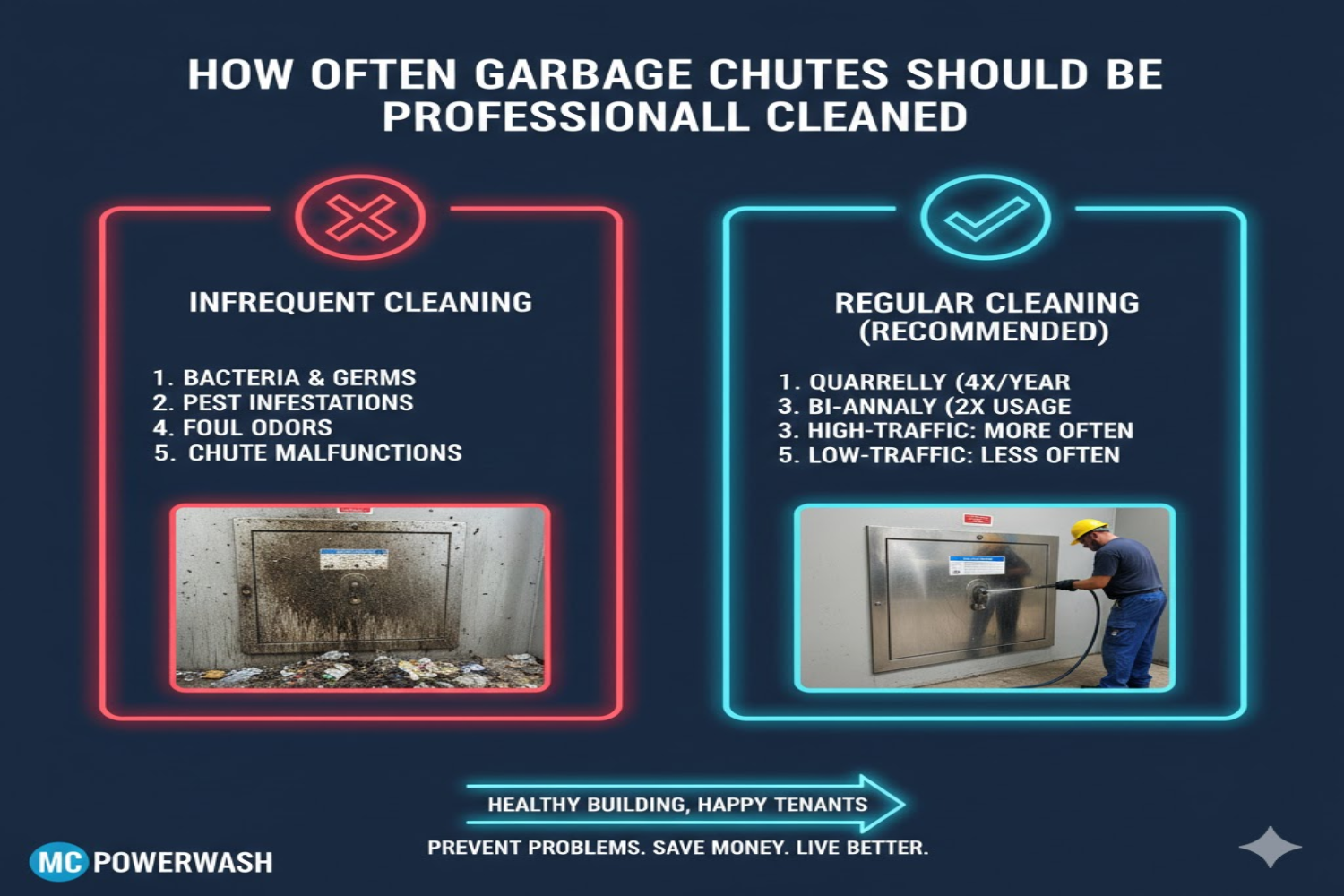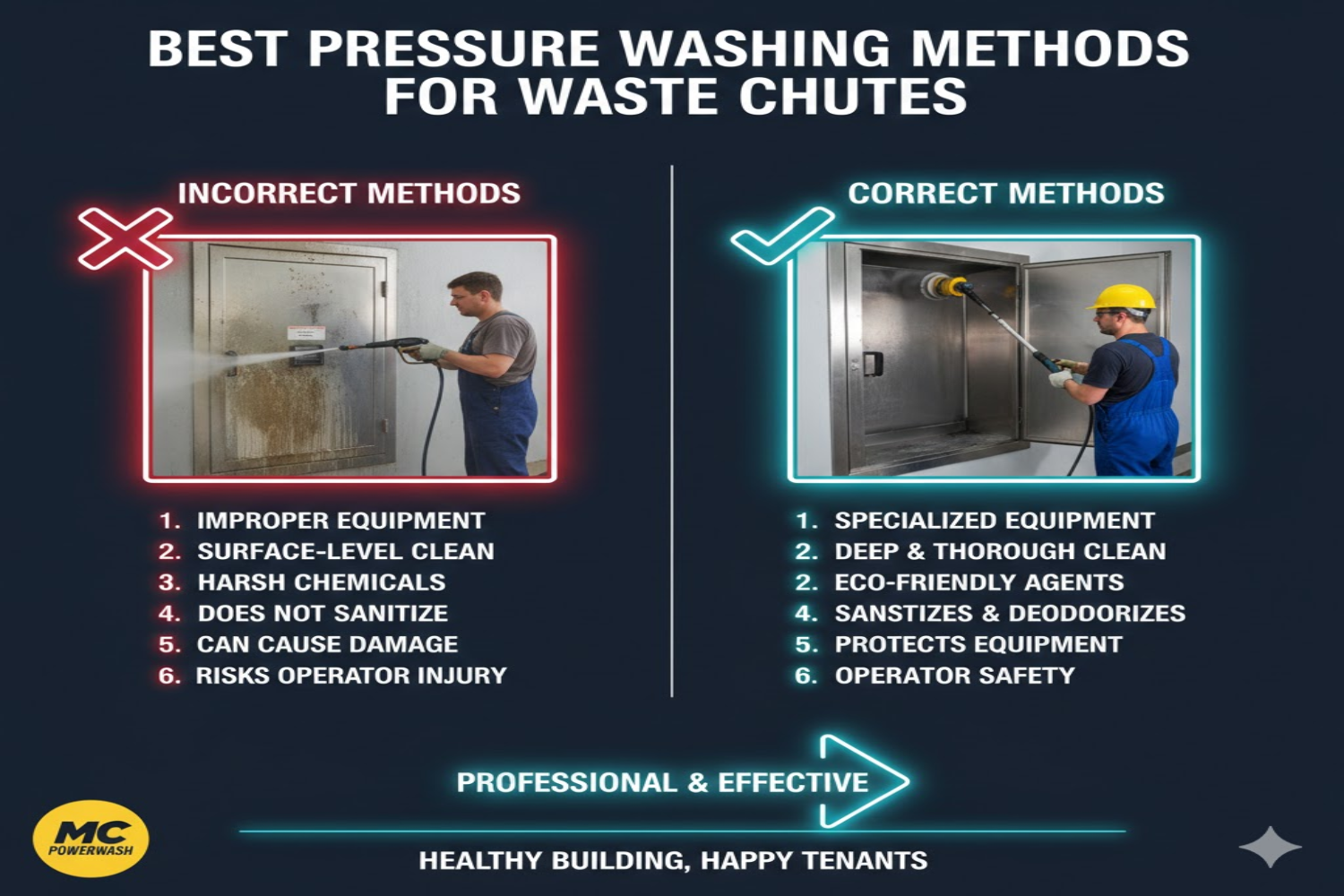
Health risks of unclean garbage chutes represent one of the most serious yet often overlooked dangers in multi-story residential buildings, apartment complexes, and high-rise communities. When garbage chutes are not cleaned regularly, they become breeding grounds for dangerous bacteria, mold, insects, rodents, and foul odors that spread throughout the entire building via HVAC systems, elevator shafts, and common corridors. Residents inhale airborne contaminants, touch contaminated surfaces, and suffer from chronic exposure to pathogens. In places like Los Angeles, high-density apartment buildings and older high-rises frequently suffer from neglected garbage chutes due to heavy usage, food waste accumulation, and inconsistent maintenance schedules. Los Angeles residents often report persistent foul smells, visible mold, and increased pest activity originating from chutes. Buildings with unclean chutes show higher rates of respiratory complaints and pest-related issues. Communities face elevated health risks when chute hygiene is ignored. Regular professional cleaning is essential to eliminate these preventable dangers and protect occupant health.
How Unclean Garbage Chutes Become Hazardous
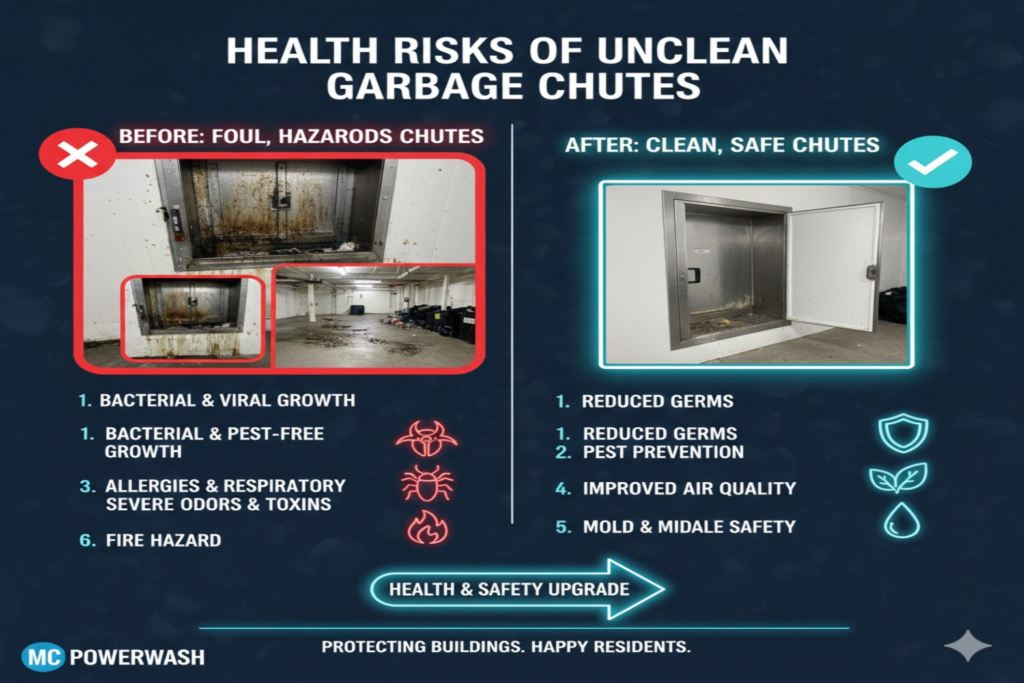
Garbage chutes collect food waste, diapers, pet waste, and decaying organic matter daily. Without cleaning, residues build up on chute walls, creating a moist, nutrient-rich environment perfect for bacterial growth. Biofilms form—slimy layers of microorganisms that resist casual rinsing. These biofilms release airborne spores and volatile organic compounds (VOCs) that travel through ventilation systems. Pests nest in the dark, warm interior. Mold thrives in humid conditions inside the chute. Over time, the chute becomes a vertical biohazard column connecting every floor. Neglect turns a simple disposal system into a major health threat.
Use professional high-temperature pressure washing, enzyme-based cleaners, and deodorizing treatments. Deep cleaning includes chute interior brushing, sanitizing, and odor neutralization. Inspect for damage during each service. Professional services reach all areas safely. Regular cleaning eliminates health risks. Consistent maintenance is the only reliable solution.
Bacterial and Pathogenic Contamination Risks
Unclean chutes harbor dangerous bacteria such as Salmonella, E. coli, Listeria, Staphylococcus aureus, and Clostridium difficile. These pathogens grow rapidly on food residues and are aerosolized when chute doors open or during flushing. Residents inhale contaminated air, especially in apartments near the chute. Los Angeles Touching door handles, elevator buttons, or hallway surfaces transfers bacteria to hands and then to the mouth, eyes, or nose. Children, elderly residents, and immunocompromised individuals face the highest risk. Outbreaks of gastrointestinal illness have been traced to poorly maintained chutes. Bacterial contamination is one of the most direct health threats.
Use professional high-temperature pressure washing, enzyme-based cleaners, and deodorizing treatments. Deep cleaning includes chute interior brushing, sanitizing, and odor neutralization. Inspect for damage during each service. Professional services reach all areas safely. Regular cleaning eliminates health risks. Consistent maintenance is the only reliable solution.
Mold and Fungal Growth Inside Chutes
Mold species like Aspergillus, Penicillium, Cladosporium, and Stachybotrys (black mold) thrive in the damp, dark, organic-rich environment of unclean chutes. Spores become airborne every time the chute is used, circulating through HVAC systems into living spaces. Inhalation causes allergic reactions, asthma attacks, chronic sinusitis, and respiratory irritation. Prolonged exposure increases risks of hypersensitivity pneumonitis and toxic mold syndrome. Vulnerable residents experience persistent coughing, wheezing, eye irritation, and fatigue. Mold spores from chutes contribute to poor indoor air quality. Fungal contamination is a major long-term health concern.
Use professional high-temperature pressure washing, Los Angeles enzyme-based cleaners, and deodorizing treatments. Deep cleaning includes chute interior brushing, sanitizing, and odor neutralization. Inspect for damage during each service. Professional services reach all areas safely. Regular cleaning eliminates health risks. Consistent maintenance is the only reliable solution.
Pest Infestations and Vector-Borne Diseases
- Cockroaches, flies, rodents (rats, mice), and phorid flies breed inside unclean chutes.
- These pests carry pathogens on their bodies and in their droppings.
- Cockroaches spread Salmonella, E. coli, and other bacteria.
- Flies transmit Shigella and other enteric diseases.
- Rodents carry hantavirus, leptospirosis, and rat-bite fever.
- Pests exit through chute doors, infest hallways, garbage rooms, and apartments.
- Bites, droppings, and dander trigger allergies and asthma.
- Pest infestations from chutes create ongoing health hazards.
- Pest control becomes much harder when the source remains uncleaned.
Respiratory Health Effects from Airborne Contaminants
Residents near unclean chutes inhale volatile organic compounds (VOCs), ammonia, hydrogen sulfide, and methane from decomposing waste. These gases cause headaches, nausea, dizziness, eye and throat irritation. Chronic exposure leads to chronic bronchitis, asthma exacerbation, and chemical sensitivity. Mold spores and bacteria trigger allergic rhinitis and sinus infections. Children and seniors suffer the most. Indoor air quality tests often show elevated microbial and VOC levels in buildings with neglected chutes. Respiratory issues are among the most reported health complaints.
Skin and Eye Irritation from Contact
Touching chute doors, hallway surfaces, or elevator buttons contaminated with bacteria, mold spores, or leachate causes skin rashes, dermatitis, and infections. Eye contact with aerosolized particles leads to conjunctivitis and irritation. Young children frequently touch surfaces and then their faces. Compromised skin barriers allow pathogen entry. Contact-related symptoms are common in buildings with unclean chutes. Regular hand washing reduces but does not eliminate risk. Surface contamination spreads illness efficiently.
Allergies and Asthma Aggravation
- Allergens from mold spores, cockroach droppings, rodent dander, and dust mites proliferate in unclean chutes.
- These allergens become airborne and circulate throughout the building.
- Residents with allergies experience frequent sneezing, nasal congestion, itchy eyes, and coughing.
- Asthmatics suffer more frequent and severe attacks.
- Children in affected buildings show higher rates of wheezing and doctor visits.
- Allergy and asthma symptoms worsen significantly in buildings with neglected chutes.
- Allergen exposure is a major chronic health concern.
Gastrointestinal Illness from Pathogen Spread
Bacteria like Salmonella, E. coli, and Campylobacter spread from chutes to hands, food preparation surfaces, and utensils. Residents ingest pathogens through contaminated hands or food. Symptoms include nausea, vomiting, diarrhea, abdominal cramps, and fever. Severe cases lead to hospitalization, especially in children and elderly. Outbreaks have been linked to poorly maintained garbage chutes. Gastrointestinal illness is a direct result of bacterial contamination. Hygiene practices reduce but do not eliminate risk.
Mental Health and Quality of Life Impact
Persistent foul odors, visible mold, and insect activity create chronic stress, anxiety, and depression. Residents report feeling unsafe in their own homes. Sleep disturbances from smells and pests are common. Families avoid certain areas of the building. Children develop fear of hallways or garbage rooms. Mental health suffers when living conditions remain unhealthy. Odor and pest issues lower overall quality of life significantly. Psychological impact is an underreported consequence.
Health Risks Comparison Table – Unclean Garbage Chutes
| Health Risk Category | Primary Source in Chute | Main Path of Exposure | Most Affected Groups | Severity Level | Preventable by Regular Cleaning? |
| Bacterial Infections | Food waste, diapers, pet waste | Airborne, hand-to-mouth | Children, elderly, immunocompromised | High | Yes |
| Mold-Related Respiratory Issues | Damp organic residue | Inhalation of spores | Asthmatics, allergy sufferers | High | Yes |
| Pest-Borne Diseases | Cockroaches, flies, rodents | Bites, droppings, dander | All residents, especially children | Medium-High | Yes |
| VOC & Gas Exposure | Decomposition gases | Inhalation | Residents near chute | Medium | Yes |
| Skin & Eye Irritation | Contaminated surfaces | Direct contact | Children, frequent touchers | Medium | Yes |
| Allergy & Asthma Aggravation | Mold, pest allergens | Inhalation | Allergy & asthma patients | High | Yes |
| Gastrointestinal Illness | Pathogenic bacteria | Contaminated hands/food | All residents | Medium-High | Yes |
| Chronic Stress & Anxiety | Odors, pests, poor conditions | Constant exposure | All residents | Medium | Yes |
Building-Wide Health Implications
Unclean chutes create a vertical contamination column that spreads pathogens and allergens to every floor via air circulation. HVAC systems distribute contaminants efficiently. Shared hallways and elevators become secondary transmission points. Buildings with neglected chutes show higher rates of respiratory illness, pest complaints, and doctor visits. Health impacts affect all residents, not just those near the chute. Building-wide hygiene suffers. Regular chute cleaning protects the entire community.
Use professional high-temperature pressure washing, enzyme-based cleaners, and deodorizing treatments. Deep cleaning includes chute interior brushing, sanitizing, and odor neutralization. Inspect for damage during each service. Professional services reach all areas safely. Regular cleaning eliminates health risks. Consistent maintenance is the only reliable solution.
Legal and Liability Issues for Building Owners
Failure to maintain clean garbage chutes can violate health codes, habitability laws, and lease agreements. Residents can file complaints with health departments or housing authorities. Persistent issues lead to fines, mandatory remediation orders, or rent withholding. Personal injury claims arise from slips, infections, or asthma attacks linked to chutes. Proper documentation of cleaning schedules protects owners. Legal compliance requires regular professional cleaning. Liability risks increase with neglect.
Recommended Cleaning Frequency and Methods
Clean chutes every 3–6 months in high-traffic buildings, more often in hot/humid climates or with food-heavy waste. Use professional high-temperature pressure washing, enzyme-based cleaners, and deodorizing treatments. Deep cleaning includes chute interior brushing, sanitizing, and odor neutralization. Inspect for damage during each service. Professional services reach all areas safely. Regular cleaning eliminates health risks. Consistent maintenance is the only reliable solution.
Use professional high-temperature pressure washing, enzyme-based cleaners, and deodorizing treatments. Deep cleaning includes chute interior brushing, sanitizing, and odor neutralization. Inspect for damage during each service. Professional services reach all areas safely. Regular cleaning eliminates health risks. Consistent maintenance is the only reliable solution.
Conclusion
Health risks of unclean garbage chutes include bacterial infections, mold-related respiratory problems, pest-borne diseases, skin/eye irritation, allergy/asthma aggravation, gastrointestinal illness, and chronic stress from odors and pests. These hazards spread building-wide through air circulation, shared surfaces, and pest movement. In high-density urban buildings, neglected chutes become serious health liabilities affecting every resident. Regular professional cleaning every 3–6 months using high-temperature pressure washing, enzyme cleaners, and sanitizing eliminates these preventable risks. Building owners and managers have a legal and ethical duty to maintain chute hygiene. Proactive chute maintenance protects occupant health, improves quality of life, and avoids liability issues. Clean chutes are essential for safe, healthy living environments.Use professional high-temperature pressure washing, enzyme-based cleaners, and deodorizing treatments. Deep cleaning includes chute interior brushing, sanitizing, and odor neutralization. Inspect for damage during each service. Professional services reach all areas safely. Regular cleaning eliminates health risks. Consistent maintenance is the only reliable solution.
Frequently Asked Questions (FAQs)
1. What are the most common health risks from unclean garbage chutes?
Bacterial infections (Salmonella, E. coli), mold-related respiratory issues, pest-borne diseases (cockroaches, flies, rodents), skin/eye irritation, allergy/asthma aggravation, and gastrointestinal illness are the most common. Airborne spores and pathogens spread throughout the building. Regular cleaning eliminates these risks. Neglect creates serious health hazards.
2. How do unclean chutes affect indoor air quality?
Chutes release mold spores, bacteria, VOCs, ammonia, and hydrogen sulfide into air circulation systems. Residents inhale contaminants in apartments, hallways, and elevators. Poor air quality causes coughing, wheezing, headaches, and fatigue. Cleaning chutes improves building-wide air quality significantly.
3. Can unclean garbage chutes cause mold in apartments?
Yes, mold spores from damp chutes travel through HVAC systems and vents into living spaces. Moisture and organic residue inside chutes support mold growth. Residents notice musty odors and allergy symptoms. Regular chute cleaning prevents mold spread.
4. Do pests from garbage chutes spread disease?
Yes, cockroaches, flies, and rodents carry Salmonella, E. coli, Shigella, hantavirus, and leptospirosis. They exit chutes and infest apartments, kitchens, and hallways. Droppings and dander trigger allergies and asthma. Pest control becomes difficult without chute cleaning.
5. How often should garbage chutes be professionally cleaned?
Every 3–6 months in high-traffic or warm-climate buildings. Monthly cleaning may be needed in buildings with heavy food waste or known pest issues. Regular professional cleaning eliminates health risks. Consistent maintenance is the best prevention.
6. Can unclean chutes cause respiratory problems?
Yes, mold spores, bacteria, and VOCs trigger asthma attacks, chronic bronchitis, sinus infections, and allergic rhinitis. Children and elderly residents are most vulnerable. Persistent exposure leads to long-term respiratory issues. Cleaning chutes reduces respiratory complaints significantly.
7. Is there a legal responsibility to keep garbage chutes clean?
Yes, most health codes, habitability laws, and lease agreements require building owners to maintain clean, sanitary common areas including chutes. Neglect can result in fines, complaints, or rent withholding. Owners have a legal duty to protect resident health.
8. How do unclean chutes affect mental health?
Persistent foul odors, visible mold, and pest activity cause chronic stress, anxiety, sleep disturbances, and depression. Residents feel unsafe in their homes. Quality of life decreases noticeably. Clean chutes eliminate these psychological burdens.
9. What are the symptoms of exposure to contaminants from chutes?
Coughing, wheezing, sinus congestion, eye/throat irritation, headaches, nausea, skin rashes, fatigue, and gastrointestinal upset are common. Children may show frequent infections. Symptoms improve after professional chute cleaning. Exposure causes wide-ranging health effects.
10. Can regular chute cleaning prevent building-wide health issues?
Yes, professional cleaning removes bacteria, mold, pests, and odors, preventing spread through air systems and surfaces. Consistent maintenance protects all residents. Clean chutes eliminate a major source of preventable illness. Regular cleaning is essential for building health.