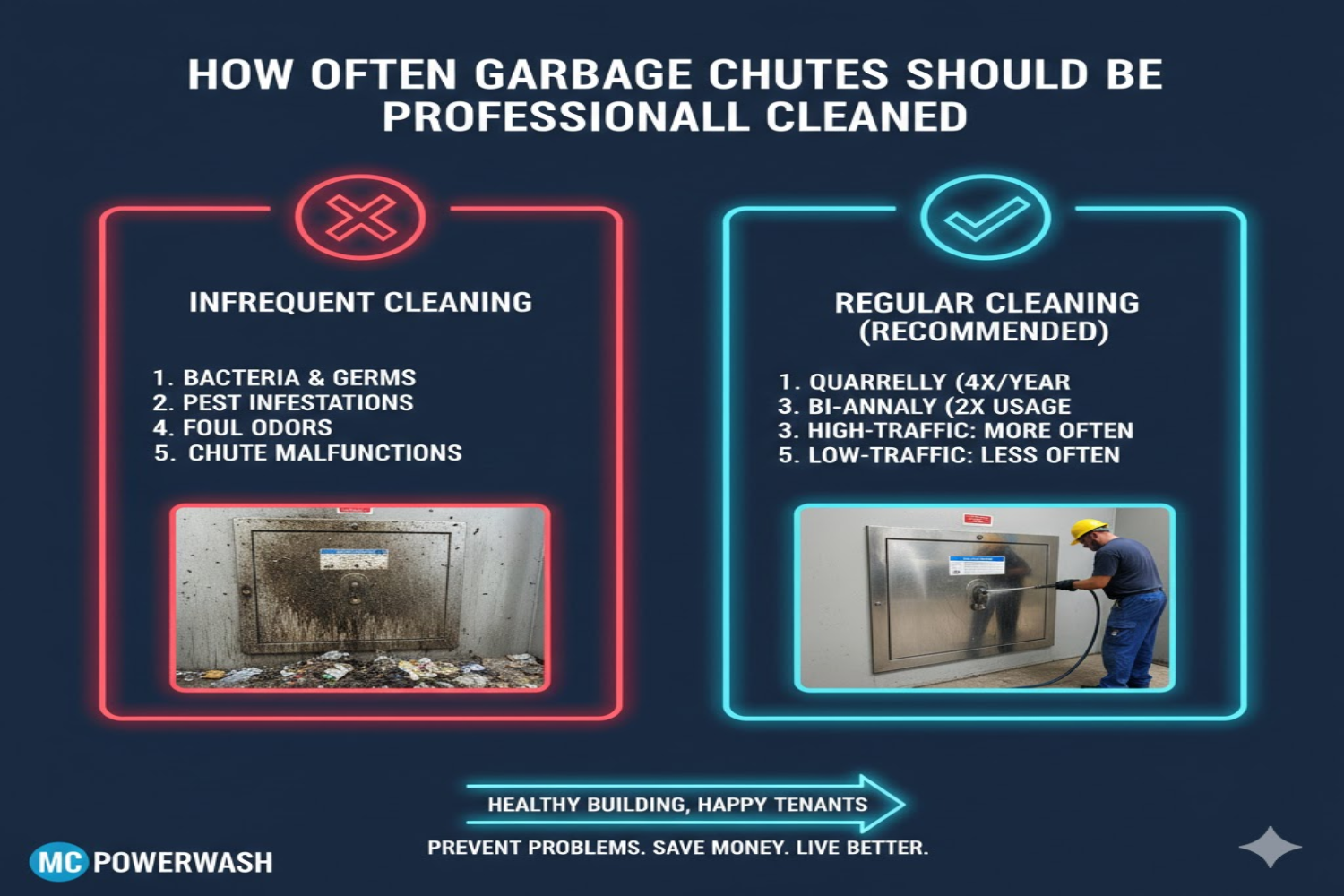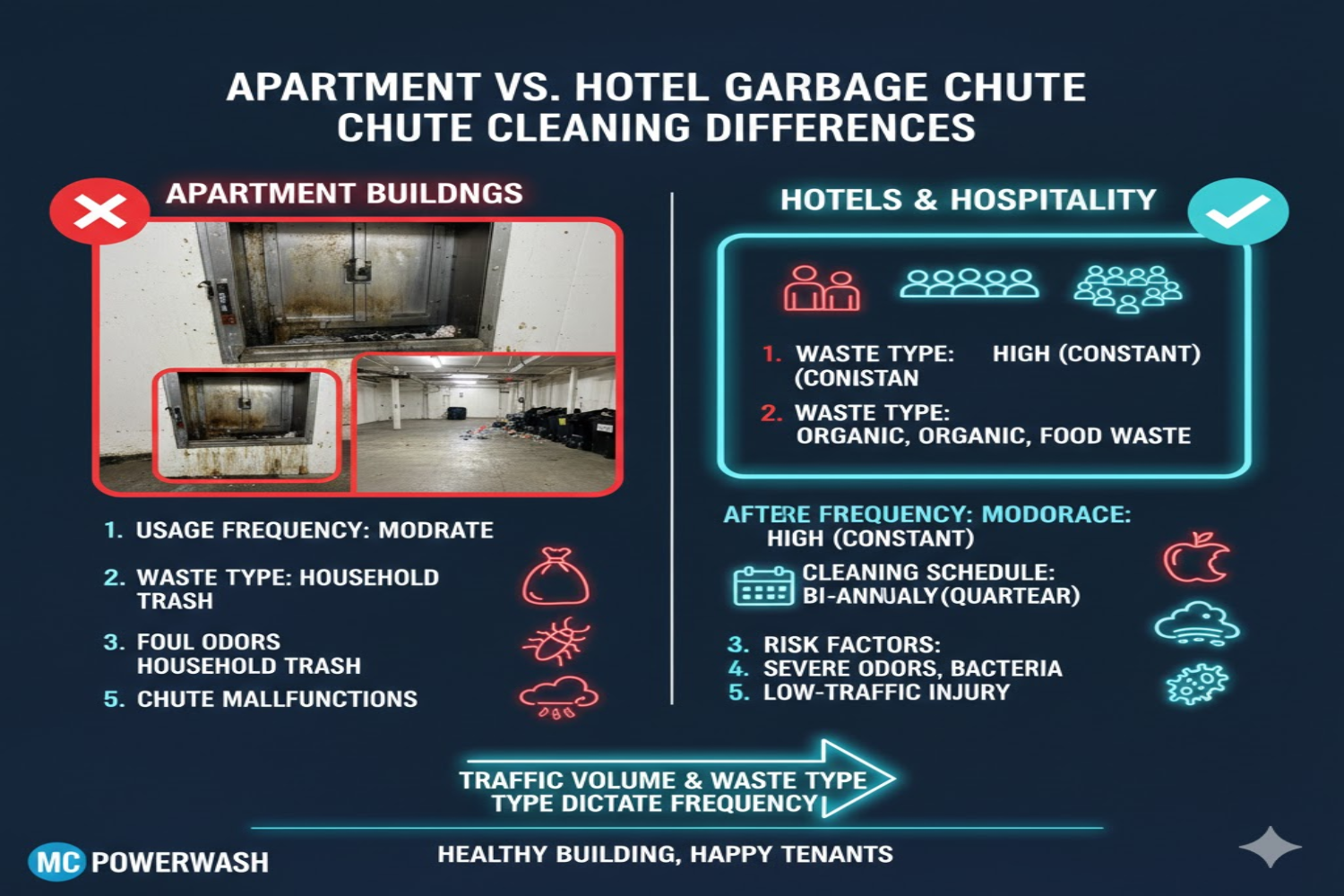
Pressure washing is currently the most effective, fastest, and safest method for deep cleaning commercial and residential waste chutes (garbage chutes) in multi-story buildings. In Los Angeles, where thousands of high-rise apartments, condominiums, hotels, and mixed-use towers depend on waste chutes daily, proper pressure washing removes thick layers of grease, food sludge, dried liquids, mold, bacteria, and odor-causing residue. The combination of high-temperature hot water (180–220°F), controlled high pressure (2,000–4,000 PSI), biodegradable degreasers, and specialized rotating nozzles allows technicians to clean the entire interior surface thoroughly. This method sanitizes, deodorizes, and restores free flow without requiring workers to enter the confined chute space. Done professionally, it dramatically reduces fire risk, eliminates persistent bad smells, and brings the chute back to hygienic condition. Regular pressure washing every 3–6 months prevents emergency blockages, pest infestations, and health code violations. Choosing the right pressure washing techniques is essential for safety, effectiveness, and long-term chute performance.
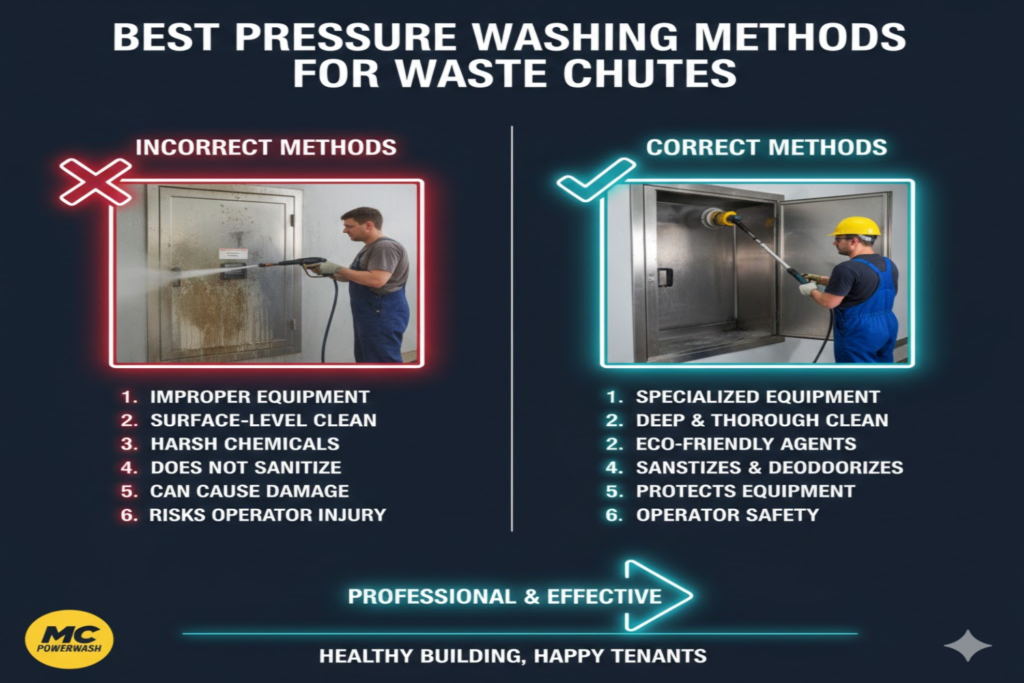
Why Pressure Washing Is the Gold Standard for Waste Chutes
Waste chutes accumulate heavy organic waste—grease, oils, food particles, sugars, and proteins—that hardens into black, sticky layers over months. Ordinary brushing or chemical drenching cannot reach or remove deep buildup effectively. Pressure washing uses mechanical force plus heat to blast away even the most stubborn sludge. Hot water melts fats into liquid form so they can be flushed out completely. High pressure dislodges compacted debris without manual scraping inside the dangerous chute. Biodegradable degreasers break down proteins and starches. The method kills bacteria and mold spores through thermal action. In Los Angeles, where warm temperatures accelerate decomposition, pressure washing prevents rapid re-soiling. It is faster and more consistent than any other cleaning method. Professional pressure washing delivers reliable, measurable results every time.
Understanding Commercial Waste Chute Construction
Most modern waste chutes are constructed from stainless steel or galvanized metal with smooth interior walls to promote gravity flow. Diameters typically range from 18 to 36 inches, depending on building size. Each floor has a self-closing hopper door with rubber gaskets. Fire dampers, sprinkler heads, and ventilation fans are integrated for safety. Some older buildings still have concrete-lined chutes, which are more porous and trap waste even more aggressively. Access points exist at the top (roof or mechanical room) and bottom (compactor room or dumpster area). Bends, joints, and transitions create areas where sludge collects fastest. Knowing the chute material and design helps technicians choose the correct pressure, temperature, nozzle type, and chemical concentration. Proper understanding prevents damage to welds, seals, or fire-safety components.
Key Advantages of Hot Water Pressure Washing
- Hot water at 180–220°F is dramatically more effective than cold water for grease removal.
- Heat melts solid fats and oils, turning them into liquid that flushes away easily.
- It also kills bacteria, mold spores, and pathogens on contact, reducing the need for strong disinfectants.
- Hot water emulsifies food proteins and starches so they do not re-adhere to walls.
- In warm urban environments like Los Angeles, hot water prevents rapid grease re-hardening after cleaning.
- The combination of temperature and pressure removes odors at the source rather than masking them.
- Hot-water systems require less chemical volume, making the process more eco-friendly.
- It shortens overall cleaning time compared to cold-water methods.
- Hot water pressure washing is considered the industry best practice for waste chutes.
Essential Pressure Washing Equipment for Chute Cleaning
Professional cleaners use truck- or trailer-mounted hot-water pressure washers capable of 3,000–5,000 PSI and temperatures up to 250°F. Specialized rotating nozzles (tornado heads, chain flails, or rotary jets) provide 360-degree cleaning inside the chute. Long high-pressure hoses (100–200 ft) with extension wands reach every section. Chemical injectors meter biodegradable degreasers into the water stream. Wet/dry vacuum systems or runoff containment pumps collect debris and wastewater. Safety equipment includes trigger guns with pressure relief, GFCI protection, and fall-arrest harnesses. Inspection cameras or borescopes verify cleanliness after washing. This professional-grade equipment ensures complete coverage. Only trained operators should handle it safely.
Step-by-Step Best Pressure Washing Procedure
The process begins with safety: lock all hopper doors, post warning signs on every floor, and notify residents. Technicians access the bottom compactor room or dumpster area and remove the collection bin. A biodegradable, low-foam degreaser is applied from bottom to top using a chemical injector and allowed to dwell 15–30 minutes. Hot water (180–220°F) at 2,500–4,000 PSI is sprayed through a rotating nozzle in slow, overlapping passes. The technician works upward or downward depending on access, ensuring every inch of wall is cleaned. Debris and wastewater are flushed into containment or vacuumed out. A final high-temperature rinse removes all residue. Disinfectant or enzymatic deodorizer is applied last. The chute is inspected with cameras. The full procedure typically takes 4–12 hours depending on building height.
Choosing the Right Pressure and Temperature Settings
- Pressure should stay between 2,000–4,000 PSI—high enough to remove sludge but not so high that it damages welds, fire dampers, or chute lining.
- Stainless steel chutes safely handle up to 4,000 PSI; older galvanized or concrete chutes require lower settings (around 2,500 PSI).
- Temperature of 180–200°F is ideal for most grease and organic waste; 220°F is used for very heavy buildup.
- Wide fan or rotating nozzles prevent concentrated damage.
- Technicians start at lower pressure and increase gradually while observing results.
- Proper settings balance cleaning power with equipment safety.
- Experienced operators adjust on-site for best results. Correct calibration prevents chute damage.
Using Biodegradable Degreasers with Pressure Washing
Most professional chute cleaners now use biodegradable, low-VOC, neutral pH degreasers during pressure washing. These products break down fats, oils, proteins, and starches without harming metal or concrete. Citrus-based or plant-derived formulas are popular for their effectiveness and safety. Enzyme additives can be injected to digest remaining organic matter. These cleaners reduce chemical runoff impact and meet urban environmental standards. They produce less foam, making wastewater easier to manage. Biodegradable degreasers work synergistically with hot water and pressure. They eliminate odors without masking them. Eco-friendly chemistry delivers powerful cleaning with lower environmental risk.
Safety Protocols During Chute Pressure Washing
Technicians wear full chemical-resistant suits, face shields, respirators, gloves, and non-slip boots. The entire chute system is isolated—hoppers locked and warning signs posted on every floor. High-pressure equipment includes dead-man triggers and pressure relief valves. Fall protection harnesses are mandatory when working at height. Electrical components use GFCI protection. Runoff is diverted to sanitary drains or captured for proper disposal. Biohazard waste is collected and handled according to regulations. Only trained, certified personnel operate the equipment. Safety protocols protect workers and building occupants. No shortcuts are acceptable in this high-risk task.
What to Expect After Professional Pressure Washing
After cleaning, the chute interior should appear clean, shiny, and free of visible grease or slime. Foul odors are usually eliminated completely. Some residual moisture remains for 24–48 hours during drying. Residents typically notice immediate improvement in hallway air quality. Trash flows freely with no resistance. Minor light staining may remain in very old chutes but is dramatically reduced. Some companies apply a residual deodorizer or enzymatic coating for longer odor control. Inspection reports and photos document the before-and-after condition. Regular follow-up maintenance prevents rapid re-soiling. Post-cleaning results are transformative for the building.
Comparison Table: Pressure Washing Settings & Applications for Waste Chutes
| Parameter | Recommended Range | Purpose / Effect | Best For | Risk if Incorrect Setting | Notes |
| Water Temperature | 180–220°F | Melts grease, kills bacteria & mold | All waste chutes | Poor grease removal if too low | 200°F is most common ideal setting |
| Pressure (PSI) | 2,000–4,000 PSI | Removes hardened sludge & stuck debris | Stainless steel & concrete chutes | Damage to welds if too high | Start low & increase gradually |
| Nozzle Type | Rotating / Tornado / Chain Flail | Provides 360° coverage inside chute | All chute diameters | Uneven cleaning if fixed nozzle | Rotating heads are industry standard |
| Degreaser Concentration | 5–15% (metered injection) | Breaks down fats, proteins & starches | Heavy food & grease buildup | Foam overflow if too strong | Use biodegradable, low-foam formulas |
| Dwell Time Before Washing | 15–30 minutes | Allows degreaser to penetrate & loosen waste | Moderate to heavy soiling | Ineffective if rushed | Longer dwell for very thick layers |
| Rinse Pressure | 1,500–2,500 PSI | Removes all chemical & debris residue | Final rinse stage | Residue left behind if too low | Wide fan nozzle prevents etching |
Common Mistakes to Avoid During Pressure Washing
Using cold water instead of hot significantly reduces grease removal power. Setting pressure too high risks damaging chute welds, fire dampers, or seals. Skipping degreaser dwell time leaves stubborn layers behind. Using fixed nozzles instead of rotating heads causes missed spots. Allowing runoff to enter storm drains violates environmental regulations. Not isolating the chute properly can endanger residents or workers. Rushing the final rinse leaves chemical residue that causes odors to return quickly. Using non-biodegradable cleaners creates disposal problems. Avoiding these mistakes ensures safe, effective, and compliant cleaning. Professional operators follow strict protocols for best outcomes.
After-Cleaning Care & Maintenance Tips
After pressure washing, allow 24–48 hours for complete drying before resuming normal use. Inspect hopper doors and compactor room for any missed debris. Apply a light enzymatic deodorizer or residual odor neutralizer for extended freshness. Schedule the next deep clean based on building usage (usually 3–6 months). Encourage residents to wrap food waste securely and avoid liquid disposal. Perform monthly visual checks and light misting treatments between major cleanings. Document every service with photos and reports. Regular after-care prevents rapid re-soiling. It extends the time between expensive deep cleanings. Consistent maintenance keeps the chute hygienic and odor-free.
Conclusion
Pressure washing is the leading method for cleaning commercial garbage chutes because it combines high temperature, high pressure, biodegradable degreasers, and rotating nozzles to remove even the heaviest grease, sludge, and bacteria buildup. In Los Angeles, where high-density multi-story buildings rely on waste chutes every day, hot-water pressure washing eliminates odors, reduces health risks, prevents blockages, and lowers fire hazards. The process—pre-degreaser dwell, high-pressure hot-water blasting, thorough rinsing, and final sanitizing—restores the chute to like-new condition quickly and safely. Regular professional cleaning every 3–6 months (more often in high-use buildings) is essential for compliance, tenant satisfaction, and long-term cost savings. Choosing experienced contractors with the right equipment and eco-friendly chemicals ensures the best results. Pressure washing is not just cleaning—it is a critical investment in building safety, hygiene, and resident well-being.
Frequently Asked Questions (FAQs)
1. What temperature should the water be for pressure washing garbage chutes?
Hot water between 180–220°F is ideal. This temperature melts grease and oils into liquid form and kills bacteria and mold spores on contact. 200°F is the most commonly used setting for effective yet safe cleaning. Heat makes a huge difference compared to cold water.
2. Is high pressure safe for stainless steel waste chutes?
Yes, stainless steel chutes safely handle 2,000–4,000 PSI when using proper rotating nozzles. Professionals start at lower pressure and increase gradually while monitoring. Correct PSI removes buildup without damaging welds or seals. Trained technicians prevent any harm.
3. How long does professional pressure washing take for a 15-story building?
Most mid-to-high-rise buildings (10–20 floors) take 6–12 hours total. This includes setup, degreaser dwell time, washing, rinsing, and inspection. Larger or heavily soiled chutes may require two technicians and a full day. Efficient teams minimize resident disruption.
4. Do I need to use chemicals when pressure washing a garbage chute?
Yes—biodegradable degreasers are almost always used to break down grease, proteins, and starches. Hot water and pressure alone are not enough for thick, layered buildup. Chemicals are metered carefully and rinsed completely. Eco-friendly formulas reduce environmental impact.
5. Will pressure washing remove bad odors completely?
Professional hot-water pressure washing with degreasers and disinfectants removes the odor source very effectively. Most buildings experience complete odor elimination after thorough cleaning. Some apply residual deodorizers for longer protection. Odors rarely return quickly with regular maintenance.
6. How often should waste chutes be pressure washed in Los Angeles?
Most buildings should be pressure washed every 3–6 months. High-rise towers and buildings with food businesses often need every 3 months. Hot summer months may require more frequent service. Regular inspections help determine the exact schedule for each property.
7. Can cold water pressure washing be used instead of hot?
Cold water is much less effective on grease and oily waste. It requires far more chemical and longer dwell times. Hot water melts fats, kills bacteria, and cleans faster. Almost all professional chute cleaners use hot-water systems for superior results.
8. What PSI is too high for garbage chute pressure washing?
Pressure above 4,000–5,000 PSI risks damaging welds, fire dampers, or seals in stainless steel chutes. Most professionals stay between 2,500–4,000 PSI. They use rotating nozzles to distribute force evenly. Experienced technicians adjust PSI based on chute condition.
9. Is pressure washing better than steam cleaning for chutes?
Pressure washing with hot water and degreaser is generally faster and more cost-effective for heavy grease removal. Steam cleaning is excellent for sanitization but slower and more expensive for large chutes. Many professionals combine both for maximum results. Pressure washing is the primary method.
10. How do I prepare residents before chute pressure washing?
Post signs on every floor, lock all hopper doors, and send advance notice via email, flyers, or building app. Inform residents to avoid using the chute during the scheduled time (usually 4–12 hours). Provide an alternative trash location if possible. Clear communication prevents confusion and complaints.