Pressure washing is one of the most effective and widely used methods for deep-cleaning commercial garbage chutes in multi-story buildings. In Los Angeles, where high-rise apartments, condos, and mixed-use properties rely heavily on garbage chutes, this technique removes years of built-up grease, food sludge, mold, bacteria, and odor-causing residue. High-pressure hot water (typically 180–220°F) combined with biodegradable degreasers blasts away layers of organic waste that stick to the metal or concrete chute walls. Rotating nozzles and extension wands allow technicians to reach every section from top to bottom. The force dislodges compacted debris while the heat emulsifies grease and kills bacteria on contact. Pressure washing is fast, thorough, and minimizes the need for harsh chemicals. When done professionally, it restores hygiene, eliminates foul smells, and prevents dangerous blockages. Regular pressure washing is essential for health, safety, and compliance in large buildings.
What Is a Commercial Garbage Chute?
Commercial garbage chutes are large-diameter vertical shafts (usually 18–36 inches wide) installed in multi-story residential and commercial buildings to transport trash from each floor to a central compactor or dumpster at the ground or basement level. Each floor has a self-closing hopper door where residents or tenants deposit bagged waste. Gravity pulls the trash downward through the smooth metal (stainless steel or galvanized) or sometimes concrete-lined chute. In high-density urban areas such as Los Angeles, chutes are standard in buildings over four stories to reduce hallway trash, elevator use, and odor migration. Modern chutes include fire dampers, ventilation fans, sprinkler heads, and access panels for maintenance. Despite durable construction, the interior walls become coated with sticky, decomposing waste over months. This makes professional cleaning, especially pressure washing, a critical maintenance task.
How Garbage Chutes Become Extremely Dirty
Every time trash bags are dropped, small amounts of liquid, grease, food particles, and oils escape and run down the walls. Coffee grounds, dairy, meat juices, sugary drinks, and cooking fats are the worst culprits. These liquids dry into a sticky film that traps paper, plastic bits, and more grease. Over time, layers build into thick, black sludge. Warm temperatures inside the shaft accelerate fermentation and bacterial growth. Mold, mildew, and anaerobic bacteria thrive in the moist, dark environment. In buildings with poor resident habits (loose bags, liquid disposal), buildup happens much faster. Blockages form when bags snag or sludge accumulates at bends and joints. The longer the buildup remains, the more difficult and hazardous it becomes to remove.
Why Pressure Washing Is the Preferred Cleaning Method
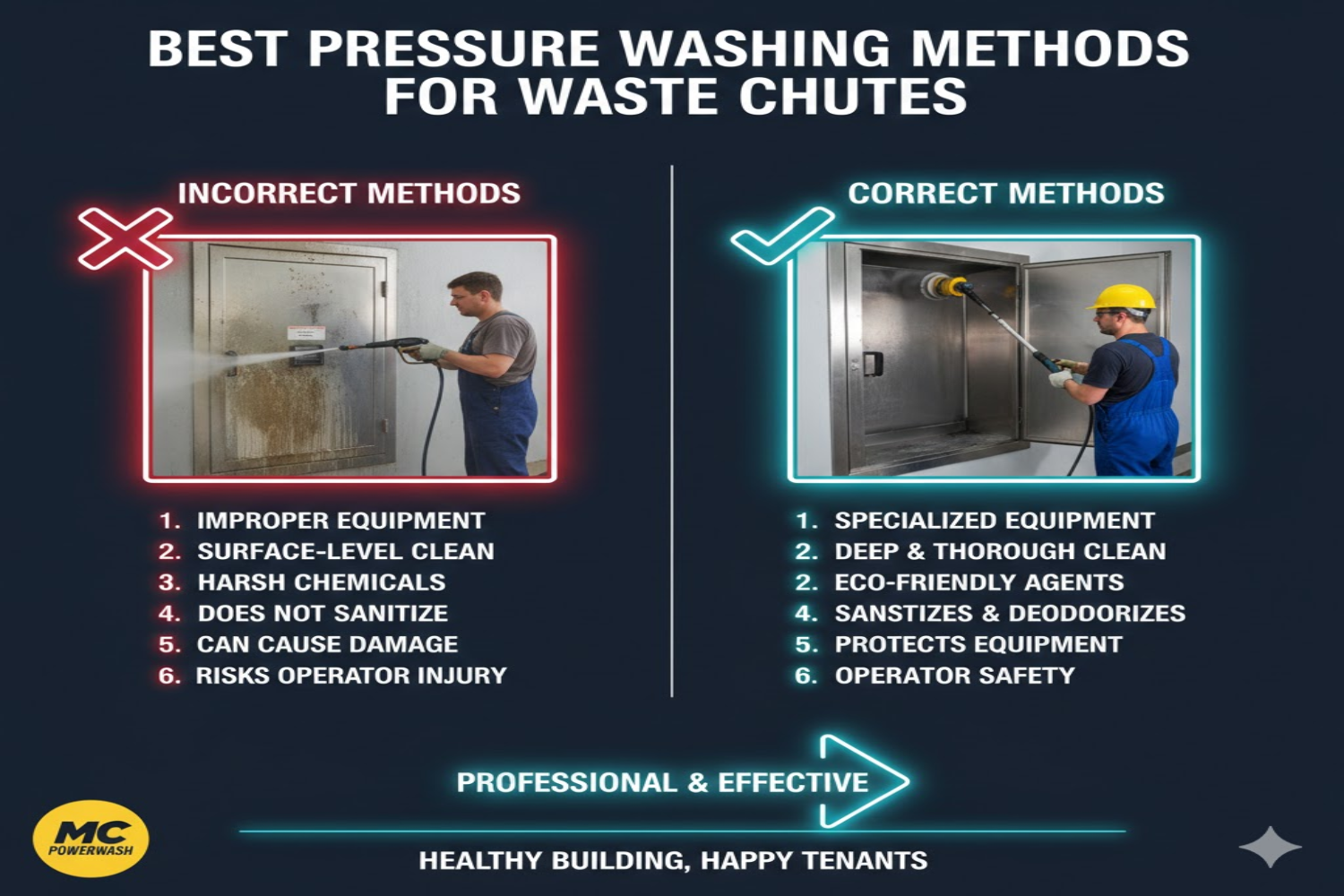
Pressure washing combines extreme force, high temperature, and controlled water flow to remove even the thickest layers of grease and organic matter. Hot water (180–220°F) melts fats and oils, making them easier to dislodge. High pressure (2,000–4,000 PSI) blasts away hardened sludge without requiring dangerous manual scraping inside the chute. Biodegradable degreasers are injected to break down proteins and starches. Rotating nozzles ensure 360-degree coverage of the chute interior. The method is fast compared to hand-cleaning and reaches areas that brushes cannot. Pressure washing sanitizes by killing bacteria and mold spores with heat. It is effective on both stainless steel and concrete chutes. When performed professionally, it leaves the chute clean, odor-free, and free-flowing.
Step-by-Step Pressure Washing Process for Garbage Chutes
- Professionals begin by securing the chute: posting signs, locking all hopper doors, and notifying residents.
- They access the bottom compactor room or dumpster area to remove the bin and gain entry.
- A high-pressure hot-water washer with a specialized rotating nozzle or chain flail is inserted from the bottom or top.
- Biodegradable degreaser is applied first and allowed to dwell 10–30 minutes to loosen grease.
- Hot water at high pressure is then sprayed in overlapping passes to blast away all layers of sludge.
- The rotating head ensures complete coverage of the chute walls.
- Debris is flushed down into a containment system or vacuumed out.
- A final rinse with disinfectant or odor-neutralizer is applied.
- The chute is inspected with cameras or mirrors for cleanliness.
- The entire process typically takes 4–12 hours depending on building height and buildup severity.
Benefits of Hot Water in Pressure Washing Chutes
Hot water is far more effective than cold water for grease and fat removal. Temperatures of 180–220°F melt solid oils into liquid form so they can be flushed away easily. Heat also kills bacteria, mold spores, and other pathogens on contact. This reduces the need for strong chemical disinfectants. Hot water emulsifies proteins and starches from food waste, preventing them from re-adhering. In warm climates like Los Angeles, hot water prevents rapid re-soiling by removing oily residue completely. It improves odor elimination dramatically. Hot-water pressure washing is more eco-friendly because it relies less on chemicals. The combination of heat and pressure delivers superior sanitization. It is the gold standard for commercial chute cleaning.
Safety Precautions During Pressure Washing
Technicians wear full PPE including chemical-resistant suits, face shields, respirators, and non-slip boots. The chute is completely isolated—hoppers locked and signs posted on every floor. High-pressure equipment is fitted with trigger guns and safety valves to prevent accidental discharge. Workers use harnesses and fall protection when accessing upper sections or roofs. Runoff is captured or diverted to sanitary drains to avoid storm water contamination. Electrical hazards are eliminated by using GFCI-protected equipment. Biohazard waste is collected and disposed of according to regulations. Safety protocols protect both workers and building occupants. Proper safety measures are non-negotiable for this hazardous task.
Eco-Friendly Pressure Washing Techniques
- Many professional companies now use biodegradable, low-VOC degreasers and neutral pH cleaners during pressure washing.
- Hot water and high pressure reduce the volume of chemicals needed.
- Enzyme-based additives break down organic matter naturally between deep cleans.
- Runoff is often captured with vacuum systems or treated before disposal.
- Citrus-based degreasers are popular for grease removal without toxicity.
- injection can be added for extra sanitization without chemicals.
- These green methods meet strict environmental standards in urban areas.
- They are safer for workers and produce less hazardous waste. Eco-friendly pressure washing delivers the same results with lower environmental impact.
- It is increasingly required by building management and health departments.
What Happens If Garbage Chutes Are Not Pressure Washed Regularly?
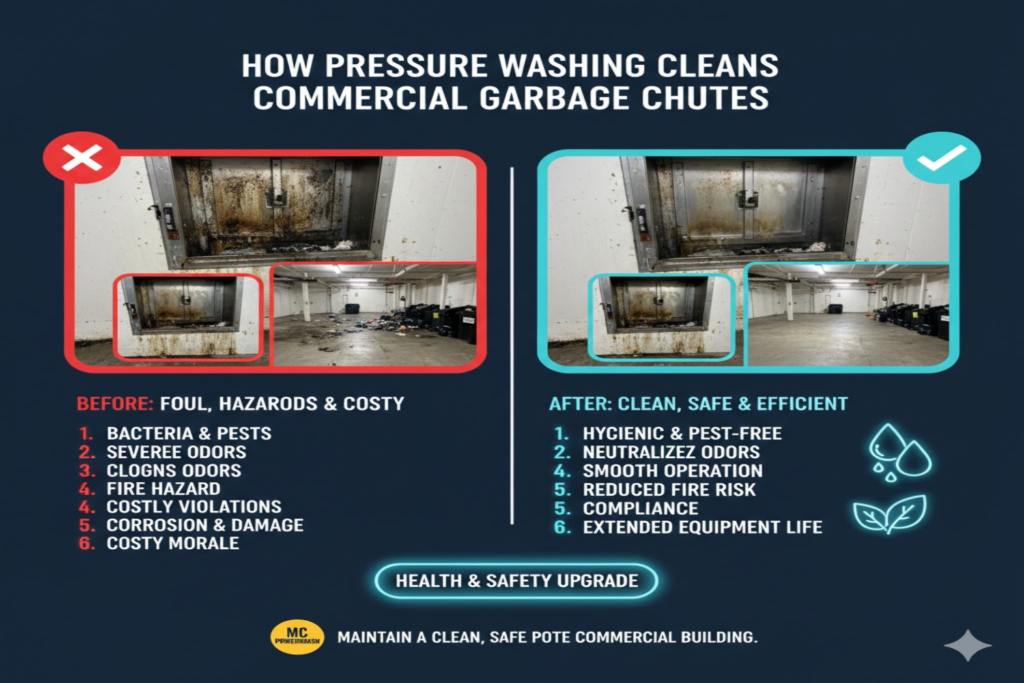
Neglected chutes develop thick layers of grease and sludge that trap bacteria and mold. Foul odors permeate hallways and apartments, lowering tenant satisfaction. Pests such as flies, roaches, and rodents infest the chute and migrate into living spaces. Blockages cause trash backups on multiple floors, creating unsanitary conditions. Fire risk increases dramatically—grease and dry debris are highly flammable. Health departments can issue citations and fines for violations. Insurance companies may deny claims if maintenance is not documented. Emergency cleanings cost significantly more than scheduled service. Regular pressure washing prevents all these serious problems. It protects health, safety, and property value.
How Pressure Washing Improves Indoor Air Quality
Dirty chutes release mold spores, volatile organic compounds, and methane gas every time a hopper door is opened. These contaminants spread through HVAC systems and hallways, affecting indoor air quality. Residents may experience headaches, nausea, respiratory irritation, or allergic reactions. Pressure washing removes the odor source and kills mold at the root. Heat and degreasers eliminate bacteria that produce smelly gases. After cleaning, air quality improves noticeably throughout the building. Fewer complaints about odors lead to higher tenant satisfaction. Clean chutes contribute to healthier living environments. It is one of the most important benefits of regular maintenance.
Comparison Table: Pressure Washing vs Other Chute Cleaning Methods
| Method | Cleaning Effectiveness | Speed | Odor Removal | Bacteria/Mold Kill | Fire Risk Reduction | Environmental Impact | Cost per Clean (Mid-Size Bldg) | Labor & Safety Risk | Long-Term Results |
| Pressure Washing (Hot Water) | Very High | Fast (4–12 hrs) | Excellent | Excellent | Very High | Low–Medium | $800–$3,000 | Medium | Long-lasting |
| Steam Cleaning | High | Moderate | Very Good | Excellent | High | Very Low | $1,000–$4,000 | Medium–High | Very Good |
| Chemical Drench & Brush | Moderate–High | Slow | Good | Good | Moderate | Medium–High | $600–$2,000 | High | Moderate |
| Manual Scraping & Mopping | Low–Moderate | Very Slow | Fair | Poor | Low | Low | $400–$1,500 | Very High | Short-term |
| Enzyme Treatments Only | Low (maintenance) | Very Slow | Moderate | Moderate | Low | Very Low | $300–$800 | Low | Preventive only |
Pressure Washing Equipment Used in Professional Chute Cleaning
Professional cleaners use truck-mounted or trailer-mounted hot-water pressure washers with 3,000–5,000 PSI capability and temperatures up to 250°F. Specialized rotating nozzles (chain flails or tornado heads) provide 360-degree coverage inside the chute. Extension wands and flexible lances reach every section. High-capacity pumps and long hoses allow cleaning from bottom to top or top to bottom. Runoff containment systems or powerful wet vacuums collect debris and water. Biodegradable degreasers are metered into the water stream. Safety features include trigger guns, pressure relief valves, and GFCI protection. This heavy-duty equipment ensures thorough cleaning. Only trained professionals should operate it safely.
After-Cleaning Expectations After Pressure Washing
After pressure washing, the chute should smell clean and fresh with no visible grease or slime. Some moisture will remain for 24–48 hours as the metal dries. Minor odors may linger briefly until full drying occurs. Residents usually notice immediate improvement in hallway air quality. The chute interior appears shiny and smooth. Flow should be unrestricted with no blockages. Some companies apply a light deodorizer or enzymatic coating for residual odor control. Initial results are dramatic, but regular maintenance keeps them that way. After-care includes inspecting hopper doors and compactor rooms. Clean chutes transform the entire building experience.
Conclusion
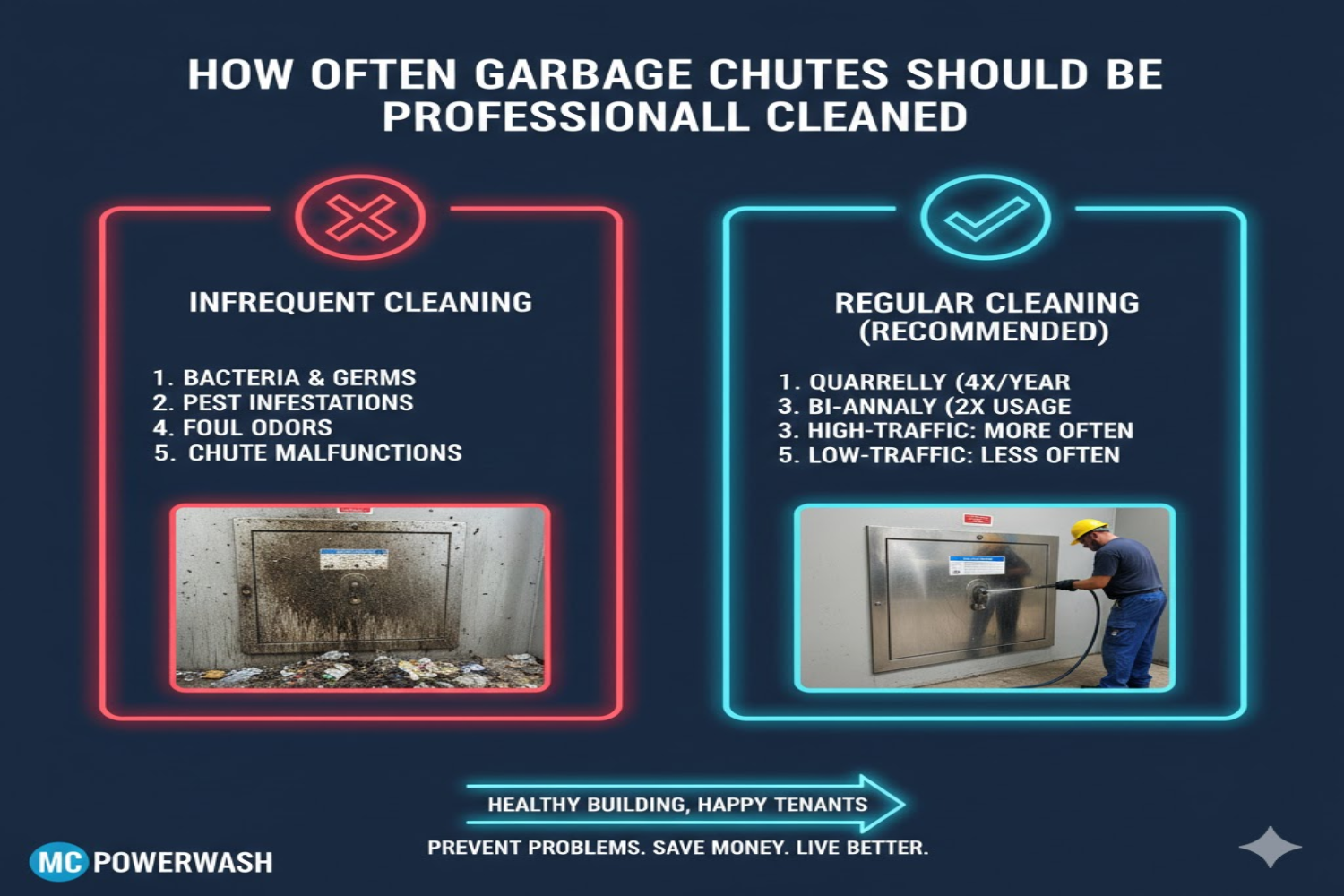
Pressure washing is the most effective, fastest, and safest method for cleaning commercial garbage chutes in high-rise buildings. In Los Angeles, where multi-story properties depend on chutes daily, hot-water pressure washing removes grease, bacteria, mold, and odors that traditional methods cannot fully eliminate. The combination of high temperature, high pressure, biodegradable degreasers, and rotating nozzles delivers deep sanitization and fire-risk reduction. Regular professional cleaning every 3–6 months prevents health hazards, pest problems, blockages, and compliance issues. Pressure washing not only restores hygiene but also improves indoor air quality and tenant satisfaction. Investing in scheduled pressure washing is one of the most important maintenance decisions for any multi-family or commercial property manager. Clean chutes mean safer, healthier, and more pleasant living and working environments.
Frequently Asked Questions (FAQs)
1. How does hot water make pressure washing more effective on garbage chutes?
Hot water (180–220°F) melts grease and fats into liquid form so they can be flushed away easily. It also kills bacteria, mold spores, and pathogens on contact. Heat emulsifies proteins and starches from food waste, preventing re-adhesion. Hot-water pressure washing removes odors and buildup more thoroughly than cold water.
2. Is pressure washing safe for stainless steel garbage chutes?
Yes, when performed by professionals using proper PSI (2,000–4,000) and rotating nozzles. Stainless steel is durable and resists corrosion. Technicians avoid excessive pressure near welds or joints. Regular pressure washing actually extends chute life by removing corrosive waste. It is one of the safest deep-cleaning methods.
3. How long does a professional pressure washing service take for a 10-story building?
Most 8–12 story buildings take 6–12 hours depending on buildup severity. The process includes setup, degreaser dwell time, washing, rinsing, and final inspection. High-rise structures may require two technicians and longer hoses. Professionals work efficiently to minimize disruption for residents.
4. Will pressure washing eliminate garbage chute odors permanently?
Professional hot-water pressure washing with degreasers and disinfectants removes the source of odors effectively. Most buildings experience complete odor elimination after thorough cleaning. Some companies apply residual deodorizers for longer freshness. Odors usually do not return quickly when regular maintenance is followed.
5. Can pressure washing damage the chute or building structure?
When done correctly by trained professionals, pressure washing does not damage properly constructed chutes. Stainless steel and concrete withstand high-pressure hot water well. Technicians use appropriate nozzles and PSI levels to avoid pitting or warping. Safety protocols protect the building and workers. Quality service ensures no harm.
6. Are there eco-friendly options for pressure washing garbage chutes?
Yes, many companies use biodegradable, low-VOC degreasers and neutral pH cleaners. Hot water and high pressure reduce chemical volume needed. Runoff is captured or treated before disposal. Enzyme additives break down organics naturally. Eco-friendly pressure washing meets strict environmental standards while delivering excellent results.
7. How much does professional garbage chute pressure washing cost?
Costs typically range from $800–$3,000 for mid-size buildings, depending on floors and condition. High-rises or heavily soiled chutes can cost $3,000–$8,000+. Regular contracts receive discounts. Emergency cleanings cost more. Quality service provides better long-term value than waiting for severe problems.
8. What should building managers do after pressure washing?
Inspect the chute for cleanliness and free flow after drying. Apply deodorizer or enzymatic treatment if desired. Notify residents that cleaning is complete. Schedule the next service date. Monitor for new odors or slow drainage. Regular maintenance prevents rapid re-soiling. Post-care ensures lasting results.
9. Does pressure washing remove bacteria and mold from chutes?
Yes, hot water at 180–220°F kills most bacteria, mold spores, and pathogens on contact. Combined with degreasers and disinfectants, it sanitizes the chute thoroughly. Pressure removes the food source that allows regrowth. Regular cleaning keeps microbial levels low. It significantly improves hygiene.
10. Why can’t residents or maintenance staff clean chutes themselves?
Chutes are confined spaces with biohazards, slippery surfaces, and fall risks. High-pressure hot-water equipment requires training and safety certifications. Incomplete cleaning pushes debris deeper, creating blockages. Professionals have specialized tools and proper disposal methods. DIY attempts are unsafe and ineffective. Professional service is the only reliable option.