Cleaning gutters yourself may seem like a simple weekend task, but it is one of the most dangerous home maintenance jobs. Every year, thousands of people are injured—or worse—while attempting DIY gutter cleaning. Ladders, heights, heavy debris, slippery conditions, and hidden roof hazards turn this chore into a serious safety risk. Here are the main dangers of DIY gutter cleaning and why hiring professionals is almost always the smarter choice.
Cleaning your gutters may seem like a simple weekend task, but in reality, it is one of the most dangerous home maintenance jobs. Many homeowners attempt DIY gutter cleaning to save money, unaware of the serious risks involved. From ladder falls and electrical hazards to hidden structural damage and health concerns, improper gutter cleaning can lead to injuries, property damage, and expensive repairs. Understanding the dangers of DIY gutter cleaning helps you make safer and smarter decisions for protecting your home.
In the sunny yet pollution-heavy climate of Los Angeles, gutters fill quickly with dust, leaves, bird nests, pollen, and urban debris. Seasonal rains and heat cycles increase the risk of clogs and overflow. When homeowners attempt to clean gutters without proper tools or training, accidents and mistakes become more likely. Professional services provide safer, more effective solutions that prevent long-term problems.
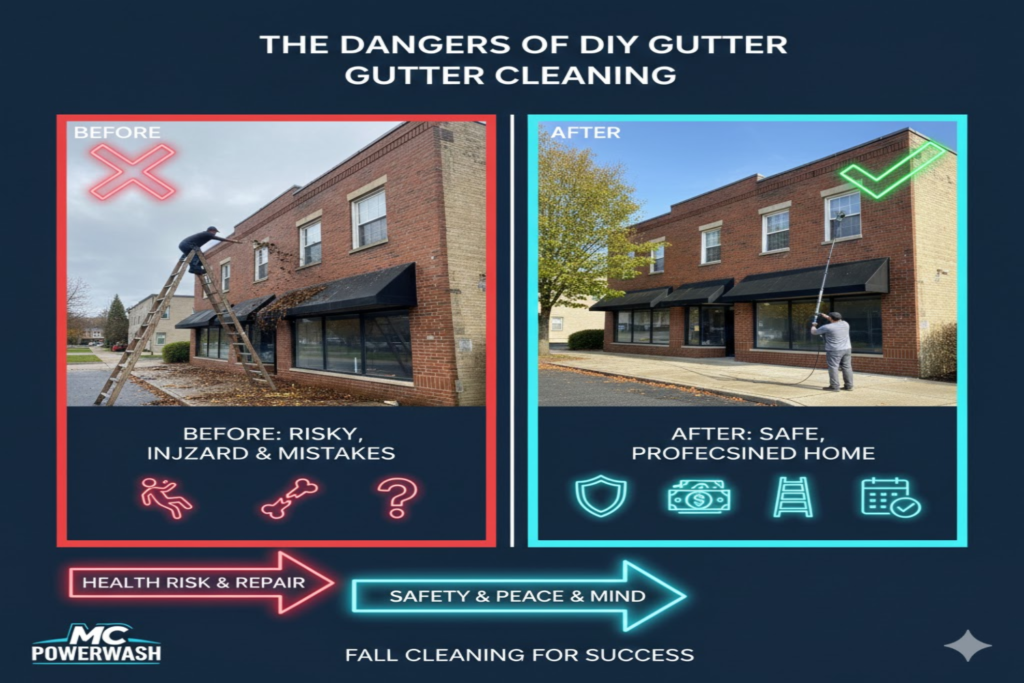
High Risk of Falls and Ladder Accidents
Most serious injuries from gutter cleaning come from falling off ladders. Reaching over to clean far sections, overreaching, or losing balance on uneven ground causes falls from 10–20 feet or more. Head injuries, broken bones, spinal damage, and even fatalities are common. Professionals use extension poles, boom lifts, or scaffolding with safety harnesses to stay on the ground or work securely at height.
Gutters are located at dangerous heights and often require climbing unstable ladders. Wet leaves, mold, and algae make surfaces slippery. Without safety equipment, homeowners are exposed to serious fall risks. Improper cleaning techniques can also damage gutters, roofing, and siding. In Los Angeles, strong sunlight weakens materials, making old gutters more fragile and hazardous to handle.
DIY cleaning may remove visible debris, but hidden blockages in downspouts often remain. This creates a false sense of security. Over time, water damage continues unnoticed. Professional inspection identifies issues that untrained homeowners usually miss.
Slippery and Unstable Working Conditions
Wet gutters, moss-covered roofs, algae on shingles, and rain-soaked ladders create extremely slippery surfaces. Loose debris or wet leaves underfoot make footing unstable. A single slip can send someone tumbling off the roof or ladder. Professionals wear non-slip boots, use safety ropes, and avoid working in wet or windy conditions—something most homeowners overlook.
Cleaning your gutters may seem like a simple weekend task, but in reality, it is one of the most dangerous home maintenance jobs. Many homeowners attempt DIY gutter cleaning to save money, unaware of the serious risks involved. From ladder falls and electrical hazards to hidden structural damage and health concerns, improper gutter cleaning can lead to injuries, property damage, and expensive repairs. Understanding the dangers of DIY gutter cleaning helps you make safer and smarter decisions for protecting your home.
In the sunny yet pollution-heavy climate of gutters fill quickly with dust, leaves, bird nests, pollen, and urban debris. Seasonal rains and heat cycles increase the risk of clogs and overflow. When homeowners attempt to clean gutters without proper tools or training, accidents and mistakes become more likely. Professional services provide safer, more effective solutions that prevent long-term problems.
Electrical Shock and Power Line Hazards
Ladders or tools touching overhead power lines cause electrocution. Many homes have power lines running close to the roof edge or gutters. Aluminum ladders conduct electricity instantly. Even a momentary contact can be fatal. Professionals know how to identify and maintain safe distances from electrical hazards and use non-conductive fiberglass ladders.
Clogged gutters contain mold, bacteria, bird droppings, and decaying organic matter. These materials release harmful spores into the air. Without protective gear, homeowners inhale these contaminants.
Exposure can trigger allergies, asthma, skin irritation, and respiratory infections. Inpollution mixed with organic debris creates even more hazardous conditions. Professionals use protective equipment to avoid these health risks.
Roof Damage and Personal Injury from Improper Tools
- Using sharp scrapers, pressure washers, or heavy tools incorrectly can damage shingles, tear underlayment, or crack tiles.
- Falling tools or dropped debris can cause head injuries or damage below.
- Standing on the roof without proper footwear or fall protection increases the chance of slipping and falling through skylights or weak spots.
- Professionals use roof brackets, harnesses, and gentle tools designed for safe cleaning.
- Clogged gutters contain mold, bacteria, bird droppings, and decaying organic matter. These materials release harmful spores into the air.
- Without protective gear, homeowners inhale these contaminants.
Exposure can trigger allergies, asthma, skin irritation, and respiratory infections. In pollution mixed with organic debris creates even more hazardous conditions. Professionals use protective equipment to avoid these health risks.
Health Hazards Inside Dirty Gutters
Clogged gutters contain mold, bacteria, bird droppings, and decaying organic matter. These materials release harmful spores into the air. Without protective gear, homeowners inhale these contaminants.
Exposure can trigger allergies, asthma, skin irritation, and respiratory infections. Pollution mixed with organic debris creates even more hazardous conditions. Professionals use protective equipment to avoid these health risks.
Risk of Damaging Your Home
Bent and Detached Gutters
Improper pressure while cleaning can bend aluminum gutters or pull them away from fascia boards.Clogged gutters contain mold, bacteria, bird droppings, and decaying organic matter. These materials release harmful spores into the air. Without protective gear, homeowners inhale these contaminants.
Exposure can trigger allergies, asthma, skin irritation, and respiratory infections. In pollution mixed with organic debris creates even more hazardous conditions. Professionals use protective equipment to avoid these health risks.
Roof and Shingle Damage
Stepping on roof edges or leaning ladders incorrectly damages shingles and flashing.Clogged gutters contain mold, bacteria, bird droppings, and decaying organic matter. These materials release harmful spores into the air. Without protective gear, homeowners inhale these contaminants.
Exposure can trigger allergies, asthma, skin irritation, and respiratory infections. In Los Angeles, pollution mixed with organic debris creates even more hazardous conditions. Professionals use protective equipment to avoid these health risks.
Cracked Seams and Leaks
Rough scraping tools damage sealants and joints, leading to future leaks. Clogged gutters contain mold, bacteria, bird droppings, and decaying organic matter. These materials release harmful spores into the air. Without protective gear, homeowners inhale these contaminants.
Exposure can trigger allergies, asthma, skin irritation, and respiratory infections. In pollution mixed with organic debris creates even more hazardous conditions. Professionals use protective equipment to avoid these health risks.
Downspout Blockages
Incomplete cleaning leaves debris in pipes, causing overflow and hidden water damage. Clogged gutters contain mold, bacteria, bird droppings, and decaying organic matter. These materials release harmful spores into the air. Without protective gear, homeowners inhale these contaminants.
Exposure can trigger allergies, asthma, skin irritation, and respiratory infections. In Los Angeles, pollution mixed with organic debris creates even more hazardous conditions. Professionals use protective equipment to avoid these health risks.
Fascia and Siding Damage
Scratches and water intrusion weaken exterior materials and promote rot. Clogged gutters contain mold, bacteria, bird droppings, and decaying organic matter. These materials release harmful spores into the air. Without protective gear, homeowners inhale these contaminants.
Exposure can trigger allergies, asthma, skin irritation, and respiratory infections. In Los Angeles, pollution mixed with organic debris creates even more hazardous conditions. Professionals use protective equipment to avoid these health risks.
Why DIY Cleaning Often Misses Hidden Problems
Homeowners usually focus only on visible debris. They rarely check:
- Downspout interiors
- Gutter slope
- Loose fasteners
- Micro-cracks
- Early rust spots
Without professional training, these warning signs go unnoticed. Over time, small issues grow into major structural repairs. Clogged gutters contain mold, bacteria, bird droppings, and decaying organic matter. These materials release harmful spores into the air. Without protective gear, homeowners inhale these contaminants.
Exposure can trigger allergies, asthma, skin irritation, and respiratory infections. In, pollution mixed with organic debris creates even more hazardous conditions. Professionals use protective equipment to avoid these health risks.
Cost Comparison: DIY vs Professional Cleaning
Many people choose DIY to save money, but accidents and mistakes cost far more.
In professional gutter cleaning typically costs $120 to $350, depending on:
- Home height
- Gutter length
- Debris level
- Accessibility
- Inspection services
- Frequency
One hospital visit or roof repair can exceed years of professional cleaning costs.
Exposure to Harmful Mold, Bird Droppings, and Pests
Clogged gutters often contain mold, mildew, bird droppings (which carry diseases like histoplasmosis), insects, rodents, wasps, or snakes. Breathing in spores or touching contaminated debris can cause respiratory illness, infections, or allergic reactions. Professionals wear masks, gloves, and protective clothing, and dispose of waste safely—most homeowners do not take these precautions.
Hidden Structural Damage You Might Miss or Worsen
While cleaning, you may not notice loose fascia, rotted wood, cracked gutters, or improper slope that needs repair. Aggressive scraping or high-pressure washing can worsen existing leaks or damage seals. Professionals inspect the entire system during cleaning, identify issues early, and recommend fixes before they become major problems.
Time, Stress, and Incomplete Results
DIY gutter cleaning takes hours or days, especially on multi-story homes. You risk injury, spend money on ladder rentals and tools, and often leave debris in the yard or miss clogs inside downspouts. Professionals finish faster, clean more thoroughly, and leave the property tidy. The cost of professional service is usually less than medical bills or repair costs from a DIY accident.
Large Overview Table: Dangers of DIY Gutter Cleaning vs. Professional Service
| Danger | DIY Risk | Professional Advantage |
| Falls from Ladders/Roof | High—thousands injured yearly | Low—use lifts, harnesses, stay on ground |
| Slippery Surfaces | Very high—wet roofs/gutters cause slips | Low—non-slip gear, avoid wet conditions |
| Electrical Shock | High—contact with power lines | Low—non-conductive tools & safe distances |
| Roof & Gutter Damage | High—wrong tools tear shingles or crack gutters | Low—gentle methods & roof-safe equipment |
| Mold/Pest Exposure | High—no protective gear | Low—masks, gloves, safe disposal |
| Missed Damage or Repairs | High—hard to spot issues from ladder | Low—full inspection & early fixes |
| Time & Incomplete Cleaning | High—exhausting & often partial results | Low—fast, thorough, clean yard |
Environmental and Safety Concerns
Improper debris disposal pollutes soil and drains. Dirty runoff enters stormwater systems. In Los Angeles, environmental regulations require responsible waste handling. Professionals follow eco-friendly disposal practices.
DIY accidents also increase emergency response burden and medical waste. Safe maintenance protects both homeowners and the community.
Benefits of Hiring Professional Gutter Cleaners
Certified technicians use:
- Safety harnesses
- Stabilized ladders
- Commercial tools
- Inspection cameras
- Protective clothing
- Insurance coverage
They clean thoroughly and identify early damage. This prevents emergency repairs and improves home durability.
Conclusion
DIY gutter cleaning may save a few hundred dollars upfront, but the risks—injury, medical bills, roof damage, incomplete cleaning, and long-term repair costs—far outweigh any savings. Falls alone send more people to the ER than almost any other home maintenance task. Professional gutter cleaners are trained, insured, equipped with safe tools, and experienced in handling every scenario. Schedule professional gutter cleaning twice a year (spring and fall) for peace of mind, better results, and real protection for your home. Your safety—and your property’s value—are worth far more than the cost of hiring experts.
Frequently Asked Questions (FAQs):
- How dangerous is ladder use for gutter cleaning?
Extremely dangerous—ladders cause more injuries than almost any other household task. Reaching, overbalancing, or slipping on wet rungs leads to falls from significant heights. Head injuries, fractures, and spinal damage are common. Professionals avoid ladders when possible and use safety equipment when necessary.
- Can I get shocked cleaning gutters near power lines?
Yes—aluminum ladders and wet conditions conduct electricity instantly if they touch overhead lines. Even brief contact can be fatal. Professionals use fiberglass ladders, maintain safe distances, and know how to identify hazards. Never attempt DIY near power lines.
- Do I need to wear protective gear for DIY gutter cleaning?
Absolutely—masks for mold spores, gloves for bird droppings and sharp debris, eye protection for falling material, and non-slip boots are essential. Most homeowners skip these, increasing health and injury risks. Professionals wear full PPE as standard practice.
- How much can a fall from a ladder cost in medical bills?
A serious fall can result in tens of thousands in hospital bills, surgery, physical therapy, and lost wages. Broken bones, concussions, or spinal injuries often require long recovery. Professional service eliminates this risk entirely.
- Can DIY gutter cleaning damage my roof or gutters?
Yes—standing on shingles cracks tiles, aggressive scraping tears underlayment, and high-pressure washing strips granules or forces water inside. Professionals use gentle, roof-safe tools and avoid walking on the roof when possible.
- Is it true that most people don’t clean gutters thoroughly on their own? Yes—homeowners often miss clogs inside downspouts, hidden debris, or improper slope issues. They also leave debris in the yard and skip fascia inspections. Professionals clean more completely and document the condition.
- What if I only have a one-story home—still risky?
Even single-story falls from 8–12 feet can cause broken bones, head injuries, or concussions. Uneven ground, slippery ladders, and overreaching still pose serious danger. Professionals remain safer and more efficient regardless of height.
- Do gutter guards make DIY cleaning safer?
Gutter guards reduce cleaning frequency but do not eliminate the need entirely. You’ll still need to access the roof or ladder occasionally, and guards can hide underlying damage. Professionals handle guards safely during maintenance.
- What should I do instead of DIY gutter cleaning?
Hire a licensed, insured gutter cleaning company that uses safe methods and equipment. They inspect for damage, clean thoroughly, and offer guarantees. Most services cost less than one emergency room visit or roof repair.
- How do I find a trustworthy gutter cleaning professional?
Look for licensed, insured companies with strong local reviews, before-and-after photos, and gutter-specific experience. Ask about safety protocols, equipment, and warranties. Request free estimates and references. A reliable company prioritizes safety and provides clear communication.