Pressure washing your home exterior is a highly effective and Los Angeles versatile maintenance service that uses high-pressure water streams, typically ranging from 1,500 to 4,000 PSI, to thoroughly eliminate dirt, grime, mold, mildew, algae, oil stains, leaf debris, pollution buildup, chalky oxidation, bird droppings, spider webs, rust spots, tire marks, and other stubborn contaminants that accumulate over time on various surfaces. This method not only revitalizes the appearance of your property but also safeguards it against long-term degradation caused by trapped moisture, which can lead to rot, cracks, leaks, and premature wear of materials.
It targets key areas such as vinyl, aluminum, fiber cement, or stucco siding, asphalt shingle or tile roofs, concrete driveways and walkways, patios made of pavers or stone, wooden or composite decks, fences in wood, vinyl, or metal, gutters and downspouts, outdoor steps, garage doors, window exteriors, and even decorative elements like light fixtures or mailbox posts. Professionals employ adjustable nozzles, eco-friendly detergents, algaecides, and surfactants to enhance cleaning efficiency while minimizing environmental impact. For delicate surfaces, soft washing techniques—combining low pressure with potent cleaning solutions—are preferred to avoid damage like paint stripping or shingle granule loss.
Understanding the Basics of Pressure Washing Your Home Exterior
Pressure washing, also known as power washing, fundamentally involves a machine that amplifies regular water pressure to blast away contaminants from exterior surfaces without the need for harsh scrubbing or chemicals alone. The core mechanism relies on a pump—powered by gas, electricity, or diesel—that forces water through a high-pressure hose and wand, creating a forceful stream capable of dislodging deeply embedded dirt and organic matter. Residential units generally operate at pressures between 1,500 and 4,000 PSI with flow rates of 2 to 5 gallons per minute, allowing customization for different tasks.
Biodegradable detergents and specialized cleaners are often injected into the water stream to break down mold, algae, grease, and oxidation before the rinse, making the process more effective and less abrasive. Technicians must carefully calibrate settings to match the surface material—high pressure for durable concrete, lower for fragile siding or roofs—to ensure safety and optimal results. This approach not only cleans but also prevents future buildup by leaving surfaces smoother and less prone to adhesion. Regular pressure washing maintains the structural integrity and visual appeal of your home year after year, making it an essential part of routine upkeep.
How the Pressure Washing Process Works Step by Step
The pressure washing process begins with a comprehensive inspection where technicians assess the condition of all exterior surfaces, noting areas with heavy buildup, delicate materials, or potential vulnerabilities like loose siding or cracked concrete. Based on this evaluation, they decide on the appropriate technique—traditional high-pressure for hard surfaces or soft washing for roofs and painted areas. Preparation involves clearing the site by moving furniture, potted plants, vehicles, decorations, and any obstacles to allow full access and protect items from overspray.
Eco-friendly cleaning solutions are then applied using low-pressure sprayers or foamers, allowing them to dwell for 5–15 minutes to loosen dirt, mold, and stains chemically. The actual washing starts from the bottom of the surface and works upward in overlapping passes to avoid pushing dirty water into cleaned sections, which could cause streaks. Nozzles are swapped as needed—wide fan tips (25°–40°) for gentle rinsing and narrower ones (0°–15°) for concentrated spots—while maintaining a safe distance to prevent damage. Finally, a thorough rinse with clean water flushes away all residue, and the team inspects the results, touching up any missed areas before cleanup.
Tools and Equipment Used in Pressure Washing
A standard pressure washing setup includes a robust pressure washer machine with a pump capable of generating the necessary PSI, a garden hose for water supply, high-pressure hoses to connect components, and a variety of spray wands for control. Professionals often incorporate surface cleaners—rotating bar attachments—for efficient flat-area cleaning like driveways. Soft washing systems with chemical tanks and low-pressure pumps are essential for roofs and siding. Safety gear such as non-slip boots, gloves, eye protection, and ear defenders is always used to guard against high-velocity water and noise. Extension poles and ladders ensure reach to higher areas without risk.
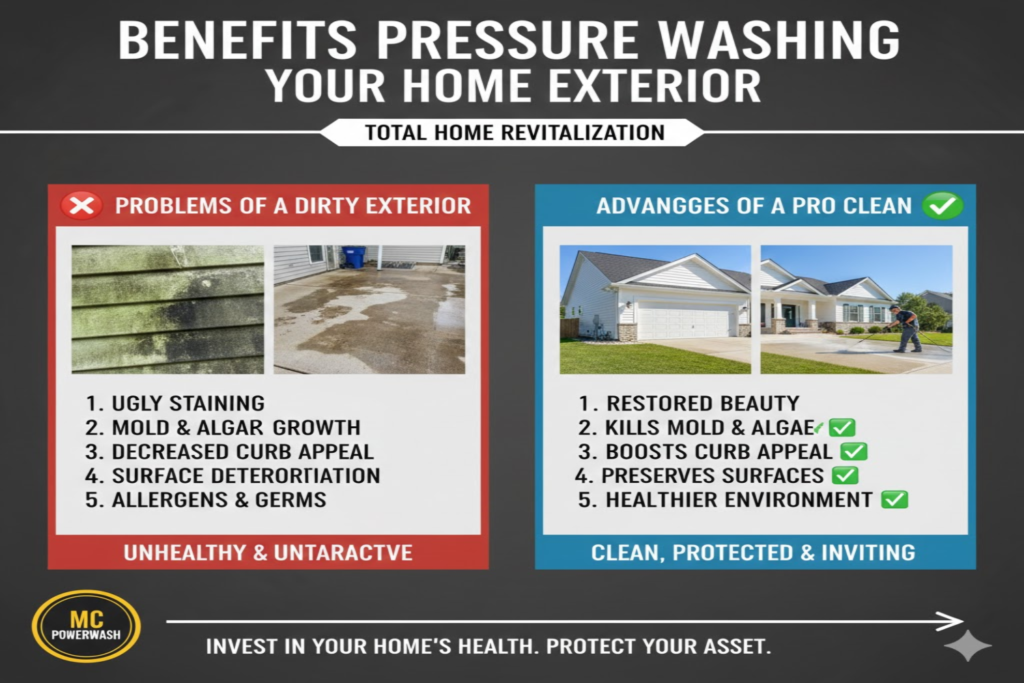
Benefits of Pressure Washing Your Home Exterior
- Dramatically enhances curb appeal by removing unsightly stains and buildup
- Prevents mold, algae, and mildew growth that can damage surfaces
- Improves safety by eliminating slippery residues on walkways and driveways
- Extends the lifespan of siding, roofs, decks, and concrete
- Reduces allergens and improves indoor air quality indirectly
- Prepares exteriors for painting, staining, or sealing projects
- Boosts overall property value and resale potential
- Saves significant money on long-term repairs and maintenance
- Provides eco-friendly cleaning with biodegradable solutions
- Offers quick, noticeable results in just a few hours
Key Equipment Used in Pressure Washing Your Home Exterior
Key equipment starts with professional-grade pressure washers featuring powerful pumps (gas, electric, or diesel) that deliver consistent high pressure for hours. Trigger wands with ergonomic grips and quick-connect fittings allow seamless nozzle changes for precision. Color-coded nozzles range from 0° for pinpoint blasting to 65° for soapy application, adapting to tasks. Hot-water units, heating water up to 200°F, excel at dissolving grease and oil on concrete. Chemical injectors (downstream or upstream) mix detergents automatically for even distribution. Long extension wands, telescoping up to 24 feet, reach second-story siding or roof edges safely from the ground.
Benefits of Getting Pressure Washing Done for Your Home Exterior
Getting your home exterior pressure washed professionally offers transformative benefits that go far beyond a simple clean. It dramatically improves curb appeal by stripping away years of dirt, oxidation, biological growth, and environmental pollutants in a single session, making your property look refreshed and well-cared for. This service effectively eliminates mold, algae, mildew, and moss that trap moisture, leading to wood rot, siding deterioration, concrete spalling, and foundation issues if left unchecked. Cleaner walkways, steps, driveways, and patios reduce slip hazards from slick algae or oil films, enhancing safety for family, guests, and visitors during wet conditions.
The process extends the lifespan of costly exterior materials like roofs, decks, fences, and siding by preventing premature wear and maintaining protective coatings. Removing exterior spores and allergens helps improve indoor air quality as fewer contaminants enter through windows, vents, or leaks. Surfaces are left in prime condition for future projects such as painting, staining, or sealing, ensuring better adhesion and longer-lasting results. A freshly pressure-washed home boosts perceived property value, often leading to higher resale prices and faster market time. In places like Los Angeles, it counters persistent smog and dust accumulation. Overall, it prevents far more expensive repairs, saving homeowners thousands while providing peace of mind.
How Does Pressure Washing Work for Home Exteriors?
Pressure washing works by harnessing a motorized pump to dramatically increase water pressure from a standard hose, creating a powerful stream that physically dislodges contaminants. The water is forced through a wand with interchangeable nozzles to control spray pattern and intensity. Detergents or cleaners are often added via injectors to chemically break down tough substances like mold or grease. For home exteriors, operators start with pre-treatment, then wash methodically to avoid streaks, and finish with rinsing. Different PSI levels suit various surfaces—high for concrete, low for wood. This combination of mechanical force and chemistry ensures deep, efficient cleaning.
Types of Surfaces That Can Be Pressure Washed on Your Home Exterior
- Concrete driveways, sidewalks, and garage floors for removing oil and stains
- Brick, stone, or stucco walls to clear dirt and efflorescence
- Wooden decks, fences, and railings to restore color and remove mildew
- Vinyl, aluminum, or fiber cement siding for eliminating streaks and oxidation
- Asphalt shingle or tile roofs using soft washing to avoid granule loss
- Patios, pavers, and flagstone areas to eliminate algae and moss
- Gutters, downspouts, and soffits for flushing out debris and buildup
- Outdoor furniture, play sets, and barbecue areas for a fresh look
Tools and Equipment Used for Pressure Washing Home Exteriors
Pressure washing requires a core set of tools including:
- High-powered pressure washer machine with adjustable PSI settings
- Standard water supply hose and high-pressure output hoses
- Spray gun wands with trigger controls and extension options
- Surface cleaner attachments for large flat areas like patios
- Safety equipment such as gloves, goggles, ear protection, and boots
- Chemical tanks or injectors for detergents and algaecides
- Ladders or telescoping poles for reaching higher surfaces safely
Common Areas That Benefit from Pressure Washing on Home Exteriors
Siding on homes often accumulates dark streaks from mildew, chalky oxidation from sun exposure, and pollution residue that dulls its finish over months or years. Roofs develop unsightly black algae streaks, green moss patches, lichen growth, and leaf debris that trap water and accelerate shingle decay. Driveways collect persistent oil drips from vehicles, black tire marks, rust stains from metal, and slippery green algae from shade or moisture. Patios of concrete, pavers, or stone become covered in green mold, dirt buildup, and weed seeds that make them slick and unattractive. Decks made of wood or composite gray out from UV rays, develop mildew spots from humidity, and lose traction when wet. Fences—whether wood, vinyl, or metal—fade from weather, stain from leaves or dirt, and gather cobwebs or grime that ages their appearance prematurely. Gutters and downspouts fill with fallen leaves, twigs, pine needles, dirt, and sludge that cause clogs and overflows during rain.
Why Professional Pressure Washing Beats DIY for Home Exteriors
Professional pressure washing outperforms DIY attempts because technicians have extensive training to select the exact pressure, nozzles, and techniques safe for each surface, avoiding common mistakes like blasting too close and causing paint chipping or water forcing behind siding. They use industrial-grade equipment that delivers steady, high-volume flow far superior to consumer rentals, ensuring even cleaning without hotspots or missed areas. Insurance and warranties cover any accidental damage, providing peace of mind not available with DIY. Pros complete large jobs in hours with uniform, streak-free results, while amateurs often spend days with uneven outcomes. They expertly handle chemical mixtures, dwell times, and runoff to comply with environmental standards. Experienced crews identify hidden problems like cracks or rot early, preventing escalation. In places like Los Angeles, pros are familiar with local challenges like smog residue.
Cost Factors in Pressure Washing Services for Home Exteriors
Cost for pressure washing home exteriors is primarily based on the total square footage of surfaces cleaned, including siding, driveway, patio, deck, and roof areas. Multi-story homes incur higher fees due to the need for ladders, lifts, or scaffolding for safe access to upper levels. Severe dirt, mold, or algae buildup requires additional time, stronger cleaners, and possibly hot water, increasing labor and material expenses. Add-on services like soft washing roofs, flushing gutters, treating fences, or degreasing driveways add to the base price. Most standard single-story homes with full exterior cleaning range from $250 to $900, depending on size and condition. Companies provide free estimates after on-site inspections to assess needs accurately. Investing in pros is cost-effective compared to DIY equipment rental plus potential damage repairs.
Large Overview Table: Key Benefits of Pressure Washing Your Home Exterior
| Benefit | Main Advantage | Problem It Solves | Long-Term Result | Typical Surfaces Affected | Estimated Cost Savings Potential |
| Enhances Curb Appeal | Removes dirt, stains, and oxidation instantly | Dull, aged, uninviting exterior look | Home appears refreshed and attractive | Siding, trim, doors, driveways | 5–10% resale value increase |
| Prevents Moisture Damage | Eliminates mold/algae that retain water | Rot, cracks, leaks in structures | Materials endure 5–15 years longer | Siding, roofs, decks, foundations | $2,000–$10,000 in repairs |
| Improves Safety | Clears slippery algae and oil residues | Fall risks on wet surfaces | Safer outdoor areas with better traction | Driveways, walkways, patios, steps | Reduced liability costs |
| Healthier Environment | Reduces exterior spores and allergens | Indoor air contamination and allergies | Cleaner air and fewer health issues | Walls, roofs, vents, windows | Lower medical expenses |
| Saves on Repairs | Stops buildup before major damage | Costly fixes for decay and wear | Thousands saved on reactive maintenance | All exterior surfaces | $3,000–$15,000 over years |
| Prepares for Upgrades | Creates clean base for paints/sealants | Poor adhesion and short-lived finishes | Coatings last 2–3 times longer | Siding, decks, fences, concrete | 30–50% extended life |
| Boosts Property Value | Signals good care to buyers/appraisers | Low market appeal and slow sales | Higher offers and quicker transactions | Entire exterior | $5,000–$20,000 added value |
| Protects Roof Longevity | Removes moss/debris that degrade shingles | Premature failure and granule loss | Roof lasts 5–10 extra years | Shingles, tiles, valleys | $8,000–$25,000 on replacement |
| Enhances Drainage | Flushes gutters and valleys of clogs | Overflow, interior leaks, water damage | Fewer stains and structural concerns | Gutters, downspouts, roof edges | $1,500–$8,000 in fixes |
| Ideal for Events | Provides spotless look for gatherings | Stained appearance during special occasions | Positive impressions and great photos | Visible outdoor spaces | Enhanced social experiences |
When to Schedule Pressure Washing for Your Home Exterior
Spring is ideal for clearing winter dirt, pollen, salt residue, and early mold to prepare for summer enjoyment. Fall removes autumn leaves, debris, and summer buildup before winter sets in. After severe storms or high winds, it quickly restores and prevents moisture problems. Before selling, it creates a polished look for photos and showings. Prior to holidays or family events, it ensures a welcoming appearance. When you spot streaks, spots, or dullness, schedule to stop progression. Every 1–2 years maximizes benefits for most homes.
Eco-Friendly Aspects of Modern Pressure Washing for Home Exteriors
Modern pressure washing prioritizes eco-friendliness with biodegradable cleaners that break down harmlessly without phosphates or harsh toxins. Runoff is managed through containment systems or grass redirection to avoid polluting waterways. Soft washing conserves water by relying more on chemicals than volume. Targeted applications minimize chemical use overall. Reputable providers use energy-efficient machines and recycle water where feasible. These practices deliver all cleaning benefits while safeguarding soil, plants, and local ecosystems.
Conclusion
Pressure washing your home exterior is a powerful, efficient service offering extensive benefits like superior curb appeal, damage prevention, safety enhancements, health improvements, cost savings, upgrade preparation, and value increase. It removes contaminants with precision using advanced equipment and techniques. Safe for all surfaces, it provides lasting protection and results. Regular use keeps your property pristine and resilient. It averts expensive issues proactively. The process is straightforward yet impactful. Homeowners gain a cleaner, more valuable home. It is an essential, worthwhile investment.
Frequently Asked Questions (FAQs)
1. What are the main benefits of pressure washing your home exterior?
The main benefits include boosting curb appeal by removing dirt and stains, preventing mold damage, improving safety on slippery surfaces, and extending material lifespan. It reduces allergens for better health, prepares for painting, boosts property value, and saves on repairs. In places like Los Angeles, it effectively handles pollution buildup. Overall, it is a cost-effective maintenance essential.
2. How does pressure washing improve home safety?
It removes algae, oil, and debris from driveways and walkways, reducing slip risks in wet conditions. Cleaner surfaces offer better traction and dry faster. This protects families and guests from falls. Professionals ensure thorough, hazard-free cleaning.
3. Can pressure washing increase my home’s value?
Yes, a clean exterior attracts buyers and higher offers by showing good care. It enhances appraisals and speeds sales. The refreshed look mimics new paint. Regular washing maintains this advantage over time.
4. How often should I pressure wash for maximum benefits?
Every 12–24 months is recommended to sustain cleanliness and protection. More often in humid or shaded areas to control growth. Seasonal timing optimizes long-term results. Consistency prevents costly buildup.
5. What surfaces benefit most from pressure washing?
Siding, roofs, driveways, patios, decks, fences, and gutters see the greatest improvements. It tackles specific issues like mold on roofs or oil on concrete. Soft methods suit delicate areas. All gain durability and appearance.
6. Does pressure washing save money long-term?
Yes, it averts rot, cracks, and replacements by addressing issues early. Savings can exceed thousands on repairs. It prolongs paint and material life significantly. Professional service is economical compared to fixes.
7. Is pressure washing eco-friendly?
Yes, with biodegradable cleaners and runoff control, it minimizes harm. Soft washing uses less water. Providers follow regulations for sustainability. Benefits include effective cleaning without environmental damage.
8. How does pressure washing help with mold prevention?
It eliminates existing mold and spores that cause spread and health risks. Pre-treatments target roots for lasting protection. This keeps moisture from accumulating. Homes remain healthier and drier.
9. What preparation is needed for pressure washing?
Move furniture, plants, and decorations clear of areas. Close windows and cover outlets. Trim bushes for access. This allows safe, efficient cleaning.
10. Why choose professionals for pressure washing benefits?
Pros avoid damage with correct techniques and equipment. They offer insurance, expertise, and even results. DIY risks injury or incomplete work. Experts maximize safety and effectiveness.