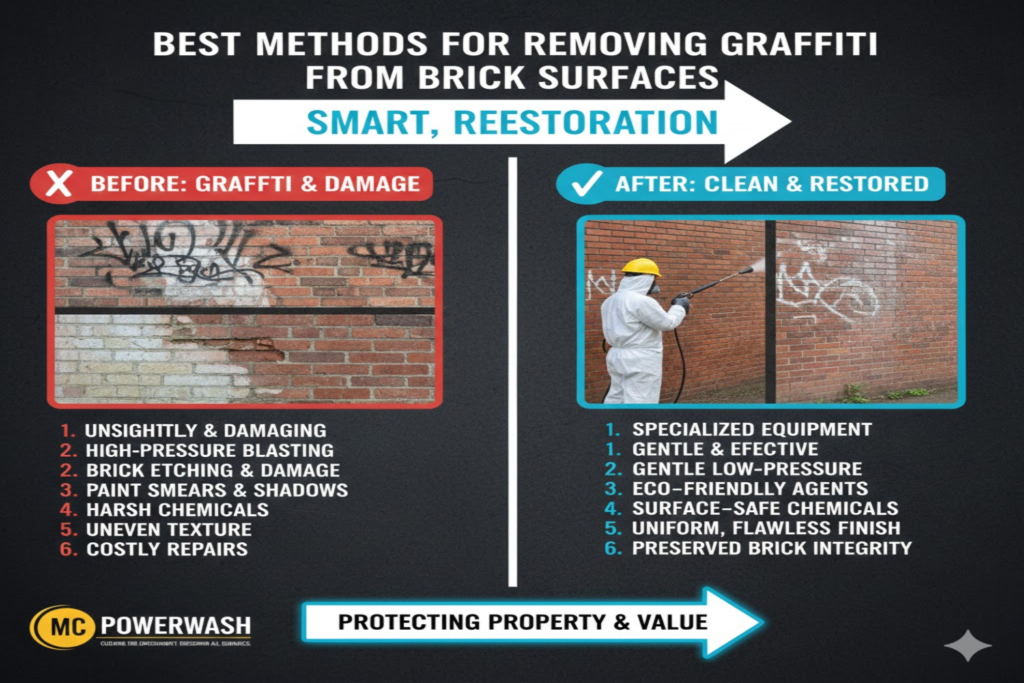
Best methods for removing graffiti from brick surfaces involve careful selection of techniques that eliminate spray paint, markers, and tags without damaging the porous brick, mortar, or original finish. Brick is highly absorbent, so graffiti penetrates deeply, making removal more challenging than on smooth surfaces like metal or glass. Harsh chemicals or aggressive pressure washing can etch brick, strip mortar, or cause efflorescence.
The safest and most effective approaches combine chemical treatments, poultices, low-pressure methods, and mechanical options depending on paint type and brick condition. In places like Los Angeles, graffiti is common on public and private brick walls due to urban density and street art culture. Los Angeles brick surfaces often face layered, multi-color graffiti that requires stronger solvents.
property owners deal with frequent tagging on exposed brick facades. buildings benefit greatly from tested, brick-safe removal strategies. Choosing the right method protects both appearance and structural integrity. Report serious or gang-related tags to local authorities. Some cities offer removal programs or reimbursement. Check local ordinances on chemical use and runoff. Keep records of removal methods for insurance or warranty purposes. Legal compliance protects property owners. Proper reporting may help address recurring issues.
Understanding Why Brick Is Difficult for Graffiti Removal
Brick is extremely porous with thousands of tiny openings that allow paint to seep deep into the material. Spray paint solvents dissolve pigments into these pores, making surface-only cleaning ineffective. Mortar joints are even more absorbent and often crack or crumble under aggressive treatment. Older brick may have soft, historic mortar that cannot tolerate strong chemicals. Modern brick with sealants reacts Los Angeles differently than unsealed surfaces. Paint type (solvent-based, water-based, enamel) affects removal difficulty.
Proper assessment of brick age, condition, and paint type is essential before starting any removal process. Report serious or gang-related tags to local authorities. Some cities offer removal programs or reimbursement. Check local ordinances on chemical use and runoff. Keep records of removal methods for insurance or warranty purposes. Legal compliance protects property owners. Proper reporting may help address recurring issues.
Why Professional Assessment Is Important First
Before attempting removal, inspect the brick for cracks, crumbling mortar, efflorescence (white powdery deposits), or previous failed cleaning attempts. Test a small hidden area with any method to check for color change, etching, or damage. Older or historic brick often requires gentler methods to avoid irreversible harm. Multi-layered graffiti may need staged removal to prevent ghosting.
Professionals use tools like moisture meters and pH testers to evaluate surface condition. Skipping assessment frequently leads to worse damage than the original graffiti. A proper evaluation guides the safest, most effective approach. Report serious or gang-related tags to local authorities. Some cities offer removal programs or reimbursement. Check local ordinances on chemical use and runoff. Keep records of removal methods for insurance or warranty purposes. Legal compliance protects property owners. Proper reporting may help address recurring issues.
Low-Pressure Washing with Graffiti Removers
Low-pressure washing (500–1000 PSI) combined with specialized graffiti removers is one of the safest initial methods for brick. Use a wide fan tip nozzle to avoid concentrated streams that etch brick. Apply a citrus-based or biodegradable remover (such as Graffiti Solutions or Dumond Smart Strip) and let it dwell 10–30 minutes. Agitate gently with a soft-bristle brush if needed. Rinse thoroughly from top to bottom.
Report serious or gang-related tags to local authorities. Some cities offer removal programs or reimbursement. Check local ordinances on chemical use and runoff. Keep records of removal methods for insurance or warranty purposes. Legal compliance protects property owners. Proper reporting may help address recurring issues.
This method removes most fresh graffiti without deep abrasion. Multiple applications may be needed for older paint. Low pressure protects mortar while effectively lifting paint.
Chemical Paint Strippers and Poultices
- Chemical strippers like soy-based or citrus-based removers penetrate paint without harming brick when used correctly.
- Apply thickly, cover with plastic sheeting, and allow 24–48 hours dwell time for deep penetration.
- Los Angeles Peel off the softened paint and rinse.
- For stubborn cases, use a poultice (absorbent material mixed with solvent) to draw paint out of pores.
- Poultices are especially effective on porous brick.
- Always neutralize chemicals after use to prevent residue.
- These methods remove even layered graffiti safely.
- Professional-grade strippers outperform household alternatives.
Heat-Based Methods (Infrared and Steam)
Infrared paint removal systems heat graffiti to 200–400°F, softening paint for scraping without chemicals. The heat does not damage brick or mortar when controlled properly. Steam cleaning at 250–300°F kills paint adhesion and loosens residue for rinsing. Both methods are eco-friendly and leave no chemical residue. Infrared works best on flat surfaces; steam reaches textured areas better. These techniques are ideal for historic brick. They require specialized equipment usually operated by professionals. Heat methods minimize environmental impact significantly.
Mechanical Removal Options
Soft abrasive blasting (using walnut shells, corn cob, or baking soda) gently removes paint without etching brick. Low-pressure dry ice blasting freezes paint for easy chipping. Sponge blasting uses soft media to avoid surface damage. These methods work well for deep-set graffiti. Avoid sandblasting—it erodes brick and mortar permanently. Mechanical options require skilled operators to control pressure.
They are effective on stubborn cases where chemicals fail. Proper media selection protects brick integrity. Report serious or gang-related tags to local authorities. Some cities offer removal programs or reimbursement. Check local ordinances on chemical use and runoff. Keep records of removal methods for insurance or warranty purposes. Legal compliance protects property owners. Proper reporting may help address recurring issues.
Eco-Friendly and Non-Chemical Alternatives
Use biodegradable citrus or soy-based strippers for minimal environmental impact. Baking soda slurry or wheat starch poultices draw out paint naturally. High-temperature steam cleaning eliminates chemicals entirely. Manual scraping with plastic or wooden tools works for fresh tags. These methods protect soil, plants, and waterways from runoff. Eco options are slower but safer long-term. They are increasingly preferred in sensitive areas. Green methods balance effectiveness and sustainability.
Report serious or gang-related tags to local authorities. Some cities offer removal programs or reimbursement. Check local ordinances on chemical use and runoff. Keep records of removal methods for insurance or warranty purposes. Legal compliance protects property owners. Proper reporting may help address recurring issues.
Step-by-Step Safe Graffiti Removal Process
- Assess brick condition, paint type, and layers present.
- Test removal method on a small, hidden area first.
- Protect surrounding surfaces with plastic sheeting and tape.
- Apply chosen remover or poultice per instructions.
- Allow proper dwell time (minutes to hours).
- Gently agitate with soft brush if needed.
- Rinse thoroughly from top to bottom with low pressure.
- Repeat if ghosting remains.
- Neutralize and rinse again if chemicals were used.
- Allow brick to dry completely before sealing.
Protecting Surrounding Areas During Removal
Cover nearby plants, grass, windows, and siding with plastic sheeting. Pre-wet landscaping to dilute any runoff. Place absorbent materials or tarps under work area. Direct rinse water away from storm drains if possible. Use containment systems to capture chemicals. Proper protection prevents collateral damage. Responsible removal safeguards the entire property.
Post-Removal Care and Brick Sealing
After removal, allow brick to dry 24–48 hours. Apply a breathable, penetrating silane/siloxane sealer to prevent future graffiti adhesion. Avoid film-forming sealers that trap moisture. Reapply sealer every 3–5 years. Sealed brick resists new graffiti and makes future removal easier. Post-care extends brick life and appearance. Proper sealing is the final step for long-term protection.
Graffiti Removal Methods Comparison Table – Brick Surfaces
| Method | Effectiveness on Brick | Damage Risk to Brick | Environmental Impact | Speed | Cost Range (DIY) | Best For |
| Low-Pressure Washing | Very Good | Low | Medium | Fast | $50–$150 | Fresh graffiti |
| Chemical Paint Strippers | Excellent | Low–Medium | Medium–High | Moderate | $80–$200 | Layered or deep-set paint |
| Infrared/Heat Removal | Excellent | Very Low | Very Low | Moderate | $300+ (equipment) | Historic or sensitive brick |
| Steam Cleaning | Very Good | Very Low | Very Low | Moderate | $200–$500 | Chemical-free preference |
| Soft Abrasive Blasting | Excellent | Low | Low | Moderate | $150–$400 | Stubborn cases |
| Poultice Method | Excellent (deep) | Very Low | Low | Slow | $50–$150 | Porous brick, ghosting |
Common Mistakes to Avoid When Removing Graffiti
Using high-pressure washing etches brick and mortar permanently. Applying undiluted solvents burns brick and causes discoloration. Skipping test patches leads to widespread damage. Rinsing from bottom to top causes streaking and residue. Ignoring mortar condition causes crumbling joints. Using sandblasting erodes brick face irreparably.
Avoiding these errors prevents costly repairs. Proper technique is more important than speed. Report serious or gang-related tags to local authorities. Some cities offer removal programs or reimbursement. Check local ordinances on chemical use and runoff. Keep records of removal methods for insurance or warranty purposes. Legal compliance protects property owners. Proper reporting may help address recurring issues.
When to Hire Professional Graffiti Removal Services
Professionals have access to commercial strippers, infrared systems, and low-pressure equipment. They carry insurance for accidental damage. Experienced crews assess brick type and adjust methods precisely. They handle containment, runoff, and disposal responsibly. Professionals complete jobs faster and more uniformly. They prevent ghosting and surface etching. For large areas, historic brick, or multi-layer graffiti, professional service is essential. Expert removal protects both appearance and value.
Preventing Future Graffiti on Brick Surfaces
Apply sacrificial anti-graffiti coatings that allow easy removal with special solvents. Use permanent penetrating sealers to make brick less absorbent. Install motion-activated lighting or cameras in vulnerable areas. Plant thorny shrubs or use physical barriers near walls. Community awareness and quick removal discourage repeat tagging. Prevention reduces removal frequency and costs. Proactive measures maintain clean brick long-term.
Legal and Reporting Considerations
Document graffiti with photos before removal. Report serious or gang-related tags to local authorities. Some cities offer removal programs or reimbursement. Check local ordinances on chemical use and runoff. Keep records of removal methods for insurance or warranty purposes. Legal compliance protects property owners. Proper reporting may help address recurring issues.
Conclusion
Best methods for removing graffiti from brick surfaces include low-pressure washing with biodegradable removers, chemical strippers, infrared/heat systems, steam cleaning, soft abrasive blasting, and poultices—each chosen based on paint type, brick condition, and porosity. Low-pressure soft washing and eco-friendly strippers offer the safest starting points, while heat and poultices excel on stubborn or deep-set graffiti. In high-graffiti urban areas, selecting the correct method prevents etching, mortar damage, and costly repairs. Always test first, protect surroundings, rinse thoroughly, and seal afterward. Professional services provide the most reliable results for large or sensitive brick surfaces.
With the right approach, graffiti can be removed effectively while preserving brick beauty and structural integrity for decades. Report serious or gang-related tags to local authorities. Some cities offer removal programs or reimbursement. Check local ordinances on chemical use and runoff. Keep records of removal methods for insurance or warranty purposes. Legal compliance protects property owners. Proper reporting may help address recurring issues.
Frequently Asked Questions (FAQs)
1. What is the safest first step for removing graffiti from brick?
Start with low-pressure washing (500–1000 PSI) using a citrus-based or biodegradable graffiti remover. Pre-wet the area and test on a small spot. This removes fresh paint without damage. Rinse thoroughly from top to bottom. It is the least risky initial method.
2. Can I use regular paint stripper on brick?
Some strippers are safe, but avoid harsh solvent-based or caustic products. Use soy, citrus, or methylene chloride-free strippers labeled for masonry. Always test first and rinse completely. Wrong strippers etch or discolor brick permanently.
3. Is pressure washing safe for brick graffiti removal?
Only low-pressure (under 1000 PSI) with wide nozzles is safe. High-pressure washing erodes brick face and mortar joints. Use soft washing techniques instead. Pressure control is critical to avoid permanent damage.
4. How do I remove deep graffiti stains from brick?
Use a poultice method with absorbent material and solvent to draw paint out of pores. Allow 24–48 hours dwell time. Peel and rinse. Repeat if needed. Poultices are most effective for deep penetration. Professional help is recommended.
5. Will graffiti removal damage old or historic brick?
Yes, aggressive methods can cause irreversible etching or mortar crumbling. Use gentle steam, infrared, or poultice methods. Always test small areas. Historic brick requires extra caution. Professional conservators are best for old surfaces.
6. Can I prevent graffiti from sticking to brick again?
Apply a breathable, sacrificial anti-graffiti coating after cleaning. These allow easy future removal. Penetrating sealers reduce porosity. Install lighting or barriers. Prevention makes future tags easier to remove. Sealing is highly effective.
7. How long does it take to remove graffiti from brick?
Fresh tags take 1–4 hours. Layered or old graffiti may require 1–3 days with dwell times. Professional jobs are faster. Deep-set paint needs multiple applications. Time varies by method and severity. Patience is essential.
8. Are eco-friendly graffiti removers effective on brick?
Yes, citrus, soy, and bio-based removers work well on brick. They penetrate paint without harming masonry. Results may take longer than harsh chemicals. Eco options protect environment and plants. They are increasingly reliable.
9. Should I seal brick after graffiti removal?
Yes, apply a penetrating silane/siloxane sealer after cleaning. It reduces future paint adhesion and water absorption. Avoid film-forming sealers that trap moisture. Sealing protects brick long-term. Reapply every 3–5 years.
10. When should I call professionals for brick graffiti removal?
Call pros for large areas, historic brick, multi-layer graffiti, or when DIY tests cause damage. Professionals have specialized tools and insurance. They prevent etching and ensure complete removal. Expert service is worth it for valuable brick.