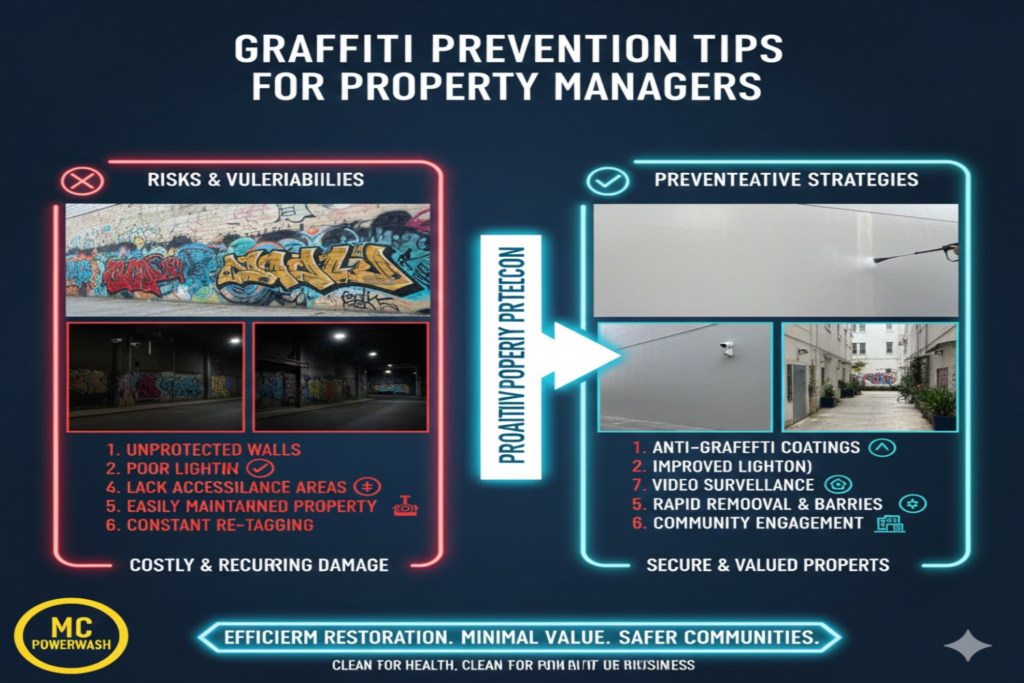
Graffiti prevention is essential for property managers to maintain property value, reduce maintenance costs, and create a welcoming environment for tenants and visitors. In Los Angeles, where urban tagging frequently affects commercial buildings, apartments, garages, and retail storefronts, proactive strategies make a significant difference. Effective prevention combines physical barriers, visual deterrents, community engagement, and protective coatings. Quick removal of any new graffiti discourages repeat offenders. Property managers who implement layered defenses see fewer incidents over time. Investing in prevention is far less expensive than repeated removal jobs. These tips help protect both residential and commercial properties. Consistent application builds long-term resilience against vandalism.
Why Graffiti Prevention Matters for Property Managers
Graffiti lowers perceived safety, drives away potential tenants, and damages first impressions for businesses. Each incident requires time, money, and effort for cleanup. In high-risk urban areas, repeated tagging creates a cycle of deterioration. Prevention breaks this cycle by making properties less attractive targets. It preserves the original appearance of buildings and reduces long-term maintenance budgets. Clean, well-maintained properties attract higher-quality tenants and command better rents. Insurance premiums may decrease with documented prevention efforts. Proactive management signals responsibility to owners and stakeholders. Prevention ultimately protects both financial returns and community reputation.
Understanding Why Properties Get Targeted
Vandals prefer easy, low-risk, high-visibility targets. Dark corners, blank walls, and poorly lit areas invite tagging. Unmaintained or neglected-looking properties signal that no one cares. Overhanging foliage provides cover for offenders. Large flat surfaces without windows or activity become canvases. In Los Angeles, alleys behind commercial strips and freeway-adjacent walls are frequent hotspots. Properties near schools, transit stops, or youth hangouts see higher activity. Recognizing patterns helps target prevention efforts. Properties that appear monitored and cared-for are tagged less often. Understanding motivation guides smarter defenses.
Install Anti-Graffiti Protective Coatings
Apply sacrificial or permanent anti-graffiti coatings to vulnerable walls. Sacrificial coatings are removed along with graffiti during cleaning. Permanent coatings allow solvents to remove paint without damaging the surface. These products create a barrier that prevents deep penetration. Application is simple with rollers or sprayers after a clean surface. Reapply sacrificial types after each major incident. Permanent coatings last 5–10 years with proper maintenance. They dramatically reduce removal time and cost. Coatings are especially effective on textured concrete and stucco. Professional application ensures even coverage.
Improve Lighting Around the Property
- Install bright motion-activated LED lights in alleys, parking areas, and building perimeters.
- Vandals avoid well-lit zones due to higher risk of being seen.
- Use timers or dusk-to-dawn fixtures for constant coverage.
- Solar-powered options work well in sunny climates.
- Position lights high to prevent tampering.
- Combine with infrared cameras for night monitoring.
- Proper lighting alone can cut graffiti incidents significantly.
- It also enhances tenant safety and security perception.
- Upgrade old fixtures to energy-efficient models.
- Consistent illumination is one of the most cost-effective deterrents.
Use Physical Barriers and Landscaping
Plant thorny or dense shrubs along blank walls to block access. Install spiked toppers or angled metal strips on fences and ledges. Place large planters, bollards, or benches in front of vulnerable surfaces. Create buffer zones with gravel or mulch that show footprints. Use chain-link or wrought-iron fencing instead of solid walls where possible. Trim trees and remove overhanging branches regularly. Physical obstacles make tagging more difficult and time-consuming. They deter casual vandals effectively. Combine with regular maintenance to keep barriers intact. Thoughtful landscaping enhances aesthetics while adding protection.
Apply Murals and Community Art Programs
Commission professional murals on large blank walls to make them less appealing for tagging. Vandals rarely cover high-quality artwork. Partner with local artists or community groups for culturally relevant designs. Rotate murals periodically to keep them fresh. Use anti-graffiti coatings under murals for easy maintenance. Involve tenants or neighborhood associations in planning. Murals transform potential targets into assets. They foster community pride and ownership. This approach has proven successful in urban revitalization. It turns a problem into a positive feature.
Increase Surveillance and Monitoring
Install visible security cameras at corners, entrances, and alleyways. Use signage stating “24/7 Video Surveillance” to create a deterrent effect. Modern systems allow remote viewing via smartphone apps. Combine cameras with motion-activated recording and alerts. Dummy cameras can supplement real ones in budget scenarios. Review footage after incidents to identify patterns. Share clear images with law enforcement when needed. Surveillance discourages opportunistic tagging. It provides evidence for prosecution. Integrated systems offer peace of mind and prevention.
Implement Rapid Removal Policies
- Remove any new graffiti within 24–48 hours whenever possible.
- Fresh paint is easier and cheaper to clean.
- Prompt removal eliminates the “broken windows” effect that invites more vandalism.
- Train staff or have on-call contractors ready.
- Document each incident with photos and dates.
- Report persistent tagging to local police for pattern tracking.
- Quick response signals active management.
- It discourages repeat offenders in the area.
- Consistency is key to long-term success.
- Rapid removal is one of the strongest prevention tools.
Use Deterrent Signage and Markings
Post clear “No Graffiti – Violators Prosecuted” signs in multiple languages. Place “Under 24-Hour Surveillance” and “Property Monitored” stickers on walls. Use reflective or high-visibility signage for night effectiveness. Mark walls with subtle anti-vandalism warnings. Consistent messaging reinforces consequences. Place signs at eye level for maximum impact. Combine with community rules and lease clauses. Visible warnings deter casual taggers. They show property is actively protected. Simple signage delivers strong preventive value.
Engage Tenants and Community
Educate tenants about reporting graffiti immediately. Create a simple reporting system via app, text, or hotline. Offer incentives for prompt reporting. Involve residents in mural projects or clean-up days. Build neighborhood watch groups focused on vandalism prevention. Partner with local businesses for mutual monitoring. Strong community ties reduce anonymous tagging. Residents become extra eyes on the property. Engagement creates collective ownership. It strengthens overall security culture.
Conduct Regular Property Inspections
Perform weekly walk-arounds to spot early tagging or vulnerabilities. Document blind spots, overgrown areas, and lighting issues. Check for new graffiti even if small. Maintain a log of conditions and actions taken. Schedule professional security audits periodically. Address issues immediately before they worsen. Regular inspections catch problems early. They demonstrate active management. Consistent checks prevent escalation. They form the foundation of effective prevention.
Partner with Local Law Enforcement
Build relationships with community policing units. Report every incident to establish patterns. Request increased patrols in problem areas. Participate in graffiti abatement task forces. Share camera footage when requested. Attend neighborhood safety meetings. Law enforcement partnerships deter vandals. They provide resources for chronic issues. Coordinated efforts reduce city-wide tagging. Strong ties improve response times. Collaboration enhances overall prevention.
Train Staff on Prevention Awareness
Educate maintenance and security teams on graffiti warning signs. Teach them to recognize vulnerable areas. Train staff to report suspicious activity promptly. Provide guidelines on safe removal of small tags. Include vandalism prevention in regular staff meetings. Create checklists for daily inspections. Informed teams spot issues faster. They become active participants in protection. Training improves response time. It creates a vigilant property culture.
Maintain Overall Property Appearance
Keep paint fresh and consistent on all exterior surfaces. Remove litter, weeds, and debris regularly. Repair broken windows, fences, and lights immediately. Maintain landscaping and parking areas. A well-cared-for property signals oversight. Neglected appearance attracts vandalism. High standards deter opportunistic taggers. Regular upkeep reinforces prevention efforts. It boosts tenant satisfaction. Clean properties stay cleaner longer.
Comparison Table: Graffiti Prevention Methods – Effectiveness & Cost
| Prevention Method | Estimated Effectiveness | Initial Cost Level | Ongoing Cost Level | Time to Implement | Impact on Property Appearance | Ease of Maintenance | Long-Term ROI | Best For |
| Anti-Graffiti Coatings | Very High | Medium-High | Low-Medium | 1–3 days | Neutral to Positive | Low | Very High | High-exposure walls |
| Motion-Activated Lighting | High | Medium | Low | 1–2 days | Positive | Low | High | Alleys & perimeters |
| Thorny Landscaping/Barriers | High | Medium | Medium | 1–4 weeks | Positive | Medium | High | Ground-level blank walls |
| Professional Murals | Very High | High | Medium | 1–2 weeks | Very Positive | Medium | Very High | Large feature walls |
| Visible Security Cameras | High | Medium-High | Low-Medium | 1–5 days | Neutral | Low | High | Entrances & parking areas |
| Rapid Removal Policy | Very High | Low | Medium | Immediate | Positive | Low | Very High | All properties |
| Deterrent Signage | Moderate | Low | Very Low | 1 day | Neutral | Very Low | Moderate | All surfaces |
| Tenant & Community Engagement | Moderate-High | Low | Low | Ongoing | Positive | Low | High | Residential & mixed-use |
| Regular Inspections & Maintenance | High | Low | Low | Ongoing | Positive | Medium | Very High | All properties |
Cost-Benefit Analysis of Prevention Strategies
Prevention investments pay off quickly through reduced removal frequency and lower repair costs. Anti-graffiti coatings often recoup their expense after just one or two avoided cleanups. Lighting and cameras provide dual benefits of vandalism deterrence and tenant safety. Murals turn potential liabilities into marketing assets that can increase property appeal. Rapid removal combined with signage creates a strong psychological deterrent at minimal cost. Landscaping adds aesthetic value while blocking access. Overall, proactive spending reduces reactive expenses dramatically. Multi-layered approaches deliver the highest return. Budget-conscious managers prioritize high-ROI measures first. Long-term savings make prevention a smart financial decision.
Final Tips for Implementing a Graffiti Prevention Plan
Create a written prevention plan with clear responsibilities and timelines. Start with low-cost measures like signage and rapid removal policies. Layer on higher-impact solutions like coatings and lighting over time. Document every step and incident for insurance and budgeting. Review effectiveness quarterly and adjust strategies. Communicate the plan to staff, tenants, and owners. Stay consistent even when incidents are low. Celebrate successes like graffiti-free periods. Involve multiple stakeholders for better results. A comprehensive, ongoing plan delivers the strongest protection.
Conclusion
Graffiti prevention for property managers requires a multi-layered approach combining physical, visual, and community-based strategies. In Los Angeles, where urban density and transit corridors create ongoing challenges, proactive measures protect both residential and commercial assets. Anti-graffiti coatings, improved lighting, rapid removal, and community engagement form the core of effective defense. Regular inspections and property upkeep reinforce these efforts. Investing in prevention saves significant time and money compared to repeated cleanups. Property managers who implement consistent plans see fewer incidents and maintain higher property values. With thoughtful planning and execution, graffiti can be minimized or virtually eliminated. A clean, protected property benefits tenants, owners, and the entire community.
Frequently Asked Questions (FAQs)
1. How effective are anti-graffiti coatings for prevention?
Anti-graffiti coatings are highly effective at preventing deep paint penetration. They make future removal faster and less damaging. Sacrificial types are removed with graffiti while permanent types allow solvent cleaning. They often reduce tagging incidents by 70–90% on treated surfaces.
2. Does better lighting really stop graffiti?
Yes, bright motion-activated lighting significantly deters vandals. Well-lit areas increase the risk of being identified or recorded. Many taggers avoid illuminated zones entirely. Combined with cameras, lighting becomes one of the strongest deterrents available.
3. How quickly should new graffiti be removed?
Remove new graffiti within 24–48 hours whenever possible. Fresh paint is much easier and cheaper to clean. Rapid removal prevents the “broken windows” effect that invites more tagging. Quick response is one of the most powerful prevention tools.
4. Are murals better than blank walls for prevention?
Yes, high-quality professional murals are rarely tagged over. Vandals tend to respect good artwork. Murals transform vulnerable walls into assets that enhance property appeal. They should be protected with anti-graffiti coatings underneath.
5. How much do anti-graffiti coatings typically cost?
Anti-graffiti coatings cost $1–$5 per square foot depending on type and area size. Permanent coatings are more expensive upfront but require less frequent reapplication. Sacrificial coatings are cheaper initially but need recoating after each incident. They pay for themselves quickly in high-risk areas.
6. Should property managers involve tenants in prevention?
Yes, engaging tenants through reporting systems and community projects strengthens prevention. Residents become extra eyes on the property. Incentives for prompt reporting encourage vigilance. Tenant involvement builds collective ownership and pride.
7. Do signs saying “No Graffiti” actually work?
Yes, clear deterrent signage reduces opportunistic tagging. Warnings like “Under Surveillance” and “Violators Prosecuted” create a psychological barrier. Multiple languages increase effectiveness in diverse areas. Consistent visible messaging reinforces active management.
8. How often should properties be inspected for graffiti risks?
Conduct walk-arounds at least weekly in high-risk areas. Check for new tags, lighting issues, and landscaping gaps. Document findings and address problems immediately. Regular inspections catch vulnerabilities before they become incidents.
9. Is community art better than plain protective coatings?
Community murals often outperform plain coatings alone. They add aesthetic value and foster neighborhood pride. Vandals are less likely to tag meaningful artwork. The best approach combines murals with underlying anti-graffiti coatings.
10. How long does it take to see results from prevention efforts?
Most prevention strategies show noticeable results within 3–6 months. Consistent rapid removal and visible deterrents can reduce incidents quickly. Full impact often appears after one year of layered efforts. Persistence delivers long-term graffiti reduction.