Graffiti removal costs vary widely depending on the size of the affected area, surface type, graffiti type, and removal method chosen. In Los Angeles, where urban tagging is common on buildings, garages, and commercial properties, property owners often face recurring expenses for quick cleanup. Professional services typically charge between $1 and $3 per square foot for standard jobs, with higher rates for complex cases. Additional factors like accessibility, layers of paint, and protective coatings influence the final price. Understanding these costs helps owners budget effectively and avoid overpaying. Quick removal prevents escalation, as fresh graffiti invites more vandalism. Preventative measures like anti-graffiti coatings reduce long-term expenses. This guide provides detailed breakdowns to empower informed decisions.
Why Graffiti Removal Costs Matter for Property Owners
Graffiti lowers property value, deters customers, and signals neglect to potential vandals. Delaying removal often increases costs as paint cures and layers build up. In Los Angeles, commercial and residential owners deal with frequent incidents in alleys, freeways, and neighborhoods. Budgeting for prompt professional service protects curb appeal and resale value. Insurance may cover vandalism, but deductibles and documentation requirements apply. Accurate cost knowledge prevents surprise bills. It also encourages investment in prevention. Proactive owners save money over time. Understanding pricing empowers negotiation with contractors.
Factors Influencing Graffiti Removal Costs
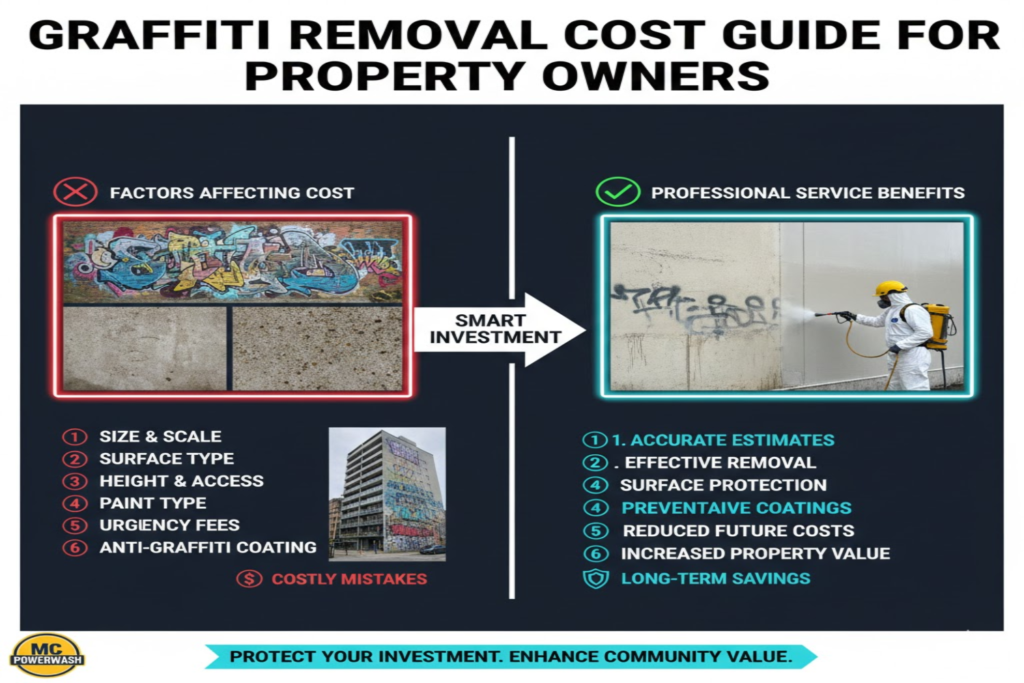
Surface material plays a major role in pricing. Porous concrete or brick absorbs paint deeply, requiring stronger chemicals or blasting. Smooth metal or glass is easier and cheaper to clean. Graffiti type—spray paint, markers, or etching—affects method and time. Layered or old graffiti demands multiple treatments. Accessibility challenges like heights or tight spaces increase labor and equipment costs. Location within the property matters for setup and safety. Urban areas often have higher labor rates due to demand. Emergency or after-hours service adds premiums. Each factor compounds to determine the quote.
Average Cost Per Square Foot
Professional graffiti removal typically ranges from $1 to $3 per square foot for standard cases. Simple tags on flat concrete may fall at the lower end. Complex jobs on textured or porous surfaces push toward $3 or higher. Some contractors charge $2 to $5 per square foot for heavy buildup. In competitive markets, prices stabilize around $1.50 to $2.50. Quotes often include minimum fees for small jobs. Per-square-foot pricing rewards larger areas with better rates. Always request detailed breakdowns. Comparing multiple quotes reveals fair pricing. Accurate measurement of affected area is essential.
Cost Breakdown by Removal Method
- Different methods have distinct price ranges based on effectiveness and surface impact.
- Chemical strippers are affordable for most surfaces at $1–$2.50 per square foot.
- Pressure washing with pretreatment averages $1.50–$3.
- Soda or dry ice blasting for delicate masonry costs $3–$7.
- Sandblasting suits tough concrete but runs $4–$10.
- Steam cleaning falls in the $2–$4 range.
- Method selection balances cost, speed, and surface preservation.
- Professionals recommend the best fit after inspection.
- Method choice significantly affects total expense.
- Eco-friendly options may add slight premiums.
Minimum Service Fees and Small Job Costs
Many companies enforce minimum charges for small tags or spots. Typical minimums range from $150 to $400 even for tiny areas. This covers travel, setup, and basic labor. Small jobs like single tags often cost $200–$500 total. Pricing reflects fixed costs regardless of size. Owners with minor graffiti benefit from bundling multiple spots. Negotiate minimums for repeat business. Some firms offer flat rates for quick jobs. Understanding minimums prevents surprises on small incidents. It encourages prompt reporting of vandalism.
Costs for Large-Scale or Commercial Removal
Large walls or building exteriors see lower per-square-foot rates due to efficiency. Commercial jobs range $1–$2.50 per square foot for extensive coverage. Multi-story or hard-to-reach areas add $500–$2,000 for scaffolding or lifts. Full facade cleaning can total $2,000–$10,000+. Frequent offenders like retail storefronts budget annually. Contracts for ongoing abatement lower unit costs. Scale provides bargaining power. Large properties benefit from preventive coatings. Commercial insurance often covers major incidents.
Additional Fees and Hidden Costs
Travel fees apply outside service radius, typically $50–$150. After-hours or emergency service adds 20–50% premiums. Hazardous waste disposal for chemicals incurs extra charges. Surface repairs after aggressive methods cost $200–$1,000. Anti-graffiti coating application runs $1–$4 per square foot. Permits for public-facing work may be required. Taxes and disposal fees add 10–15%. Request all-inclusive quotes. Clarify extras upfront. Avoiding surprises keeps budgets on track.
DIY vs Professional Cost Comparison
DIY attempts use store-bought removers at $20–$100 per job. Pressure washer rental costs $50–$150 per day. Chemicals and tools add up quickly for poor results. Failed DIY often requires professionals anyway. Professional service ensures safe, effective removal. It saves time and prevents surface damage. DIY suits tiny fresh tags only. Pros handle large or delicate jobs better. Cost savings from DIY rarely outweigh risks. Professionals provide warranties and insurance.
Regional Cost Variations in Urban Areas
Large cities with high demand see elevated pricing due to labor and competition. In Los Angeles, rates trend toward the higher end of national averages. Urban access challenges and traffic increase costs slightly. Coastal humidity affects paint adhesion and removal difficulty. Commercial hubs have more specialized contractors. Comparing local providers reveals competitive pricing. Urban owners budget higher than rural counterparts. Location-specific factors influence quotes. Research local firms for accurate estimates.
Cost of Anti-Graffiti Protective Coatings
Sacrificial coatings cost $1–$3 per square foot and require reapplication after removal. Permanent coatings range $2–$5 per square foot for longer protection. Application adds $500–$2,000 depending on area. Coatings reduce future removal costs dramatically. They allow easier cleaning with solvents. Investment pays off quickly in high-risk areas. Combine with lighting or cameras for deterrence. Protective treatments lower lifetime expenses. They preserve original surfaces longer.
Insurance and Reimbursement Options
- Many property insurance policies cover vandalism removal.
- File claims promptly with photos and police reports.
- Deductibles often range $500–$2,000.
- Some cities offer graffiti abatement programs or reimbursements.
- Nonprofits provide low-cost services in certain areas.
- Document everything for claims.
- Insurance reduces out-of-pocket expenses.
- Check policy exclusions carefully.
- Reimbursement programs vary widely.
- They ease financial burden for owners.
Budgeting for Recurring Graffiti Issues
High-risk properties budget $1,000–$5,000 annually for removal and prevention. Frequent tagging requires quarterly cleanups. Preventive coatings cut costs by 50–70% long-term. Track incidents to predict expenses. Allocate funds for emergency responses. Negotiate annual contracts for discounts. Budgeting prevents reactive overspending. It supports consistent property maintenance. Forward planning protects cash flow.
How to Get Accurate Quotes
Measure graffiti area precisely in square feet. Photograph from multiple angles. Note surface type and graffiti details. Contact 3–5 licensed contractors for inspections. Request itemized quotes including methods and warranties. Ask about experience with similar surfaces. Compare value, not just price. Check reviews and references. On-site estimates are most accurate. Thorough quotes prevent cost overruns.
Ways to Reduce Graffiti Removal Costs
Act within 24–48 hours for easier, cheaper removal. Install anti-graffiti coatings proactively. Use motion lights and cameras for deterrence. Trim foliage to eliminate hiding spots. Join community watch programs. Choose eco-friendly methods for lower disposal fees. Bundle multiple cleanups for discounts. Negotiate with repeat contractors. Prevention is cheaper than repeated removal. Small investments yield big savings.
Long-Term Cost Savings with Prevention
Preventive coatings pay for themselves after 2–3 incidents. Reduced frequency lowers labor and chemical expenses. Protected surfaces avoid damage from aggressive methods. Higher property value offsets initial costs. Insurance premiums may decrease with proactive care. Long-term planning minimizes financial impact. Consistent prevention transforms recurring expense into one-time investment. Owners achieve cleaner, safer properties. Savings compound over years.
Comparison Table: Graffiti Removal Costs by Scenario
| Scenario | Average Cost Range | Per Sq Ft Estimate | Key Factors Influencing Price | Typical Total for 100 Sq Ft | Notes & Recommendations |
| Small fresh tag on concrete | $150 – $400 | $1 – $2.50 | Quick chemical treatment, easy access | $200 – $350 | DIY possible if small |
| Medium layered graffiti on brick | $400 – $1,200 | $2 – $4 | Porous surface, multiple applications | $500 – $900 | Professional recommended |
| Large commercial wall | $1,000 – $5,000+ | $1.50 – $3 | Scale discounts, equipment needs | $1,500 – $3,000 | Negotiate contract rates |
| High-access (multi-story) | $800 – $3,000+ | $2.50 – $6 | Scaffolding/lifts required | $1,200 – $2,500 | Adds significant labor cost |
| Sandblasting or blasting method | $500 – $2,000 | $3 – $10 | Abrasive, for tough concrete | $800 – $1,500 | Higher damage risk if not careful |
| Anti-graffiti coating application | $500 – $3,000 | $1 – $5 | One-time preventive, varies by type | $1,000 – $2,000 | Reduces future removal costs |
| Emergency/after-hours service | +20–50% premium | N/A | Urgency and availability | Extra $200–$800 | For quick response to new vandalism |
How to Negotiate Better Prices with Contractors
Obtain multiple detailed quotes from licensed professionals. Highlight repeat business potential for discounts. Ask about bundling removal with coating services. Inquire about off-peak scheduling savings. Request itemized breakdowns to spot overcharges. Compare warranties and guarantees offered. Mention competitor quotes politely. Negotiate minimum fees for small jobs. Long-term relationships yield better rates. Smart negotiation lowers overall expenses.
Conclusion
Graffiti removal costs require careful consideration of size, surface, method, and urgency for property owners. In Los Angeles, urban challenges make quick, professional service essential to control expenses. Per-square-foot pricing from $1–$3 provides a reliable baseline, with extras for complexity or prevention. Investing in anti-graffiti coatings and deterrence cuts long-term costs dramatically.
Obtain multiple quotes, act promptly, and prioritize surface-safe methods. Budget wisely, document incidents for insurance, and focus on prevention. Effective cost management restores properties, deters vandals, and protects investment value. With the right approach, owners turn a frustrating issue into manageable maintenance. Ask about bundling removal with coating services. Inquire about off-peak scheduling savings
. Request itemized breakdowns to spot overcharges. Compare warranties and guarantees offered. Mention competitor quotes politely. Negotiate minimum fees for small jobs. Long-term relationships yield better rates. Smart negotiation lowers overall expenses. Ask about bundling removal with coating services. Inquire about off-peak scheduling savings. Request itemized breakdowns to spot overcharges. Compare warranties and guarantees offered. Mention competitor quotes politely. Negotiate minimum fees for small jobs. Long-term relationships yield better rates. Smart negotiation lowers overall expenses.
Frequently Asked Questions (FAQs)
1. What is the average cost of graffiti removal per square foot?
The average cost ranges from $1 to $3 per square foot for most professional services. This covers standard chemical and pressure washing methods. Higher rates apply to porous surfaces or layered paint. Always get site-specific quotes for accuracy.
2. How much does a small graffiti tag removal cost?
Small tags or spots typically cost $150 to $400 including minimum service fees. Fresh paint on accessible surfaces stays at the lower end. Contractors often charge flat rates for tiny jobs. Quick action keeps costs minimal.
3. Does insurance cover graffiti removal expenses?
Many property insurance policies cover vandalism removal including graffiti. File claims with photos, police reports, and receipts. Deductibles usually range $500–$2,000. Check policy details for exclusions and limits.
4. Are there ways to lower graffiti removal costs?
Act within 24–48 hours for easier removal and lower prices. Install anti-graffiti coatings to simplify future cleanups. Bundle jobs or negotiate annual contracts with contractors. Prevention through lighting and cameras reduces incidents.
5. How much do anti-graffiti coatings cost?
Anti-graffiti coatings range from $1 to $5 per square foot depending on type. Sacrificial coatings are cheaper but need reapplication. Permanent options cost more upfront but last longer. They reduce future removal expenses significantly.
6. Why do some jobs cost more than the per-square-foot average?
Hard-to-reach areas require scaffolding or lifts adding hundreds. Layered or old graffiti needs multiple treatments. Porous surfaces demand stronger methods. Emergency service or special disposal fees increase totals.
7. Is DIY graffiti removal cheaper than professional?
DIY costs $20–$150 for supplies but risks surface damage or incomplete results. Professionals ensure safe, effective removal with warranties. DIY suits only small fresh tags. Hiring pros often saves money long-term.
8. How much does large commercial graffiti removal cost?
Large areas cost $1,000 to $5,000+ with per-square-foot rates dropping for scale. Multi-story or extensive coverage adds equipment fees. Contracts for ongoing service lower unit prices. Commercial jobs benefit from negotiation.
9. What affects graffiti removal pricing the most?
Surface type, graffiti age and layers, accessibility, and removal method impact pricing most. Porous materials and heights raise costs. Quick response on fresh paint lowers expenses. Accurate measurement prevents surprises.
10. Should property owners budget annually for graffiti?
Yes, high-risk properties should budget $1,000–$5,000 yearly for removal and prevention. Frequent tagging requires regular funds. Investing in coatings reduces ongoing costs. Proactive budgeting protects cash flow and property value.