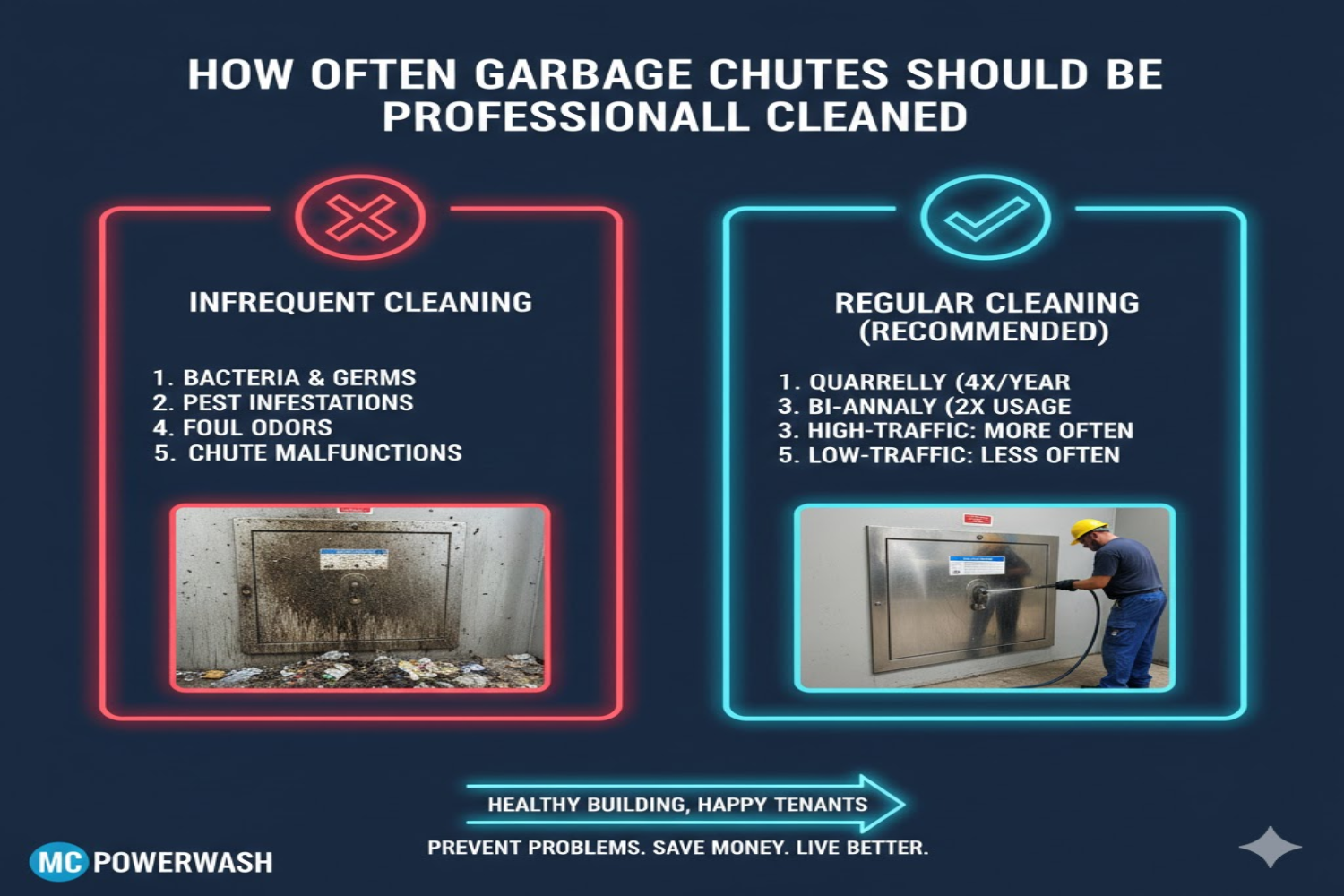
Grease and residue buildup is a common problem in homes, garages, driveways, commercial kitchens, and especially waste chutes in multi-story buildings. In Los Angeles, where warm temperatures accelerate grease hardening and food waste decomposition, removing these sticky layers requires specific techniques that break down fats, oils, and proteins effectively. Grease sticks to concrete, metal, tile, and stucco, trapping dirt, odors, and bacteria over time. Residue often includes dried food particles, soap scum, cooking oils, engine grease, and organic sludge. Proper removal prevents slippery surfaces, foul smells, mold growth, and fire hazards. The best methods combine chemical action (degreasers), heat, mechanical agitation, and thorough rinsing. Choosing the right technique depends on the surface type, grease age, and thickness. With correct methods, grease and residue can be completely eliminated, restoring surfaces to clean, safe condition.
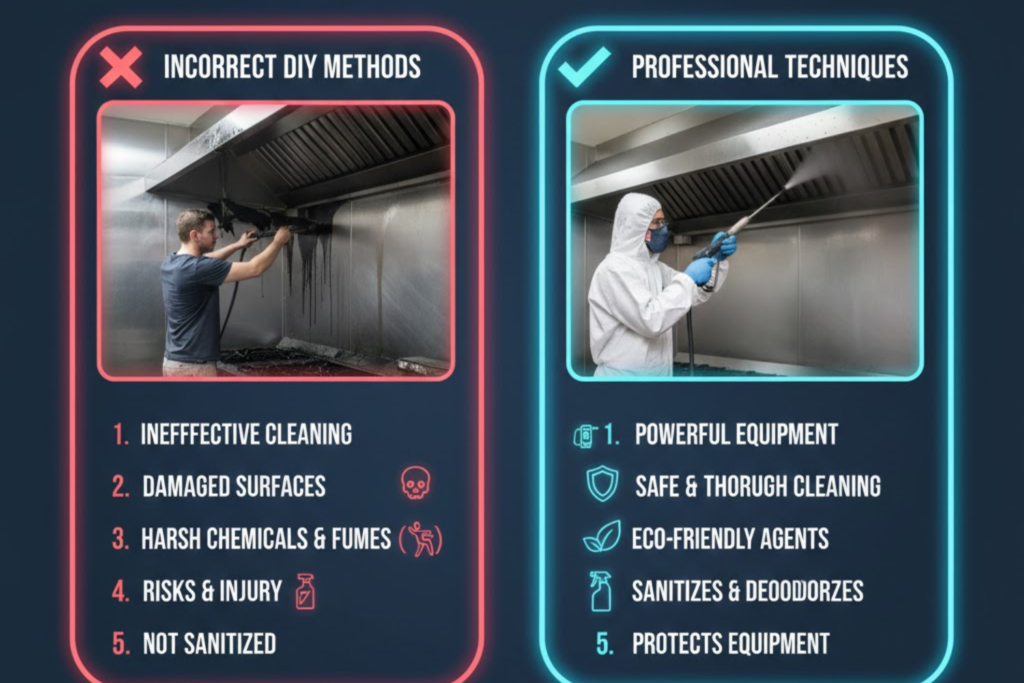
Understanding Different Types of Grease & Residue
Kitchen grease comes from cooking oils, butter, and food splatters that harden on walls, backsplashes, and floors. Automotive grease appears on garage floors and driveways from oil leaks or engine maintenance. In waste chutes, heavy food grease mixes with sugars, starches, and proteins to form thick black sludge. Bathroom residue includes soap scum combined with body oils and hair products. Industrial residue may contain machine oils or hydraulic fluids. Fresh grease is soft and easier to remove, while aged grease cures into a hard, varnish-like layer. In Los Angeles, sun exposure bakes residue onto concrete and metal, making it more stubborn. Each type requires tailored degreasers and techniques. Recognizing the grease source and age determines the best removal strategy.
Popular products include Simple Green, Purple Power, Krud Kutter, Oil Eater, and Zep Heavy-Duty Degreaser. Apply undiluted or per label instructions, let dwell 10–30 minutes, agitate with a brush, and rinse thoroughly. Citrus-based formulas are milder and eco-friendlier. Alkaline degreasers cut grease faster but require neutralization afterward. Test on a small area first to avoid etching or discoloration. Commercial degreasers penetrate deeper than soap. They are essential for engine grease, kitchen backsplashes, and chute residue. Always rinse completely to prevent slippery residue.
Why Grease & Residue Are Difficult to Remove
Grease is hydrophobic (repels water) and bonds strongly to porous surfaces like concrete, grout, and unsealed tile. Over time, oxidation and polymerization turn it into a tough film that resists soap and plain water. Residue traps dirt, dust, and bacteria, creating layers that protect deeper deposits. Heat from cooking or summer temperatures in Los Angeles causes grease to penetrate deeper and harden faster. Organic components ferment and produce odors that linger even after surface cleaning. Aggressive scrubbing alone pushes grease deeper into pores. Proper removal requires emulsification (breaking oil into water-soluble particles) using surfactants, solvents, or heat. Understanding these properties helps select effective techniques.
Popular products include Simple Green, Purple Power, Krud Kutter, Oil Eater, and Zep Heavy-Duty Degreaser. Apply undiluted or per label instructions, let dwell 10–30 minutes, agitate with a brush, and rinse thoroughly. Citrus-based formulas are milder and eco-friendlier. Alkaline degreasers cut grease faster but require neutralization afterward. Test on a small area first to avoid etching or discoloration. Commercial degreasers penetrate deeper than soap. They are essential for engine grease, kitchen backsplashes, and chute residue. Always rinse completely to prevent slippery residue.
Safety Precautions Before Starting Grease Removal
Always wear chemical-resistant gloves, safety goggles, and long sleeves/pants when using degreasers or pressure washers. Work in well-ventilated areas to avoid inhaling fumes. Keep children, pets, and food away from the work zone. Cover nearby plants, carpets, and furniture with plastic sheeting. Wet landscaping before and after to dilute any chemical runoff. Never mix different cleaners (especially bleach with ammonia). Have a hose or bucket ready for immediate rinsing. Use stable ladders for vertical surfaces. Keep a first-aid kit and phone accessible. Read all product labels carefully. Safety prevents burns, respiratory issues, and environmental contamination.
Popular products include Simple Green, Purple Power, Krud Kutter, Oil Eater, and Zep Heavy-Duty Degreaser. Apply undiluted or per label instructions, let dwell 10–30 minutes, agitate with a brush, and rinse thoroughly. Citrus-based formulas are milder and eco-friendlier. Alkaline degreasers cut grease faster but require neutralization afterward. Test on a small area first to avoid etching or discoloration. Commercial degreasers penetrate deeper than soap. They are essential for engine grease, kitchen backsplashes, and chute residue. Always rinse completely to prevent slippery residue.
Best Household Remedies for Light Grease & Residue
- For fresh or light grease, dish soap (Dawn or similar) mixed with hot water is highly effective.
- The surfactants in dish soap break down oils quickly. Apply generously, let sit 10–15 minutes, scrub with a stiff nylon brush, and rinse thoroughly.
- Baking soda paste (baking soda + water) acts as a mild abrasive and deodorizer—apply, scrub, and rinse.
- White vinegar and baking soda create a fizzing reaction that lifts light grease.
- For concrete, sprinkle cat litter or sawdust first to absorb surface oil, then apply dish soap.
- Household remedies are inexpensive, non-toxic, and safe for most surfaces.
- They work best on fresh spills. Repeat applications improve results for moderate buildup.
Commercial Degreasers for Medium to Heavy Grease
Heavy-duty degreasers containing surfactants, solvents, or citrus extracts are necessary for stubborn grease. Popular products include Simple Green, Purple Power, Krud Kutter, Oil Eater, and Zep Heavy-Duty Degreaser. Apply undiluted or per label instructions, let dwell 10–30 minutes, agitate with a brush, and rinse thoroughly. Citrus-based formulas are milder and eco-friendlier. Alkaline degreasers cut grease faster but require neutralization afterward. Test on a small area first to avoid etching or discoloration. Commercial degreasers penetrate deeper than soap. They are essential for engine grease, kitchen backsplashes, and chute residue. Always rinse completely to prevent slippery residue.
Hot Water & Pressure Washing for Large Areas
Hot water pressure washing (180–220°F) is the most powerful method for large surfaces like driveways, garage floors, and commercial waste chutes. Heat melts grease into liquid form so it flushes away easily. Use 1,500–3,000 PSI with a 25°–40° wide fan nozzle to avoid etching concrete. Pre-apply degreaser and allow dwell time. Work from bottom to top to prevent streaks. Rinse thoroughly to remove all residue. In Los Angeles, hot water is especially effective on sun-baked grease. Pressure washing covers large areas quickly and sanitizes through heat. It is ideal for heavy commercial buildup. Always test pressure on a small spot first.
Enzyme-Based Cleaners for Organic Residue
Enzymatic cleaners contain live bacteria and enzymes that digest fats, proteins, and starches over time. Apply after initial degreasing or pressure washing. Pour or spray onto the surface, let sit 24–48 hours (or longer), then rinse or wipe. Enzymes continue working in the background, breaking down hidden residue. They are ideal for waste chutes, kitchen drains, and concrete floors with food grease. Enzyme products are non-toxic, biodegradable, and odor-reducing. They prevent rapid re-soiling between deep cleanings. Regular application maintains cleanliness. Enzymes provide long-term organic residue control.
Poultice Method for Deep Grease Stains on Concrete
- For grease soaked deep into porous concrete, use a poultice to draw out oils.
- Mix absorbent powder (kitty litter, diatomaceous earth, or baking soda) with a solvent (mineral spirits, citrus degreaser, or commercial poultice liquid) into a thick paste.
- Apply ¼–½ inch thick over the stain, cover with plastic wrap, and leave 24–48 hours.
- Remove dried poultice, scrub lightly, and rinse. Repeat 2–3 times for stubborn stains.
- This method pulls grease upward without spreading it.
- It is slow but highly effective for old stains.
- Poultices work best on unsealed concrete.
- They prevent surface damage during extraction.
Steam Cleaning for Grease & Residue Removal
Steam cleaners (vapor cleaners) use high-temperature steam (220–300°F) to melt grease and lift residue without chemicals. Apply steam directly to the surface, agitate with a brush or cloth, and wipe or vacuum the loosened material. Steam kills bacteria and mold while sanitizing. It works well on tile, stainless steel, and sealed concrete. Steam is eco-friendly and leaves no chemical residue. It is slower than pressure washing but gentler on delicate surfaces. Ideal for kitchen areas and smaller vertical surfaces. Steam cleaning provides deep cleaning with minimal environmental impact.
Preventing Future Grease & Residue Buildup
Use drip pans under vehicles and planters to catch leaks. Place absorbent mats in high-spill areas. Seal concrete and grout with penetrating sealers every 1–2 years. Clean spills immediately before they set. Install grease traps in kitchen drains. Encourage proper disposal habits in multi-family buildings. Regular light cleaning with degreaser prevents heavy accumulation. Preventive maintenance is far easier than removal. It saves time, money, and surface wear. Consistent habits keep surfaces grease-free long-term.
Popular products include Simple Green, Purple Power, Krud Kutter, Oil Eater, and Zep Heavy-Duty Degreaser. Apply undiluted or per label instructions, let dwell 10–30 minutes, agitate with a brush, and rinse thoroughly. Citrus-based formulas are milder and eco-friendlier. Alkaline degreasers cut grease faster but require neutralization afterward. Test on a small area first to avoid etching or discoloration. Commercial degreasers penetrate deeper than soap. They are essential for engine grease, kitchen backsplashes, and chute residue. Always rinse completely to prevent slippery residue.
Comparison Table: Grease & Residue Removal Techniques
| Technique | Best For | Time Required | Cost Level (DIY) | Effectiveness on Heavy Grease | Surface Damage Risk | Eco-Friendliness | Skill Level Needed | Recommended Surfaces |
| Dish Soap + Hot Water | Light kitchen grease | 30 min–2 hours | Very Low | Low–Medium | Very Low | High | Beginner | Tile, countertops, painted walls |
| Commercial Degreaser | Medium kitchen & garage grease | 1–4 hours | Low–Medium | High | Low–Medium | Medium | Beginner–Moderate | Concrete, metal, tile |
| Hot Water Pressure Washing | Large areas, heavy grease | 2–8 hours | Medium (rental) | Very High | Medium | Medium | Moderate–High | Driveways, garage floors, chutes |
| Enzyme-Based Cleaner | Organic residue, waste chutes | 24–72 hours | Medium | High (long-term) | Very Low | Very High | Beginner | Concrete, drains, chutes |
| Poultice Method | Deep-set grease on concrete | 24–72 hours | Low–Medium | Very High | Very Low | High | Moderate | Unsealed concrete, masonry |
| Steam Cleaning | Tile, metal, sealed surfaces | 2–6 hours | Medium | High | Low | Very High | Moderate | Kitchens, bathrooms, metal |
| Citrus-Based Degreaser | Eco-sensitive areas | 1–4 hours | Low–Medium | High | Low | Very High | Beginner | Most surfaces near plants |
Cost-Benefit Analysis of Grease Removal Techniques
Household methods like dish soap and baking soda cost almost nothing and work well for light, fresh grease, making them ideal for daily kitchen cleanup. Commercial degreasers ($10–$40 per bottle) offer excellent value for medium buildup and outperform soap on tougher stains. Hot-water pressure washing rentals ($50–$150/day) deliver fast, thorough results on large areas but require equipment investment. Enzymatic cleaners ($20–$60) provide long-term organic breakdown at low cost, perfect for preventive maintenance. Poultices use inexpensive materials and excel at deep extraction without surface harm. Steam cleaners ($100–$300 purchase or $50–$100 rental) offer chemical-free sanitization but are slower. Combining pre-treatment with pressure washing provides the best balance of cost, time, and results. Investing in prevention (sealers, drip pans) yields the highest long-term savings.
Final Tips for Dealing with Stubborn Grease & Residue
Always test products on a hidden spot first. Work in small sections to avoid spreading. Repeat treatments rather than increasing strength or pressure. Capture chemical runoff responsibly to protect waterways. Photograph before-and-after for reference. Address the grease source (leaks, spills, improper disposal) to prevent recurrence. For very stubborn buildup, combine chemical softening with hot-water pressure washing. Patience and multiple light applications beat aggressive shortcuts. Consistent care keeps surfaces clean and protected. Professional help is worth considering for large or heavily soiled areas.
Conclusion
Removing grease and residue effectively requires matching the technique to the surface, grease type, and severity of buildup. Household remedies handle light kitchen grease, while commercial degreasers, hot-water pressure washing, enzymes, poultices, and steam cleaning tackle heavier, deeper deposits. In Los Angeles, where sun-baked concrete and warm conditions make grease stubborn, combining heat, surfactants, and proper dwell time delivers the best results. Always prioritize safety, test products, and protect surrounding areas. Prevention through sealers, drip containment, and regular maintenance is the most cost-effective strategy. Whether cleaning driveways, kitchens, or commercial waste chutes, the right methods restore surfaces completely. Clean, grease-free areas enhance appearance, safety, and property value for years.
Frequently Asked Questions (FAQs)
1. What is the fastest way to remove fresh kitchen grease from surfaces?
Blot excess grease immediately with paper towels. Apply dish soap (Dawn works best) mixed with hot water, let sit 5–10 minutes, scrub with a sponge or nylon brush, and rinse thoroughly. Fresh grease has not bonded yet, so quick action usually removes it completely. Repeat if any film remains.
2. Can old hardened grease be completely removed from concrete?
Yes, but very old grease may leave a faint shadow. Use hot-water pressure washing with degreaser or apply multiple poultice treatments to draw out deep oil. Resealing afterward hides minor discoloration. Patience and repeated applications are key for deep-set stains.
3. Is pressure washing safe for removing grease from garage floors?
Yes, use 1,500–3,000 PSI with a 25°–40° wide fan nozzle and hot water after applying degreaser. Start at lower pressure and test first. High pressure can etch unsealed concrete if overdone. Hot water melts grease much faster than cold.
4. What is the best degreaser for heavy grease buildup?
Heavy-duty citrus-based or surfactant degreasers like Purple Power, Oil Eater, or Zep Heavy-Duty work very well. They break down grease without excessive surface damage. Apply, agitate, and rinse thoroughly. Avoid highly acidic or caustic products on concrete.
5. How does the poultice method work for deep grease stains?
Poultice uses absorbent powder mixed with solvent (citrus degreaser or mineral spirits) into a paste. Apply thickly, cover with plastic, and leave 24–48 hours. It draws grease upward from pores. Remove dried poultice and rinse. Repeat for stubborn stains.
6. Will dish soap alone remove heavy grease?
Dish soap handles light or fresh grease well but is usually insufficient for heavy, aged buildup. Combine with hot water, degreaser, or pressure washing for better results. Multiple applications may be required for thicker layers.
7. Should I reseal concrete after removing grease stains?
Yes, resealing is highly recommended after cleaning. It closes pores, prevents future grease absorption, and hides minor shadows. Use penetrating or acrylic sealer. Apply only after the surface is completely dry. Resealing provides long-term protection.
8. Can grease stains on concrete cause structural damage?
Surface grease stains are cosmetic, but deep oil can weaken concrete over time if it reaches rebar and causes rust. If you see cracking or flaking with grease, consult a structural professional. Prompt removal and sealing prevent worsening.
9. How long does it take to remove deep grease stains?
Fresh grease can be removed in hours. Deep, old stains often require 1–7 days with poultices or repeated treatments. Each poultice cycle needs 24–48 hours dwell time. Multiple applications are normal for complete extraction.
10. Are eco-friendly degreasers effective on heavy grease?
Yes, citrus-based, soy-based, or plant-derived degreasers remove heavy grease effectively. They may require slightly longer dwell times but are safer for the environment and nearby plants. Rinse thoroughly after use. They perform well on most surfaces.