Clean windows play a surprisingly important role in improving a home’s energy efficiency, often overlooked amid bigger upgrades like insulation or new HVAC systems. Dirt, dust, grime, pollen, and hard water spots on glass act as barriers that los angeles block natural light and interfere with heat transfer. According to various sources, including the U.S. Department of Energy, heat gain and loss through windows account for 25–30% of a home’s heating and cooling energy use. Dirty windows worsen this by reducing sunlight penetration and affecting low-E coatings’ performance. Regular professional cleaning restores clarity, maximizes free solar energy, cuts artificial lighting needs, and helps maintain stable indoor temperatures—leading to noticeable savings on utility bills without major investments.
Many homeowners and business owners focus on insulation, HVAC systems, and lighting to reduce energy bills. However, one often-overlooked factor is window cleanliness. Dirty windows block sunlight, trap heat, and reduce natural warmth, leading to higher energy consumption. Regular window cleaning improves natural light, temperature control, and overall energy efficiency. This article explains how clean windows help lower utility costs and improve indoor comfort.
Maximizing Natural Light to Reduce Lighting Costs
Dirty windows can block up to 40% of natural light transmission, forcing homeowners to rely more on artificial lighting during daytime hours. Professional cleaning removes layers of grime, allowing up to 40% more sunlight to enter rooms. This brightens interiors naturally, reducing the need for electric lights by 30–50% in daylight periods. Many homeowners and business owners focus on insulation, HVAC systems, and lighting to reduce energy bills. However, one often-overlooked factor is window cleanliness.
Dirty windows block sunlight, trap heat, and reduce natural warmth, leading to higher energy consumption.Regular window cleaning improves natural light, temperature control, and overall energy efficiency. This article explains how clean windows help lower utility costs and improve indoor comfort. In sunny climates or homes with large windows, this translates to lower electricity bills year-round. Cleaner glass also enhances views and mood, making spaces feel more open and inviting without extra energy use.
Better Solar Heat Gain in Winter and Heat Rejection in Summer
In colder months, clean windows permit maximum passive solar heat gain—sunlight warms interiors naturally, easing the burden on heating systems. los angeles Dirty glass blocks this free warmth, increasing heating demands and bills. In summer, clear low-E coated windows (common in modern homes) reflect unwanted heat more effectively when free of buildup, reducing cooling loads. Grime on coatings diminishes their efficiency, allowing more solar heat inside. Regular cleaning preserves these coatings’ performance, helping regulate temperatures passively and cutting HVAC runtime.
Regular window cleaning improves natural light, temperature control, and overall energy efficiency. This article explains how clean windows help lower utility costs and improve indoor comfort. In sunny climates or homes with large windows, this translates to lower electricity bills year-round. Cleaner glass also enhances views and mood, making spaces feel more open and inviting without extra energy use.
Allows More Natural Sunlight Indoors
Dust, grime, and pollution reduce the amount of sunlight that enters through windows.Regular window cleaning improves natural light, temperature control, and overall energy efficiency. This article explains how clean windows help lower utility costs and improve indoor comfort. In sunny climates or homes with large windows, this translates to lower electricity bills year-round. Cleaner glass also enhances views and mood, making spaces feel more open and inviting without extra energy use.
Clean windows:
- Maximize daylight
- Reduce need for artificial lighting
- Brighten interior spaces
- Improve visibility
More sunlight means less dependence on electrical lights, lowering electricity bills.
Improves Passive Solar Heating
During cooler months, sunlight provides free natural heat. Regular window cleaning improves natural light, temperature control, and overall energy efficiency. This article explains how clean windows help lower utility costs and improve indoor comfort. In sunny climates or homes with large windows, this translates to lower electricity bills year-round. Cleaner glass also enhances views and mood, making spaces feel more open and inviting without extra energy use.
Clean glass allows:
- Better heat absorption
- Increased indoor warmth
- Reduced heater usage
- Stable room temperatures
This passive solar heating helps cut heating costs without extra energy use.
Reduces Heat Loss in Winter
Dirt buildup can damage window seals and frames over time. Regular window cleaning improves natural light, temperature control, and overall energy efficiency. los angeles This article explains how clean windows help lower utility costs and improve indoor comfort. In sunny climates or homes with large windows, this translates to lower electricity bills year-round. Cleaner glass also enhances views and mood, making spaces feel more open and inviting without extra energy use.
Regular cleaning:
- Prevents moisture buildup
- Protects seals
- Reduces air leakage
- Maintains insulation
Well-maintained windows keep warm air inside during winter.
Maintaining Window Insulation and Preventing Energy Loss
Accumulated dirt and mineral deposits can compromise window seals and frames over time, leading to air leaks and reduced insulation. Clean windows ensure seals stay intact longer, minimizing drafts that waste energy. The U.S. Department of Energy notes windows contribute to 25–30% of residential energy loss—cleaning helps mitigate this by keeping glass and frames in optimal condition. This prevents heat escape in winter or excessive gain in summer, supporting consistent indoor comfort and lower bills.
Regular window cleaning improves natural light, temperature control, and overall energy efficiency. This article explains how clean windows help lower utility costs and improve indoor comfort. In sunny climates or homes with large windows, this translates to lower electricity bills year-round. Cleaner glass also enhances views and mood, making spaces feel more open and inviting without extra energy use.
Additional Indirect Energy Savings and Home Benefits
Beyond direct light and heat effects, clean windows improve overall home efficiency by delaying costly repairs like resealing or replacement. They also reduce reliance on fans or lights in dim rooms. Healthier air from less dust/pollen buildup indirectly supports energy use by maintaining better ventilation. In polluted or dusty areas, frequent cleaning (2–4 times yearly) maximizes these gains.
Accumulated dirt and mineral deposits can compromise window seals and frames over time, leading to air leaks and reduced insulation. Clean windows ensure seals stay intact longer, minimizing drafts that waste energy. The U.S. Department of Energy notes windows contribute to 25–30% of residential energy loss—cleaning helps mitigate this by keeping glass and frames in optimal condition. This prevents heat escape in winter or excessive gain in summer, supporting consistent indoor comfort and lower bills.
Large Overview Table: How Clean Windows Boost Energy Efficiency
| Mechanism | How Dirty Windows Hurt Efficiency | Benefit of Clean Windows | Estimated Impact / Savings | Supporting Factors / Sources |
| Natural Light Transmission | Blocks up to 40% sunlight | Allows 30–50% more light, cuts artificial lighting | 30–50% reduction in daytime lighting needs | Studies on light blockage from grime |
| Passive Solar Heat Gain (Winter) | Reduces free warmth from sun | Maximizes solar heating, lowers heating bills | Reduced heating load by noticeable % | DOE: windows 25–30% of energy loss |
| Heat Rejection (Summer) | Interferes with low-E coatings | Better reflection of unwanted heat | Lower cooling demands | Clean coatings function optimally |
| Insulation & Seal Integrity | Grime accelerates seal degradation | Maintains airtightness, reduces drafts | Prevents 5–15% extra energy waste | Long-term maintenance extends efficiency |
| Overall Energy Consumption | Increases HVAC runtime | Passive regulation, less artificial energy | Potential 10–20% indirect bill reduction | Combined light + heat effects |
| Long-Term Window Longevity | Speeds etching/pitting | Delays replacements/repairs | Thousands saved over years | Prevents costly fixes |
Improves Indoor Comfort Levels
Clean windows create balanced temperatures and consistent lighting. Accumulated dirt and mineral deposits can compromise window seals and frames over time,los angeles leading to air leaks and reduced insulation. Clean windows ensure seals stay intact longer, minimizing drafts that waste energy. The U.S. Department of Energy notes windows contribute to 25–30% of residential energy loss—cleaning helps mitigate this by keeping glass and frames in optimal condition. This prevents heat escape in winter or excessive gain in summer, supporting consistent indoor comfort and lower bills.
This results in:
- Fewer hot spots
- Less cold drafts
- Better humidity control
- Increased comfort
Comfortable homes require less artificial heating and cooling.
Helps Identify Energy Leaks Early
Clean windows make it easier to spot problems.Accumulated dirt and mineral deposits can compromise window seals and frames over time, leading to air leaks and reduced insulation. Clean windows ensure seals stay intact longer, minimizing drafts that waste energy. The U.S. Department of Energy notes windows contribute to 25–30% of residential energy loss—cleaning helps mitigate this by keeping glass and frames in optimal condition. This prevents heat escape in winter or excessive gain in summer, supporting consistent indoor comfort and lower bills.
Homeowners can detect:
- Cracks
- Seal failures
- Condensation
- Frame damage
Early repairs prevent energy loss and costly replacements.
Professional Cleaning vs DIY for Energy Efficiency
Professional window cleaners use purified water and specialized tools.Accumulated dirt and mineral deposits can compromise window seals and frames over time, leading to air leaks and reduced insulation. Clean windows ensure seals stay intact longer, minimizing drafts that waste energy. The U.S. Department of Energy notes windows contribute to 25–30% of residential energy loss—cleaning helps mitigate this by keeping glass and frames in optimal condition. This prevents heat escape in winter or excessive gain in summer, supporting consistent indoor comfort and lower bills.
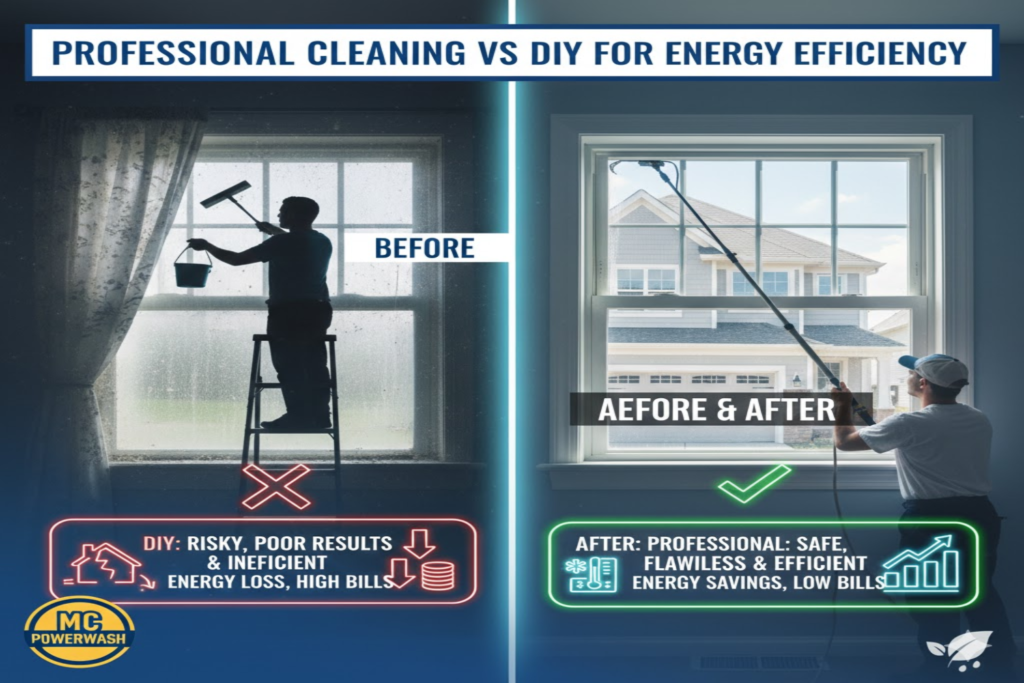
They ensure:
- Streak-free surfaces
- Complete contaminant removal
- Safe seal protection
- No residue buildup
DIY cleaning often leaves residue that attracts dirt faster.
Conclusion
Clean windows boost energy efficiency by maximizing natural light (reducing lighting needs by up to 30–50%), optimizing solar heat gain/loss, preserving low-E coatings, and preventing seal damage—all contributing to lower utility bills without expensive upgrades. In homes where windows handle 25–30% of energy loss, regular professional cleaning (2–4 times yearly) offers one of the simplest, most cost-effective ways to save money and improve comfort. Schedule cleanings to keep glass clear and coatings effective—the small effort yields ongoing savings in electricity, heating, and cooling while enhancing your home’s brightness and value.
Accumulated dirt and mineral deposits can compromise window seals and frames over time, leading to air leaks and reduced insulation. Clean windows ensure seals stay intact longer, minimizing drafts that waste energy. The U.S. Department of Energy notes windows contribute to 25–30% of residential energy loss—cleaning helps mitigate this by keeping glass and frames in optimal condition. This prevents heat escape in winter or excessive gain in summer, supporting consistent indoor comfort and lower bills.
Frequently Asked Questions (FAQs)
- How do dirty windows reduce natural light and increase energy use?
Dirt, dust, and grime on glass block up to 40% of sunlight from entering rooms. This forces greater reliance on artificial lights during daytime, spiking electricity bills. Studies show dirty windows cut light transmission significantly compared to clean ones. Professional cleaning restores maximum brightness naturally. Homes with large or south-facing windows benefit most from this effect.
- Can clean windows actually lower my heating bills in winter?
Yes, clean glass allows maximum passive solar heat gain—sunlight warms interiors for free, reducing heating system workload. Dirty windows block this warmth, making furnaces work harder and longer. In colder months, this can lead to noticeable savings on heating costs. Regular cleaning ensures optimal heat entry without added energy.
- Do clean windows help with cooling costs in summer?
Absolutely—clear low-E coatings on modern windows reflect unwanted solar heat better when free of buildup. Grime reduces their effectiveness, allowing more heat inside and increasing air conditioning use. Professional cleaning preserves coating performance for better summer efficiency. This helps maintain cooler interiors with less energy.
- How much energy can clean windows save on lighting alone?
By allowing 30–50% more natural light, clean windows cut daytime artificial lighting needs substantially. In well-lit homes, this reduces electricity consumption noticeably during daylight hours. The savings add up over months, especially in offices or sunny rooms. It’s a passive, no-cost boost after cleaning.
- Does window cleaning maintain low-E coatings for better efficiency?
Yes, dirt and minerals degrade low-E coatings over time, reducing their heat-reflecting ability. Regular professional cleaning removes buildup safely without damaging layers. This keeps coatings working optimally for temperature regulation year-round. Protected coatings extend window efficiency and lifespan.
- How often should I clean windows to maximize energy benefits?
Most experts recommend 2–4 times per year, depending on location, pollution, and weather. Dusty or polluted areas need more frequent service to prevent heavy buildup. Seasonal cleanings (spring/fall) align well with efficiency needs. Consistent care ensures ongoing savings.
- Can clean windows prevent drafts and air leaks?
Indirectly yes—grime accelerates seal and frame deterioration, leading to leaks over time. Clean windows stay in better condition longer, maintaining airtightness. This reduces unwanted heat loss/gain and HVAC strain. Professional inspections during cleaning catch early issues.
- Is the energy savings from clean windows worth the cleaning cost?
Definitely—the modest cost of professional cleaning delivers ongoing savings through reduced lighting, heating, and cooling bills. It prevents bigger expenses like premature replacements. Many see payback quickly via lower utilities. It’s one of the easiest efficiency steps.
- Do clean windows improve overall home comfort?
Yes—brighter rooms with even temperatures feel more comfortable year-round. Less reliance on lights/HVAC creates consistent conditions. Cleaner air from reduced dust/pollen adds to well-being. Natural light boosts mood and productivity too.
- How do I know if dirty windows are affecting my energy bills?
Notice dimmer rooms, higher lighting use, uneven temperatures near windows, or rising bills despite same habits. Compare light levels before/after cleaning. If windows look hazy or streaky, they’re likely blocking efficiency. A professional assessment confirms impact.