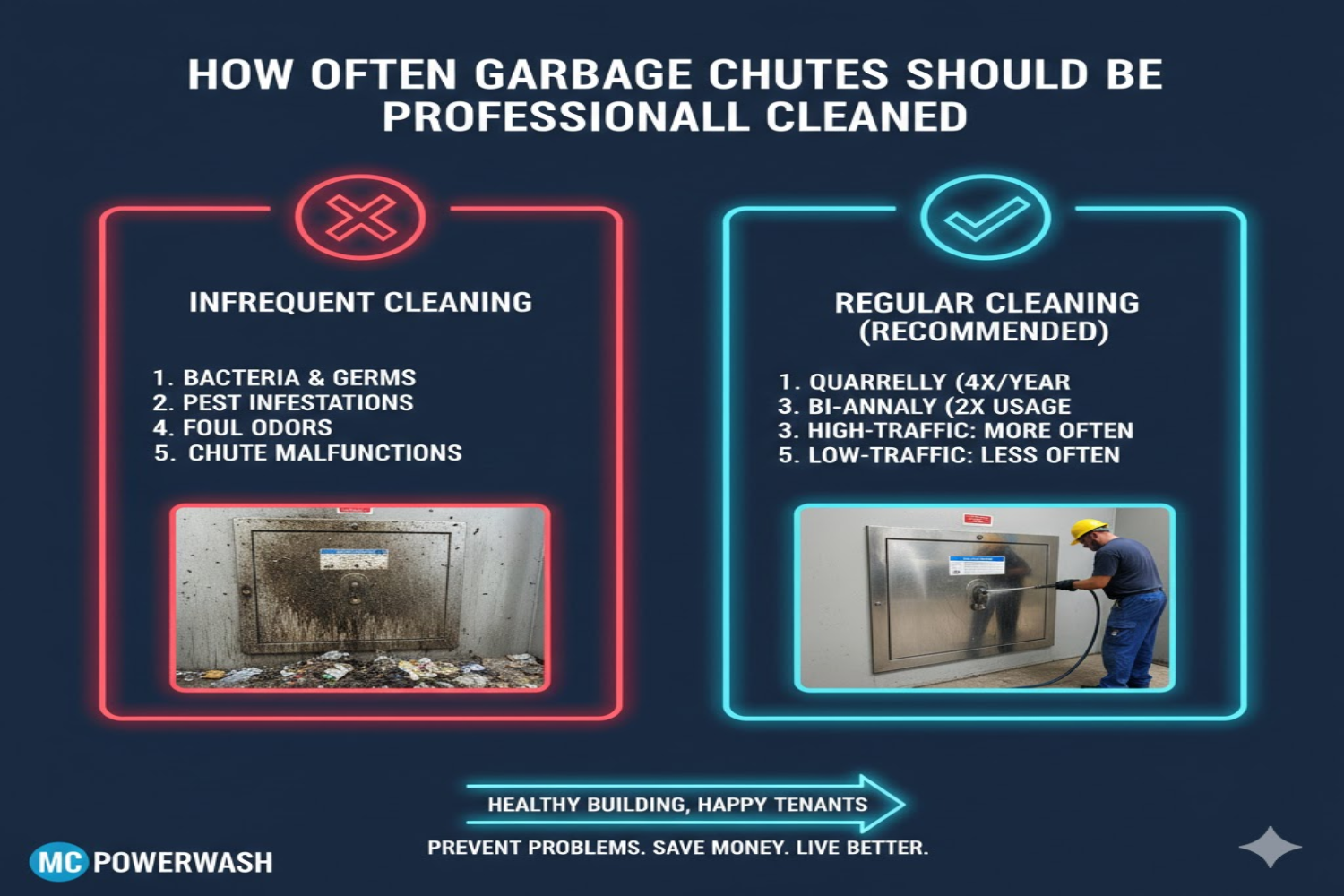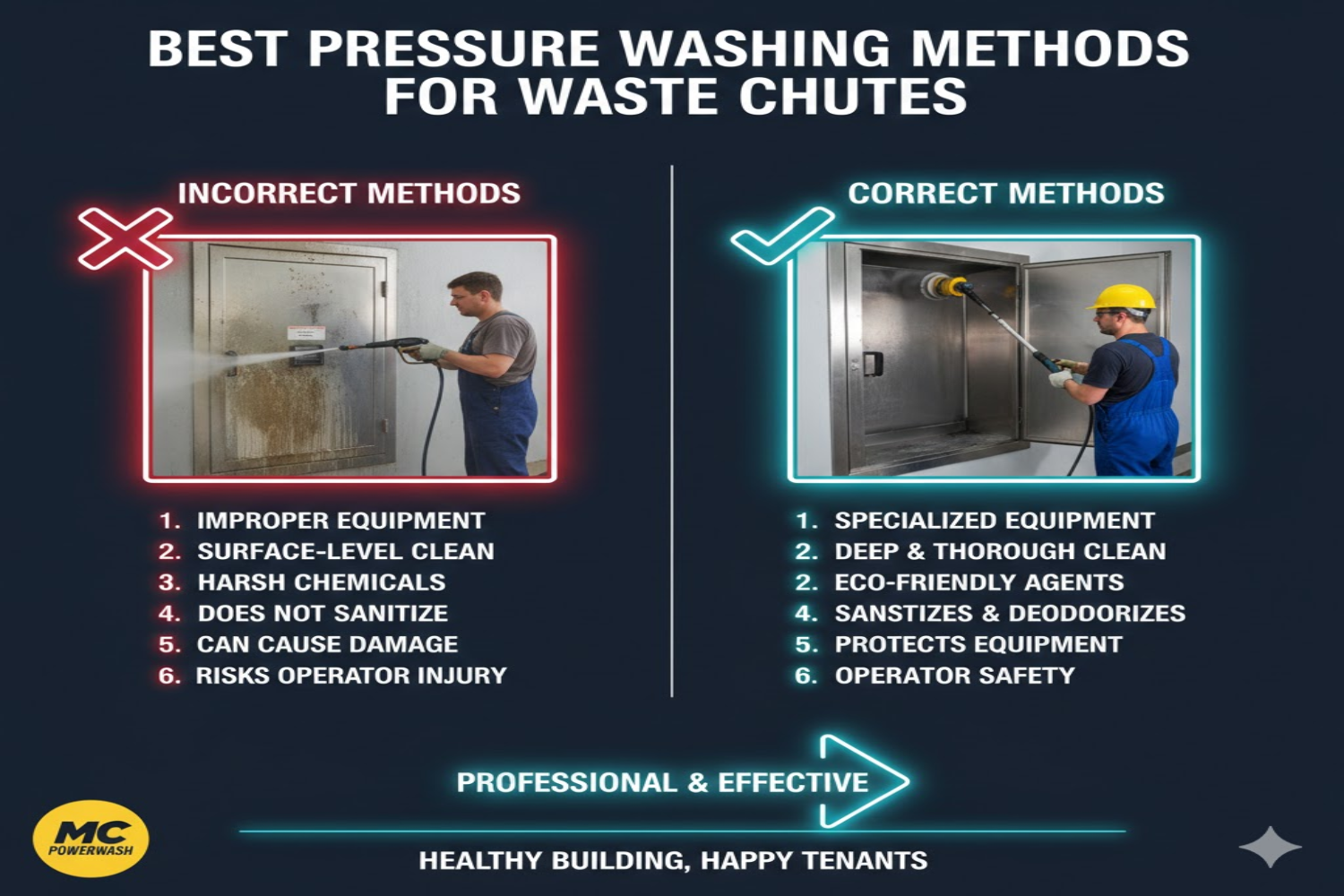
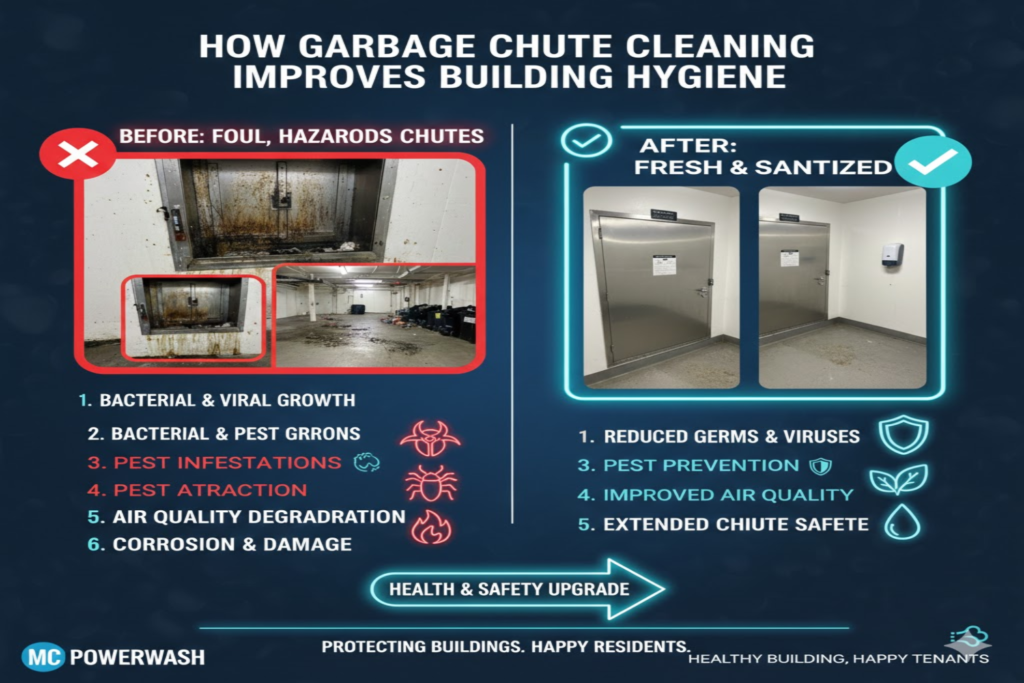
Regular garbage chute cleaning significantly enhances overall building hygiene by eliminating the primary source of foul odors, harmful bacteria, mold spores, and pest attractants in multi-story residential and commercial properties. In Los Angeles, where high-rise apartments, condominiums, and mixed-use towers house thousands of residents in close proximity, unclean chutes quickly become a central hygiene risk affecting every floor. Built-up grease, food waste, and decomposing organic matter create an ideal environment for pathogens like E. coli, Salmonella, Listeria, and mold species. Professional cleaning removes these breeding grounds, drastically reducing airborne contaminants that circulate through hallways, elevators, and HVAC systems. Clean chutes prevent cross-contamination between units and improve indoor air quality for all occupants. They also lower the risk of pest infestations that spread disease. Regular maintenance ensures compliance with health codes and protects vulnerable populations such as children, elderly residents, and those with respiratory conditions. Ultimately, consistent chute cleaning transforms a hidden hazard into a hygienic, odor-free system that benefits the entire building community.
Why Garbage Chutes Are Major Hygiene Risks
Garbage chutes act as vertical conduits that collect waste from every floor, creating a moist, warm, dark environment perfect for microbial growth. Food residues, grease, and liquids stick to the walls, fermenting and releasing volatile organic compounds that cause persistent bad odors. Bacteria multiply rapidly in this organic sludge, producing airborne pathogens every time a chute door opens. In Los Angeles, mild winters and warm summers accelerate decomposition, making bacterial and mold growth faster than in colder regions. Poorly maintained chutes become reservoirs for disease-causing organisms that spread through shared airspaces. Cockroaches, flies, and rodents are attracted to the food source and can migrate into apartments. Unclean chutes compromise indoor air quality building-wide. They pose a continuous hygiene threat until professionally cleaned. Regular removal of this contamination source is essential for occupant health.
Reduced pest control and odor complaint expenses add up significantly. Insurance providers often favor documented hygiene maintenance. Preventive cleaning avoids expensive emergency services and major repairs. Healthier residents mean fewer sick days and medical costs for occupants. Long-term savings far exceed regular cleaning expenses. Proactive hygiene maintenance is one of the highest-ROI investments for multi-family properties. It delivers compounding benefits over time.
How Bacteria & Pathogens Thrive in Dirty Chutes
The combination of organic waste, moisture, and lack of sunlight creates ideal conditions for pathogenic bacteria to flourish. E. coli and Salmonella from food waste survive and multiply in the nutrient-rich sludge. Listeria grows well in the cool, moist lower sections near the compactor. Mold species like Aspergillus and Stachybotrys release spores that become airborne when doors open. In high-rise buildings, natural stack effect pulls contaminated air upward through the shaft and into hallways. Opening chute doors releases bursts of contaminated air into living spaces. Residents inhale these pathogens daily. Dirty chutes act as continuous infection sources. Cleaning eliminates the breeding medium and kills existing colonies. It breaks the cycle of pathogen spread throughout the building.
Reduced pest control and odor complaint expenses add up significantly. Insurance providers often favor documented hygiene maintenance. Preventive cleaning avoids expensive emergency services and major repairs. Healthier residents mean fewer sick days and medical costs for occupants. Long-term savings far exceed regular cleaning expenses. Proactive hygiene maintenance is one of the highest-ROI investments for multi-family properties. It delivers compounding benefits over time.
Reduction in Airborne Contaminants After Cleaning
Professional cleaning using hot-water pressure washing removes the sticky organic layers that harbor bacteria and mold. Heat (180–220°F) kills many pathogens on contact while high pressure dislodges the breeding material. Post-cleaning application of disinfectants and enzymatic treatments continues sanitization. Airborne mold spores and bacterial counts drop dramatically within hours. Hallway and apartment air quality improves noticeably. Residents report fewer allergy symptoms and respiratory complaints. Cleaner air reduces cross-contamination between units. Regular cleaning maintains low pathogen levels long-term. It transforms the building’s indoor environment from a potential health risk into a hygienic space. Reduced airborne contaminants are one of the most direct hygiene benefits.
Reduced pest control and odor complaint expenses add up significantly. Insurance providers often favor documented hygiene maintenance. Preventive cleaning avoids expensive emergency services and major repairs. Healthier residents mean fewer sick days and medical costs for occupants. Long-term savings far exceed regular cleaning expenses. Proactive hygiene maintenance is one of the highest-ROI investments for multi-family properties. It delivers compounding benefits over time.
Elimination of Persistent Foul Odors
Foul odors from decomposing waste are the most common resident complaint in buildings with dirty chutes. Pressure washing removes the organic source material that produces volatile organic compounds (VOCs) and sulfur gases. Hot water and degreasers dissolve grease that traps odor molecules. Neutralizers and deodorizers applied afterward destroy remaining smell compounds. Enzymatic treatments continue digesting hidden residues, preventing new odor formation. After thorough cleaning, hallways and apartments become noticeably fresher. Odors no longer migrate through doors or ventilation. Tenant satisfaction increases dramatically. Odor elimination is one of the most immediate and appreciated results of proper chute cleaning. It restores pleasant living conditions throughout the building.
Prevention of Pest Infestations
Dirty chutes provide a constant food source and breeding ground for cockroaches, flies, phorid flies, and rodents. Grease and food particles attract these pests, which then migrate into apartments through gaps around hopper doors or plumbing penetrations. Once inside living spaces, they spread bacteria on surfaces and in food. Professional cleaning removes the food supply and breeding sites. Heat and disinfectants kill eggs and larvae. Regular maintenance disrupts pest life cycles. Buildings with clean chutes experience far fewer pest sightings and exterminator calls. Reduced pest activity lowers disease transmission risk. Pest prevention is a major indirect hygiene benefit. It creates a healthier living environment for all residents.
Impact on Indoor Air Quality
- Unclean chutes continuously release mold spores, bacteria, and VOCs into shared airspaces.
- These contaminants circulate through hallways, elevators, and HVAC systems, degrading indoor air quality building-wide.
- Sensitive individuals suffer from headaches, nausea, eye irritation, and respiratory issues.
- After professional cleaning, airborne pollutant levels drop significantly. Cleaner chutes reduce volatile emissions and biological contaminants.
- Residents breathe fresher air with fewer irritants.
- Allergy and asthma symptoms often decrease noticeably. Improved air quality enhances overall comfort and well-being.
- It is one of the most important health benefits of regular chute maintenance.
- Clean air directly improves quality of life.
Reduction in Health Complaints & Sick Days
Buildings with dirty chutes receive frequent complaints about odors, allergies, and unexplained illnesses. Residents report more frequent headaches, sinus problems, and respiratory irritation. After consistent chute cleaning, these complaints drop sharply. Fewer airborne irritants mean fewer sick days and doctor visits. Especially vulnerable groups—children, elderly, immunocompromised individuals—benefit the most. Property managers see reduced maintenance requests related to air quality. Healthier occupants create a more positive living environment. Reduced health issues lower indirect costs for owners and tenants. Improved hygiene translates to real wellness gains. Regular cleaning delivers measurable health improvements.
Reduced pest control and odor complaint expenses add up significantly. Insurance providers often favor documented hygiene maintenance. Preventive cleaning avoids expensive emergency services and major repairs. Healthier residents mean fewer sick days and medical costs for occupants. Long-term savings far exceed regular cleaning expenses. Proactive hygiene maintenance is one of the highest-ROI investments for multi-family properties. It delivers compounding benefits over time.
Fire Safety & Hygiene Connection
Thick grease and dry organic debris in chutes are highly flammable. Dirty chutes increase fire risk when ignited by discarded cigarettes, hot coals, or faulty batteries. Once started, fires spread rapidly upward through the shaft. Regular cleaning removes this fuel load, dramatically lowering fire hazard. Cleaner chutes reduce both hygiene and fire risks simultaneously. Fire marshals in many cities require documented chute maintenance. Clean chutes help meet fire safety codes. Reduced fire risk protects lives and property. Hygiene maintenance directly supports life safety. It is a dual-purpose benefit of regular cleaning.
Compliance with Health & Building Codes
Many local health departments and building codes require regular garbage chute cleaning to maintain sanitary conditions. In Los Angeles, multi-family housing regulations and fire codes emphasize chute hygiene to prevent odors, pests, and fire hazards. Unclean chutes frequently result in citations during inspections. Documented professional cleaning demonstrates compliance. Regular service records protect owners from fines and liability. Health code adherence avoids forced emergency cleanings. Proper cleaning frequency ensures legal standing. It prevents costly violations and disruptions. Compliance is both a legal and hygiene necessity.
Comparison Table: Hygiene Improvements Before & After Regular Cleaning
| Hygiene Aspect | Before Regular Cleaning | After Regular Professional Cleaning | Direct Benefit to Residents & Building |
| Airborne Bacteria & Mold Spores | High levels circulating through hallways | Drastically reduced spore & bacteria counts | Fewer respiratory issues & allergies |
| Persistent Foul Odors | Strong odors in hallways & apartments | Odors eliminated or minimal | Improved comfort & tenant satisfaction |
| Pest Activity (roaches, flies, rodents) | Frequent sightings & infestations | Rare or no pest problems | Lower disease transmission & extermination costs |
| Indoor Air Quality | Poor due to continuous emissions | Significantly improved | Healthier breathing environment |
| Fire Risk from Flammable Buildup | High – grease & debris highly combustible | Greatly reduced fuel load | Enhanced life safety & code compliance |
| Resident Complaints | Frequent odor, pest, & air quality issues | Sharp decrease in complaints | Higher retention & positive reputation |
| Health Code Compliance | Risk of citations & violations | Consistent compliance with documented service | Avoids fines & forced emergency cleanings |
Long-Term Health & Cost Benefits of Regular Cleaning
Consistent chute cleaning reduces cumulative exposure to pathogens and allergens over years. Buildings maintain healthier indoor environments with fewer illness outbreaks. Lower turnover and higher tenant satisfaction decrease vacancy costs. Reduced pest control and odor complaint expenses add up significantly. Insurance providers often favor documented hygiene maintenance. Preventive cleaning avoids expensive emergency services and major repairs. Healthier residents mean fewer sick days and medical costs for occupants. Long-term savings far exceed regular cleaning expenses. Proactive hygiene maintenance is one of the highest-ROI investments for multi-family properties. It delivers compounding benefits over time.
Reduced pest control and odor complaint expenses add up significantly. Insurance providers often favor documented hygiene maintenance. Preventive cleaning avoids expensive emergency services and major repairs. Healthier residents mean fewer sick days and medical costs for occupants. Long-term savings far exceed regular cleaning expenses. Proactive hygiene maintenance is one of the highest-ROI investments for multi-family properties. It delivers compounding benefits over time.
Conclusion
Regular professional garbage chute cleaning dramatically improves building hygiene by eliminating the primary source of bacteria, mold, odors, pests, and airborne contaminants. In Los Angeles, where high-density living amplifies hygiene challenges, clean chutes reduce health risks, enhance indoor air quality, prevent pest infestations, and lower fire hazards. Pressure washing with hot water and degreasers removes the organic breeding ground, while post-cleaning treatments neutralize lingering smells and prevent recurrence. The benefits extend to fewer resident complaints, better compliance with health codes, higher tenant satisfaction, and long-term cost savings. Neglecting chute hygiene creates continuous health and comfort issues for everyone in the building. Investing in scheduled professional cleaning is one of the most important hygiene decisions property managers can make. Clean chutes create healthier, safer, and more pleasant living environments for all occupants. Reduced pest control and odor complaint expenses add up significantly. Insurance providers often favor documented hygiene maintenance. Preventive cleaning avoids expensive emergency services and major repairs. Healthier residents mean fewer sick days and medical costs for occupants. Long-term savings far exceed regular cleaning expenses. Proactive hygiene maintenance is one of the highest-ROI investments for multi-family properties. It delivers compounding benefits over time.
Frequently Asked Questions (FAQs)
1. How does cleaning garbage chutes improve indoor air quality?
Cleaning removes the source of mold spores, bacteria, and volatile organic compounds that are continuously released into hallways and apartments. After thorough pressure washing and treatment, airborne contaminants drop significantly. Residents breathe cleaner air with fewer irritants. Air quality improvement is one of the most noticeable benefits.
2. Can dirty chutes actually make people sick?
Yes—dirty chutes harbor bacteria (E. coli, Salmonella), mold spores, and allergens that become airborne every time a door opens. Residents may experience respiratory irritation, allergies, headaches, or infections from prolonged exposure. Vulnerable groups are especially at risk. Regular cleaning greatly reduces these health hazards.
3. How often should chutes be cleaned to maintain good hygiene?
Most buildings need deep professional cleaning every 3–6 months. High-traffic or food-heavy buildings often require every 3 months. Regular cleaning prevents heavy bacterial and mold growth. Frequency should be adjusted based on inspections and resident feedback.
4. Does chute cleaning reduce pest problems in the building?
Yes—cleaning removes the food source that attracts cockroaches, flies, and rodents. Pests are far less likely to infest a clean chute. Regular maintenance disrupts breeding cycles. Buildings with clean chutes experience significantly fewer pest sightings and exterminator calls.
5. How does cleaning lower fire risk in garbage chutes?
Dirty chutes contain thick layers of grease and dry debris that are highly flammable. Cleaning removes this fuel load, making ignition much less likely and limiting fire spread. Fire marshals frequently require documented chute maintenance. Reduced fire risk is a major safety benefit.
6. Will regular cleaning stop odors from coming back?
Professional cleaning with hot water, degreasers, and deodorizers removes the odor source very effectively. When combined with enzymatic treatments and good resident habits, odors stay gone for months. Regular maintenance prevents rapid return. Persistent freshness is achievable with proper care.
7. Is chute cleaning required by health codes?
Many cities, including Los Angeles, require regular chute maintenance under health and fire codes to prevent odors, pests, and fire hazards. Unclean chutes can result in citations and fines. Documented professional cleaning demonstrates compliance. It helps avoid legal and financial penalties.
8. How much does improved hygiene from chute cleaning benefit property value?
Clean chutes reduce complaints, lower turnover, and increase tenant satisfaction, which supports higher occupancy rates and rental values. Well-maintained buildings command better market prices. Hygiene improvements enhance overall property reputation. Clean chutes contribute to stronger long-term value.
9. Can residents help maintain hygiene between professional cleanings?
Yes—wrap food waste tightly, tie bags securely, avoid pouring liquids into the chute, and report slow drainage or odors immediately. Following disposal guidelines prevents rapid re-soiling. Resident cooperation makes cleaning more effective and less frequent.
10. How soon do hygiene benefits appear after professional cleaning?
Most residents notice improved air quality and reduced odors within hours to a few days after thorough cleaning. Pest activity decreases quickly. Bacterial and mold levels drop significantly. Full benefits become apparent within 1–2 weeks as the chute dries and stabilizes. Immediate positive changes are common.