Gutter maintenance is often the unsung hero of homeownership, acting as the silent guardian of your home’s structural integrity. While most homeowners don’t give their drainage system a second thought until a torrential downpour creates a literal waterfall over their front door, the timing and frequency of this chore are absolutely critical. A well-functioning gutter system is designed to navigate thousands of gallons of water away from your home’s delicate foundation, crawlspace, and siding. When these channels are clear, they are your first line of defense against the elements; however, when they are neglected, they transform from a protective shield into a liability that can cause catastrophic water damage and devalue your property overnight.
The true cost of ignoring your gutters goes far beyond a simple clog; it is a decision that invites rot, mold, and expensive repairs into the very bones of your house. Whether you are dealing with the heavy seasonal leaf drops of the East Coast or the unique environmental challenges of a Mediterranean climate like Los Angeles, understanding the precise frequency of maintenance is the key to longevity. From the “spring drop” of pollen and seeds to the stubborn debris of autumn, your gutters are constantly under siege. In this comprehensive guide, we will explore why the standard “twice a year” rule might not be enough for your specific property, the hidden financial risks of procrastination, and how a proactive approach can save you tens of thousands of dollars in foundation and roof repairs.
The Standard Answer: Twice a Year
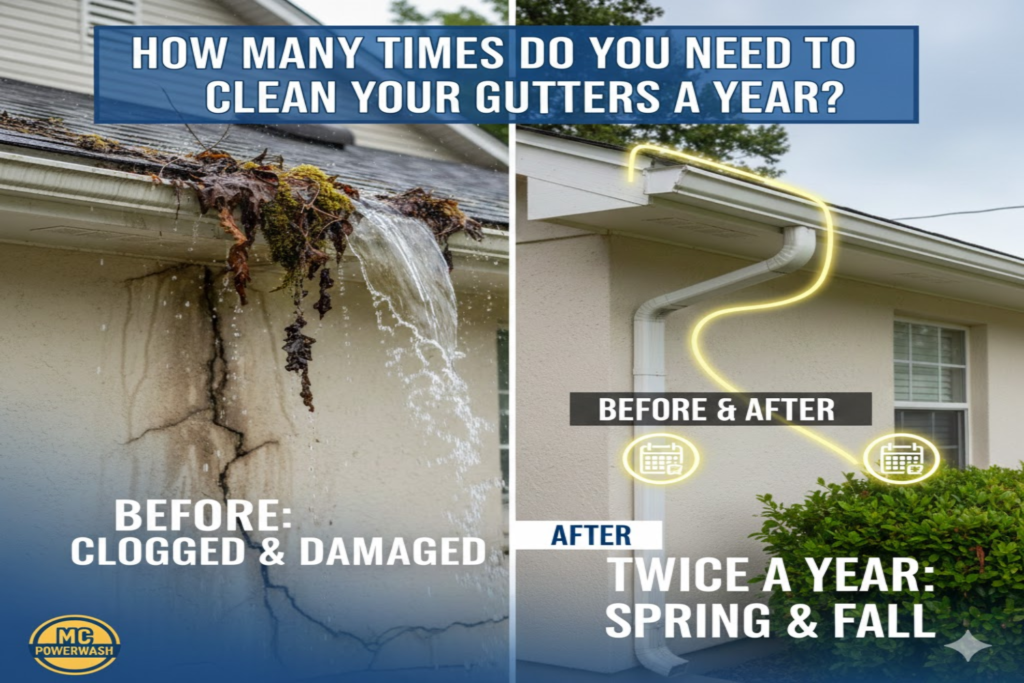
For the vast majority of homeowners, the magic number is two times per year. Traditionally, this happens once in the late spring and once in the late fall.
- Late Spring Cleaning: This is essential to clear out the “spring drop”—the seeds, pollen, flower petals, and small buds that trees shed as they bloom. If left inside the gutters, this organic material combines with spring rains to create a thick, heavy sludge that can clog downspouts.
- Late Fall Cleaning: This is the most critical cleaning of the year. Once the deciduous trees have dropped their leaves, your gutters are likely filled with debris. Cleaning them now ensures that winter rains can flow freely, preventing the weight of wet leaves from pulling the gutters away from your fascia boards.
However, if you live in a Mediterranean climate like Los Angeles, your schedule might look slightly different due to the lack of heavy autumn leaf drops compared to the East Coast, but the need for clear channels before the winter rainy season remains paramount.
Factors That Increase Your Cleaning Frequency
While twice a year is the baseline, several environmental factors can force you to get the ladder out more often.
1. Tree Proximity and Species
If you have large oak, pine, or maple trees hanging directly over your roofline, you may need to clean your gutters four times a year.
- Pines: Pine needles are notorious for bypassing gutter guards and creating “nests” in downspout elbows.
- Deciduous Trees: If you have trees that drop leaves throughout the seasons, a quarterly schedule is safer.
2. Roof Pitch and Material
Steep roofs collect water faster and “wash” debris into the gutters with more force. Additionally, if you have an older asphalt shingle roof, you may notice a buildup of ceramic granules. These granules are heavy and sink to the bottom of the gutter, creating a dam that traps leaves and twigs.
3. Local Weather Patterns
In regions like Los Angeles, homeowners often deal with long periods of drought followed by intense, concentrated bursts of rain. During the dry months, dust, bird droppings, and wind-blown debris accumulate. If these aren’t cleared before the first major storm of the season, the sudden volume of water will immediately overflow the system, potentially flooding your basement or damaging your landscaping.
The Hidden Dangers of Neglected Gutters
To understand why frequency matters, we must look at what happens when you skip a cleaning.
- Foundation Erosion: Water pooling at the base of your home can crack the foundation.
- Basement Flooding:Clogged gutters are the #1 cause of water in the basement.
- Pest Infestations: Stagnant water is a breeding ground for mosquitoes, and damp debris attracts termites and carpenter ants.
- Fascia Rot: When water backs up, it soaks the wooden boards your gutters are mounted to, leading to expensive wood rot.
Professional vs. DIY: A Comparison Table
Understanding the scale of the task helps you decide if you should tackle this 2,000-word-level maintenance yourself or hire a pro.
| Feature | DIY Gutter Cleaning | Professional Gutter Cleaning |
| Cost | Low (Price of a ladder and gloves) | Moderate ($150 – $350) |
| Safety | High Risk (Ladder falls are common) | Low Risk (Professionals use harnesses) |
| Quality | Surface level cleaning | Deep flush of downspouts & minor repairs |
| Time | 3 – 6 hours for an average home | 1 – 2 hours |
| Equipment | Basic household tools | Industrial vacuums/high-reach blowers |
Gutter Maintenance Checklist (Step-by-Step)
If you decide to handle the maintenance, follow these steps to ensure a comprehensive job:
- Inspect the Downspouts: Ensure water exits at least 3-5 feet away from the foundation.
- Check the Slope: Gutters should drop 1/4 inch for every 10 feet toward the downspout.
- Tighten Fasteners: Replace any loose spikes or brackets.
- Seal Leaks: Use a high-quality gutter sealant on any dripping seams.
- Remove Biological Growth: Much like roof cleaning in Los Angeles, check for moss or mold growing in the damp debris.
The Role of Gutter Guards
Many homeowners install gutter guards to reduce the frequency of cleaning. While these can help, they are not a “set it and forget it” solution. Even with guards, fine debris and “shingle grit” can enter the system. You will still likely need a professional inspection once a year to ensure no sludge has built up beneath the guards.
In areas like Los Angeles, where wildfires are a concern, metal gutter guards serve a second purpose: they prevent dry leaves and embers from collecting in the gutters, which can act as a fuse and ignite your roof during a fire event.
Conclusion: Don’t Wait for the Rain
Determining how many times you need to clean your gutters a year depends on your specific landscape. However, adhering to a minimum of a bi-annual schedule is the cheapest insurance policy you can buy for your home. By keeping those channels clear, you protect your foundation, your roof, and your peace of mind.
Frequently Asked Questions (FAQs)
1. Is gutter cleaning really necessary if it doesn’t rain often? Yes, absolutely. In regions like Los Angeles, gutters accumulate a significant amount of dust, bird droppings, and wind-blown debris during dry spells. If these aren’t cleared, the first heavy rain of the season will turn that debris into a thick sludge that immediately clogs your downspouts, causing water to overflow and potentially damage your home’s foundation.
2. What are the most common signs that my gutters need cleaning? Keep an eye out for “tiger striping” (dark streaks on the outside of the gutters), water spilling over the sides like a waterfall during rain, or sagging gutter sections. Additionally, if you see birds or pests frequenting your roofline, they may be nesting in the debris trapped within your gutters.
3. Do gutter guards eliminate the need for cleaning entirely? While high-quality gutter guards significantly reduce the frequency of maintenance, they do not make your gutters “maintenance-free.” Small particles like pollen, silt, and shingle granules can still enter the system. It is recommended to have a professional inspection at least once a year to ensure there is no buildup underneath the guards.
4. How much does professional gutter cleaning cost on average? Depending on the size of your home and the height of the roof, professional cleaning usually ranges from $150 to $400. In a metropolitan area like Los Angeles, prices may vary based on the complexity of the landscape and the number of stories. This is a small price to pay compared to the thousands of dollars required for foundation or water damage repairs.
5. Can I clean my gutters myself, or should I hire a professional? If you have a single-story home and the proper safety equipment, DIY cleaning is possible. However, for multi-story homes or steep roof pitches, hiring a professional is much safer. Professionals use specialized tools to flush out hidden clogs in the downspouts and can identify minor repair needs before they become major expenses.
6. Will clogged gutters affect my homeowners’ insurance? In some cases, yes. Neglecting routine maintenance like gutter cleaning can lead to water damage that insurance companies may classify as “preventable.” If a claim is filed for basement flooding or wood rot caused by clogged gutters, the provider may deny the claim due to a lack of proper home upkeep.