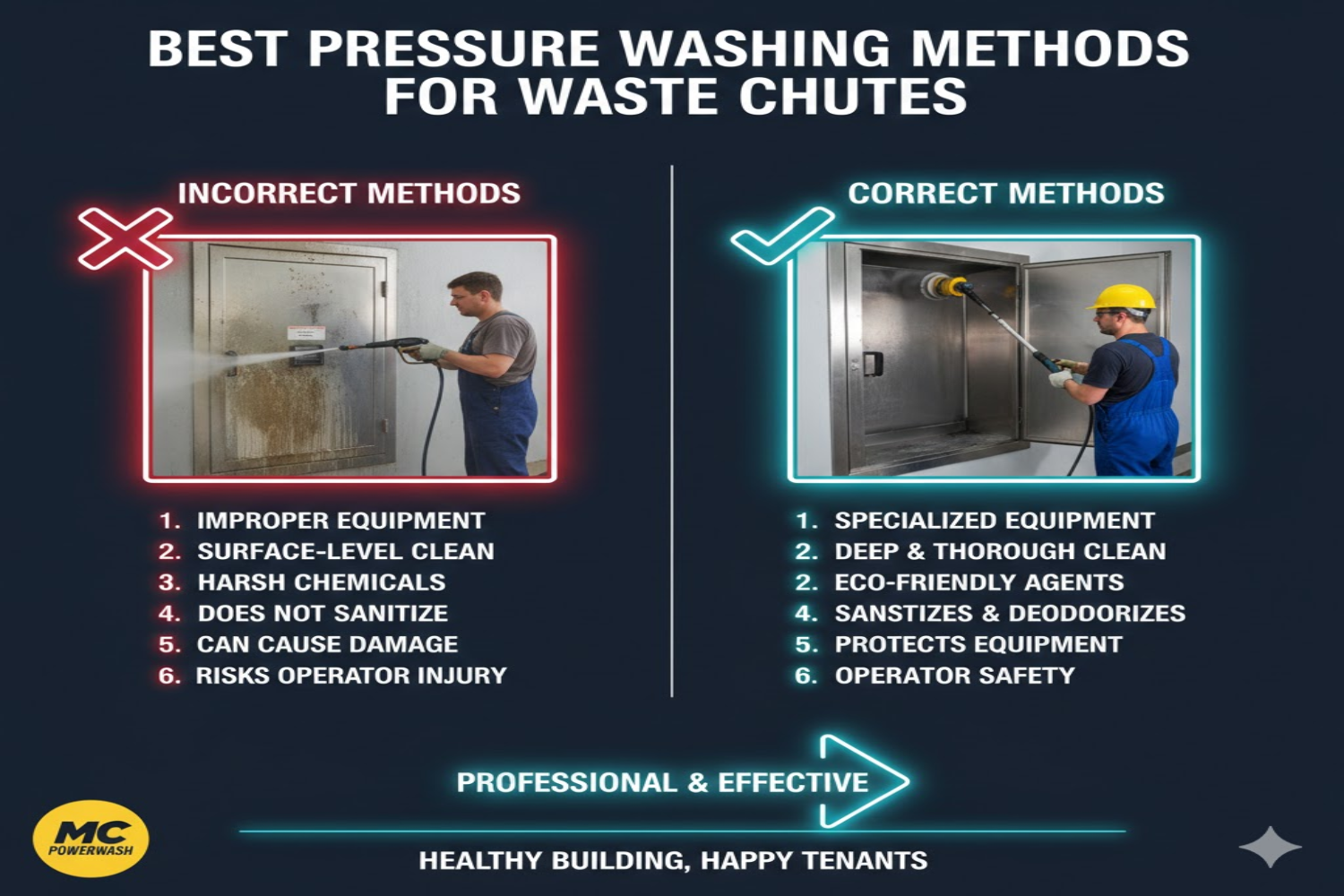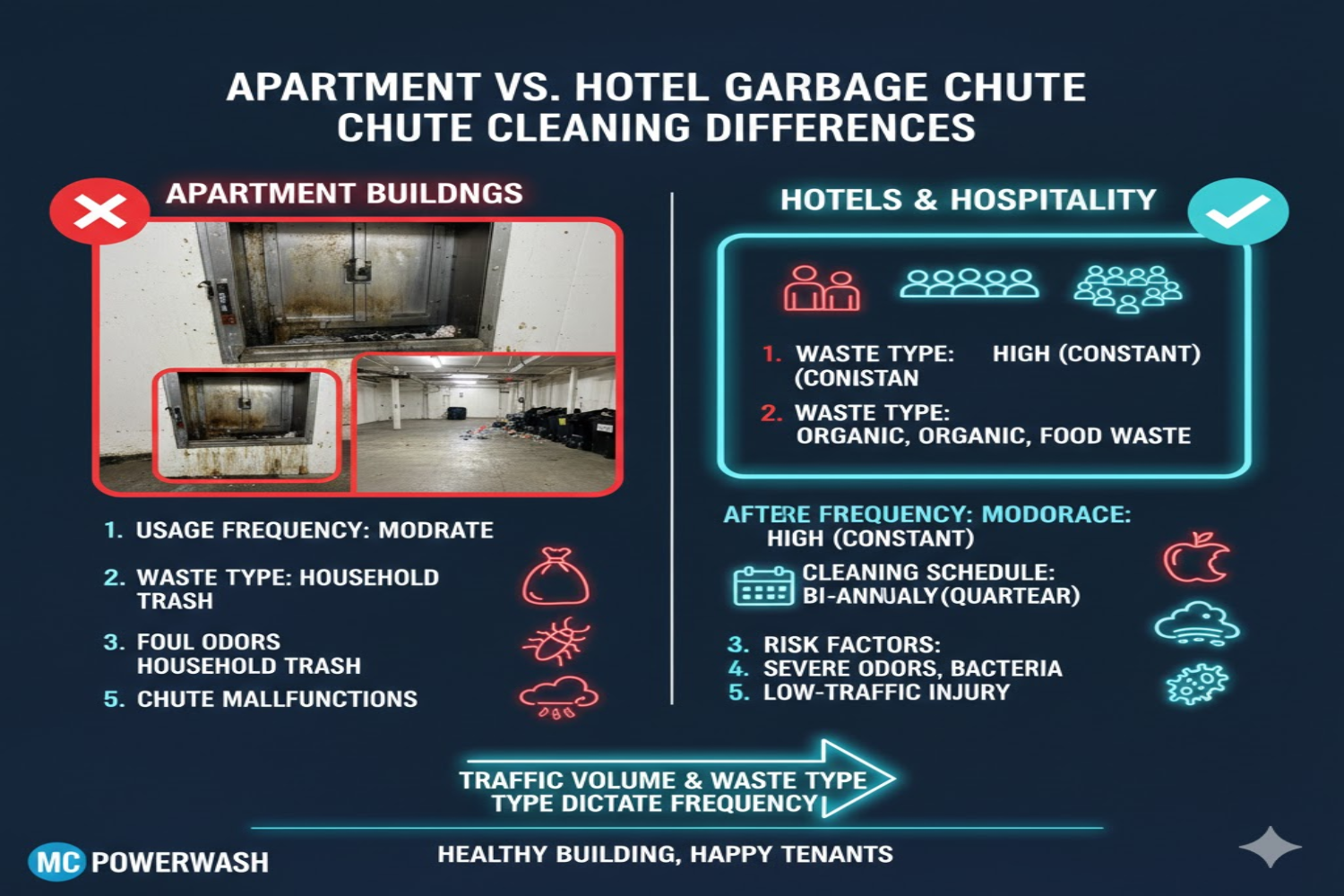
Professional cleaning of garbage chutes is a critical maintenance task in multi-story residential and commercial buildings. In Los Angeles, where high-rise apartments, condominiums, and mixed-use towers are extremely common, regular chute cleaning directly affects resident health, indoor air quality, fire safety, and property compliance. Most industry experts and building codes recommend deep professional cleaning every 3 to 6 months depending on building size, occupancy, and usage patterns. Neglected chutes quickly develop thick grease layers, mold, bacteria, and foul odors that spread throughout the entire building. More frequent cleaning (every 1–3 months) is often necessary in high-traffic buildings or during warmer months when decomposition accelerates. Proper scheduling prevents emergency blockages, pest infestations, and health code violations. Regular cleaning is far more cost-effective than reactive emergency services. Understanding the right frequency helps property managers protect both residents and the building’s long-term value.
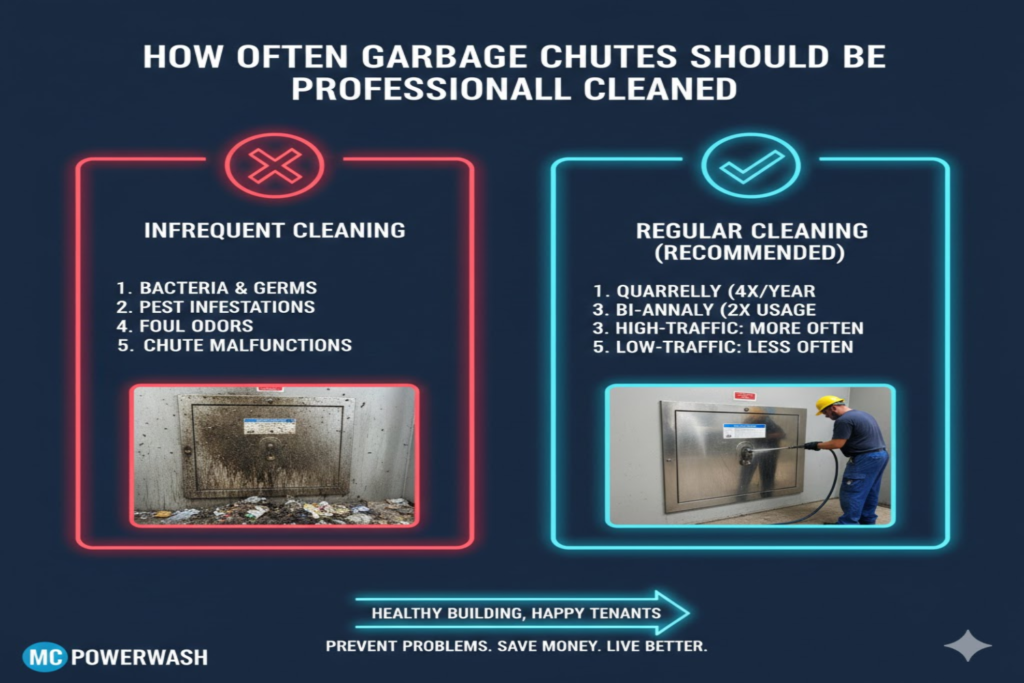
Why Frequency of Cleaning Matters So Much
Garbage chutes are dark, warm, moist environments that become breeding grounds for bacteria, mold, and pests within weeks if not maintained. Food waste, grease, liquids, and paper create layers of sludge that ferment and produce strong odors. In Los Angeles, mild winters and warm summers speed up decomposition, making buildup faster than in colder climates. Infrequent cleaning allows grease to harden, odors to permeate hallways, and fire hazards to increase dramatically. Health departments and fire marshals frequently cite unclean chutes as violations. Regular professional cleaning removes the fuel source for bacteria and flames. It also reduces tenant complaints and turnover. The right frequency balances cost with safety and hygiene. Inconsistent cleaning leads to expensive emergencies and legal issues.
Factors That Determine Cleaning Frequency
- Building occupancy level is one of the biggest factors—higher resident numbers mean more food waste and faster buildup.
- Buildings with many restaurants, cafes, or food-heavy tenants require more frequent cleaning.
- Age of the chute system matters—older metal chutes corrode faster when grease and acids accumulate.
- Poor resident habits (loose bags, liquid dumping) accelerate soiling.
- Seasonal changes affect frequency—summer months usually need more attention. Ventilation quality in the chute shaft influences odor and mold growth.
- Buildings with known pest problems or previous blockages should clean more often. Management should review complaint logs and odor reports quarterly.
- Each building has unique needs. A customized schedule based on actual conditions works best.
Recommended Cleaning Frequency Guidelines
Most property management companies and chute cleaning professionals recommend deep professional cleaning every 3–6 months for average residential buildings. High-rise towers with 100+ units often need cleaning every 3 months. Luxury condos with strict cleanliness standards may clean every 2–3 months. Buildings with commercial food tenants (restaurants, cafes on lower floors) usually require quarterly or bi-monthly service. Older buildings with limited ventilation or known odor issues benefit from every 2 months. Low-occupancy or well-managed small buildings can sometimes stretch to 6–8 months. After major move-outs, renovations, or seasonal spikes, an extra cleaning is advised. These are general guidelines—actual frequency should be adjusted based on inspections. Consistent scheduling prevents problems from becoming severe.
Signs You Need More Frequent Cleaning
Persistent foul odors even after regular trash removal indicate heavy buildup. Flies, gnats, or small roaches appearing near chute doors on multiple floors are clear signs. Slow drainage or trash getting stuck when dropped suggests partial blockage. Visible black slime, brown grease, or mold around hopper frames means urgent cleaning. Multiple tenant complaints about smells in hallways or apartments require immediate attention. Yellowing or staining inside the chute door is a visual warning. Any of these signs mean the current frequency is too low. Early response prevents escalation. Regular monitoring helps adjust the schedule proactively. Listening to residents is one of the best indicators.
What Happens When Cleaning Is Too Infrequent
Infrequent cleaning allows grease to harden into thick layers that trap more waste. Mold and bacteria multiply rapidly, releasing spores into the air. Odors become overpowering and travel through HVAC systems. Pests infest the chute and migrate into apartments. Blockages cause backups on multiple floors, creating unsanitary conditions. Fire risk increases as flammable grease and dry debris accumulate. Health departments issue citations and require immediate action. Insurance companies may deny claims related to neglected maintenance. Emergency cleanings cost 2–3 times more than scheduled service. Tenant turnover rises due to dissatisfaction. Infrequent cleaning creates expensive, avoidable problems.
Benefits of Sticking to a Regular Cleaning Schedule
- Regular professional cleaning eliminates odors and dramatically improves indoor air quality. It reduces pest activity and lowers extermination costs.
- Fire hazards decrease significantly when grease and debris are removed.
- Health risks from bacteria and mold are minimized for all residents.
- Property managers receive far fewer maintenance requests and complaints.
- Buildings maintain higher occupancy rates and better resident satisfaction.
- Compliance with health and fire codes becomes easier to demonstrate.
- Insurance providers often favor documented maintenance programs.
- Scheduled cleaning prevents emergency service premiums.
- Long-term savings come from avoiding major repairs and legal issues.
- Consistent frequency delivers the best overall results.
How Building Size Affects Cleaning Frequency
Small to mid-size buildings (4–10 floors) usually do well with cleaning every 4–6 months. Mid-size high-rises (10–20 floors) often need every 3–4 months due to higher usage. Large high-rises (20+ floors) typically require quarterly cleaning or even every 2 months in high-traffic properties. Taller buildings have longer chutes that accumulate more layers over time. More floors mean more residents contributing waste daily. Access difficulty increases with height, making thorough cleaning more important. Larger buildings benefit from customized plans with monthly inspections. Size directly influences how quickly problems develop. Proper frequency matches the building’s scale and usage.
Seasonal Adjustments to Cleaning Frequency
In warmer months (May–October in Los Angeles), decomposition and grease buildup accelerate—many buildings increase cleaning to every 2–3 months during summer. Cooler winter months slow bacterial growth slightly, allowing some properties to extend to every 5–6 months. After holiday seasons (Thanksgiving, Christmas) with more food waste, an extra cleaning is recommended. Move-in/move-out seasons also create spikes in improper disposal. Seasonal adjustments prevent overload during peak times. Smart managers review frequency twice a year. Adapting to weather and usage patterns keeps chutes cleaner year-round. It avoids odor crises during hot weather.
Combining Deep Cleaning with Ongoing Maintenance
- Deep pressure washing every 3–6 months should be paired with lighter monthly or bi-monthly maintenance.
- Maintenance includes enzymatic or deodorizing misting systems, odor-neutralizing foam, and quick visual inspections.
- These treatments slow buildup between major cleanings.
- Some buildings install automatic chute washing systems that spray degreaser weekly.
- Regular hopper door cleaning and compactor room sanitization help.
- Combining deep and light maintenance extends time between full services.
- It keeps odors low and prevents blockages.
- A layered approach delivers maximum hygiene.
- It reduces overall long-term costs.
Cost Implications of Different Cleaning Frequencies
Cleaning every 6 months is cheapest per visit but risks heavier buildup and emergency fees. Quarterly cleaning (every 3 months) balances cost and prevention for most buildings. Bi-monthly or monthly service costs more upfront but prevents expensive blockages and health violations. Many companies offer significant discounts for annual contracts. Regular frequency reduces emergency call-out charges (often 2–3 times standard rates). Preventive cleaning lowers pest control and deodorizing expenses. Over time, more frequent scheduled service is usually more economical. Budgeting for consistent cleaning protects long-term finances. It avoids surprise high-cost interventions.
Comparison Table: Recommended Cleaning Frequency by Building Type
| Building Type | Recommended Deep Cleaning Frequency | Reasons for This Frequency | Typical Cost per Clean (Mid-Size Bldg) | Risk if Frequency Is Too Low | Signs You Need More Frequent Cleaning |
| Small/Mid-Size Apartment (4–10 floors) | Every 4–6 months | Moderate usage, fewer residents | $500–$1,500 | Odors & minor blockages | Hallway smells, occasional flies |
| High-Rise Residential (10–20 floors) | Every 3–4 months | Higher daily waste volume | $1,200–$3,000 | Mold, pests, fire risk | Persistent odors, slow chute flow |
| Luxury Condos / High-End Buildings | Every 2–3 months | Strict cleanliness standards, premium tenants | $1,500–$4,000 | Tenant complaints & turnover | Any odor or visible slime |
| Mixed-Use (Residential + Food) | Every 2–3 months | Restaurants/cafes cause heavy grease buildup | $1,800–$5,000 | Severe blockages & health issues | Grease visible, roaches near hoppers |
| Older Buildings / Poor Ventilation | Every 2–3 months | Faster mold & odor development | $1,000–$3,500 | Structural corrosion & fire | Strong odors even after minor cleaning |
How to Create a Customized Cleaning Schedule
Start with a professional inspection to assess current buildup and chute condition. Review tenant complaint logs, odor reports, and pest activity history. Consider building age, occupancy level, and presence of food businesses. Set an initial frequency (e.g., every 3 months) and monitor results. Adjust based on seasonal changes and resident feedback. Document every cleaning with photos and reports. Include monthly maintenance (deodorizing, inspections) in the plan. Work with a reliable cleaning company to create a calendar. Review and update the schedule annually. A tailored plan prevents under- or over-cleaning. It delivers the best hygiene at the lowest overall cost.
Conclusion
How often garbage chutes cleaning should be professionally cleaned depends on building size, occupancy, usage patterns, and local conditions. In Los Angeles, most multi-story residential and mixed-use buildings benefit from deep cleaning every 3–6 months, with many high-rises and food-heavy properties needing quarterly or bi-monthly service. Regular professional cleaning eliminates odors, reduces health risks, prevents blockages, lowers fire hazards, and maintains compliance with health and fire codes. More frequent cleaning is always better than waiting for severe problems to appear. Investing in a customized schedule with deep pressure washing and ongoing maintenance protects residents, improves air quality, and saves money long-term. Consistent chute cleaning is one of the most important responsibilities for any property manager in high-density urban living. Clean chutes mean healthier, safer, and more pleasant buildings for everyone.
Frequently Asked Questions (FAQs)
1. What is the most common recommended frequency for garbage chute cleaning?
Most experts recommend professional deep cleaning every 3 to 6 months for typical residential buildings. High-rise and high-traffic properties often need every 3 months. The exact frequency depends on building usage and inspection results. Regular cleaning prevents serious problems from developing.
2. Why do some buildings need chute cleaning every 2 months?
Buildings with restaurants, cafes, or many food-heavy tenants accumulate grease and organic waste much faster. Luxury condos with strict cleanliness standards and older buildings with poor ventilation also require more frequent service. Hot summer months accelerate decomposition. More frequent cleaning keeps odors and health risks under control.
3. Can a building go longer than 6 months without professional cleaning?
Some low-occupancy or very well-managed small buildings can stretch to 6–8 months. However, most professionals advise against going beyond 6 months because buildup becomes severe quickly. Longer intervals usually lead to odors, pests, and blockages. Regular inspections help determine safe intervals.
4. How do I know if my building needs more frequent cleaning?
Persistent odors, flies or roaches near chute doors, slow trash flow, visible slime or grease around hoppers, and multiple tenant complaints are clear signs. Any of these indicate the current frequency is too low. Early action prevents escalation and expensive emergency cleanings.
5. Does seasonal weather affect how often chutes should be cleaned?
Yes—in warmer months (May–October), decomposition and grease buildup happen faster, so many buildings increase cleaning to every 2–3 months. Cooler months allow slightly longer intervals. After holiday seasons with more food waste, an extra cleaning is recommended. Seasonal adjustments keep chutes hygienic year-round.
6. Is it cheaper to clean more often or wait until there’s a problem?
Regular scheduled cleaning (every 3–6 months) is almost always cheaper than waiting for severe buildup or blockages. Emergency cleanings cost 2–3 times more. Frequent cleaning prevents pest infestations, fire hazards, and health code violations. Proactive maintenance saves money long-term.
7. Who decides the cleaning frequency for a building?
Property managers, HOAs, or building owners decide based on professional recommendations, inspection reports, resident feedback, and local regulations. Experienced chute cleaning companies provide customized schedules after initial assessment. The frequency should be reviewed and adjusted at least annually.
8. What happens if we ignore the recommended cleaning frequency?
Ignoring recommended frequency leads to thick grease layers, mold growth, pest infestations, and strong odors throughout the building. Blockages cause trash backups on multiple floors. Fire risk increases significantly. Health departments may issue citations. Emergency cleanings become necessary and cost much more.
9. Can monthly maintenance replace full deep cleaning?
No—monthly maintenance (deodorizing, enzymatic misting, inspections) helps slow buildup but does not replace deep pressure washing. Deep cleaning removes hardened grease and sludge that light maintenance cannot touch. Combining both gives the best results. Deep cleans every 3–6 months are still essential.
10. How do health and fire codes influence cleaning frequency?
Many cities, including Los Angeles, have health and fire codes that require regular chute maintenance to prevent odors, pests, and fire hazards. While exact frequency may not be mandated, documented regular cleaning helps demonstrate compliance. Neglected chutes can result in citations, fines, or failed inspections. Regular professional service ensures code compliance.