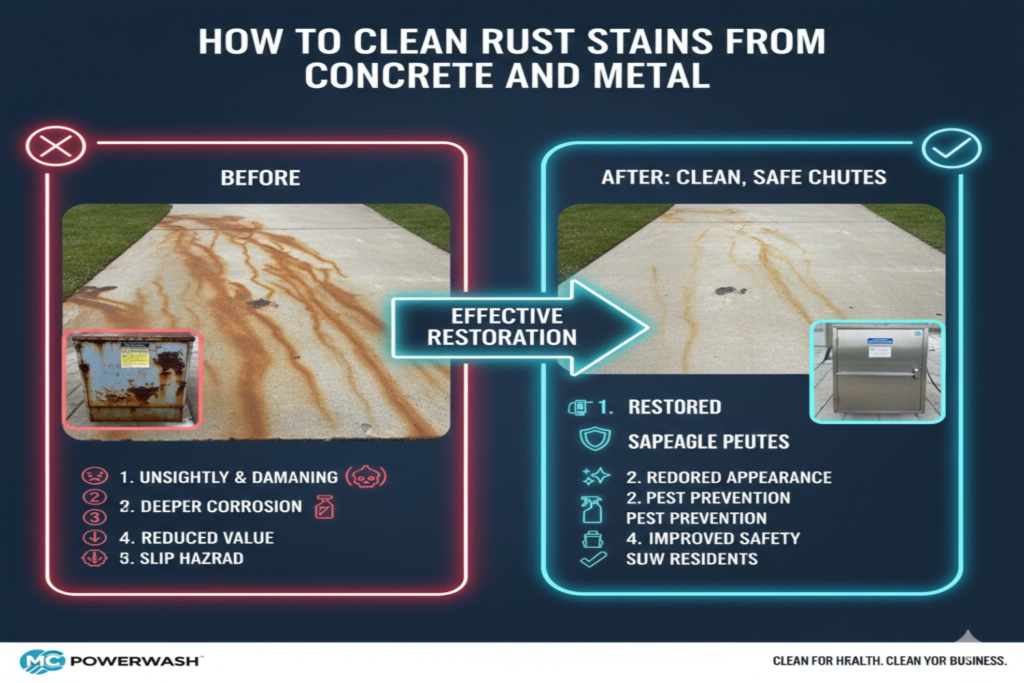
Rust stains on concrete and metal are common and unsightly, often caused by iron-rich water, rusted rebar, metal furniture, tools, or leaking pipes. In Los Angeles, where hard water and occasional coastal salt air accelerate oxidation, these reddish-brown stains appear frequently on driveways, patios, garage floors, railings, and outdoor furniture. Removing them requires breaking down iron oxide so it can be lifted without damaging the underlying surface. Concrete is porous and absorbs rust deeply, while metal can pit or corrode further if cleaned too aggressively. Safe methods combine chemical action, mechanical scrubbing, and protective rinsing. Prompt treatment prevents stains from becoming permanent. With the right products and techniques, most rust marks can be significantly reduced or completely eliminated. Regular maintenance and rust prevention keep surfaces looking clean long-term.
Understanding Rust Stains and Why They Are Tough
Rust (iron oxide) forms when iron reacts with oxygen and moisture. On concrete, rust from rebar, metal planters, or water runoff seeps deep into pores. On metal surfaces, rust stains appear as surface corrosion that can spread if untreated. Porous materials trap rust particles, creating dark halos that worsen with time. Sun exposure in dry climates bakes stains, making them harder to lift. Older stains bond chemically with the surface. Different surfaces—unsealed concrete, sealed patios, painted metal, stainless steel—require specific approaches. Aggressive methods can etch concrete or pit metal. Understanding the stain source and surface type ensures safe, effective removal.
Common Sources of Rust Stains
Leaking vehicles leave rust from brake dust and undercarriage corrosion on driveways. Rusted metal furniture, planters, and tools bleed onto patios and garage floors. Exposed rebar in cracked concrete causes internal rust stains. Sprinkler water with high iron content leaves vertical streaks on walls. Outdoor railings, gates, and BBQ grills rust and transfer stains. In Los Angeles, hard water from municipal supply and occasional ocean mist speed up rust formation. Construction debris and metal scraps also contribute. Identifying the source helps stop recurrence. Most stains are preventable with proper containment and maintenance.
Safety Precautions Before Cleaning Rust
Wear chemical-resistant gloves, safety goggles, and long sleeves when using acids or commercial removers. Work in a well-ventilated area to avoid inhaling fumes. Keep children and pets away from the cleaning zone. Cover nearby plants, grass, and sensitive surfaces with plastic sheeting. Wet vegetation before and after to dilute any runoff. Never mix different cleaners, especially acids with bleach. Have a hose or bucket ready for immediate rinsing. Use stable ladders for vertical surfaces. Keep a first-aid kit and phone accessible. Read all product labels carefully. Safety protects both you and the surrounding property.
Best Household Remedies for Light Rust Stains
Lemon juice and salt is a popular natural method for light rust. Sprinkle coarse salt over the stain, squeeze fresh lemon juice to make a paste, and let it sit 30–60 minutes. Scrub with a stiff brush, then rinse thoroughly. White vinegar and baking soda create a fizzing reaction that lifts rust. Apply vinegar, sprinkle baking soda, wait 15–30 minutes, scrub, and rinse. These remedies work best on fresh, surface-level rust. Repeat applications may be needed. Household items are inexpensive, non-toxic, and readily available. They are ideal for small spots on concrete and metal. Avoid on painted or delicate surfaces.
Using Commercial Rust Removers Effectively
- Choose rust-specific cleaners containing phosphoric acid, oxalic acid, or chelating agents.
- Popular products include CLR Rust Remover, Iron Out, Rust-Oleum Rust Dissolver, and Naval Jelly.
- Apply generously, let dwell 10–30 minutes (follow label), agitate with a brush, and rinse thoroughly.
- Multiple applications are common for deeper stains.
- Test on a hidden area first to check for etching or discoloration.
- These removers penetrate concrete pores and dissolve rust on metal.
- Avoid prolonged contact with painted or galvanized surfaces.
- Commercial products outperform household remedies on medium to heavy stains.
- Proper use minimizes surface damage.
Poultice Method for Deep Rust Stains on Concrete
Poultices pull rust from deep within porous concrete. Mix absorbent material (diatomaceous earth, kitty litter, or baking soda) with a rust remover (phosphoric acid solution or commercial poultice liquid) into a thick paste. Apply ¼–½ inch thick over the stain. Cover with plastic wrap, tape edges, and leave 24–48 hours. Remove dried poultice, scrub lightly, and rinse. Repeat 2–3 times for stubborn stains. This method is slow but extracts rust without aggressive abrasion. It is highly effective on unsealed concrete. Poultices prevent spreading during treatment. They are ideal for old, set-in rust marks.
Safe Pressure Washing for Rust Removal
Use a pressure washer with cold or warm water (hot water helps dissolve rust faster). Start at low pressure (800–1500 PSI) with a 25°–40° wide fan nozzle. Apply rust remover first and allow dwell time. Wash from bottom to top to avoid streaks. Keep the wand 12–18 inches away and move steadily. Rinse thoroughly to remove all residue. Avoid high pressure on painted metal or delicate concrete. Pressure washing is fast for large areas like driveways. Always pre-treat with a rust dissolver. Test pressure on a small spot first.
Removing Rust from Painted or Coated Metal
On painted metal, avoid strong acids that strip paint. Use mild rust converters or gel-based removers. Apply, let convert rust to a stable compound, then wipe or rinse. For surface rust, scrub gently with a soft brush and mild detergent. Repaint with rust-inhibiting primer and topcoat afterward. Galvanized metal tolerates phosphoric acid better but still needs rinsing. Stainless steel responds well to oxalic acid cleaners. Protect surrounding paint with tape. Gentle methods preserve the finish. Multiple light treatments work better than aggressive attempts.
Dealing with Rust Stains on Sealed vs Unsealed Concrete
Sealed concrete resists deep rust penetration, so stains stay surface-level and lift easier with degreasers or mild acids. Unsealed concrete absorbs rust quickly, often requiring poultices or repeated treatments. Test seal status by sprinkling water—if it beads, the surface is sealed. Reseal after cleaning to prevent future absorption. Sealed surfaces handle slightly higher pressure safely. Unsealed concrete needs gentler, longer methods. Knowing the seal condition guides technique. Resealing is essential for long-term protection. It dramatically reduces recurrence.
Eco-Friendly and Non-Toxic Rust Removal Options
Citrus-based or plant-derived rust removers (like Bio-Clean or Eco-Rust) break down rust safely. White vinegar and lemon juice are natural acids that work on light stains. Baking soda and salt pastes lift rust without harsh chemicals. Use absorbent natural materials for poultices. Capture runoff with absorbent booms or shop vacs. Rinse onto landscaping instead of storm drains when possible. Eco-friendly options reduce environmental impact. They perform well on most light to medium stains. Many are safe near plants and pets. Sustainable choices align with local runoff regulations.
Preventing Future Rust Stains
Place rubber mats or drip pans under metal furniture and planters. Coat outdoor metal with rust-inhibiting paint or clear sealant. Repair leaks and seal cracks in concrete promptly. Use rust-resistant metal (stainless steel, galvanized) for future installations. Apply penetrating concrete sealer every 1–2 years. Clean metal surfaces regularly to remove early oxidation. Store tools and equipment indoors or covered. Prevention is far easier than removal. Consistent habits eliminate most recurring rust issues. Proactive care protects surfaces long-term.
When to Hire Professional Rust Removal Services
Call professionals for large areas, deep rebar rust, or multi-story surfaces. They use commercial-grade rust removers, hot-water pressure washing, and safe disposal methods. Pros handle heavy contamination from old machinery or structural rust. They minimize damage to sealers and coatings. In Los Angeles, experienced concrete restoration teams understand local water chemistry and sun exposure. Professionals finish jobs faster with uniform results. Get multiple quotes and check insurance. Complex or structural rust warrants expert help. Hiring pros protects your property investment.
Long-Term Maintenance After Rust Removal
Reseal concrete surfaces after successful cleaning. Apply rust-inhibiting coatings on metal. Inspect regularly for early rust spots. Clean surfaces with mild detergent monthly. Touch up paint or coatings promptly. Maintain good drainage to prevent water pooling. Document cleaning products and dates. Consistent maintenance prevents deep rust recurrence. It extends surface life significantly. Proactive care keeps concrete and metal looking new.
Comparison Table: Rust Stain Removal Methods for Concrete & Metal
| Method | Best For | Time Required | Cost Level (DIY) | Effectiveness on Deep Rust | Surface Damage Risk | Eco-Friendliness | Skill Level Needed | Recommended Surfaces |
| Lemon Juice + Salt | Light surface rust | 1–2 hours | Very Low | Low–Medium | Very Low | High | Beginner | Concrete, painted metal |
| White Vinegar + Baking Soda | Light to medium stains | 1–4 hours | Very Low | Medium | Low | High | Beginner | Concrete, non-coated metal |
| Commercial Rust Remover | Medium stains, concrete & metal | 1–6 hours | Low–Medium | High | Low–Medium | Medium | Beginner–Moderate | Concrete, galvanized metal |
| Poultice with Phosphoric Acid | Deep, old stains on concrete | 24–72 hours | Low–Medium | Very High | Very Low | Medium | Moderate | Unsealed concrete, masonry |
| Pressure Washing + Pre-Treat | Large areas, driveways | 2–8 hours | Medium (rental) | High | Medium | Medium | Moderate–High | Concrete, sealed surfaces |
| Rust Converter (for metal) | Surface rust on painted metal | 1–3 hours | Low–Medium | High (converts) | Low | Medium | Moderate | Painted/coated metal |
| Oxalic Acid Cleaner | Stubborn rust on concrete | 2–12 hours | Medium | Very High | Medium | Low | Moderate | Unsealed concrete only |
| Professional Service | Large/deep/structural rust | 4–12 hours | High | Very High | Low (expert) | Varies | None (hired) | Any difficult surface |
Cost-Benefit Analysis of Rust Removal Approaches
Household remedies like vinegar and lemon juice cost almost nothing and work well for light, fresh rust, making them ideal for quick spot treatment. Commercial rust removers ($10–$40 per bottle) offer excellent value for medium stains and outperform natural methods on tougher marks. Poultices require time but use inexpensive materials and excel at deep extraction without surface harm. Pressure washing rentals ($50–$150/day) deliver fast results on large areas but carry higher equipment costs. Professional services ($200–$1,000+) are expensive upfront but save time, prevent damage, and handle wastewater legally. Combining pre-treatment with washing provides the best balance of cost, time, and results. Investing in prevention (sealers, protective coatings, rust-resistant materials) yields the highest long-term savings.
Final Tips for Stubborn or Recurring Rust Stains
Always test products on a hidden area first. Work in small sections to avoid spreading. Repeat treatments rather than increasing strength or pressure. Capture runoff responsibly to protect waterways. Photograph before-and-after for reference. Reseal concrete and recoat metal after cleaning. Address the rust source (leaks, metal contact, water runoff) to prevent recurrence. For very deep stains, multiple poultice cycles may be necessary. Patience and persistence beat aggressive shortcuts. Consistent care keeps concrete and metal surfaces clean and protected for years.
Conclusion
Cleaning rust stains from concrete and metal requires matching the method to the stain’s depth, age, and surface type. Fresh surface rust responds quickly to household acids and commercial removers, while deep, old stains demand poultices or professional hot-water washing. In Los Angeles, where hard water and coastal air accelerate rust, prompt action and proper techniques prevent permanent damage. Always prioritize safety, test products, and protect surrounding areas. Prevention through sealers, protective coatings, and rust-resistant materials is the most cost-effective strategy. Whether using DIY remedies or hiring experts, consistent effort restores surfaces effectively. Clean concrete and metal enhance property appearance, safety, and value for the long term.
Frequently Asked Questions (FAQs)
1. What is the fastest way to remove fresh rust stains from concrete?
Blot any excess moisture, then apply a commercial rust remover or vinegar-salt paste immediately. Let it dwell 15–30 minutes, scrub with a stiff brush, and rinse thoroughly. Fresh rust has not bonded deeply, so quick action often removes it completely. Repeat if faint marks remain.
2. Can old rust stains be completely removed from concrete?
Yes, but very old or rebar-related stains may leave a faint shadow. Poultices with phosphoric acid or commercial removers applied multiple times pull out most rust. Resealing afterward hides minor discoloration. Patience and repeated treatments are necessary for deep stains.
3. Is pressure washing safe for rust removal on concrete?
Low to medium pressure (1000–2000 PSI) with a wide fan nozzle is safe after pre-treating with rust remover. High pressure can etch concrete or drive rust deeper. Always start low and test first. Hot water pressure washing works best for stubborn rust.
4. What is the best rust remover for concrete?
Phosphoric acid-based removers (CLR, Iron Out, Rust-Oleum Rust Dissolver) are highly effective on concrete. They dissolve iron oxide without excessive etching when used correctly. Apply, agitate, and rinse thoroughly. Avoid strong hydrochloric or muriatic acid on concrete.
5. How do I remove rust from painted metal without stripping paint?
Use a gel-based rust converter or mild oxalic acid cleaner. Apply carefully, let it convert rust, then wipe gently. Avoid abrasive scrubbing or strong acids. Repaint with rust-inhibiting primer afterward. Multiple light treatments preserve the existing paint.
6. What is a poultice and how does it work on rust?
A poultice is a thick paste of absorbent material and rust remover applied over the stain. It draws rust out of pores over 24–48 hours. Cover with plastic to keep moist. It is very effective for deep stains in concrete. Repeat cycles may be needed.
7. Should I reseal concrete after removing rust stains?
Yes, resealing is highly recommended after cleaning. It closes pores, prevents future rust absorption, and hides minor shadows. Use a penetrating or acrylic sealer. Apply only after the surface is completely dry. Resealing provides long-term protection.
8. Can rust stains on concrete cause structural damage?
Surface rust stains are cosmetic, but rust from rebar inside concrete can cause cracking and spalling. If you see rust accompanied by cracks or flaking, consult a structural professional. Prompt removal prevents worsening. Address the source to avoid recurrence.
9. How long does it take to remove deep rust stains?
Fresh stains can be removed in hours. Deep, old stains often require 1–7 days with poultices or repeated treatments. Each poultice cycle needs 24–48 hours dwell time. Multiple applications are normal for complete extraction.
10. Are eco-friendly rust removers effective?
Yes, citrus-based, plant-derived, or vinegar-based removers effectively remove light to medium rust. They may require longer dwell times but are safer for the environment and nearby plants. Rinse thoroughly after use. They perform well on most household stains.