Pressure washing vs chemical solvent graffiti removal is one of the most important decisions property owners face when dealing with unwanted spray paint, markers, tags, or etchings on brick, concrete, stucco, metal, glass, wood, or painted surfaces. Pressure washing uses high-velocity water (often 1500–4000 PSI) to blast away graffiti, while chemical solvent removal applies specialized paint strippers, citrus-based removers, soy gels, or low-VOC solvents to dissolve paint for wiping, scraping, or rinsing. Each method has distinct advantages, risks, and ideal applications depending on surface type, graffiti age, paint type (solvent-based, enamel, water-based), and environmental concerns. Choosing the wrong approach can etch brick faces, crack mortar, strip original coatings, or leave permanent ghosting (faint outlines). In places like Los Angeles, graffiti appears frequently on brick facades, concrete walls, and metal gates due to urban density and street art activity. Los Angeles property owners often face multi-layer, solvent-based tags that penetrate deeply. surfaces require careful selection to avoid damage in high-visibility or historic areas. buildings benefit most from understanding the pros, cons, and best use cases of both methods. The right choice preserves surfaces while effectively eliminating graffiti.
Why Compare Pressure Washing and Chemical Solvents
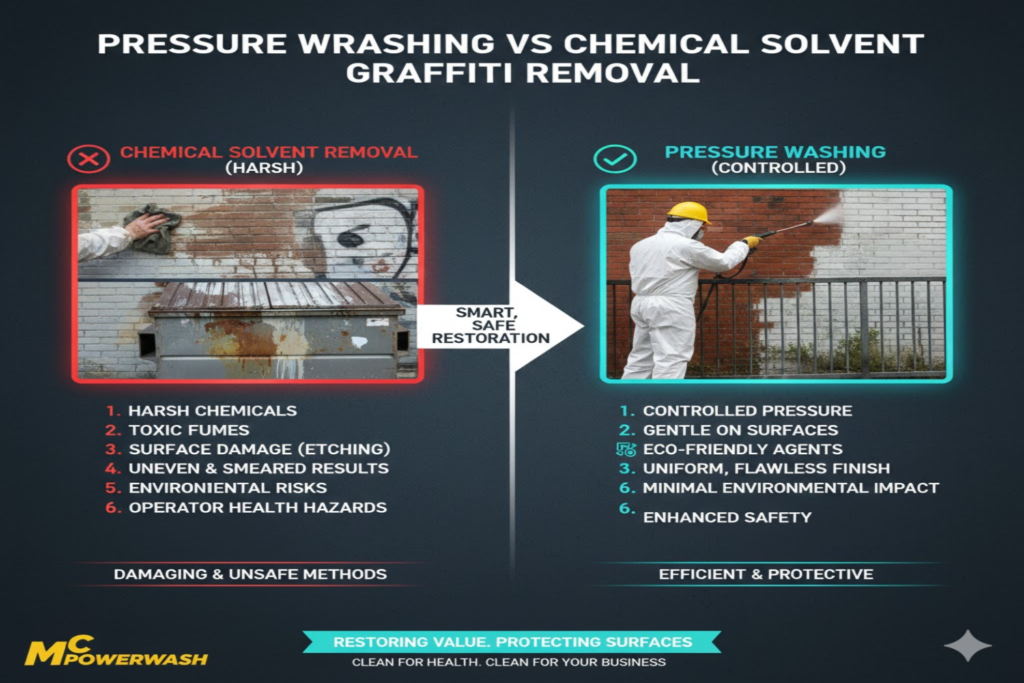
Pressure washing relies on mechanical force to physically dislodge paint, while chemical solvents work by breaking down paint bonds chemically. Pressure washing is fast for non-porous surfaces but risks surface erosion on porous materials like brick and concrete. Chemical solvents penetrate deeply into pores but can leave residue or require extensive rinsing if misused. The two methods differ dramatically in damage potential, speed, environmental impact, cost, and suitability for different substrates. Understanding these differences prevents costly mistakes. Many professionals combine both approaches in stages for best results. The comparison helps owners choose the safest, most effective path.
Advantages of Pressure Washing for Graffiti Removal
Pressure washing removes fresh graffiti quickly on hard, non-porous surfaces like sealed concrete, metal, and glass. It requires minimal chemicals, reducing runoff concerns in some cases. High-pressure systems can clear large areas in a short time. It is effective against water-based paints and light tags. Los Angeles Equipment is widely available and relatively inexpensive to rent. Pressure washing leaves no chemical residue when used alone. It is often the first choice for non-absorbent surfaces.
Disadvantages and Risks of Pressure Washing
High-pressure washing (above 1500 PSI) etches brick faces, erodes mortar joints, and causes micro-cracks in concrete. It drives paint deeper into porous surfaces, worsening ghosting. Aggressive pressure strips original paint, sealers, or coatings from walls. Los Angeles Water intrusion into unsealed brick or stucco promotes mold and efflorescence. Pressure washing creates large amounts of contaminated runoff. It is ineffective on deep-set or layered graffiti without chemicals. On delicate surfaces, the damage often exceeds the graffiti itself.
Advantages of Chemical Solvent Graffiti Removal
- Chemical solvents penetrate deeply into porous surfaces like brick and concrete, dissolving paint from within pores.
- They are highly effective on layered, old, or solvent-based graffiti.
- Low-VOC, citrus, soy, or bio-based solvents are safer for the environment and workers.
- Solvents allow controlled application with minimal mechanical force.
- They reduce the risk of surface erosion when used correctly.
- Many products are biodegradable and leave little residue after proper rinsing.
- Chemical methods excel where pressure alone fails.
Disadvantages and Risks of Chemical Solvents
- Strong solvents (methylene chloride, acetone) are toxic, require full PPE, and pose health risks if inhaled or contacted.
- Improper dilution or dwell time can burn brick, discolor stucco, or soften wood.
- Runoff from solvents can harm plants, soil, and waterways if not contained.
- Some products leave oily residue that attracts dirt.
- Chemical removal is slower and more labor-intensive than pressure washing.
- Ineffective rinsing causes efflorescence or staining.
- Harsh solvents can void warranties on sealed surfaces.
Surface-by-Surface Comparison
Non-porous surfaces (metal, glass, sealed concrete) usually respond best to low-pressure washing with minimal chemical support. Porous masonry (brick, unsealed concrete) benefits more from chemical solvents or poultices because paint penetrates deeply. Painted walls tolerate solvents better but can peel if pressure is too high. Stucco and soft brick are extremely sensitive to high pressure and require gentle chemical methods. Wood surfaces risk warping or grain raising from pressure. Surface type dictates the safest dominant method. Matching the technique prevents most damage.
Pressure Washing Equipment and Settings
Use 500–1000 PSI with wide fan nozzles (25–40 degrees) for graffiti removal. Higher pressure (2000+ PSI) is only safe on hard, non-porous surfaces. Always start at the lowest effective pressure and increase gradually. Use hot water (120–180°F) to improve paint softening without chemicals. Add mild detergent to the water for better results. Avoid zero-degree nozzles—they concentrate force and cause etching. Controlled pressure settings minimize surface damage significantly.
When to Hire Professional Graffiti Removal Services
Professionals have commercial-grade removers, low-pressure equipment, infrared systems, and insurance. They assess surface type and adjust methods precisely. Experienced crews prevent etching, ghosting, and structural damage. They handle containment, runoff, and disposal responsibly. Professionals complete jobs faster and more uniformly. For large areas, historic surfaces, or multi-layer graffiti, expert service is essential. Professional removal protects value and appearance.
Chemical Solvent Types and Application
Citrus-based removers (d-limonene) are fast and safe for most surfaces. Soy or bio-based gels cling to vertical surfaces for longer dwell. Low-VOC solvents reduce odor and health risks. Apply with a brush, roller, or low-pressure sprayer. Cover with plastic sheeting to extend dwell time. Allow 10 minutes to 24 hours depending on product and paint age. Rinse thoroughly with low pressure. Correct application maximizes paint removal while protecting surfaces.
Combining Pressure Washing and Chemical Solvents
Many professionals use a staged approach: apply chemical solvent first to soften paint, then use low-pressure washing to rinse away residue. This combination reduces pressure needs and improves results on porous surfaces. Chemicals break down paint bonds while low pressure flushes without deep abrasion. The hybrid method minimizes damage and ghosting. It is especially effective on brick and concrete. Combining both achieves the best balance of speed and safety.
Pressure Washing vs Chemical Solvent Comparison Table
| Aspect | Pressure Washing | Chemical Solvent Removal | Winner (Most Cases) | Notes |
| Speed | Very fast (large areas) | Moderate to slow (dwell time) | Pressure Washing | Pressure clears quickly on hard surfaces |
| Damage Risk to Porous Surfaces | High (etching, mortar erosion) | Low–Medium (if used correctly) | Chemical Solvents | Brick & concrete prefer solvents |
| Damage Risk to Painted Surfaces | High (peeling, stripping) | Moderate (possible softening) | Chemical Solvents | Solvents are gentler on coatings |
| Effectiveness on Layered Graffiti | Moderate (surface only) | Excellent (deep penetration) | Chemical Solvents | Solvents handle deep paint better |
| Environmental Impact | Medium (runoff with paint particles) | Medium–High (chemical disposal) | Pressure Washing | Fewer chemicals, but more contaminated water |
| Cost (DIY) | Low (equipment rental) | Moderate (product cost) | Pressure Washing | Pressure uses less consumables |
| Safety (User Exposure) | High risk (water rebound, slips) | Moderate (fumes, skin contact) | Pressure Washing | Less chemical exposure |
| Ghosting Risk | High (drives paint deeper) | Low (dissolves from within) | Chemical Solvents | Solvents reduce residual outlines |
Protecting Adjacent Areas During Removal
Cover plants, windows, siding, and vehicles with plastic sheeting. Pre-wet landscaping to dilute runoff. Place absorbent tarps or drop cloths below. Use containment berms to capture chemicals. Direct rinse water away from storm drains. Proper protection prevents collateral damage. Responsible removal safeguards the entire property.
Post-Removal Surface Care
Allow surfaces to dry completely (24–48 hours). Apply a breathable penetrating sealer (silane/siloxane-based) to reduce future graffiti adhesion. Avoid film-forming sealers that trap moisture. Reapply sealer every 3–5 years. Sealed surfaces resist new tags better. Post-care extends protection and simplifies future removal. Sealing is essential for long-term results.
Preventing Future Graffiti Recurrence
- Apply sacrificial anti-graffiti coatings for easy future removal.
- Use permanent penetrating sealers to make surfaces less absorbent.
- Install motion-sensor lighting or surveillance cameras.
- Add physical barriers or thorny landscaping near vulnerable walls.
- Quick removal of new tags discourages repeat offenders.
- Prevention reduces removal frequency and costs.
- Proactive measures maintain clean surfaces long-term.
Common Mistakes That Damage Surfaces
Using high-pressure washing on porous brick or stucco causes etching and mortar erosion. Applying undiluted harsh solvents burns surfaces. Skipping test patches leads to widespread discoloration. Rinsing from bottom to top creates streaks. Not neutralizing chemicals leaves residue. Using sandblasting erodes surfaces permanently. Avoiding these errors prevents costly repairs. Correct technique is more important than speed.
Conclusion
Pressure washing vs chemical solvent graffiti removal depends heavily on surface type: low-pressure washing excels on non-porous surfaces like metal and sealed concrete for fast, low-chemical results, while chemical solvents (citrus, soy, low-VOC) are superior on porous brick, concrete, and stucco because they penetrate deeply and reduce ghosting without aggressive force. Pressure washing carries high damage risk on masonry due to etching and water intrusion, while solvents pose chemical exposure risks but protect surfaces better when used correctly. In high-graffiti urban environments, combining low-pressure rinsing with safe solvents often delivers the best outcome. Always test first, protect surroundings, rinse thoroughly, and seal afterward. Professional services provide the most reliable, surface-safe results for complex cases. Choosing the appropriate method based on surface and graffiti type prevents costly damage while effectively eliminating unwanted markings.
Frequently Asked Questions (FAQs)
1. Is pressure washing or chemical solvents better for brick graffiti?
Chemical solvents are generally better for brick because they penetrate deeply and dissolve paint without etching the surface. Pressure washing risks eroding brick face and mortar. Use low-pressure rinsing after solvent application. Solvents are safer and more effective on porous masonry.
2. Can pressure washing remove all graffiti without chemicals?
No, pressure washing alone often fails on solvent-based or layered graffiti and drives paint deeper into porous surfaces. It works best on fresh tags on non-porous materials. Adding a mild detergent improves results. For most cases, chemicals are necessary.
3. Are chemical graffiti removers safe for painted surfaces?
Yes, when using low-VOC, citrus, or soy-based removers designed for painted walls. Harsh solvents can soften or strip original paint. Always test in a hidden area first. Gentle chemical removers are safer than high-pressure on painted surfaces.
4. How do I avoid ghosting when removing graffiti?
Use chemical solvents or poultices to dissolve paint from within pores rather than blasting it. Allow proper dwell time and rinse thoroughly. Multiple applications may be needed for deep stains. Chemical methods reduce ghosting better than pressure alone.
5. Is there a method that avoids both high pressure and strong chemicals?
Yes, steam cleaning or infrared heat removal softens paint without chemicals or high pressure. These methods are gentle on surfaces and leave no residue. They require specialized equipment. Heat-based options are excellent for sensitive surfaces.
6. How do I protect landscaping during graffiti removal?
Pre-wet plants and grass with plain water. Cover sensitive foliage with plastic sheeting. Place absorbent tarps below to catch runoff. Use biodegradable, low-VOC removers. Rinse landscaping thoroughly afterward. Proper protection prevents chemical burn.
7. What is the fastest graffiti removal method?
Low-pressure washing with citrus-based removers is fastest for fresh graffiti (5–30 minutes dwell). Pressure washing alone is quick on non-porous surfaces but less effective overall. Chemical methods are slower but more thorough. Speed depends on surface and paint type.
8. Should I seal surfaces after graffiti removal?
Yes, apply a breathable penetrating sealer (silane/siloxane-based) after cleaning. It reduces future paint adhesion and water absorption. Avoid film-forming sealers that trap moisture. Sealing makes future removal easier and protects surfaces.
9. Are eco-friendly graffiti removers worth using?
Yes, citrus, soy, and bio-based removers are highly effective and safer for the environment, plants, and waterways. They may require longer dwell times but produce excellent results. Eco options are reliable and increasingly popular. They balance performance with responsibility.
10. When should I hire professionals for graffiti removal?
Hire pros for large areas, historic surfaces, multi-layer graffiti, or when DIY tests cause damage. Professionals have specialized removers, equipment, and insurance. They prevent etching and ensure complete removal. Expert service is worth it for valuable or complex surfaces.