Removing chewing gum and sticky residues with pressure washing is an effective and widely used method to eliminate stubborn gum, adhesives, tar, sap, bird droppings, and other sticky substances from concrete sidewalks, driveways, patios, brick pavers, metal surfaces, and building exteriors. Pressure washing uses high-velocity water to break the bond between sticky residues and the surface, often combined with heat, steam, or pre-treatments for maximum efficiency. When done correctly, it restores surfaces without the need for scraping, sanding, or harsh scraping tools that can cause scratches or damage. In places like Los Angeles, chewing gum and sticky residues are extremely common on sidewalks, public walkways, and building entrances due to high foot traffic and urban density. concrete and paver surfaces frequently accumulate layers of gum, tar from street runoff, and sticky pollutants. property owners and managers deal with these issues regularly on commercial and residential exteriors. Los Angeles areas benefit greatly from pressure washing as it handles large surface areas quickly and effectively. Proper technique, pressure control, and safety measures make this method fast, cost-effective, and surface-friendly.
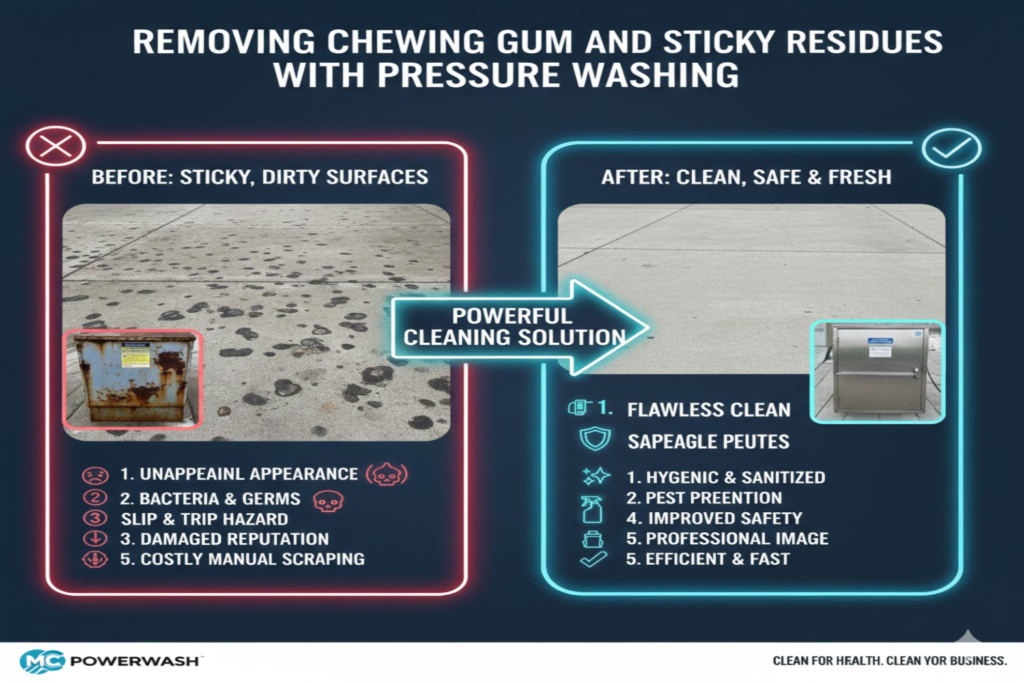
Why Pressure Washing Works for Chewing Gum and Sticky Residues
Chewing gum and similar residues bond tightly to porous and non-porous surfaces through heat, pressure from foot traffic, and time. High-pressure water disrupts this bond by forcing water underneath the gum, lifting it away without mechanical abrasion. Hot water (120–200°F) softens gum and adhesives dramatically, making removal easier. Steam pressure washing combines heat and pressure for even better results. Pre-treatments (degreasers, citrus solvents) further loosen sticky substances. Pressure washing clears large areas quickly compared to manual scraping. It is non-toxic when using only water or mild additives. The method is ideal for both small spots and widespread contamination.
Understanding Different Types of Sticky Residues
Chewing gum is the most common and difficult due to its rubbery, heat-sensitive nature. Tar and asphalt residues from street runoff harden and bond strongly to concrete. Tree sap and pine pitch are sticky and UV-resistant, requiring heat to soften. Adhesive residues from stickers, tape, or labels leave thin, stubborn films. Bird droppings contain acids that etch surfaces over time. Each type responds differently to pressure, heat, and pre-treatment. Identifying the residue helps choose the correct pressure setting and additive. Correct identification prevents wasted effort and surface damage.
Safety Precautions Before Pressure Washing Sticky Residues
Always wear non-slip, waterproof boots, chemical-resistant gloves, safety goggles, and hearing protection. Use a residual-current device (GFCI) for all electrical equipment near water. Never point the wand at people, animals, or fragile objects. Keep a safe distance from electrical outlets, windows, and vehicles. Use fall protection when working on elevated surfaces. Have a first-aid kit and phone nearby. Avoid working alone on large jobs. Safety gear and awareness prevent injuries during high-pressure work.
Choosing the Right Pressure Washer for Gum Removal
Select a gas or electric pressure washer rated 2000–4000 PSI with adjustable pressure settings. Hot water units (120–200°F) are ideal for gum and tar. Use wide fan nozzles (25–40 degrees) to avoid surface etching. Surface cleaners (rotating spray bars) cover large areas evenly. Extension wands allow ground-based operation for safety. Rent or purchase equipment with variable pressure control. The right machine ensures effective removal without damage.
Pre-Treatment Options for Better Results
Apply citrus-based degreasers or gum-specific solvents (such as Goo Gone, Citrus King, or Goof Off) to soften gum and adhesives before washing. Let dwell 5–15 minutes. Use hot water steam pre-treatment on stubborn spots. Los Angeles Baking soda paste or vinegar solutions work for light residues. Pre-treatment reduces pressure needs and prevents surface stress. Always test pre-treatments on a small area. Proper preparation makes pressure washing more effective.
Step-by-Step Pressure Washing Process for Gum Removal
- Sweep loose dirt and debris from the surface first.
- Apply pre-treatment solvent or degreaser to gum spots.
- Allow 10–15 minutes dwell time for softening.
- Set pressure washer to 1500–2500 PSI with a 25–40 degree fan nozzle.
- Hold the wand 6–12 inches from the surface.
- Work in small sections, moving steadily to avoid streaking.
- Start at the lowest effective pressure and increase gradually.
- Rinse thoroughly to remove all loosened residue.
- Inspect and repeat on stubborn spots if needed.
- Allow surface to dry completely.
Adjusting Pressure for Different Surfaces
Concrete and pavers tolerate 2000–3000 PSI safely. Brick and stucco require 1000–2000 PSI to avoid mortar damage. Painted or sealed surfaces need 1000 PSI or less. Metal and glass can handle higher pressure but avoid direct concentrated streams. Always start low and test. Surface sensitivity determines safe pressure range. Correct adjustment prevents etching and damage.
Hot Water vs Cold Water Pressure Washing
Hot water pressure washing (120–200°F) softens gum, tar, and adhesives dramatically, reducing cleaning time and pressure needs. Cold water works for fresh gum but struggles with hardened residues. Hot water units cost more but deliver superior results. Cold water is sufficient for light jobs. Temperature choice affects efficiency significantly. Hot water is preferred for stubborn sticky residues.
Adding Detergents and Degreasers to Pressure Washing
Use biodegradable degreasers or gum-specific additives in the pressure washer detergent tank. Citrus or soy-based cleaners enhance gum removal without surface harm. Avoid harsh alkaline or acid detergents on sensitive materials. Low-foam formulas prevent equipment clogs. Detergents improve results on oily or tarry residues. Proper additives make pressure washing more effective.
Avoiding Common Pressure Washing Mistakes
Using too high pressure etches concrete and brick. Los Angeles Holding the wand too close causes damage. Not pre-treating hardened gum leads to poor results. Rinsing from bottom to top creates streaks. Skipping PPE causes injury. Using narrow nozzles concentrates force dangerously. Avoiding these mistakes prevents surface damage and injury. Correct technique is essential for success.
Pressure Washing vs Other Gum Removal Methods Comparison Table
| Method | Effectiveness on Gum | Surface Damage Risk | Speed | Cost (DIY) | Environmental Impact | Best Surfaces |
| Hot Water Pressure Washing | Excellent | Low–Medium | Very Fast | $50–$150 (rental) | Low (water only) | Concrete, pavers, brick |
| Cold Water Pressure Washing | Good | Low | Fast | $30–$100 | Very Low | Fresh gum, non-porous surfaces |
| Steam Pressure Washing | Excellent | Very Low | Moderate | $200–$500 | Very Low | Delicate & porous surfaces |
| Chemical Solvents + Scraping | Very Good | Medium | Slow | $20–$80 | Medium | Small areas, painted surfaces |
| Dry Ice Blasting | Excellent | Very Low | Moderate | $300+ (pro) | Very Low | Historic or sensitive materials |
| Manual Freezing & Scraping | Fair | Low | Very Slow | $10–$50 | Zero | Very small spots |
Protecting Surrounding Areas During Pressure Washing
Cover nearby plants, windows, vehicles, and adjacent surfaces with plastic sheeting. Pre-wet landscaping to dilute any runoff. Place absorbent tarps or drop cloths below. Use containment berms for chemical additives. Direct wastewater away from storm drains if possible. Proper protection prevents collateral damage. Responsible pressure washing safeguards the entire property.
Post-Cleaning Surface Care
Rinse surfaces thoroughly to remove all residue. Allow complete drying (24–48 hours). Apply a penetrating sealer to concrete or pavers to prevent future adhesion. Reapply sealer every 2–3 years. Inspect for any missed spots and treat as needed. Post-care maintains clean appearance. Sealing reduces future gum sticking.
Preventing Future Chewing Gum and Sticky Residues
Install “no gum” signage in high-traffic areas. Use anti-graffiti or release coatings on vulnerable surfaces. Apply textured or non-stick sealers to concrete. Place trash cans and gum disposal bins nearby. Regular sweeping and spot cleaning discourage buildup. Community awareness reduces incidents. Prevention is more cost-effective than repeated cleaning.
When to Hire Professional Pressure Washing Services
Professionals use commercial hot water units, proper pressure control, and trained operators. They carry insurance for accidental damage. Experienced crews protect landscaping and adjacent surfaces. They handle large areas faster and more uniformly. Professionals follow local runoff regulations. For commercial properties or large vandalism, professional service is essential. Expert cleaning reduces risk and ensures quality.
Legal and Environmental Considerations
- Check local ordinances on pressure washing runoff and wastewater disposal.
- Many cities prohibit discharging into storm drains.
- Use biodegradable detergents when additives are needed.
- Contain and collect wastewater when required.
- Proper compliance prevents fines.
- Environmental responsibility is legally required.
- Responsible cleanup protects waterways and community standards.
Documentation for Insurance and Warranty Purposes
Photograph sticky residues before and after cleaning. Keep receipts for rented equipment, detergents, and professional services. Note dates, times, and methods used. Maintain records of any pre-existing damage. Documentation supports insurance claims or warranty disputes. Thorough records provide protection. Proper documentation is essential for large jobs.
Long-Term Cost Savings from Proper Gum Removal
Regular removal prevents gum hardening, surface staining, and costly repairs. Clean surfaces deter future vandalism and buildup. Professional or careful DIY methods extend surface life. Prevention of damage saves thousands compared to replacement. Consistent maintenance is far cheaper than neglect. Long-term savings justify the effort.
Conclusion
Removing chewing gum and sticky residues with pressure washing is highly effective when using the right pressure settings (500–3000 PSI), hot water (120–200°F), wide fan nozzles, and optional pre-treatments or degreasers. Hot water softens gum dramatically, low pressure prevents surface damage, and proper technique clears concrete, brick, pavers, and metal efficiently. In high-traffic urban environments, this method handles widespread buildup quickly and safely. Always prioritize safety gear, surface testing, runoff control, and post-cleaning sealing. For large or commercial jobs, professional hot water pressure washing delivers superior results. With the correct approach, pressure washing removes chewing gum and sticky residues completely while protecting surfaces and preventing future adhesion.
Frequently Asked Questions (FAQs)
1. What PSI is safe for removing gum from concrete?
1500–3000 PSI with a wide fan nozzle (25–40 degrees) is safe and effective on concrete and pavers. Start low and increase gradually. Avoid narrow nozzles or zero-degree tips. Proper pressure prevents etching and damage.
2. Does hot water make gum removal easier?
Yes, hot water (120–200°F) softens gum and adhesives dramatically, reducing cleaning time and pressure needs. Cold water struggles with hardened residues. Hot water units provide superior results. Temperature is a key factor.
3. Can I remove gum with pressure washing alone?
Yes for fresh gum, but hardened or layered residues often require pre-treatment with citrus degreaser or solvent. Pre-treating softens gum significantly. Pressure alone works best on non-porous surfaces. Combination yields best results.
4. Is pressure washing safe for brick surfaces?
Low-pressure (800–1500 PSI) is safe if using wide nozzles. High pressure erodes brick face and mortar joints. Always test a small area first. Soft washing techniques are safest for brick. Pressure control is critical.
5. How do I protect plants during pressure washing?
Pre-wet all landscaping with plain water. Cover sensitive plants with plastic sheeting. Place tarps below to catch runoff. Rinse plants thoroughly afterward. Use biodegradable detergents if additives are needed. Proper protection prevents chemical burn.
6. What pre-treatment works best for chewing gum?
Citrus-based degreasers, Goo Gone, or commercial gum removers soften gum effectively. Apply, let dwell 5–15 minutes, then pressure wash. Pre-treatment reduces pressure needs. It makes removal much easier.
7. Can pressure washing damage painted surfaces?
Yes, high pressure strips paint and causes peeling. Use 500–1000 PSI max with wide nozzles. Test first. Low pressure with detergent is safer. Painted surfaces require extra caution.
8. How long does it take to pressure wash gum off a sidewalk?
Small areas take 15–60 minutes. Large sidewalks or driveways may take 2–6 hours depending on gum coverage. Pre-treatment speeds the process. Hot water reduces time significantly. Time varies by surface and residue amount.
9. Should I seal surfaces after removing gum?
Yes, apply a penetrating concrete or paver sealer after cleaning. It reduces future gum adhesion and makes removal easier. Reapply every 2–3 years. Sealing protects surfaces long-term.
10. When should I hire professionals for gum removal?
Hire pros for large areas, commercial properties, multi-story access, or when DIY attempts risk damage. Professionals use hot water units and proper pressure control. They protect landscaping and ensure complete removal. Expert service is worth it for big jobs.