Roof cleaning safety tips for homeowners are essential to avoid serious injuries, property damage, or voided warranties when attempting to remove black algae, moss, lichen, smog buildup, bird droppings, and dirt from roofs. Working at heights, handling chemicals, and using equipment create multiple hazards that can be minimized with proper preparation and techniques.
Soft washing (low-pressure cleaning) is the safest method recommended by roofing experts for homeowners. In places like Los Angeles, constant urban smog and mild weather promote rapid algae growth, tempting many to clean roofs frequently.homeowners often face slippery surfaces from pollution residue and algae. Los Angeles roofs show heavy buildup that makes DIY attempts riskier without precautions.
properties benefit from careful safety planning during cleaning projects. Following proven safety tips protects both people and the roof structure effectively. Check ladders for bent rungs, cracked rails, or loose bolts before each use. Inspect harnesses, lanyards, and anchors for wear or damage. Test spray equipment for leaks or clogs. Replace worn hoses, nozzles, or connectors immediately. Store equipment properly to prevent deterioration. Regular maintenance ensures reliability. Faulty gear causes most preventable accidents.
Why Roof Cleaning Safety Is Critical
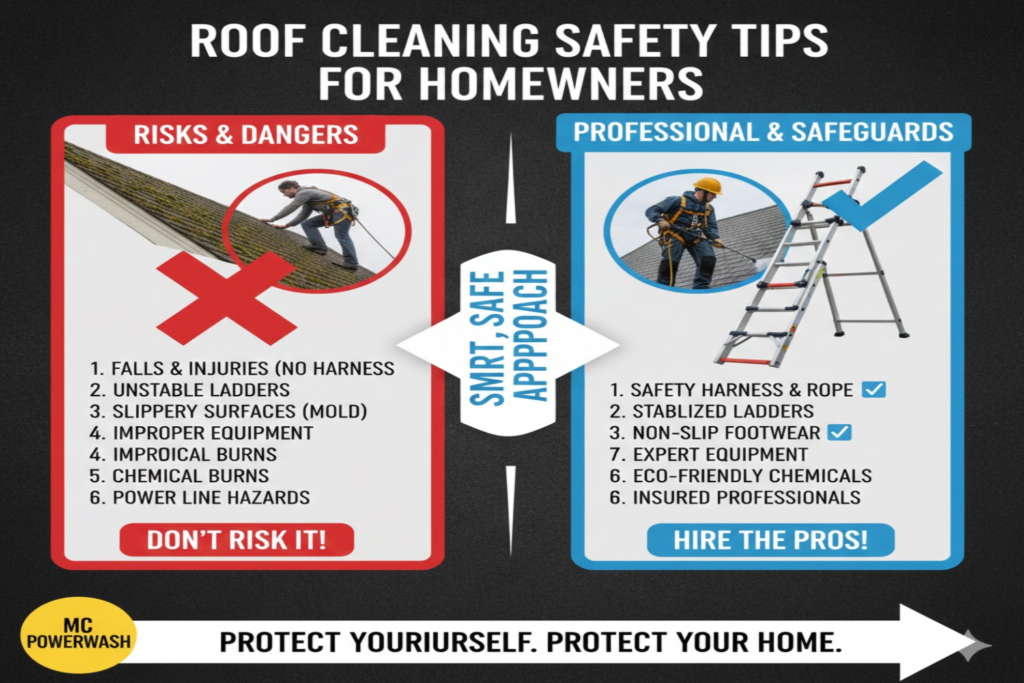
Falls from roofs cause thousands of injuries and fatalities annually across the country. Improper chemical use can damage shingles, tiles, or landscaping. High-pressure washing often leads to granule loss, cracking, or water intrusion. Slippery algae-covered surfaces increase fall risks dramatically. Electrical hazards from Los Angeles nearby power lines are common. Incorrect ladder placement causes thousands of accidents yearly. Safe practices prevent emergency room visits, lawsuits, and expensive repairs.
Check ladders for bent rungs, cracked rails, or loose bolts before each use. Inspect harnesses, lanyards, and anchors for wear or damage. Test spray equipment for leaks or clogs. Replace worn hoses, nozzles, or connectors immediately. Store equipment properly to prevent deterioration. Regular maintenance ensures reliability. Faulty gear causes most preventable accidents.
Assess Your Roof Condition Before Starting
Inspect the roof from the ground using binoculars to identify heavy buildup, cracked shingles, or sagging areas. Look for loose tiles, missing granules, or damaged flashing that could collapse under weight. Check for overhanging power lines or tree branches near the work area. Evaluate the roof slope—steeper pitches are much riskier for homeowners. Note shaded areas where moss grows thickest and creates slippery spots.
If the roof shows advanced deterioration, hire professionals instead. A thorough pre-assessment prevents working on unsafe surfaces. Check ladders for bent rungs, cracked rails, or loose bolts before each use. Inspect harnesses, lanyards, and anchors for wear or damage. Test spray equipment for leaks or clogs. Replace worn hoses, nozzles, or connectors immediately. Store equipment properly to prevent deterioration. Regular maintenance ensures reliability. Faulty gear causes most preventable accidents.
Choose Soft Washing Over High-Pressure Methods
Soft washing uses low pressure (under 500 PSI) and cleaning solutions to dissolve contaminants safely. High-pressure washing strips granules, cracks tiles, and forces water under shingles. Low-pressure application reduces slip risks from forceful water rebound. Soft washing allows better control and less physical strain on the worker. It complies with most roofing manufacturer warranties. Professionals and experienced homeowners prefer soft washing for safety.
This method minimizes both personal injury and roof damage simultaneously. Check ladders for bent rungs, cracked rails, or loose bolts before each use. Inspect harnesses, lanyards, and anchors for wear or damage. Test spray equipment for leaks or clogs. Replace worn hoses, nozzles, or connectors immediately. Store equipment properly to prevent deterioration. Regular maintenance ensures reliability. Faulty gear causes most preventable accidents.
Wear Proper Personal Protective Equipment (PPE)
- Always wear non-slip, rubber-soled shoes with good ankle support when on the roof.
- Use chemical-resistant gloves, safety goggles, and a respirator when mixing or applying cleaners.
- Wear long sleeves and pants to protect skin from splashes and UV exposure.
- A hard hat protects against falling debris or branches.
- Fall protection harnesses are mandatory on steep roofs or edges.
- Ear protection helps if using loud equipment.
- Full PPE significantly reduces injury risks during cleaning.
Set Up Safe Ladder Access and Placement
Use a sturdy, extension ladder rated for your weight plus equipment. Place the ladder on firm, level ground at a 4:1 angle (4 feet out for every 1 foot up). Extend the ladder at least 3 feet above the roof edge for safe access. Secure the ladder top and bottom to prevent slipping. Never stand on the top two rungs. Have a spotter hold the ladder steady when climbing. Proper ladder setup is the foundation of safe roof access.
Check ladders for bent rungs, cracked rails, or loose bolts before each use. Inspect harnesses, lanyards, and anchors for wear or damage. Test spray equipment for leaks or clogs. Replace worn hoses, nozzles, or connectors immediately. Store equipment properly to prevent deterioration. Regular maintenance ensures reliability. Faulty gear causes most preventable accidents.
Use Fall Protection Systems Correctly
Install a personal fall arrest system with a roof anchor, full-body harness, and shock-absorbing lanyard on steep roofs. Attach anchors to strong structural points like rafters or trusses. Never tie off to chimneys, vents, or weak points. Keep the lanyard short enough to limit fall distance but allow movement. Practice using the harness on the ground first. Fall protection saves lives when slips occur. Every homeowner working on roofs should invest in quality gear.
Protect Landscaping and Property from Chemicals
Pre-soak plants, grass, and flowers with plain water before applying cleaners. Cover sensitive shrubs and flowers with plastic sheeting or tarps. Use low-concentration solutions and rinse thoroughly after cleaning. Direct runoff away from storm drains if possible. Avoid cleaning on windy days to prevent overspray. Test cleaners on small areas first. Proper protection prevents plant burn and environmental damage.
Handle Cleaning Chemicals Safely
Mix sodium hypochlorite or other detergents in well-ventilated outdoor areas only. Never mix bleach with ammonia or acids—this creates toxic gas. Wear gloves and goggles when pouring or diluting solutions. Store chemicals in original containers away from children and pets. Use measuring tools for accurate dilution ratios. Dispose of leftover solutions according to local regulations.
Safe chemical handling prevents burns, respiratory issues, and accidents. Check ladders for bent rungs, cracked rails, or loose bolts before each use. Inspect harnesses, lanyards, and anchors for wear or damage. Test spray equipment for leaks or clogs. Replace worn hoses, nozzles, or connectors immediately. Store equipment properly to prevent deterioration. Regular maintenance ensures reliability. Faulty gear causes most preventable accidents.
Avoid Working Alone on the Roof
Always have at least one person on the ground as a spotter during cleaning. The spotter can call emergency services if a fall occurs. Use two-way radios or cell phones for constant communication. Share your work plan and expected completion time. Have a charged phone nearby for emergencies. Never work alone on multi-story roofs or steep pitches. A second person dramatically improves safety.
Work During Optimal Weather Conditions
Clean roofs on calm, dry days with mild temperatures (60–80°F). Avoid windy conditions that increase fall risks and overspray. Never work during or immediately after rain when surfaces are extremely slippery. Postpone if thunderstorms are forecast. Los Angeles Early morning or late afternoon reduces direct sun exposure. Proper weather selection prevents slips and heat-related illness.
Ideal conditions make cleaning safer and more effective.Check ladders for bent rungs, cracked rails, or loose bolts before each use. Inspect harnesses, lanyards, and anchors for wear or damage. Test spray equipment for leaks or clogs. Replace worn hoses, nozzles, or connectors immediately. Store equipment properly to prevent deterioration. Regular maintenance ensures reliability. Faulty gear causes most preventable accidents.
Use the Right Tools and Equipment Safely
- Choose extension poles for ground-based soft washing whenever possible.
- Use wide-tip, low-pressure nozzles to avoid damage.
- Secure hoses and cords to prevent tripping hazards.
- Keep tools within reach but out of fall paths.
- Use stable scaffolding or roof brackets on very steep roofs.
- Inspect all equipment before use for wear or defects.
- Quality tools reduce physical strain and risks.
Know When to Call Professionals Instead
If the roof is steeper than 6/12 pitch, hire professionals with proper safety training. Call experts if you see extensive rot, missing shingles, or structural damage. Professionals have insurance, fall protection expertise, and commercial equipment. DIY attempts on complex roofs often cause more harm. When in doubt, professional service is safer and more cost-effective. Experts handle high-risk situations properly.
Understand Local Regulations and Permits
Check if your city requires permits for ladder use or chemical application. Follow any restrictions on runoff into storm drains. Use only approved cleaning solutions in regulated areas. Understand liability if damage occurs to neighboring properties. Comply with HOA rules if applicable. Knowledge of regulations prevents fines. Safe compliance protects homeowners legally.
Post-Cleaning Safety Checks
Inspect the roof edge, gutters, and downspouts for leftover debris. Ensure no tools or tarps remain on the roof. Check for chemical residue on siding or windows. Rinse plants again if needed. Verify all equipment is cleaned and stored properly. Document the work with photos. Thorough post-checks prevent lingering hazards.
Roof Cleaning Safety Tips Comparison Table
| Safety Aspect | DIY Risk Level | Professional Advantage | Key Prevention Tip | Consequence if Ignored |
| Fall Protection | High | Full harness systems & anchors | Use harness on steep roofs | Serious injury/death |
| Chemical Handling | Medium-High | Precise mixing & containment | Wear PPE & ventilate | Burns/respiratory harm |
| Ladder Setup | High | Scaffolding & lifts | 4:1 angle & secure placement | Falls & fractures |
| Weather Conditions | Medium | Flexible scheduling | Avoid wind/rain | Slips & overspray |
| Roof Condition Assessment | High | Detailed inspections | Ground inspection first | Collapse/collapse |
| Landscaping Protection | Medium | Containment & runoff control | Pre-soak plants | Plant death/runoff |
| Working Alone | Very High | Spotters & teams | Always have a ground person | Delayed emergency help |
Prepare an Emergency Plan Before Starting
Keep a fully charged phone accessible at all times. Know the exact address and nearest cross street for emergency calls. Have a first-aid kit with bandages, antiseptics, and burn treatment nearby. Inform a neighbor or family member of your work schedule. Know how to shut off water supply quickly if needed. Keep emergency numbers posted. A solid plan reduces panic in accidents.
Check ladders for bent rungs, cracked rails, or loose bolts before each use. Inspect harnesses, lanyards, and anchors for wear or damage. Test spray equipment for leaks or clogs. Replace worn hoses, nozzles, or connectors immediately. Store equipment properly to prevent deterioration. Regular maintenance ensures reliability. Faulty gear causes most preventable accidents.
Clean in Sections and Take Frequent Breaks
Divide the roof into manageable sections to avoid fatigue. Work from top to bottom to prevent walking on wet areas. Take 10–15 minute breaks every hour to rest and hydrate. Watch for signs of dizziness, heat exhaustion, or muscle strain. Avoid overexertion on hot days. Sectioned cleaning improves safety and quality. Regular breaks prevent mistakes from tiredness.
Inspect and Maintain Equipment Regularly
Check ladders for bent rungs, cracked rails, or loose bolts before each use. Inspect harnesses, lanyards, and anchors for wear or damage. Test spray equipment for leaks or clogs. Replace worn hoses, nozzles, or connectors immediately. Store equipment properly to prevent deterioration. Regular maintenance ensures reliability. Faulty gear causes most preventable accidents.
Conclusion
Roof cleaning safety tips for homeowners focus on fall prevention, proper PPE, soft washing techniques, chemical handling, ladder safety, and knowing when to hire professionals. Falls, chemical burns, roof damage, and environmental harm are the main risks that careful planning eliminates. In demanding climates, safe practices become even more important due to slippery algae and frequent cleaning needs. Always prioritize low-pressure methods, weather awareness, and fall protection systems.
3 Never work alone on steep roofs or ignore visible damage. Following these comprehensive safety tips protects your health, your roof, and your property value. When risks seem high, professional roof cleaning services provide the safest solution. Check ladders for bent rungs, cracked rails, or loose bolts before each use. Inspect harnesses, lanyards, and anchors for wear or damage. Test spray equipment for leaks or clogs. Replace worn hoses, nozzles, or connectors immediately. Store equipment properly to prevent deterioration. Regular maintenance ensures reliability. Faulty gear causes most preventable accidents.
Frequently Asked Questions (FAQs)
1. What is the biggest safety risk when cleaning a roof?
Falls from heights are by far the greatest danger and cause most injuries. Slippery algae, steep slopes, and improper ladders increase fall risks dramatically. Always use fall protection on anything steeper than a low pitch. A harness and anchor can save your life if a slip occurs.
2. Is soft washing safer than pressure washing?
Yes, soft washing uses low pressure and avoids stripping granules or forcing water inside. High-pressure methods increase slip hazards from rebound water. Soft washing is gentler on the roof and safer for the user. Professionals and experts recommend it for homeowner safety.
3. Do I need a harness for every roof cleaning job?
Yes, if the roof pitch is steep (over 6/12) or you’re working near edges. Even on low-slope roofs, a harness adds security. OSHA recommends fall protection above 6 feet. Investing in a good system is worth it for peace of mind.
4. How can I protect my plants during roof cleaning?
Pre-wet all plants and grass with plain water before applying cleaners. Cover sensitive flowers with plastic sheeting. Use the lowest effective concentration and rinse thoroughly afterward. Biodegradable detergents reduce risk further. Proper protection prevents chemical burn to landscaping.
5. Is it safe to clean my roof alone?
No—always have a ground person as a spotter who can call for help. Working alone delays emergency response if a fall happens. Use radios or phones for constant contact. A second person makes the job much safer overall.
6. What PPE should I wear for roof cleaning?
Non-slip rubber boots, chemical-resistant gloves, safety goggles, respirator, long sleeves/pants, and a hard hat. Add a fall harness for steep roofs. Full PPE protects against slips, splashes, debris, and chemicals. Never skip any piece of protective gear.
7. Can I use household bleach for roof cleaning safely?
Yes, when diluted properly (usually 50/50 or less) and mixed with surfactant. Wear full PPE and ventilate the area. Avoid mixing with other chemicals. Household bleach works but professional-grade sodium hypochlorite is often more consistent.
8. When should I hire professionals instead of DIY?
Hire pros if the roof is steep, over two stories, shows damage, or you lack safety equipment. Professionals have training, insurance, and commercial tools. DIY on complex roofs often leads to injury or damage. When in doubt, professional service is safer.
9. How do I prevent ladder accidents during roof access?
Use a stable, properly angled ladder (4:1 ratio) on level ground. Extend it 3 feet above the roof edge. Secure both top and bottom. Never stand on top rungs. Have a spotter hold it steady. Correct ladder use prevents most access-related falls.
10. What should I do if I feel unsafe on the roof?
Stop immediately and come down carefully. Never push through fear or fatigue. Reassess conditions or call professionals. Your safety is more important than finishing the job. Listen to your instincts and prioritize health.