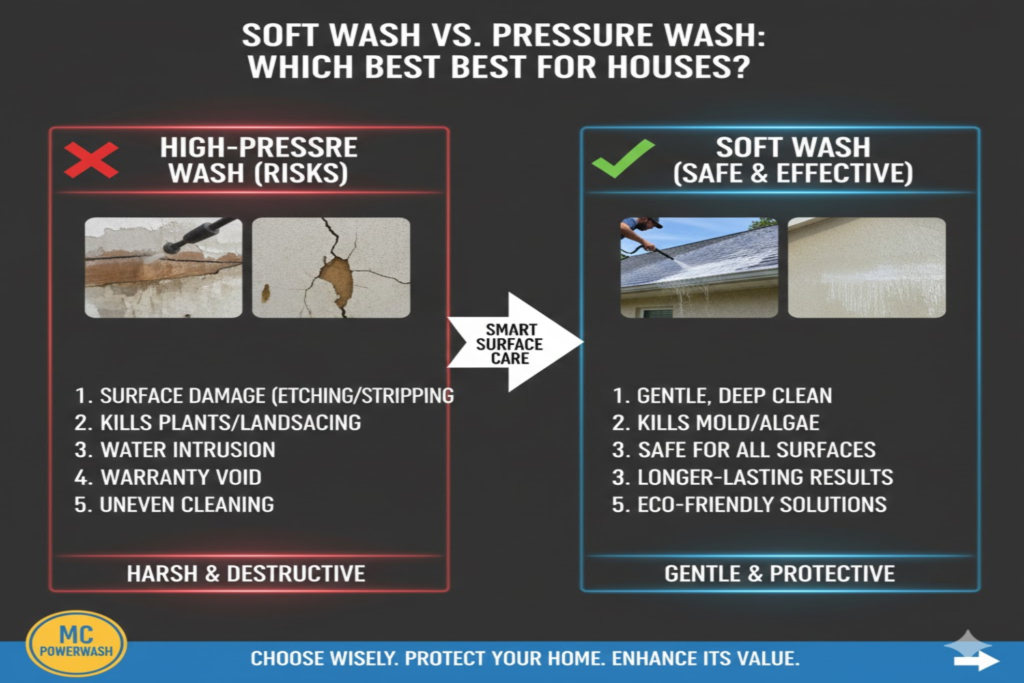
Soft washing and pressure washing are the two leading methods used to clean house exteriors effectively. Soft washing applies low-pressure water combined with powerful cleaning solutions to kill and remove mold, mildew, algae, dirt, oxidation, and stains without harming surfaces. Pressure washing uses high-pressure water jets to blast away tough grime, oil, and embedded debris quickly and forcefully.
Both techniques restore curb appeal, improve safety, and protect home exteriors from long-term damage. For most residential houses, soft washing is considered the superior and safer choice overall. It prevents common issues like paint peeling, shingle granule loss, and water intrusion behind siding. Pressure washing remains excellent for specific hard surfaces where heavy buildup exists. Choosing the right method depends on the house materials, location of cleaning, and desired long-term results. Professionals help determine the best approach for every home.
Understanding Soft Wash vs. Pressure Wash Basics
Soft washing relies on low pressure under 500 PSI along with specialized biodegradable detergents and algaecides. The cleaning agents dwell on surfaces to break down organic growth at the molecular level before a gentle rinse removes everything. This method is specifically designed to clean fragile and coated house exteriors safely. Pressure washing operates at 1,500 to 4,000 PSI and uses mechanical force to dislodge dirt and stains rapidly.
It requires less chemical assistance and delivers instant visible results on durable surfaces. Both methods have unique strengths depending on the area being cleaned. Soft washing is gentler and longer-lasting on most house exteriors. Pressure washing is faster but carries higher risk when used incorrectly. The right choice protects your home investment effectively.
How Soft Washing and Pressure Washing Actually Work
Soft washing starts with applying a low-pressure chemical solution that soaks into dirt, mold, and algae for 10–20 minutes. After dwelling, a soft rinse flushes away dead contaminants without damaging underlying materials. Pressure washing uses high-velocity water streams directed through adjustable nozzles to physically remove tough buildup immediately.
Technicians work from top to bottom to avoid streaking on house walls and roofs. Both methods require careful surface assessment before starting any job. Preparation includes protecting plants, windows, and nearby items from overspray. Final inspection ensures complete and uniform cleaning results. Soft washing dominates for upper house areas while pressure suits lower hardscapes. Combining both techniques often produces the best overall outcome.
Main Differences Between Soft Wash and Pressure Wash
Soft washing uses very low pressure and focuses heavily on chemical action to kill contaminants at the root level. Pressure washing depends primarily on high water pressure to blast away surface dirt and stains mechanically.
Soft washing is much safer for roofs, vinyl siding, painted surfaces, and wood decks. Pressure washing excels on concrete driveways, patios, walkways, and brick areas with heavy grime. Soft washing typically provides longer-lasting cleanliness with less frequent need for repeat treatments. Pressure washing gives faster dramatic transformation but may cause damage if misapplied. Soft washing is more water-efficient and eco-friendly in most cases. Pressure washing can use hot water for stubborn grease removal effectively. Understanding these core differences helps homeowners choose wisely.
Benefits of Choosing Soft Washing for Your House
Soft washing cleans house exteriors without risking damage to paint, shingles, or delicate siding materials. It eliminates mold, algae, and mildew at the root level for significantly longer-lasting results. Soft washing preserves protective coatings and sealants on exterior surfaces much better than high-pressure methods. It reduces the chance of water forcing behind siding or into roof underlayment.
Soft washing is gentler on the environment with biodegradable solutions and lower water usage overall. Homeowners enjoy a cleaner, fresher appearance that lasts for years with proper maintenance. It prepares surfaces perfectly for future painting or sealing projects. Soft washing also improves indoor air quality by removing exterior allergens effectively. Overall, it offers the safest and most protective cleaning solution for houses.
Benefits of Choosing Pressure Washing for Your House
Pressure washing delivers fast and powerful cleaning results on tough exterior surfaces quickly. It removes heavy oil stains, tire marks, rust, and thick dirt layers with impressive efficiency. Pressure washing is ideal for concrete driveways, garage floors, and stone patios with deep-set grime. It provides immediate dramatic before-and-after transformation that boosts curb appeal instantly. Pressure washing can use hot water to dissolve grease and stubborn contaminants more easily. It works well for large flat areas where speed is important for the homeowner. Pressure washing clears slippery residues effectively, improving safety around the house. It is usually more budget-friendly for ground-level hardscape cleaning jobs. When used correctly, it remains a valuable option for specific house areas.
Which Surfaces Should Use Soft Wash vs Pressure Wash
Roofs with asphalt shingles or tiles should always use soft washing to prevent granule loss and leaks. Vinyl, aluminum, and fiber cement siding benefit most from soft washing to protect the factory finish. Wood decks and fences stay intact longer when cleaned with soft washing techniques only. Concrete driveways and garage floors perform best with pressure washing for oil and tire mark removal. Stone and paver patios respond excellently to pressure washing for deep dirt and moss elimination. Brick and stucco walls are safer with soft washing to avoid damaging mortar joints over time. Gutters and downspouts clean effectively with soft washing without causing dents or warping. Windows, trim, and painted doors stay protected with gentle soft washing methods. Using the correct technique per surface ensures maximum safety and longevity.
Key Reasons to Prefer Soft Washing for Most House Exteriors
- Safest option for roofs, siding, and painted surfaces
- Kills mold, algae, and mildew at the root for longer results
- Prevents damage like shingle granule loss, paint peeling, or water intrusion
- Uses biodegradable chemicals and lower water volume
- Better for preserving factory finishes and protective coatings
- Reduces regrowth and the need for frequent cleanings
- More environmentally friendly and plant-safe
- Creates a natural, uniform, streak-free finish
Eco-Friendly Benefits of Modern Soft Washing
Modern soft washing uses biodegradable and phosphate-free cleaning agents that break down harmlessly. Low-pressure application significantly reduces overall water consumption compared to traditional methods. Runoff is carefully managed to protect nearby plants, soil, and local waterways effectively. Soft washing minimizes chemical overuse through precise targeted application techniques.
Energy-efficient pumps and equipment lower the environmental footprint further. In areas like Los Angeles, eco-friendly soft washing helps combat urban smog and dust buildup responsibly. Pressure washing can incorporate water reclamation systems when available. Both methods follow strict environmental guidelines in professional hands. Soft washing provides powerful cleaning with much less ecological impact overall.
When to Use Pressure Washing on Your House
- Best for concrete driveways, garage floors, and walkways
- Excellent for removing heavy oil, grease, tire marks, and rust stains
- Ideal for stone pavers, brick patios, and hardscape areas
- Provides fast, dramatic cleaning results on durable surfaces
- Useful when speed is more important than extreme gentleness
- Works well with hot water for stubborn greasy buildup
- Clears thick, embedded dirt that chemicals alone can’t remove
- Should be done carefully with the right nozzles and distance
Cost Factors That Affect Soft Wash and Pressure Wash Prices
House size and total square footage cleaned directly impact the final service cost significantly. Multi-story homes require extra equipment like ladders or lifts, raising the price accordingly. Heavy mold, algae, or oil buildup demands more time and stronger solutions overall.
Add-on services such as gutters, fences, or deck cleaning increase the total amount charged. Soft washing typically costs slightly more due to specialized chemical usage. Pressure washing is often cheaper for simple hard-surface jobs only. In places like Los Angeles, pricing may reflect higher demand and urban pollution challenges. Most full-house cleanings range between $200 and $900 depending on condition. Free on-site estimates help homeowners understand exact costs upfront clearly.
Soft Wash vs Pressure Wash Comparison Table
| Feature | Soft Wash | Pressure Wash | Best For | Long-Term Advantage |
| Pressure Level | Under 500 PSI | 1,500–4,000 PSI | Delicate vs Durable | Safety vs Speed |
| Primary Cleaning Method | Chemical action + gentle rinse | High-pressure mechanical force | Organic vs Inorganic | Longer results vs Instant clean |
| Damage Risk | Very low | Medium to high if misused | Roofs, siding | Material preservation |
| Mold/Algae Removal | Kills at root level | Removes surface only | Roofs, walls | Fewer regrowths |
| Water Usage | Lower volume | Higher volume | Eco homes | Resource conservation |
| Curb Appeal Result | Natural and uniform | Dramatic and fast | Full house | Higher property value |
| Paint/Coating Safety | Excellent preservation | Risk of stripping | Painted areas | Longer finish life |
| Cost per Job | Slightly higher | Usually lower | Budget projects | Long-term repair savings |
| Eco-Friendliness | Biodegradable + low water | Higher water use | Green cleaning | Minimal environmental impact |
Why Professional Soft Wash Beats DIY Every Time
Professionals select the perfect pressure and chemical mix for each house surface accurately. They use commercial equipment that delivers consistent, high-quality cleaning results every time. DIY attempts often cause expensive damage to siding, roofs, or paint finishes. Professionals carry insurance that protects homeowners from accidental issues completely. They manage chemical runoff and comply with all local environmental regulations properly. Experienced teams spot hidden problems like rot or cracks early during cleaning. Professionals finish large house exteriors much faster with streak-free perfection. They provide warranties and follow-up advice for best long-term maintenance. Choosing professionals guarantees safer, better, and longer-lasting house cleaning results.
When Is the Best Time to Schedule Soft Wash or Pressure Wash
Spring is perfect for removing winter mold, pollen, and salt residue from house exteriors. Fall cleaning clears summer buildup, leaves, and debris before cold weather arrives. After major storms, prompt cleaning prevents moisture damage and staining issues quickly. Before putting your house on the market, cleaning boosts photos and buyer impressions dramatically. Prior to holidays or family gatherings, a fresh exterior creates a welcoming appearance instantly. Visible streaks, dark spots, or dullness signal it is time to clean soon. Scheduling every 12 to 24 months maintains the best protection and appearance long-term. Soft washing is recommended most often for regular house maintenance schedules. Consistent timing prevents expensive repairs and keeps your home looking its best.
Common Mistakes to Avoid When Choosing Soft Wash or Pressure Wash
Many homeowners mistakenly use high-pressure washing on roofs and siding, causing serious damage like shingle loss or water intrusion. Choosing the wrong method often leads to premature wear of paint, sealants, and protective coatings on the house. DIY cleaning without proper training frequently results in uneven results, streaks, or missed areas. Using non-biodegradable or harsh chemicals can harm plants, soil, and local water systems. Skipping surface preparation like moving items or covering plants leads to accidental damage or overspray issues. Ignoring professional advice can cause costly repairs that far exceed the cleaning cost. Not scheduling regular maintenance allows heavy buildup that requires more aggressive and expensive cleaning later. Always match the method to the surface type for the best and safest results.
Signs Your House Needs Soft Washing or Pressure Washing
- Dark streaks or black spots on the roof from algae and moss growth
- Green or black mildew appearing on siding, decks, or fences
- Dull, chalky, or faded appearance on painted or vinyl surfaces
- Oil stains, tire marks, or rust buildup on driveways and garage floors
- Slippery algae or moss patches on patios, walkways, or steps
- Visible dirt, pollen, or pollution residue on exterior walls and trim
- Cobwebs, bird droppings, or leaf stains that won’t rinse off easily
- Musty odors or increased indoor allergens from exterior mold
- General lack of curb appeal making the house look old or neglected
Conclusion
Soft washing stands out as the best overall choice for most house exteriors today. It cleans safely, kills contaminants at the root, and protects expensive materials from damage effectively. Pressure washing remains valuable for concrete, pavers, and heavy-duty areas only. Professional teams combine both techniques intelligently for optimal house results. Regular soft washing prevents costly repairs and maintains high property value long-term.
It improves safety, curb appeal, and indoor air quality simultaneously. In places like Los Angeles, soft washing effectively counters persistent smog and urban dust accumulation. Investing in proper exterior cleaning delivers excellent returns for every homeowner. Soft washing offers the smartest, safest, and most durable solution available. Choose soft washing for the majority of your house to enjoy lasting benefits.
Frequently Asked Questions (FAQs)
1. What is the biggest advantage of soft washing over pressure washing for houses?
Soft washing is much gentler and prevents damage to roofs, siding, and painted surfaces completely. It kills mold and algae at the root instead of just removing surface growth. This delivers longer-lasting cleanliness with fewer repeat cleanings needed over time. Overall, soft washing protects your home investment far better than high-pressure methods.
2. Which method is safer for asphalt shingle roofs?
Soft washing is the only safe option for asphalt shingle roofs in almost every case. High-pressure washing can strip granules, crack shingles, and force water underneath easily. Soft washing removes black streaks and moss gently without causing leaks or premature failure. It extends roof lifespan significantly compared to pressure methods.
3. Does soft washing really increase home value more than pressure washing?
Yes, soft washing usually increases home value more because it preserves exterior materials and finishes better. A clean, undamaged house exterior signals excellent maintenance to buyers and appraisers. Pressure washing provides quick visual improvement but risks costly damage if misused. Soft washing creates a more polished and valuable appearance overall.
4. How often should a house get soft washed versus pressure washed?
Most houses benefit from soft washing every 12 to 24 months depending on climate and shade. Pressure washing is needed less often, usually only for driveways and patios every 1–3 years. Regular soft washing prevents heavy buildup and reduces the need for aggressive pressure cleaning later. Consistent soft washing keeps the entire exterior in top condition longer.
5. Is soft washing more expensive than pressure washing?
Soft washing typically costs slightly more because it uses specialized biodegradable chemicals and requires more dwell time. Pressure washing is often cheaper for simple hard-surface jobs due to faster completion. However, soft washing saves money long-term by preventing damage repairs and extending material life. The higher upfront cost delivers better overall value for most houses.
6. Can pressure washing damage vinyl siding?
Yes, pressure washing can easily damage vinyl siding by chipping paint, cracking panels, or forcing water behind the siding causing mold and rot. Soft washing is much safer for vinyl, aluminum, and fiber cement siding. It cleans effectively without risking structural or cosmetic damage. Professionals always recommend soft washing for most house siding materials.
7. Does soft washing remove oil stains from driveways?
Soft washing is not ideal for heavy oil stains on concrete or driveways because it relies more on chemicals than force. Pressure washing is better for blasting away stubborn oil, grease, and tire marks quickly. For best results, professionals often use a combination approach on mixed surfaces. Soft washing works well for light organic stains on hard surfaces.
8. Is soft washing safe for plants and landscaping?
Yes, professional soft washing uses biodegradable, plant-safe solutions and careful application techniques. Technicians cover or rinse nearby plants to prevent any chemical exposure. Low-pressure rinsing also avoids soil erosion or plant damage. Soft washing is one of the most landscaping-friendly exterior cleaning methods available.
9. How long do soft wash results typically last?
Soft wash results usually last 1 to 3 years depending on climate, shade, and exposure to pollution or moisture. Because it kills mold and algae at the root, regrowth is much slower than with pressure washing. Regular maintenance every 12–24 months keeps the house looking fresh longer. Consistent soft washing maximizes the duration of clean results.
10. Why should I hire professionals instead of renting equipment?
Professionals have the right equipment, training, and insurance to clean safely and effectively without damaging your home. DIY rentals often lead to incorrect pressure settings, poor chemical mixing, and expensive mistakes. Experts finish faster, achieve better uniform results, and spot hidden issues early. Hiring pros saves time, money, and protects your property long-term.