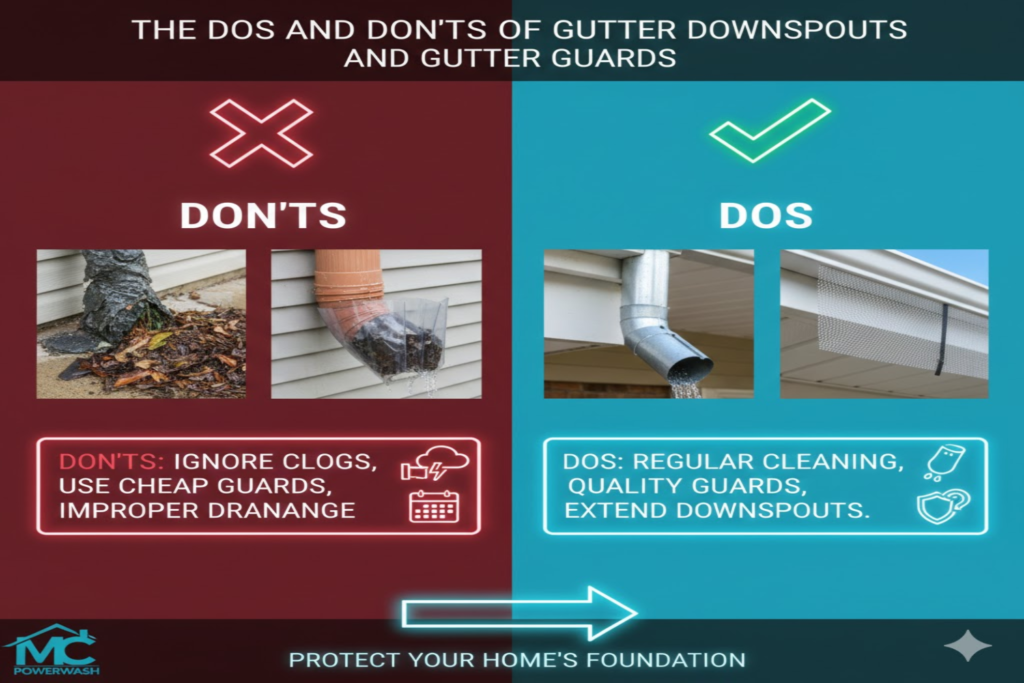
Gutter downspouts and gutter guards play a critical role in protecting your home from water damage. Downspouts carry rainwater safely away from the foundation, while guards reduce debris buildup inside gutters. However, improper installation, poor maintenance, or wrong choices can cause clogs, overflow, and expensive repairs. Here are the essential dos and don’ts to help you keep your gutter system working effectively and avoid common mistakes.
Gutter downspouts and gutter guards play a vital role in protecting your home from water damage. Downspouts direct rainwater away from the foundation, while gutter guards prevent debris from clogging the system. When these components are installed and maintained properly, they extend the life of your roof, walls, and drainage system. In the sunny yet pollution-heavy climate of Los Angeles, dust, leaves, and urban debris make proper gutter management especially important. Following the right dos and don’ts helps homeowners avoid costly repairs and maintain long-term property value.
Why Downspouts and Gutter Guards Matter
Downspouts carry water from gutters to safe drainage areas. Without proper placement, water collects near foundations and causes cracks. Gutter guards block leaves, twigs, and dirt from entering gutters. Together, they ensure smooth water flow and reduce maintenance needs. In Los Angeles, seasonal storms and falling debris make these systems essential for home protection.
Gutter downspouts and gutter guards play a vital role in protecting your home from water damage. Downspouts direct rainwater away from the foundation, while gutter guards prevent debris from clogging the system. When these components are installed and maintained properly, they extend the life of your roof, walls, and drainage system.
In the sunny yet pollution-heavy climate of Los Angeles, dust, leaves, and urban debris make proper gutter management especially important. Following the right dos and don’ts helps homeowners avoid costly repairs and maintain long-term property value.
Dos for Gutter Downspouts
- Do extend downspouts at least 5–10 feet away from the foundation using splash blocks, buried extensions, or rain chains.
- This prevents water from pooling near the base of the house and reduces erosion and foundation pressure.
- Gutter downspouts and gutter guards play a vital role in protecting your home from water damage.
- Downspouts direct rainwater away from the foundation, while gutter guards prevent debris from clogging the system.
- When these components are installed and maintained properly, they extend the life of your roof, walls, and drainage system.
- In the sunny yet pollution-heavy climate of Los Angeles, dust, leaves, and urban debris make proper gutter management especially important.
- Following the right dos and don’ts helps homeowners avoid costly repairs and maintain long-term property value.
Do install downspout elbows and extensions properly so water flows freely without leaks or blockages at joints. Secure all connections with screws or rivets to withstand heavy rain.
Do clean downspouts regularly—flush them with a garden hose from the top or use a plumber’s snake for stubborn clogs. This ensures full water flow and prevents backup into gutters.
Do add gutter guards or screens at the top of downspouts to catch large debris before it enters the pipe. This simple step reduces clogs and extends the life of the entire system.
Don’ts for Gutter Downspouts
Don’t allow downspouts to discharge water directly onto driveways, sidewalks, or patios—water will splash back toward the foundation and cause pooling.
Don’t connect downspouts to underground drains without proper slope and cleanouts—clogs in buried lines are extremely difficult and costly to fix. Don’t ignore visible rust, holes, loose hangers, or sagging downspouts—these small issues quickly lead to leaks, overflow, and water damage. Don’t use flexible corrugated extensions without securing them properly—they collapse, kink, or shift under water pressure and become ineffective.
Gutter downspouts and gutter guards play a vital role in protecting your home from water damage. Downspouts direct rainwater away from the foundation, while gutter guards prevent debris from clogging the system. When these components are installed and maintained properly, they extend the life of your roof, walls, and drainage system. In the sunny yet pollution-heavy climate of Los Angeles, dust, leaves, and urban debris make proper gutter management especially important. Following the right dos and don’ts helps homeowners avoid costly repairs and maintain long-term property value.
Dos for Gutter Guards
Do choose the right type of guard for your roof and environment—micro-mesh, surface tension, reverse curve, or brush-style guards each work best in specific conditions (heavy leaves, pine needles, or fine debris). Do hire a professional for installation on multi-story homes or steep roofs—proper fit and secure attachment are essential for guards to work effectively without sagging or blowing off. Do inspect and clean gutter guards at least once a year—remove trapped debris, leaves, and pollen that can still accumulate on top and block water entry. Do combine gutter guards with regular professional gutter cleaning—guards reduce frequency but do not eliminate the need for maintenance entirely.
Gutter downspouts and gutter guards play a vital role in protecting your home from water damage. Downspouts direct rainwater away from the foundation, while gutter guards prevent debris from clogging the system. When these components are installed and maintained properly, they extend the life of your roof, walls, and drainage system. In the sunny yet pollution-heavy climate of Los Angeles, dust, leaves, and urban debris make proper gutter management especially important. Following the right dos and don’ts helps homeowners avoid costly repairs and maintain long-term property value.
The Don’ts of Gutter Guards
1. Don’t Assume Guards Eliminate All Maintenance
Gutter guards reduce debris but do not make gutters maintenance-free. Gutter downspouts and gutter guards play a vital role in protecting your home from water damage. Downspouts direct rainwater away from the foundation, while gutter guards prevent debris from clogging the system.
When these components are installed and maintained properly, they extend the life of your roof, walls, and drainage system. In the sunny yet pollution-heavy climate of, dust, leaves, and urban debris make proper gutter management especially important. Following the right dos and don’ts helps homeowners avoid costly repairs and maintain long-term property value.
2. Don’t Install Low-Quality Guards
Cheap guards bend easily and fail to block debris. Invest in durable products. Downspouts carry water from gutters to safe drainage areas. Without proper placement, water collects near foundations and causes cracks. Gutter guards block leaves, twigs, and dirt from entering gutters. Together, they ensure smooth water flow and reduce maintenance needs. In seasonal storms and falling debris make these systems essential for home protection.
3. Don’t Block Water Flow
Improper installation can restrict drainage. Always ensure free water movement. Downspouts carry water from gutters to safe drainage areas. Without proper placement, water collects near foundations and causes cracks. Gutter guards block leaves, twigs, and dirt from entering gutters. Together, they ensure smooth water flow and reduce maintenance needs. In, seasonal storms and falling debris make these systems essential for home protection.
4. Don’t Ignore Small Gaps
Small openings allow leaves and dirt inside. Seal gaps immediately. Downspouts carry water from gutters to safe drainage areas. Without proper placement, water collects near foundations and causes cracks. Gutter guards block leaves, twigs, and dirt from entering gutters. Together, they ensure smooth water flow and reduce maintenance needs. In seasonal storms and falling debris make these systems essential for home protection.
5. Don’t Mix Incompatible Systems
Using mismatched gutter and guard systems reduces performance and lifespan. Downspouts carry water from gutters to safe drainage areas. Without proper placement, water collects near foundations and causes cracks. Gutter guards block leaves, twigs, and dirt from entering gutters. Together, they ensure smooth water flow and reduce maintenance needs. In, seasonal storms and falling debris make these systems essential for home protection.
Cost of Installing Downspouts and Gutter Guards
In Los Angeles, average installation costs range from $300 to $1,500, depending on:
- Home size
- Gutter length
- Guard type
- Material quality
- Labor charges
- Drainage design
Professional installation ensures long-term value.
Don’ts for Gutter Guards
Don’t install cheap, poorly designed guards that collect more debris than they prevent—some plastic or foam inserts trap leaves on top and cause worse clogs.
Don’t rely 100% on gutter guards to eliminate cleaning—fine dirt, shingle granules, pine needles, and pollen still pass through most systems over time.
Don’t skip professional inspection before installation—guards can hide existing gutter damage, improper slope, or leaks that need fixing first.
Don’t use solid covers or caps that completely seal the gutter—they trap water inside, cause overflow, and promote mold and rot.
Large Overview Table: Dos and Don’ts Summary
| Category | Do This | Don’t Do This |
| Downspout Placement | Extend 5–10 feet from foundation | Discharge directly onto driveway or patio |
| Downspout Maintenance | Flush and inspect regularly | Ignore rust, holes, or sagging |
| Downspout Connections | Secure joints properly | Use unsecured flexible corrugated extensions |
| Gutter Guard Selection | Choose type suited to your roof & debris | Buy cheap, ineffective guards |
| Gutter Guard Installation | Hire pros for high or steep roofs | Install over damaged or improperly sloped gutters |
| Gutter Guard Maintenance | Clean guards annually | Assume guards eliminate all cleaning needs |
Environmental and Safety Benefits
Proper gutter systems reduce soil erosion and polluted runoff. Controlled drainage protects nearby waterways. In eco-friendly drainage supports local environmental regulations. Safe installation also reduces ladder accidents and injuries.
Downspouts carry water from gutters to safe drainage areas. Without proper placement, water collects near foundations and causes cracks. Gutter guards block leaves, twigs, and dirt from entering gutters. Together, they ensure smooth water flow and reduce maintenance needs. In seasonal storms and falling debris make these systems essential for home protection.
Why Hire Professionals for Installation and Maintenance
Certified technicians ensure correct slope, alignment, and drainage. They identify hidden roof or fascia damage. Professionals use safety equipment and offer warranties. Their services provide peace of mind and long-term protection.
Downspouts carry water from gutters to safe drainage areas. Without proper placement, water collects near foundations and causes cracks. Gutter guards block leaves, twigs, and dirt from entering gutters. Together, they ensure smooth water flow and reduce maintenance needs. In seasonal storms and falling debris make these systems essential for home protection.
Key Features of Professional Gutter Services
- System inspection
- Downspout alignment
- Guard installation
- Leak sealing
- Debris removal
- Drainage planning
- Safety compliance
- Maintenance scheduling
- Warranty support
- Emergency repairs
Conclusion
Following the right dos and don’ts for gutter downspouts and gutter guards prevents overflow, clogs, and expensive water damage to your foundation, roof, siding, and interior. Properly extended downspouts and well-chosen, well-maintained gutter guards work together to protect your home and save you thousands in repairs. Schedule professional gutter cleaning and inspection at least twice a year (spring and fall) and consider adding high-quality guards for extra protection. A reliable gutter service can advise on the best system for your home and climate. Invest in proper gutter care—it’s one of the most cost-effective ways to safeguard your property.
Frequently Asked Questions (FAQs):
- How far should downspouts extend from the foundation?
Downspouts should carry water at least 5–10 feet away from the house using extensions, splash blocks, or buried drains. This prevents pooling near the foundation and reduces erosion and hydrostatic pressure. Closer discharge causes soil saturation and basement leaks. Proper extension is one of the simplest and most effective protections.
- Do gutter guards really eliminate the need for cleaning?
No—gutter guards significantly reduce debris entry and extend cleaning intervals, but they do not eliminate maintenance completely. Fine dirt, shingle granules, pollen, and small needles still accumulate over time. Most professionals recommend inspecting and cleaning guarded gutters at least once a year.
- Can I install gutter guards myself?
DIY installation is possible on low, accessible roofs, but professionals are recommended for multi-story homes, steep pitches, or complex gutter systems. Proper fit, secure attachment, and correct slope are critical for guards to work effectively. Poor installation can cause sagging, overflow, or hidden damage.
- What is the best type of gutter guard?
There is no single “best” type—it depends on your roof, trees, and climate. Micro-mesh guards work well for fine debris, reverse-curve guards handle heavy leaves, brush guards suit pine needles, and surface-tension guards are good for low-slope roofs. A professional can recommend the right option for your specific home.
- How much does it cost to add gutter guards?
Professional gutter guard installation typically costs $8–$20 per linear foot, depending on the type, gutter length, roof height, and accessibility. For an average home, expect $1,000–$3,000 total. The investment often pays off by reducing cleaning frequency and preventing clogs and water damage.
- Should downspouts connect to underground drains?
Yes, but only with proper design—use solid PVC pipe with cleanouts, correct slope, and pop-up emitters or daylight outlets. Buried flexible corrugated pipe often collapses or clogs and is difficult to access. Poorly installed underground drains can cause worse problems than surface overflow.
- Do gutter guards prevent ice dams?
Gutter guards can help indirectly by reducing debris that traps water and ice, but they do not eliminate ice dam risk completely. Heated gutter cables, proper insulation, and attic ventilation are more effective for ice dam prevention. Clean gutters and good drainage remain essential in cold climates.
- What happens if downspouts are too short?
Short downspouts discharge water right next to the foundation, causing soil saturation, erosion, basement leaks, and hydrostatic pressure against walls. This leads to cracks, mold, and structural issues. Extending downspouts is one of the easiest and most important fixes for water management.
- Can clogged downspouts cause mold inside the house?
Yes—when downspouts are blocked, water backs up into gutters, overflows, soaks fascia and siding, and eventually enters the home through roof leaks or wall penetration. Damp conditions promote mold growth in attics, walls, and basements. Clean downspouts prevent this chain reaction.
- How do I choose a reliable gutter and downspout service?
Look for licensed, insured companies with strong reviews, gutter-specific experience, and safety equipment. Ask about their cleaning methods, inspection process, and guarantees. Request before-and-after photos and free estimates. A good company offers clear pricing, checks for damage, and advises on guards or extensions.