For many homeowners, the driveway is merely a functional slab of concrete or asphalt designed to hold a vehicle. However, in the world of real estate and property maintenance, the driveway is the “red carpet” of your home.
Whether you are living in the suburban stretches of the San Fernando Valley or the coastal neighborhoods of Los Angeles, your driveway is the first impression your property makes.
The Psychology of Curb Appeal
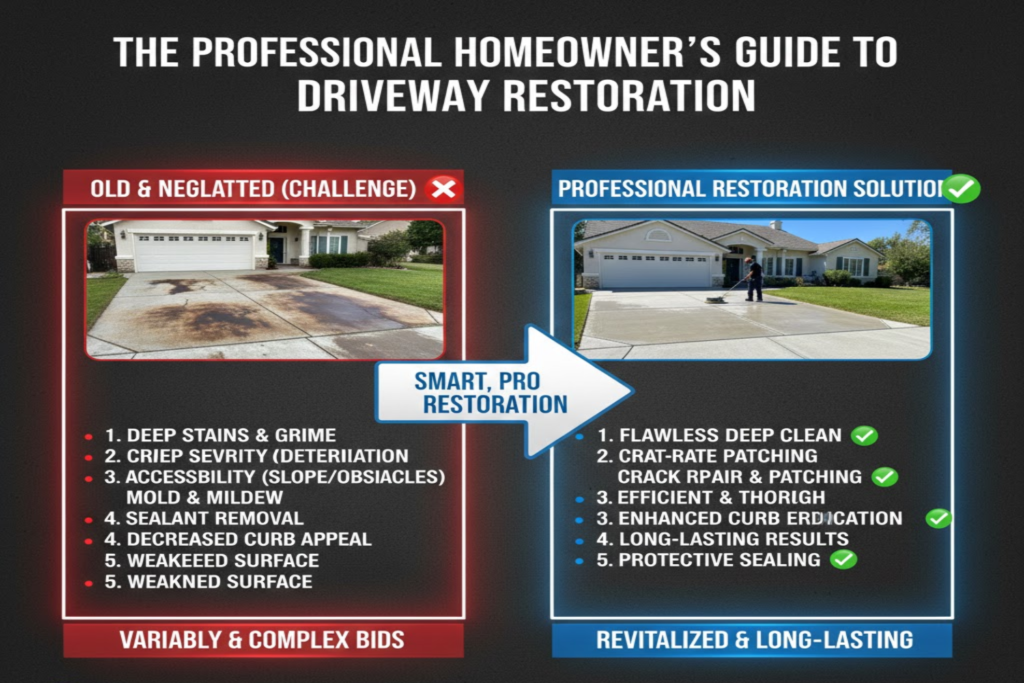
Curb appeal is not just a buzzword; it is a financial strategy. Studies suggest that a clean, well-maintained exterior can increase a home’s perceived value by 5% to 10%. A driveway covered in oil slicks, tire marks, and black mold signals neglect to neighbors and potential buyers alike. Pressure washing restores the original luster of the stone or concrete, instantly brightening the entire facade of the home.
The Secret to Longevity
Beyond aesthetics, the “secret” to a long-lasting driveway lies in pore management. Concrete is a porous material—it breathes and absorbs. When automotive fluids like oil, brake fluid, and antifreeze sit on the surface, they don’t just stay there; they migrate deep into the substrate. In the unique climate of Los Angeles, where intense UV rays bake these chemicals into the surface, the structural integrity of the driveway can begin to fail, leading to premature cracking and spalling. High-pressure cleaning removes these corrosive agents before they can cause permanent structural damage.
Why the Garden Hose Fails
A standard garden hose typically delivers water at about 40 to 60 PSI. While this is fine for watering roses, it is physically incapable of dislodging the microscopic particles of soot, carbon, and biological growth embedded in a driveway’s pores. Pressure washing utilizes mechanical kinetic energy to “scrub” the surface at a molecular level, providing a deep clean that a hose simply cannot replicate.
2. Understanding the Basics: PSI, GPM, and Nozzles
To master pressure washing, one must move past “spraying water” and understand the physics of fluid dynamics. Professional cleaning is a balance between Pressure and Volume.
PSI vs. GPM: The Golden Ratio
- PSI (Pounds per Square Inch): This represents the striking force. Think of PSI as a hammer. It is what breaks the bond between the dirt and the driveway. For a homeowner in Los Angeles dealing with sun-baked grime, you need enough PSI to “chip” away the dirt without “chipping” the concrete.
- GPM (Gallons per Minute): This represents the flow rate or volume. If PSI is the hammer, GPM is the shovel that pushes the dirt away. A high-PSI machine with low GPM will leave “zebra stripes” because there isn’t enough water to flush the debris you’ve loosened.
The Combination: For most residential driveways, a machine providing 2800 PSI and at least 2.5 GPM is the ideal entry-level professional setup.
The Color-Coded Nozzle System
The nozzle is the most important safety and quality tool in your kit. It determines the “fan pattern” of the water.
- Red (0-Degree): The “Blaster.” It concentrates all the pressure into a single pinpoint. Warning: This nozzle can cut through skin, boots, and even high-strength concrete. It is rarely used on driveways except for cleaning very small, deep cracks in metal or industrial equipment.
- Yellow (15-Degree): The “Scraper.” Use this for stubborn areas—dried paint, heavy mud, or thick moss. It must be used with caution to avoid etching the surface.
- Green (25-Degree): The “Standard.” This is the go-to nozzle for Los Angeles homeowners. It provides a wide enough fan to work quickly but enough pressure to clean effectively.
- White (40-Degree): The “Wash.” Best for rinsing away soap or cleaning more fragile surfaces like brick or pavers that have loose sand joints.
Electric vs. Gas Pressure Washers
- Electric: Quiet and low-maintenance. However, they usually top out at 2000 PSI and 1.2 GPM. These are suited for small patios or car washing but will take a very long time to clean a standard two-car driveway.
- Gas: These are the workhorses. They offer the GPM necessary for a streak-free finish. If your Los Angeles property has a large incline or significant square footage, a gas-powered unit (3000 PSI+) is highly recommended.
3. Pre-Wash Preparation: Setting the Stage for Success
Professional results are 70% preparation and 30% execution. Skipping this stage is how windows get broken and expensive landscaping dies.
Clearing the Zone
Start by removing all obstacles. This includes cars, basketball hoops, and decorative pots. Even small pebbles left on the driveway can become dangerous projectiles once hit by a 3000 PSI stream of water.
Protecting the Greenery
Pressure washing chemicals (especially those containing sodium hypochlorite or heavy degreasers) are “alkaline,” meaning they can burn the leaves of your plants.
- The Pre-Soak Technique: Before you start with chemicals, soak your lawn and garden beds with a regular hose. If the plants are already saturated with clean water, they are less likely to absorb the runoff from your cleaning solution.
- Tarping: For sensitive rose bushes or expensive Los Angeles landscaping, use breathable fabric tarps to cover them during the chemical application phase.
Safety Protocol
Never underestimate the power of pressurized water.
- Eyes: Goggles are non-negotiable. Debris can fly back into your eyes at hundreds of miles per hour.
- Feet: Never wear flip-flops. A momentary lapse in concentration can lead to a “water injection injury,” where the pressure forces water and bacteria under your skin.
4. The Chemicals: Cleaning Solutions & Degreasers
Water is a universal solvent, but it needs help to tackle “non-polar” stains like oil and grease.
Breaking Down Stains
- Organic Stains (Mold/Algae): These require a “Surfactant” or a bleach-based cleaner. If you see black or green spots, you are dealing with living organisms that need to be killed, not just moved.
- Hydrocarbon Stains (Oil/Gasoline): These require a Degreaser. Degreasers work by emulsifying the oil, allowing it to mix with water so it can be lifted out of the concrete pores.
- Rust Stains: Often caused by iron in the water or metal furniture. These require an acid-based cleaner (like oxalic acid) to neutralize the iron oxide.
Eco-Friendly Options for Homeowners
In environmentally conscious areas like Los Angeles, many homeowners prefer “Green” cleaners. Look for biodegradable surfactants that use citric acid or oxygen-based bleaching agents (Sodium Percarbonate). These are safer for your pets and the local storm drain system.
5. Equipment Comparison & Requirements Table
To ensure you don’t damage your specific driveway type, use the following technical requirements as a guide.
Surface-Specific Cleaning Requirements
| Surface Type | Recommended PSI | Recommended Nozzle | Primary Cleaning Agent | Risk Level |
| Standard Concrete | 2500 – 3000 | 25° (Green) | Alkaline Degreaser | Low (Very durable) |
| Asphalt | 1500 – 2000 | 40° (White) | pH-Neutral Soap | High (Pressure can strip oils) |
| Brick / Pavers | 1500 – 1800 | 40° (White) | Sodium Percarbonate | Medium (Can dislodge sand) |
| Stamped Concrete | 2000 – 2200 | 25° or 40° | Mild Detergent | Medium (Can damage sealer) |
| Exposed Aggregate | 2000 – 2500 | 25° (Green) | Degreaser + Rinse | Low (Hidden by texture) |
6. Step-by-Step Guide: How to Pressure Wash Like a Pro
The difference between a “streaky” DIY job and a professional-grade finish lies in the technique. Many homeowners in Los Angeles make the mistake of jumping straight to high pressure. Follow this four-stage professional workflow.
Step 1: Applying the Detergent (The Bottom-to-Top Rule)
Most people start at the top of the driveway incline and work down. This is a mistake when applying soap. You should apply detergent starting from the lowest point and moving upward. This prevents the soap from running down dry concrete, which creates permanent “soap trails” or streaks that are nearly impossible to remove once they dry. Ensure you are using the Black Soaper Nozzle, as high-pressure nozzles will simply atomize the chemical into the air rather than applying it to the surface.
Step 2: The “Dwell” Time (The Chemical Bond)
Once the driveway is coated in a thick layer of foam or solution, you must wait. This is known as “dwell time.” Typically, 10 to 15 minutes is sufficient. During this time, the surfactants are chemically breaking the bond between the grime and the concrete.
- Pro Tip: In the dry Los Angeles heat, chemicals can evaporate quickly. Use a light mist from a garden hose to keep the surface damp. If the soap dries, it traps the dirt back onto the surface, forcing you to start over.
Step 3: The Washing Technique (Consistent Strokes)
Now, switch to your Green (25-degree) nozzle. Start at the highest point of the driveway. Hold the wand at a consistent distance—usually 10 to 12 inches—from the surface. Move the wand in smooth, horizontal passes.
- The Secret of Overlapping: Each stroke should overlap the previous one by about 50%. This ensures that no “tiger stripes” (thin lines of dirt left behind) appear once the driveway dries. Keep the wand moving at all times; lingering in one spot can etch a permanent mark into the stone.
Step 4: Final Rinsing (The Top-to-Bottom Method)
After the dirt has been agitated and lifted, switch to a lower-pressure rinse or a wider nozzle (White 40-degree). This time, work from the top down. You are now simply pushing the “dirty” water off the driveway toward the street or drainage system.
7. Common Mistakes to Avoid: Protecting Your Investment
Even with the best equipment, errors can lead to expensive repairs. Here are the most frequent blunders documented by exterior cleaning experts:
- Using the 0-Degree Nozzle: Many homeowners think the “Red Nozzle” is the best for tough stains. In reality, it acts like a liquid chainsaw. It can slice through wood, destroy mortar joints between pavers, and leave permanent swirl marks on concrete.
- The “Tiger Stripe” Effect: This happens when the wand is moved too quickly or unevenly. It results in a driveway that looks like a zebra once dry. The only way to fix it is to wash the entire surface again.
- Washing on a Windy Day: High-pressure spray creates a fine mist. In wind-prone areas of Los Angeles, this mist (filled with degreasers or bleach) can drift onto parked cars, neighboring properties, or sensitive patio furniture, causing oxidation or staining.
- Ignoring the Safety Lock: Pressure washer triggers have a safety latch for a reason. Always engage it when changing nozzles or taking a break. A pressurized blast at close range can cause a Grade 3 skin tear.
8. Special Cases: Removing Tough Stains
Sometimes, standard pressure is not enough. Specific stains require specific chemical reactions.
Oil and Grease Stains
If you find a fresh oil leak, do not spray it with water immediately—this will only spread the oil. Instead:
- Cover the spot with kitty litter or sawdust to soak up the liquid.
- Apply a concentrated alkaline degreaser.
- Scrub with a stiff nylon brush (not wire, as wire can leave metal fragments that rust).
- Pressure wash as normal.
Rust and Tire Marks
Rust often comes from patio furniture or irrigation water with high iron content. Standard detergents won’t touch this. You need an acid-based cleaner like Oxalic Acid. Apply, scrub gently, and rinse thoroughly. For black tire marks (common in high-heat Los Angeles summers), a citrus-based solvent is usually the most effective at dissolving the rubber polymers.
9. Post-Wash Maintenance: Keeping it Clean Longer
Once you have achieved that perfect, bright finish, you want it to last.
The Power of Sealing
Concrete is essentially a hard sponge. If you don’t seal it, the very next oil leak will soak right back in.
- Penetrating Sealers: These go deep into the pores and are best for Los Angeles driveways because they don’t make the surface slippery and they allow the concrete to “breathe” while repelling water.
- Film-Forming Sealers: These create a “glossy” look. While beautiful, they can be slippery when wet and may require re-application every 2 years.
Routine Maintenance
- Monthly Sweeping: Removing organic debris like leaves and dirt prevents them from breaking down and creating “tannin” stains (brown spots).
- Immediate Rinsing: If you notice bird droppings or a small spill, rinse it with a garden hose immediately. Don’t wait for your next deep clean.
10. DIY vs. Hiring a Professional: The Cost-Benefit Analysis
Is it worth doing it yourself? Let’s look at the math.
- DIY Costs: Rental for a pro-sumer gas machine ($80-$120/day) + Detergents ($30) + Personal Time (6-8 hours for a standard driveway). Total: ~$150 and a full weekend.
- Professional Costs: For a standard Los Angeles home, professional service might range from $250 to $500.
When to hire a pro? If your driveway is over 2,000 square feet, has significant oil saturation, or involves delicate pavers, a professional’s “Surface Cleaner” (a rotating UFO-shaped tool) will provide a more uniform finish in 25% of the time it takes with a wand.
11. Conclusion: The Reward of a Pristine Entrance
Pressure washing your driveway is one of the most satisfying home improvement projects you can undertake. It provides an immediate visual “win” and protects your home’s structural integrity. By understanding the balance of PSI, choosing the right chemicals, and following a disciplined overlapping technique, you can achieve a result that rivals any professional crew.
Your driveway isn’t just a place to park—it’s the first chapter of your home’s story. Keep it clean, keep it sealed, and enjoy the pride of a pristine entrance.
12. Frequently Asked Questions
Q1: Can pressure washing actually damage my concrete?
A: Yes, if done incorrectly. Using a high-pressure nozzle (like the Red 0-degree) or holding the wand too close to the surface can cause “etching” or “spalling,” where the top cream layer of the concrete peels off. To avoid this, always maintain a distance of at least 10–12 inches and use a fan-pattern nozzle (25 or 40-degree).
Q2: How often should I pressure wash my driveway in Los Angeles?
A: For most residential properties, once a year is the industry standard. However, if your driveway is shaded by large trees (which promotes mold and mildew growth) or if you have multiple vehicles that may leak oil, a bi-annual clean every 6 months is recommended to prevent permanent staining.
Q3: Is it better to clean my driveway in the morning or the afternoon?
A:Morning is the optimal time. In the intense Los Angeles heat, cleaning chemicals and soaps can dry out on the concrete within minutes during the afternoon. If the soap dries before you rinse it, it can leave white streaks and trap dirt back into the pores. Working in the cooler morning hours allows the chemicals the “dwell time” they need to work effectively.
Q4: Do I really need to use chemicals, or is water enough?
A: While water removes loose dirt, it cannot dissolve hydrocarbons (oil) or kill organic spores (mold/algae). Using a professional-grade degreaser or surfactant is essential to ensure you are actually cleaning the pores of the driveway rather than just moving surface dirt around.
Q5: Can I pressure wash my driveway if it has cracks?
A: You can, but you must be extremely careful. High-pressure water hitting a crack can force water deep into the sub-base, potentially causing the soil underneath to shift or the crack to widen. Avoid spraying directly into large cracks; instead, clean around them and consider filling them with a concrete sealer after the driveway is dry.
Q6: How long should I wait to park my car after washing and sealing?
A: After a standard pressure wash, you can park as soon as the surface is dry (usually 2–4 hours in the California sun). However, if you apply a sealer, you should wait at least 24 to 48 hours before driving on it to allow the protective coating to cure completely.