1. Introduction
When it comes to home maintenance, everyone seems to have a “secret” family recipe or a time-tested trick for getting glass to shine. From using old socks to spraying automotive waxes on exterior panes, the world of glass maintenance is filled with conflicting advice. However, windows are more than just transparent barriers; they are high-tech components of your home’s envelope, often featuring specialized “Low-E” coatings and delicate argon-gas seals.
Misinformation doesn’t just lead to streaks—it can lead to permanent damage. Whether you are a DIY enthusiast or looking to hire a service in Los Angeles, separating old wives’ tales from modern glass science is essential. In this 2,000-word deep dive, we will expose the most common window cleaning truths and myths to ensure your “lens to the world” remains pristine and structurally sound for decades to come.
2. Myth #1: Newspaper is the Best Tool for a Streak-Free Shine
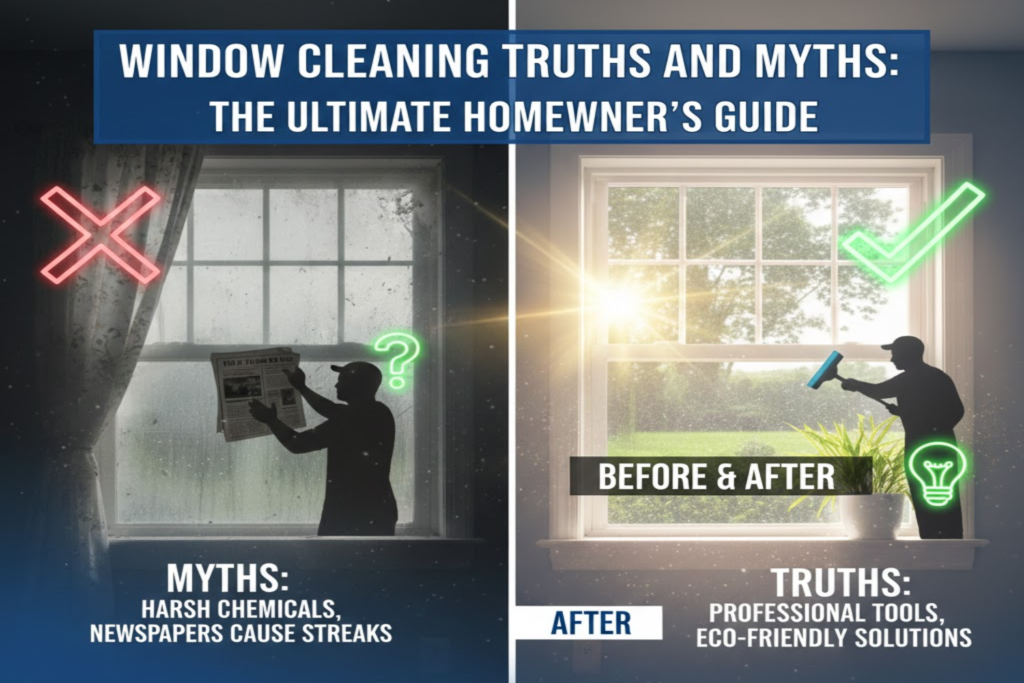
For decades, the “newspaper and vinegar” method was the gold standard for homeowners. The myth suggests that the abrasive nature of the paper combined with the specific chemicals in the ink creates a polishing effect that microfiber cannot match.
The Truth: While this may have been true forty years ago when newsprint used petroleum-based inks containing lead, modern newspaper ink is almost entirely soy-based. Soy ink does not polish; it smears. If you use newspaper today, you will likely notice a gray, oily residue left on your window frames and sills. Furthermore, modern glass is often treated with microscopic coatings to reflect heat. The wood fibers in newspaper are surprisingly abrasive and can cause “micro-scratching” over time, dulling the clarity of the glass.
The Pro Alternative: Professionals never reach for the Sunday comics. Instead, they use surgical-grade microfiber cloths or high-quality rubber squeegees. These tools are designed to lift and trap dirt rather than moving it around the surface.
3. Myth #2: Vinegar and Water is the Ultimate “Miracle” Cleaner
The “green cleaning” movement has elevated white vinegar to legendary status. The myth claims that because vinegar is acidic, it is the only thing you need to cut through dirt without using “harsh chemicals.”
The Truth: While vinegar is a decent degreaser, it is far from a miracle solution. Because vinegar is acidic, it can be incredibly harsh on the non-glass components of your window. Repeated exposure to vinegar can cause the rubber seals (gaskets) to become brittle and crack. Once those seals fail, the insulating gas between your double-paned windows escapes, leading to permanent fogging.
Furthermore, vinegar leaves behind a microscopic film that carries a slight static charge. In the dusty environment of Los Angeles, this static charge acts as a magnet for smog and pollen. This is why your windows often look dirty again just a week after a vinegar-based cleaning. Professionals use pH-neutral surfactants that allow water to “sheet” off the glass, leaving no residue and no static charge.
4. Myth #3: You Should Only Clean Windows on a Sunny Day
It seems logical: you want the sun out so you can see every smudge, and the heat will help the windows dry faster, right?
The Truth: This is perhaps the most self-defeating myth in the industry. Cleaning windows in direct Los Angeles sunlight is the primary cause of streaks. The intense heat of the sun causes the glass surface to reach high temperatures, which makes your cleaning solution evaporate almost instantly. When the liquid evaporates before you can squeegee it off, it leaves behind the dirt and soap minerals in a “baked-on” streak pattern.
The Pro Strategy: Professionals prefer overcast days or working on the “shadow side” of the building. By keeping the glass cool, the cleaning solution stays liquid longer, allowing the squeegee to physically remove the dirt and moisture together, resulting in that “invisible glass” look.
5. Myth #4: Pressure Washers are Great for High Windows
Many DIY homeowners think, “Why climb a ladder when I can just blast the dirt off from the driveway?”
The Truth: Using a pressure washer on windows is one of the most expensive mistakes you can make. Standard residential windows are designed to withstand wind and rain, not 3,000 PSI of concentrated water pressure.
- Seal Failure: High pressure can easily “blow” the seals of an Insulated Glass Unit (IGU).
- Water Intrusion: It can force water behind your siding or into the wall cavity, leading to hidden mold and wood rot.
- Screen Damage: It can rip or stretch window screens beyond repair.
6. Truth: Hard Water is the “Silent Killer” of Glass
This is a “truth” that many homeowners ignore until it is too late. Hard water contains high concentrations of calcium and magnesium.
The Reality: When hard water (from a garden hose or a sprinkler) dries on your glass, the minerals stay behind. Over time, these minerals don’t just sit on the surface; they undergo a chemical process called “etching,” where they bond to the molecular structure of the glass.
In a city with notoriously hard water like Los Angeles, this is a major problem. If you don’t remove these spots within a few months, they can become permanent. Professional window cleaners use Deionized (DI) water systems—which remove every single mineral from the water—to ensure that even if a drop is left behind, it dries perfectly clear without leaving a “scar” on the glass.
7. Comparison Table: DIY Myths vs. Professional Truths
| Factor | The DIY “Myth” Method | The Professional “Truth” Method |
| Cleaning Agent | Vinegar / Ammonia / Dish Soap | Deionized Water / Neutral Surfactants |
| Drying Tool | Newspaper / Paper Towels | Professional Grade Rubber Squeegee |
| Environmental Impact | Static buildup attracts more dust | Residue-free; glass stays clean longer |
| Safety Level | High (Unstable ladders) | Low (Water-fed poles / Safety gear) |
| Risk of Damage | High (Scratches/Blown seals) | Zero (Non-abrasive techniques) |
| Result | “Looks better” but streaky | “Invisible” optical clarity |
8. Myth #5: Rain Makes Your Windows Dirty
How many times have you said, “I’m not cleaning the windows today because it’s going to rain tomorrow”?
The Truth: Rainwater is actually quite pure; it is essentially distilled water. Rain doesn’t make windows dirty—dirty windows make rain look bad. When rain hits a window that is already covered in dust and pollen, it moves the dirt around and leaves “mud spots” when it dries. However, if your windows are professionally clean and residue-free, the rain will simply bead up and roll off, leaving the glass just as clear as before.
Conclusion
Navigating the sea of window cleaning truths and myths is essential for any homeowner who wants to protect their property’s long-term value. While the nostalgic appeal of using newspaper and vinegar may linger in household lore, the reality of modern glass science favors precision over folklore. By debunking these common misconceptions, you move from simply “washing” a surface to “maintaining” a critical home system. In a demanding environment like Los Angeles, where salt air, urban soot, and intense UV rays are constant factors, using the right tools and timing is the difference between a streaky, temporary fix and a lasting, crystal-clear result.
Ultimately, your windows are the most significant visual and functional link between your private sanctuary and the outside world. Treating them with the care they deserve—by avoiding high-pressure blasts and chemical-heavy DIY solutions—ensures that your “lens to the world” remains structurally sound and optically perfect. Whether you decide to tackle the task yourself using professional techniques or entrust your home to a specialized team, remember that clarity is achieved through science, not shortcuts. A well-maintained home starts with a clear view, and by following these truths, you ensure your home always looks its best from both sides of the glass.
Highly Searched Frequently Asked Questions (FAQs)
Q: Can I use dish soap to clean my windows? A: While many people use dish soap, it is often too sudsy and contains lotions that leave a microscopic “greasy” film behind. This residue is a magnet for dust and pollen. If you must use it, use a tiny amount of a clear, non-lotion formula, or better yet, a professional-grade glass surfactant that is designed to evaporate cleanly without leaving a trace.
Q: Why do my windows still look streaky after I use a squeegee? A: Streaks after squeegeeing are usually caused by two things: a worn-out rubber blade or improper technique. Professional squeegee rubber is very sensitive; even a tiny nick in the blade will leave a line of water behind. Additionally, if you don’t wipe the top edge of the window frame first, water will “bleed” down from the top, creating those frustrating vertical streaks.
Q: Does cleaning windows in the winter actually work? A: Yes, windows can and should be cleaned in the winter. In fact, salt and road spray from winter storms can etch glass if left too long. In colder climates, professionals use specialized anti-freeze solutions (like windshield washer fluid or rubbing alcohol) in their water to prevent it from freezing on the glass before they can squeegee it off.
Q: Is it safe to use a razor blade to scrape off stickers or paint? A: It can be safe, but it is extremely risky for the amateur. You must use a brand-new, stainless steel blade and ensure the glass is heavily lubricated with soapy water. If you scrape dry glass or use a dull blade, you will permanently scratch the surface. Furthermore, never use a blade on tempered glass, as it can cause “tempering chips” that ruin the pane.
Q: How do I remove hard water spots that have been there for years? A: For light spots, a mixture of lemon juice and water might work. For heavy, “etched” spots common in Los Angeles, you will likely need a professional acid-wash or a polishing compound like cerium oxide. These treatments require skill to apply without damaging the glass, so it is often best to call a specialist for restoration.
Q: Why do my windows look “rainbowed” after cleaning? A: This “rainbow” effect (often called thin-film interference) is usually caused by an oily residue left behind by previous cleanings or automotive waxes. It can also occur if you have a specialized “Low-E” coating on the outside of your glass that has been compromised by harsh chemicals. A deep clean with a neutralizing surfactant usually solves the problem.